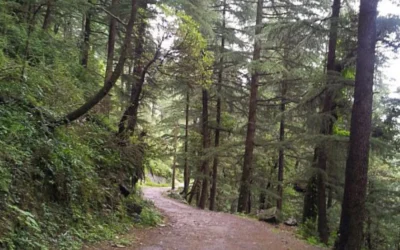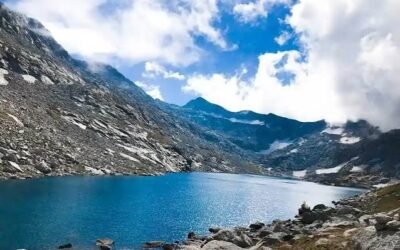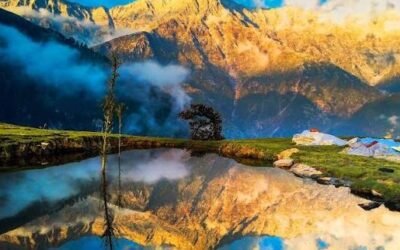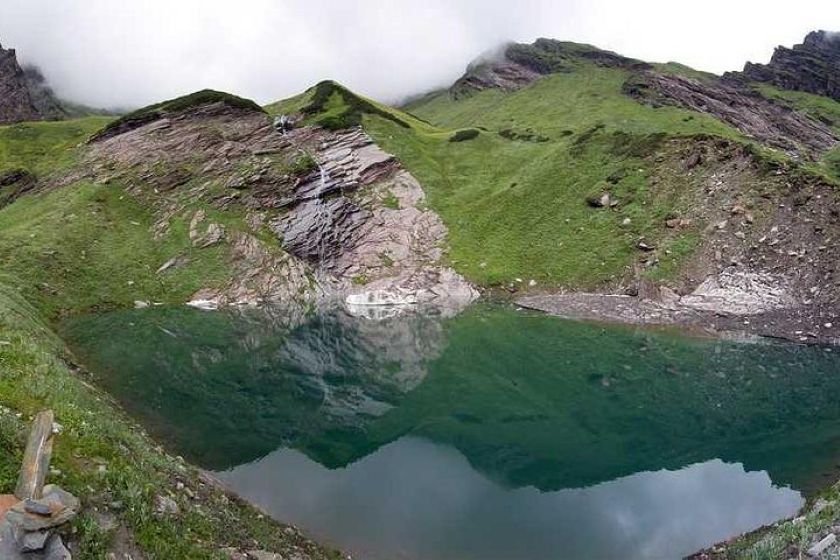
Beas Kund Trek is one of the most scenic short treks near Manali in Himachal Pradesh. The trail takes trekkers towards the source region of the Beas River, through open meadows, glacial streams, rocky sections and wide views of the Pir Panjal mountains.
This trek is popular because it offers a proper Himalayan landscape without needing a very long expedition. You start from the Solang Valley side, walk through Dhundi and meadow sections, and gradually move towards the high-altitude basin where Beas Kund is located.
Beas Kund is suitable for fit beginners and regular trekkers, but it should not be treated casually. The altitude, changing weather, stream crossings and rocky trail sections need preparation, proper shoes and local guidance.
Image Title: Beas Kund Trek Manali
Alt Text: Beas Kund trek with alpine lake, green meadows and mountain slopes near Manali in Himachal Pradesh
Caption: Beas Kund Trek near Manali is known for its glacial lake, open meadows, stream crossings and views of the Pir Panjal range.
SEO File Name: beas-kund-trek-manali-himachal-pradesh.jpg
Why Beas Kund Trek is Famous
Beas Kund Trek is famous because it takes trekkers close to the source region of the Beas River, one of the most important rivers of Himachal Pradesh. The trail has both natural beauty and cultural importance, as the lake area is traditionally associated with the origin of the river.
The trek is also loved for its mountain views. On a clear day, trekkers can see impressive peaks and ridges around the Solang and Manali region, including views towards Hanuman Tibba and other high mountains of the Pir Panjal range.
Another reason Beas Kund is popular is its accessibility. The trek starts close to Manali, so travellers can experience alpine meadows and high mountain scenery within a short itinerary.
About Beas Kund Trek
Beas Kund is a high-altitude lake and glacial basin near Manali. The trek is commonly approached from Solang Valley, Dhundi and Bakarthach side. The route passes through open valleys, grasslands, stream-side sections and rocky terrain before reaching the lake area.
The trek is usually planned over 3 to 4 days, depending on route, campsite and group pace. Some experienced trekkers may complete a shorter version, but a slower plan is more comfortable and safer for beginners.
The landscape changes beautifully along the route. The lower sections have valley views and streams, while the higher sections feel more open, colder and closer to the mountains.
Location of Beas Kund Trek
Beas Kund Trek is located near Manali in Kullu district, Himachal Pradesh. The trek lies in the Pir Panjal range and is commonly approached from the Solang Valley and Dhundi side.
Nearest major town: Manali
Nearest tourist base: Manali / Solang Valley
District: Kullu, Himachal Pradesh
Mountain range: Pir Panjal Range
Common starting side: Solang Valley / Dhundi side
Nearest airport: Kullu-Manali Airport at Bhuntar
Nearest major railway side: Chandigarh or Pathankot side, followed by road travel to Manali
Quick Trek Details
| Detail | Information |
|---|---|
| Trek Name | Beas Kund Trek |
| Location | Near Manali, Kullu district |
| District | Kullu, Himachal Pradesh |
| Mountain Range | Pir Panjal Range |
| Common Starting Side | Solang Valley / Dhundi side |
| Common Route | Manali – Solang Valley – Dhundi – Bakarthach – Beas Kund |
| Common Duration | Usually 3 to 4 days |
| Approximate Trek Distance | Around 16 to 25 km total, depending on route and campsite |
| Difficulty Level | Easy to moderate / moderate |
| Lake Altitude | Around 3,800 to 3,900 metres approx. |
| Best Time to Visit | May to June and September to October |
| Suitable For | Fit beginners and regular trekkers |
| Family Friendly | Suitable for active families with older children, not ideal for very small children |
| Guide Requirement | Recommended, especially for first-timers |
| Nearest Market | Manali / Solang Valley |
| Camping Status | Check current local rules before planning camps |
| Avoid During | Heavy rain, snowfall warnings, deep winter snow, poor visibility and unsafe weather |
Trek Route
The common Beas Kund Trek route follows this direction:
Manali → Solang Valley → Dhundi → Bakarthach → Beas Kund
Most trekkers first drive from Manali towards Solang Valley and further towards the active road-head near Dhundi, depending on road access and local rules. From this side, the walking route begins through an open valley with mountain views.
The trail towards Bakarthach is scenic and manageable for fit walkers. The route has grasslands, stream-side sections and gradual climbs. As you move higher, the terrain becomes more alpine and open.
The section towards Beas Kund is the main highlight of the trek. The trail becomes rockier, and the weather can feel colder and windier near the lake basin. Depending on the season, trekkers may find snow patches, wet ground or loose stones near the higher sections.
The return usually follows the same route back towards Bakarthach, Dhundi and Solang Valley side.
Suggested 4-Day Itinerary
Day 1: Reach Manali and prepare for the trek
Arrive in Manali, check your gear and confirm the weather, route condition and camping arrangements. If you are coming after a long road journey, rest properly before starting the trek.
Day 2: Manali to Solang Valley / Dhundi and trek towards Bakarthach
Drive from Manali towards Solang Valley and Dhundi side, depending on road access. Begin the trek through valley and meadow sections towards Bakarthach or the approved campsite.
Day 3: Bakarthach side to Beas Kund and return towards campsite
Start early for Beas Kund. This is the most important trekking day. Walk slowly through rocky and open terrain, spend limited time near the lake area, and return to the campsite before weather changes.
Day 4: Descend to Dhundi / Solang Valley and return to Manali
Descend carefully towards the road-head and drive back to Manali. Keep extra time because road conditions and traffic around Solang and Manali can change during peak season.
This itinerary is only a practical structure. Final planning should depend on weather, road access, campsite rules, water availability and the advice of a local guide.
How to Reach Beas Kund Trek Starting Point
By Road
Manali is the main base for Beas Kund Trek. It is well connected by road from Delhi, Chandigarh, Mandi, Kullu and other parts of Himachal Pradesh.
From Manali, travellers usually drive towards Solang Valley and Dhundi side. Road access can change due to weather, traffic rules, construction or local restrictions, so confirm the current status before leaving.
By Air
Kullu-Manali Airport at Bhuntar is the nearest airport. From Bhuntar, taxis and buses are available towards Kullu and Manali.
By Train
There is no direct major railway station at Manali. Travellers usually reach Chandigarh, Pathankot or nearby rail-connected cities and then continue by road towards Manali.
Best Time to Visit Beas Kund Trek
The best time for Beas Kund Trek is generally May to June and September to October.
May and June are good for fresh mountain scenery, snow patches in higher sections and pleasant daytime weather. In some years, early-season snow may still be present near the upper route.
September and October are usually better for clearer skies and sharper mountain views after the monsoon season. The meadows may look different from early summer, but visibility can be excellent.
Avoid the trek during heavy monsoon rain because the trail can become slippery, streams can become difficult and road conditions may be affected. Winter and early spring should be avoided unless you are with experienced local support and proper winter gear.
Difficulty Level of Beas Kund Trek
Beas Kund Trek is generally considered easy to moderate, though many trekkers feel it as moderate because of altitude and rocky sections near the lake.
The trek is suitable for fit beginners, but the final approach towards Beas Kund can feel tiring. The route has stream crossings, uneven ground, meadow walking and rocky terrain.
Walk slowly, stay hydrated and do not rush on the lake day. People with knee pain, breathing issues or very low fitness should take extra care.
Food, Water and Stay Options
Food and stay options are easily available in Manali and Solang Valley before and after the trek. On the trek route, food and camping are usually managed by trekking operators or local guides.
Carry personal snacks such as dry fruits, energy bars or biscuits. Water sources may be available on the route, but use them only after checking with your guide.
Camping should be done only at suitable and permitted locations. Avoid camping too close to streams, unstable slopes or the lake area.
Mobile Network and Facilities
Mobile network works in Manali and around Solang Valley, but it becomes unreliable once you move higher towards Dhundi, Bakarthach and Beas Kund.
Do not depend on mobile signal for safety or navigation. Inform someone about your trek plan before starting. Carry a charged phone and power bank.
Facilities are limited after leaving the road-head. Trekkers should be prepared for basic camping, cold nights and limited emergency access.
Things to Carry for Beas Kund Trek
For Beas Kund Trek, carry proper trekking essentials:
- Comfortable trekking shoes with good grip
- Warm layers and windproof jacket
- Rain protection or poncho
- Gloves and woollen cap
- Sunglasses and sun cap
- Water bottle
- Energy bars, dry fruits and light snacks
- Personal medicines
- Basic first-aid kit
- Trekking pole if needed
- Headlamp or torch
- Power bank
- Sunscreen and lip balm
- Small garbage bag to bring waste back
- Valid ID proof
- Sleeping bag and camping gear if not arranged by operator
Even in summer, the Beas Kund side can feel cold and windy. Do not judge the trek only by Manali’s weather.
Safety Tips for Beas Kund Trek
Start early on the lake day. Weather in high mountain areas can change quickly by afternoon.
Be careful near stream crossings. Water flow can increase with snowmelt, rain or afternoon warming.
Do not stay too long near the lake if clouds build up or wind becomes strong. Return on time.
Avoid trekking during heavy rain, snowfall, thunderstorm, poor visibility or official weather warnings.
Take a local guide or experienced operator if you are doing the trek for the first time.
Do not leave the marked route in meadows or rocky sections. Walking randomly can damage fragile ground and increase the chance of losing the trail.
Avoid alcohol during the trek. It affects balance, stamina, hydration and judgement.
Nearby Places to Visit
Manali
Manali is the main base for Beas Kund Trek. It offers hotels, cafes, markets and access to many nearby attractions.
Solang Valley
Solang Valley is the main approach side for this trek and is also known for adventure activities, views and seasonal snow.
Dhundi
Dhundi is a scenic valley area on the route towards Beas Kund. It is often part of the trek approach depending on road access.
Atal Tunnel Side
The Atal Tunnel and nearby Lahaul side can be explored separately if road and weather conditions allow.
Vashisht
Vashisht is known for its temple area, hot springs and village atmosphere. It is a good place to visit before or after the trek.
Google Maps Location
For navigation, search:
Beas Kund Trek, Manali, Himachal Pradesh
You can also search:
Solang Valley, Manali
or
Dhundi, Himachal Pradesh
Solang Valley and Dhundi are commonly used as approach-side landmarks for the trek. Google Maps routes in mountain areas can be approximate, so always confirm the active trail locally before starting.
Responsible Travel Tips
Beas Kund is a sensitive high-altitude area connected with the source region of the Beas River. Visitors should treat the place with care.
Do not throw plastic bottles, food packets, wet wipes, cigarette waste or batteries on the trail. Carry your waste back to Manali or the road-head.
Avoid loud music in campsites and near the lake. The mountains should remain peaceful for other trekkers, local people and wildlife.
Do not wash utensils, clothes or use soap in streams or near the lake area. Protect natural water sources.
Camp only at suitable locations and avoid damaging meadows. Use local guides and operators who follow responsible trekking practices.
FAQs About Beas Kund Trek
Is Beas Kund Trek suitable for beginners?
Beas Kund Trek is suitable for fit beginners, but it should not be taken lightly. The trail has altitude gain, stream crossings, rocky sections and changing weather.
How many days are needed for Beas Kund Trek?
Most trekkers plan Beas Kund Trek over 3 to 4 days. A 4-day plan is more relaxed and safer for first-time trekkers.
What is the distance of Beas Kund Trek?
The total trek distance is usually around 16 to 25 km, depending on the starting point, campsite and route followed.
What is the altitude of Beas Kund?
Beas Kund is located at around 3,800 to 3,900 metres above sea level. Altitude figures may vary slightly between different trekking sources.
What is the best time for Beas Kund Trek?
May to June and September to October are generally considered the best months for Beas Kund Trek. Avoid heavy monsoon rain, deep winter snow and poor visibility days.
Is a guide required for Beas Kund Trek?
A guide is recommended, especially for first-timers. The route passes through meadows, streams and rocky sections where weather and visibility can change quickly.
Is Beas Kund Trek safe?
Beas Kund Trek is generally safe in good weather with proper shoes, warm clothing, basic fitness and local guidance. It becomes risky during heavy rain, snowfall, stream swelling, fog, late starts or careless route decisions.
Last Word
Beas Kund Trek is one of the best short treks near Manali for travellers who want meadows, mountain views and a high-altitude lake experience in a few days. It is scenic, accessible and deeply connected with the landscape of the Beas River.
This trek is ideal for fit beginners and regular trekkers who want more than a simple day hike but do not want a long expedition. Start early, respect the water sources, carry proper clothing and follow local advice.
With careful planning, Beas Kund Trek can become one of the most memorable trekking experiences near Manali.
Fact-check note: Trek distance, altitude, weather, road access, stream crossings, food availability, camping rules and local restrictions can change. Visitors should verify current conditions locally before starting the trek.