
Temple & sacred site
Chandrashekhar Mahadev Temple, Saho
The Third Son Who Became a Shivalinga
At a glance
- Location
- Saho village, Chamba district
- How to reach
- Road from Chamba towards Saho; confirm village parking and temple access
In the Sal Valley at Saho, Chandrashekhar Mahadev brings together an old Shiva shrine, the memory of a local ruler and a legend of three mysterious children.
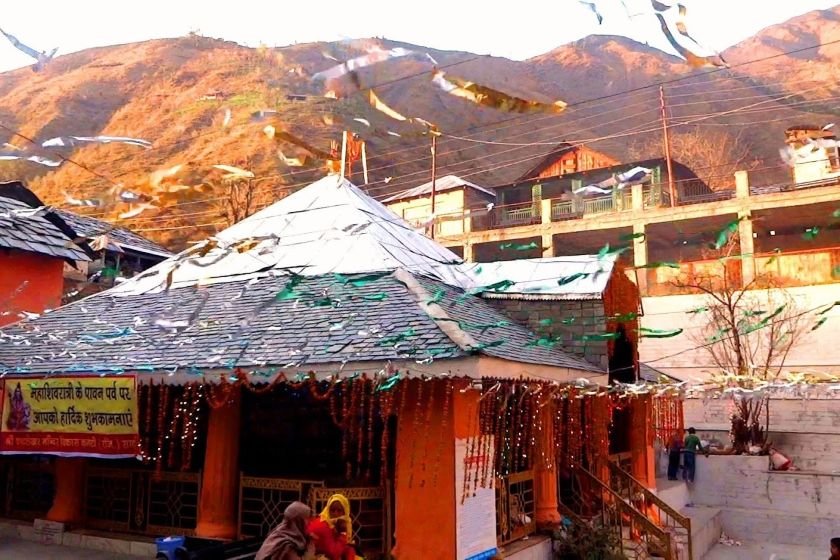
Chandrashekhar Mahadev Temple stands in Saho village, Chamba district. The large Shivling and the temple’s village setting draw devotees, while the region’s inscriptions give the shrine a place in the history of early medieval Chamba.
It is a rewarding visit from Chamba for anyone interested in both worship and the evidence behind a temple’s story. Local legend and historical study offer different ways to understand the place.
🌄 Location and how to reach it
Saho is in the Sal Valley, reached by road from Chamba town.
Google Maps: Find Chandrashekhar Mahadev Temple at Saho
- By road: Ask specifically for the Saho road and Chandrashekhar Mahadev Temple. Do not assume it lies directly on the main route towards Bharmour.
- In Saho: Arrange the return journey and ask where vehicles should park before entering the village. The final approach may involve village lanes, slopes or steps; check the actual route if mobility or walking distance affects your plans.
- Regional connections: Pathankot provides a broad-gauge rail gateway for the wider Chamba journey, followed by road travel. Allow for hill-road conditions rather than planning entirely from distance.
🌸 Best Time to Visit
Spring and autumn are comfortable seasons for combining the temple with a village visit. In the monsoon, check the road and take care on wet paths. Winter conditions need a local check, particularly after bad weather.
Choose a time when the shrine is receiving visitors. Older visitor accounts describe a midday break, but no fixed daily closure is asserted here. Ask about the day’s worship and opening arrangements before making a special trip.
🕉️ Chandrashekhar: Shiva Who Bears the Moon
The name Chandrashekhar refers to Shiva bearing the moon. Worship centres on the Shivling, with Nandi facing the sacred space. The shrine belongs to the continuing Shiva traditions of the Chamba region.
Give worshippers room to approach and ask before entering the sanctuary. If a priest is available, a simple question about the deity or the day’s observance can make the visit more meaningful than trying to see every detail at once.
📖 The Three Children of the Local Legend
One local story tells of a sadhu who noticed that someone had bathed in a spring before him. Keeping watch, he saw three mysterious children. He caught one, who disappeared and manifested as a Shivling.
In the version preserved in this temple’s local retellings, the children connect Chandrashekhar at Saho, Manimahesh at Bharmour and Chandragupta Mahadev in Chamba. The legend relates separate shrines through a shared sacred story.
It is a devotional account, not evidence that the three buildings were founded together or by a single patron. Details can vary between tellings. Ask how the story is remembered at Saho without expecting one version to settle every shrine’s history.
📜 The Sarahan Inscription and Satyaki
There is also material evidence for a Shiva temple in this part of the valley. The Sarahan prashasti, found across the Sal near Saho, records a temple founded by Satyaki. Scholarly discussion links it with Chandrashekhar Mahadev.
J. Ph. Vogel’s early study of Chamba’s antiquities treated that identification cautiously. Later research discusses the inscription as dating to around the 9th–10th centuries and records its preservation in the Bhuri Singh Museum.
This supports an early medieval context while leaving a distinction between the old foundation, the surviving sacred objects and the present building. A date attached to the inscription should not automatically be applied to every visible wall or roof.
🏛️ Looking at the Temple and Nandi
Begin with the relationship between the sanctuary, the Shivling and the Nandi outside it. Look at the entrance and any sculpted details visible from the permitted approach. Their religious function is as important as their appearance.
Some travel accounts describe later rebuilding, but a precise reconstruction history requires stronger documentation than repeated visitor summaries. The temple can be appreciated without assuming that the current structure has remained unchanged for a thousand years.
A frequently repeated curiosity concerns a bell-like sound attributed to the stone Nandi. Leave the sculpture untouched: tapping historic or sacred stone to test a story is not an appropriate visitor activity.
🪔 Shivratri and Local Observances
Shivratri is an important occasion within Shiva worship, and local accounts describe fairs and other gatherings at Saho. Confirm the actual temple programme, dates and visitor arrangements with the community.
The wider Manimahesh pilgrimage season can also shape travel in Chamba. Visiting Saho is a separate local journey; it should not be described as completing the high-altitude Manimahesh pilgrimage.
During ordinary worship or a crowded occasion, keep entrances clear, follow footwear rules and ask before photographing interiors or people. Place offerings only where directed.
🌿 Time in the Sal Valley
Saho’s setting is part of the visit. The Sal Valley has fields, village life and wooded slopes, with the landscape changing through the seasons. Walk on public routes and ask before entering fields, homes or private paths.
The Ecotourism Society of Himachal Pradesh also describes Saho’s forest-rest-house setting. That is useful regional context, but it does not establish public access or accommodation availability at the rest house.
🏞️ Places to Combine With Saho
- Bhuri Singh Museum, Chamba: a useful companion for the region’s inscriptions and art; ask which objects are on display.
- Chamba’s temples: explore the town’s sacred architecture on a separate walking visit.
- Bharmour: relevant to the three-shrine legend, but a longer road journey to plan separately.
Manimahesh Lake and upper-valley walks require independent preparation. They are not casual extensions of a short visit from Chamba.
❓ Questions Before You Go
Where is Saho? In the Sal Valley near Chamba town, in Chamba district.
Who is associated with the temple’s historical foundation? The Sarahan inscription records a Shiva temple founded by Satyaki and is linked by scholars with this shrine.
Is the three-children story documented history? It is a local sacred tradition connecting related Shiva shrines.
Can I test the sound of Nandi? Leave the sculpture untouched and follow conservation and worship instructions.
Is the temple open continuously? Confirm the actual day’s arrangements rather than relying on an old timetable.
A Last Word
Saho offers the pleasure of a temple whose stories can be followed into both the village and the museum. Give the legend its place, look carefully at the historical evidence and allow time for the living shrine.
Sources and Further Reading
- J. Ph. Vogel: Antiquities of Chamba State — the Sal Valley, Sarahan inscription and proposed identification with Saho’s Shiva temple.
- Indologica Taurinensia: scholarly discussion of the Sarahan prashasti — Satyaki, dating and museum context.
- Regional temple account: Chandrashekhar Mahadev, Saho — local legend; distinct from epigraphic evidence.
- Ecotourism Society of Himachal Pradesh: Saho — valley setting.