
Temple & sacred site
Banni Mata Temple, Tundah
Where Draupadi’s Grief Became a Goddess
At a glance
- Location
- Banni / Tundah area, Bharmour region, Chamba district
- How to reach
- Confirm the mountain road and final approach locally before leaving Bharmour
Near Tundah in the Bharmour region, Banni Mata’s mountain shrine brings together devotion to Mahakali, a local Draupadi tradition and the journeys of Gaddi shepherds.
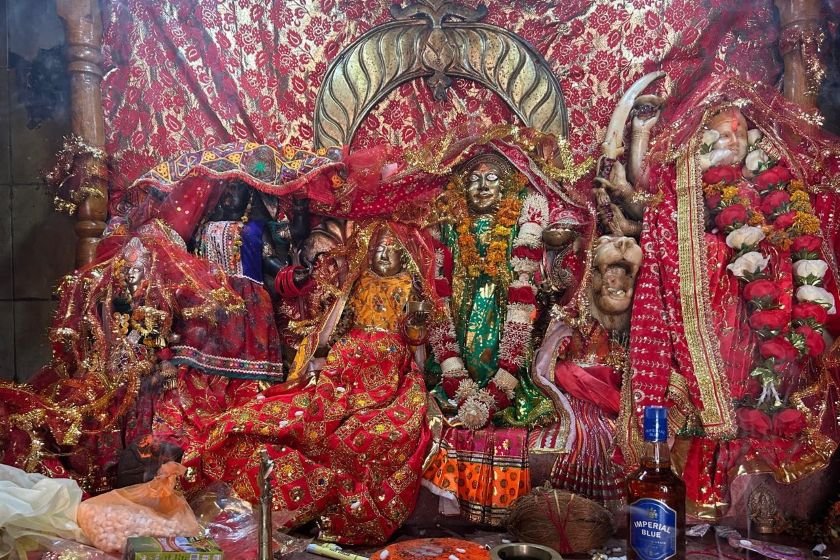
Banni Mata Temple is dedicated to Maa Kali / Mahakali in Chamba district. The forested mountain setting is central to its identity: the goddess is remembered as a protective presence in country where paths, weather and seasonal movement shape daily life.
This guide concerns the Banni–Tundah side of the Bharmour region. It is a dedicated mountain visit, best arranged with local knowledge of the final approach rather than as an unplanned detour.
🌄 Location and how to reach it
Begin by establishing the current road connection from Bharmour towards the Banni / Tundah area.
Google Maps: Search for Banni Mata Temple near Tundah
- Confirm the roadhead: Published accounts give different descriptions of the roadhead and the remaining walk, reflecting both differing routes and changing access.
- By rail or air: Pathankot is a broad-gauge rail gateway for travel into Chamba, followed by a substantial road journey. Regional airport choices also require onward road planning. Check the complete journey to your overnight base before deciding on the temple day.
- Final approach: Confirm with local residents or an experienced local driver which approach is usable and where vehicles should stop.
🌸 Best Time to Visit
Choose settled weather and obtain a recent report on the approach. The open travel season depends on snow, rain and road repairs rather than a fixed calendar alone. Allow enough daylight for the walk back and the return drive.
During the monsoon, mountain roads and paths can be affected by slips and rising streams. In colder periods, ice or snow may prevent a visit. Ask locally before departure and leave room to change the plan.
For a religious fair, confirm the actual date and visitor arrangements with the community. A season described in an older article does not guarantee that an event will be held in the same way now.
🕉️ Mahakali and the Forest Setting
The name Banni is commonly linked with ban, or oak trees, in accounts of the shrine. The surrounding forest and the mountain routes help explain why protection and safe passage are recurring themes in the goddess’s local significance.
Himachal’s Language, Art and Culture department lists Mahakali Mata Temple Banni Sarautha within its Bharmour-region temple grouping. Such an administrative reference supports the institution’s place in the regional sacred landscape; it does not date the surviving building.
📖 Draupadi and the Journey Towards Heaven
A regional legend connects Banni Mata with the final Himalayan journey of the Pandavas and Draupadi. In local retellings, Draupadi’s death and association with Kali become part of the goddess’s presence in these mountains.
Some versions also describe Charola, a rock revealing tridents and an earlier presence at Lyundi before the goddess’s settlement at Banni. Details vary between tellings. They are sacred geography preserved through tradition, rather than a surveyed itinerary or an archaeologically dated foundation story.
The tale gives an epic journey a local home. It should be heard as a community’s devotional memory, without turning the Mahabharata association into a construction date or asking visitors to locate every legendary place without guidance.
🐑 Banni Mata and the Gaddi Shepherds
The shrine is associated in regional accounts with Gaddi shepherds seeking blessings before journeys towards Kali Chho and the Lahaul side. Worship is linked to the practical uncertainty of crossing high mountain terrain.
For travellers, this connection is best understood as part of a living pastoral landscape. A shepherd’s route can hold generations of knowledge about grazing, water and weather. Its appearance in a pilgrimage story does not make it a signed trail suitable for casual walkers.
A visit to the temple and a crossing of the pass are very different undertakings. The latter requires separate route planning, an experienced team, suitable equipment and current local advice.
🏛️ Visiting the Shrine
Approach the building first as a place of worship maintained by its community. Ask which areas are open and where offerings should be placed. Leave sacred objects and carved or finished surfaces untouched.
Published descriptions differ in their detail about the building and associated shrines. Rather than promise a particular architectural feature or view, allow the visit to be shaped by what is accessible on the day. Mountain visibility is always weather-dependent.
🪔 Fairs and Local Ritual Traditions
Accounts of Banni Mata describe a Bhadrapad fair and Shakta traditions involving animal sacrifice and a ritual medium known as a chela. These are descriptions in published accounts, not confirmation of a current programme or a practice a visitor will witness.
If attending or avoiding a particular rite affects your plans, ask respectfully about the actual observance before travelling. Do not arrive expecting a performance or request that a ceremony be staged or explained while it is taking place.
Photography and filming require particular care during worship. Ask permission, keep the approach clear and follow community instructions about where visitors may stand.
👣 Practical Arrangements
Confirm the final walk, water availability, meal arrangements and return transport. Carry what you need for the day and do not assume a guest room or mobile signal will be available. No independently verified temple phone number or fixed opening hours are supplied here.
Use an overnight base that makes the journey realistic. If conditions change, returning without reaching the shrine is preferable to rushing an unfamiliar path near nightfall.
🏞️ Other Places in the Region
- Bharmour and the Chaurasi temples: a useful companion visit for understanding the region’s sacred history.
- Tundah’s villages and mountain landscape: explore only with permission and local route advice.
- Manimahesh pilgrimage: a separate journey requiring its own seasonal and access planning.
- Kali Chho: a serious mountain crossing, not an additional stop on a temple outing.
❓ Questions Before You Go
Which goddess is worshipped here? Banni Mata is worshipped as Mahakali / Kali.
Is the Draupadi story documented construction history? No. It is a regional sacred tradition associated with the Pandavas’ final journey.
Can I drive all the way to the temple? Confirm the current roadhead and remaining walk locally; published descriptions are not consistent.
Will I witness a particular ritual? Do not assume so. Ask about the current occasion and visitor rules.
A Last Word
Banni Mata’s story joins the forest, the goddess and people who travel through demanding mountains. Come with time, preparation and respect for the knowledge of the community that continues the pilgrimage.
Sources and Further Reading
- Himachal Pradesh Language, Art and Culture department: temple listings — Mahakali Mata Temple Banni Sarautha in the Bharmour grouping.
- HPTT / Planman’s Group: Banni Mata — regional travel account of the legend and shepherd connection; not an official access notice.
- Banni Mata Temple: reference overview — reported local traditions and ritual descriptions, to be distinguished from current arrangements.