
Temple & sacred site
Mohan Shakti Heritage Park, Solan
Sacred Art and Gardens in the Ashwini Khad Valley
At a glance
- Location
- Harat village, Solan district
- How to reach
- Road approach from Salogra on the Kalka–Shimla highway
A temple, sculpture gardens, and a modern expression of India’s sacred traditions in the hills near Solan.
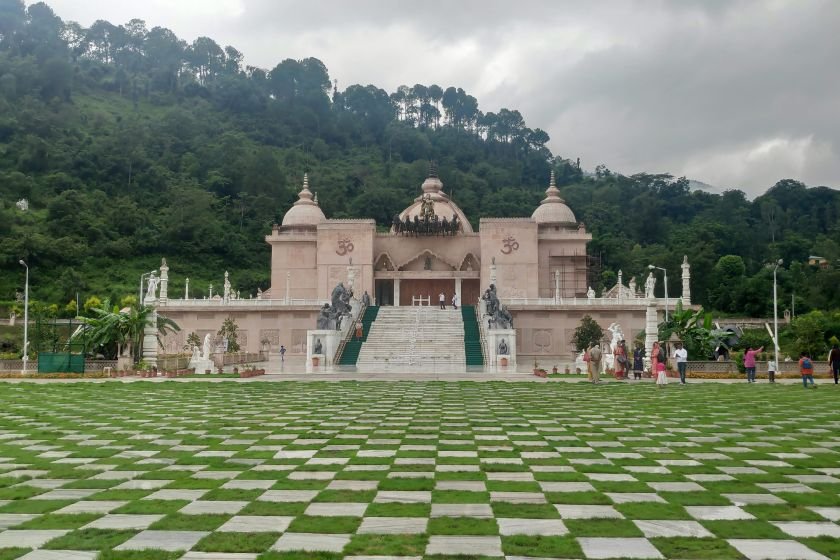
Mohan Shakti Heritage Park brings sacred imagery into an open landscape. A visit moves between a temple, sculptural figures, gardens, and views across the surrounding hills. It suits travellers interested in religious art as well as families looking for a cultural stop near Solan.
The distinction worth making at the beginning is that this is a modern heritage complex. Its subjects come from ancient religious traditions; the buildings themselves should not be mistaken for an ancient temple site. Understanding that makes it easier to appreciate the park on its own terms.
🌄 Location and how to reach it
The park is at Harat village in Solan district, in the Ashwini Khad valley. The village also appears as Hart in official visitor information. Solan’s district administration describes the approach as a diversion from Salogra on the Kalka–Shimla highway, followed by approximately 7 km towards the village.
Google Maps: Find Mohan Shakti National Heritage Park
- By road: Arrange the final approach from Solan or Salogra, checking the route with your driver. Reaching the highway turn is a separate part of the journey from reaching the park.
- By public transport: Confirm the connection from the highway and the return service before relying on a bus-based visit.
- With elderly visitors: Ask about the walk from parking, steps, and temple access. Verified wheelchair access is not established here.
Use the park’s full name when arranging transport. If a driver is dropping you off, agree on the return journey before beginning your visit.
📜 The vision behind the park
Himachal Pradesh Tourism credits Brigadier Kapil Mohan with founding the approximately 40-acre complex. The temple and grounds bring together subjects from the Vedas, Ramayana, and Mahabharata.
The intention was educational as well as devotional: to introduce Indian cultural and religious traditions through buildings, images, and a setting people could walk through. This gives the park a different character from a village shrine whose story has developed over many generations of local worship.
An important dating distinction concerns 2002. Contemporary reporting in November that year described a forthcoming foundation-stone ceremony and several proposed facilities. That account should not be used as proof that every planned building or activity was completed and opened at the same time.
🏛️ What to look for in the temple and grounds
The tourism department highlights the prominent Om symbols, Surya’s seven-horse chariot, figures of Vedic rishis, and animal sculptures. Look at how these subjects are arranged rather than treating the whole complex as a single photograph.
For families, the figures can provide starting points for conversation: which characters are familiar, which stories do children recognise, and what details distinguish one image from another? When an identity is uncertain, a label or a knowledgeable explanation is more useful than guessing.
Allow space for different kinds of visits. Someone interested in worship may spend most of their time at the temple, while a visitor interested in sculpture may move more slowly through the grounds. Neither experience needs to be rushed into a checklist.
🕰️ Timings, entry, and parking
Himachal Pradesh Tourism publishes temple hours of 7 am–8 pm, says that temple entry requires no ticket, and notes available parking. These are published visitor details, rather than a direct confirmation from the park today.
Check arrangements before a special journey. The statement about temple entry should not be stretched into a promise that every vehicle, filming activity, or additional service is free. Similarly, do not assume that a facility mentioned in an old development proposal is available during your visit.
🌸 Planning a comfortable visit
Choose daylight if you want to appreciate the outdoor setting as well as the temple. As a planning suggestion, leave around one to two hours, adjusting that allowance to your interests and walking pace; this is not an official visit duration.
Wear comfortable footwear, carry drinking water, and check the weather before leaving. If rain affects the approach or walking surfaces, adapt the visit rather than relying on a fixed itinerary.
For a school group, confirm access, toilets, vehicle arrangements, and any group requirements directly. Carry essentials instead of depending on unconfirmed shops or refreshments.
🙏 Respectful worship and photography
- Follow footwear and entrance instructions at the temple.
- Ask before photographing interiors, ceremonies, or people at prayer.
- Avoid climbing on sculptures or touching sacred objects.
- Keep voices low around worshippers and leave restricted spaces private.
- Take litter away and keep food and drinks outside areas where they are prohibited.
🏞️ Combining the visit with Solan
Solan town and Shoolini Devi Temple offer another way to explore the area’s religious life. The tourism department’s Solan guide describes Shoolini Devi as the town’s presiding deity. A visit there complements the heritage park without assuming that the two places have the same age or history.
Keep a combined outing realistic. Start with the places that interest you most and confirm journey times locally, rather than adding several distant hill destinations simply because they appear on the same map.
❓ Quick questions travellers ask
Is this an ancient temple complex?
No. It is described as a modern heritage complex whose subjects draw on older religious and cultural traditions.
Is temple entry free?
The tourism department says no temple-entry ticket is required. Confirm current arrangements and any separate charges before travelling.
Is it suitable for children?
Its cultural subjects can support a family visit. Plan around children’s walking needs and supervise them around steps and sculptures.
Are museum rooms or special programmes guaranteed?
No. Confirm any particular facility or programme before making it the reason for your journey.
A final thought
The park is best approached with time to look and ask questions. Its interest lies in the meeting of religious imagery, a modern architectural setting, and the visitor’s curiosity. A clear understanding of what is historic, what is symbolic, and what is available today makes the visit more rewarding.
Sources and references
- Himachal Pradesh Tourism: Mohan Shakti National Heritage Park — founder, extent, artistic subjects, and published temple visitor information.
- District Solan: Places of Interest — village setting and approach from Salogra.
- Times of India, 29 November 2002: Heritage Park near Solan soon — contemporary report distinguishing the foundation-stage project from completed facilities.
- Himachal Pradesh Tourism: Solan — regional context and Shoolini Devi Temple.