
Hydropower & River Projects
Dehar and Pandoh Hydroelectric Project, Mandi
How the Beas–Sutlej Link sends water across a watershed
At a glance
- Location
- Pandoh, Sundernagar and Dehar, Mandi district
- How to reach
- Mandi for Pandoh; Sundernagar for the balancing reservoir
- Walking difficulty
- Public approaches and designated viewpoints
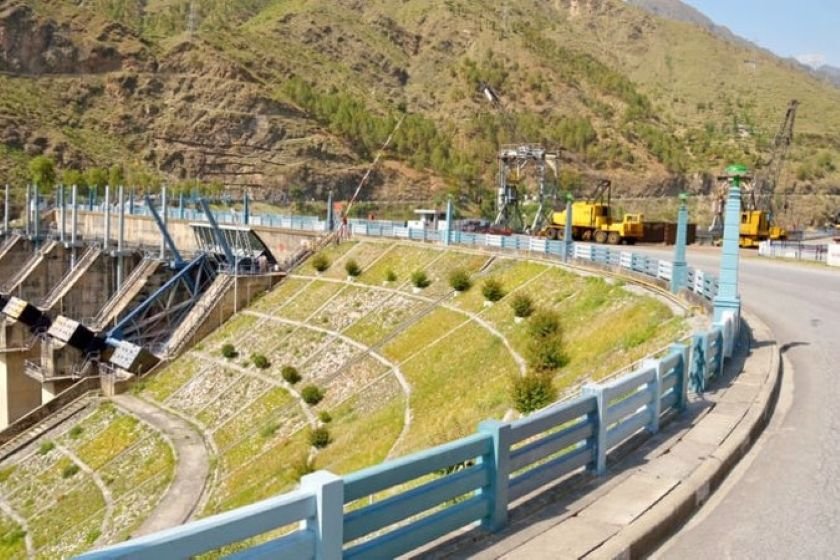
The Pandoh Dam takes water from the Beas, while the Dehar power station discharges into the Sutlej. Tunnels, a channel and the Sundernagar balancing reservoir link the two valleys.
🌄 Location and how to reach it
Pick a public destination depending on the part of the system you want to see. Pandoh lies on the Mandi–Kullu road. Sundernagar’s balancing reservoir is a separate stop and Dehar lies on the Sutlej side.
Google Maps: Map the approach
- By road: Use Mandi for the Pandoh approach and the main highway towards Sundernagar for the reservoir. Save each place separately and ask about safe stopping points.
- By public transport: Use a bus scheduled to stop in Pandoh or Sundernagar. Confirm the final drop-off before travelling to a project structure.
- On foot: Walk in public areas in town. Follow signs at channels, fences and reservoirs, and stay clear of the works and river margins.
🧭 Follow the transfer
At Pandoh, a diversion on the Beas feeds the Pandoh–Baggi tunnel. An open channel carries the water onwards to the Sundernagar balancing reservoir. From there a second tunnel and pressure system take it towards the Dehar power house. The intervening reservoir helps smooth out differences between inflow and the station’s demand.
⚙️ Where the electricity is generated
The major generating station is at Dehar, where BBMB lists six 165 MW units totalling 990 MW. The change in elevation towards the Sutlej provides the head to drive the turbines. Dehar’s outlet puts the transferred water into the Sutlej system upstream of Bhakra, where it can contribute to the wider network’s water supply.
🌊 Pandoh and Pong on the Beas
Pandoh is the diversion point for the Beas–Sutlej Link. Pong lies much farther down the Beas and creates its own large reservoir. A map of both projects shows where some of the Beas flow leaves the basin and where the river continues towards Pong.
Pong Dam and Maharana Pratap Sagar