
Temple & sacred site
Brij Raj Swami Temple, Nurpur Fort
Krishna and Mirabai in the Old Citadel
At a glance
- Location
- Inside Nurpur Fort, Nurpur, Kangra district
- How to reach
- Via the Pathankot–Dharamshala corridor to Nurpur, then enter through the fort gate
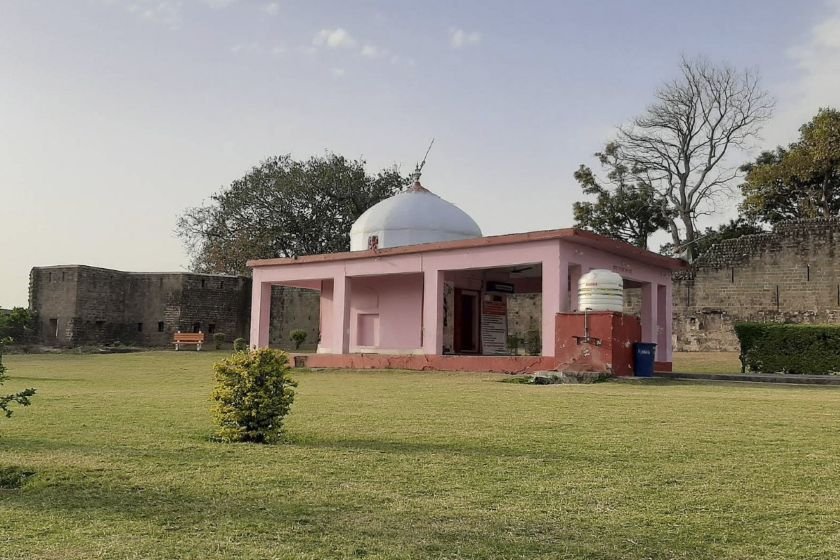
Inside Nurpur Fort, the Brij Raj Swami Temple remains a place of worship amid the ruined walls of old Dhameri.
The main reason to enter Nurpur Fort for many visitors is the Krishna shrine inside it. Kangra district describes the joint worship of Krishna and Mirabai and records carvings associated with stories of Krishna. The same walk also takes you through the remains of a Pathania stronghold.
🌄 Location and how to reach it
Brij Raj Swami Temple is inside Nurpur Fort in Nurpur town, Kangra district, on the road corridor between Pathankot and Dharamshala. The district guide puts Nurpur roughly 25–28 km from Pathankot by road.
Google Maps: Find Brij Raj Swami Temple Nurpur Fort Kangra
- By road: Follow the main road to Nurpur, then use Nurpur Fort as the destination for the last stretch. Ask where vehicles can stop before the fort entrance.
- By public transport: Ask for a bus stopping in Nurpur and confirm the best drop-off for the fort. If arriving at Pathankot Junction, arrange road transport for the onward leg.
- On foot: Enter by the public fort gate and ask for the route to the temple. Allow time for uneven surfaces and check which paths are open.
🌸 Best Time to Visit
Choose a daylight visit so you can see both the temple and the fort walls. If you are coming for darshan or a festival, check the shrine arrangements and the fort entrance separately. The fort is a protected monument and larger gatherings can have specific access arrangements.
🪔 Krishna and Mirabai
The district account describes worship of Krishna and Mirabai together in the temple. Krishna is worshipped here as Brij Raj, while Mirabai is remembered for her devotional songs and dedication to Krishna. The temple’s carved scenes give visitors another way to recognise the subject of worship. Ask which details are visible from public areas.
Kangra district’s heritage account associates the black stone image of Krishna with Raja Jagat Singh and says it came from Rajasthan during his reign. That account concerns the image’s journey. The fort walls, ruined structures and surviving place of worship each tell a different part of Nurpur’s history. For Janmashtami, ask locally where the queue starts and whether the fort authorities have changed the public approach.
🏰 The Fort of Dhameri
Kangra district records Dhameri as the fort’s older name and links the complex with the Pathania rulers. Historical accounts differ about the earliest foundation date. The visible precinct includes the remains of royal and administrative buildings as well as the temple. The district guide records damage in the 1905 earthquake.
Take time to see the change in scale between the high outer walls and the smaller worship spaces within. The fort sits above the Jabbar river, and the surrounding terrain helps explain why the site was chosen as a stronghold.
🙏 Visiting with Respect
Follow the temple’s rules on footwear and photographs, and keep the route open for worshippers. In the fort, use the permitted paths and view carvings from ground level. Some walls stand above steep slopes, so keep clear of edges and fenced sections.
❓ Quick Questions Travellers Ask
- Do I need two separate stops? The temple is within the fort. Use the public fort entrance and ask for the shrine once inside.
- Can I stop between Pathankot and Dharamshala? Yes. Allow time for the local approach and the walk through the fort.
- Do the fort and temple keep the same hours? Confirm both locally, especially if travelling for worship or a festival.
A Final Thought
Visit the shrine and then walk the parts of the fort open to visitors. In a single stop you can see how an active place of worship fits within the remains of a former hill kingdom.