
Temple & sacred site
Gyuto Tantric Monastery, Sidhbari
The Golden Monastery Where Tibet’s Tantric Chants Survived Exile
At a glance
- Location
- Sidhbari, near Dharamshala, Kangra district
- How to reach
- Arrange the Sidhbari road connection and confirm prayer-hall visitor access
Gyuto’s monastery at Sidhbari carries a centuries-old Tibetan tradition of tantric study and ritual chanting into the foothills below Dharamshala.
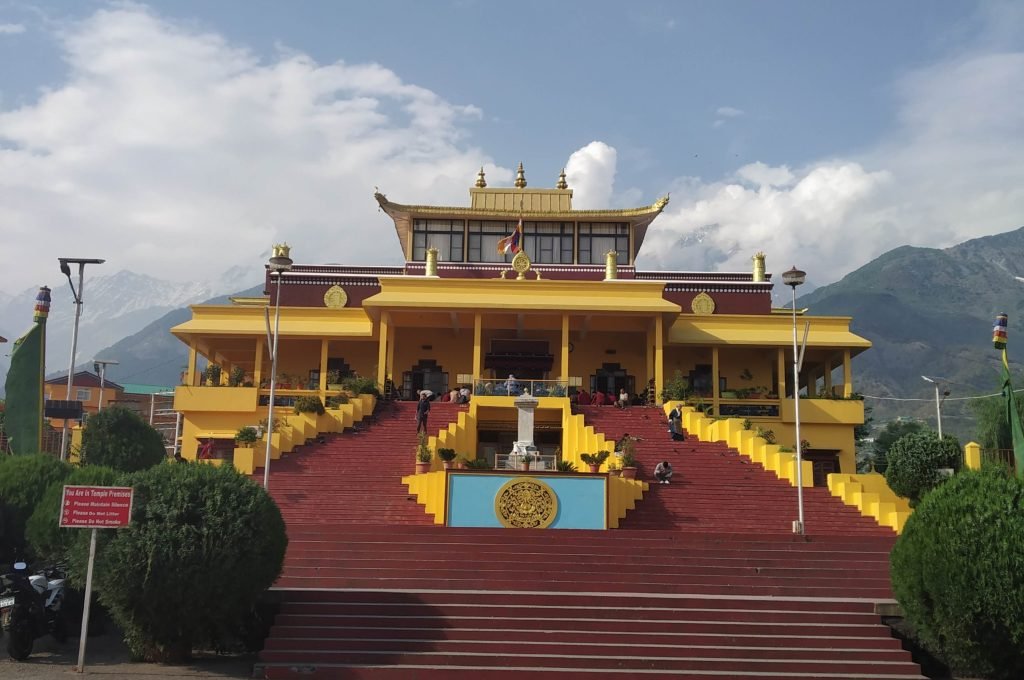
The yellow buildings of Gyuto Tantric Monastery are a familiar sight in the Dharamshala region. Behind that recognisable exterior is a specialised Gelug Buddhist institution, where the preservation of teachings depends on study, disciplined training and practice.
Many travellers first hear of Gyuto through recordings of its monks’ deep chanting. Visiting the monastery adds a setting to that sound: prayer spaces, a community of practitioners and an institution rebuilt in India after exile.
🌄 Location and how to reach it
Gyuto is at Sidhbari, near Dharamshala, in Kangra district. It is separate from the main temple complex in McLeod Ganj and from Norbulingka Institute at Sidhpur, although the latter is a possible companion visit in the wider area.
Google Maps: Find Gyuto Monastery
- By road, air or rail: Arrange road transport from your base in Dharamshala or the Kangra Valley. Gaggal/Kangra Airport is the regional airport. Travellers using broad-gauge rail can continue by road from Pathankot; check local transport connections for the day you travel.
- At the monastery: Confirm where visitors should enter and ask about stairs or other access requirements if they affect your visit.
🌸 Best Time to Visit
Spring and autumn are comfortable seasons for a Dharamshala cultural itinerary. Winter can bring clear days but cold mornings and evenings. Monsoon travel needs more flexibility because heavy rain can affect roads and walking surfaces.
If you hope to attend a prayer session, enquire about the monastery’s current visitor arrangements. Chanting is part of religious practice; it should not be treated as a performance available on demand. A recording or an old travel timetable cannot tell you what will be happening on your visit.
📜 A Tibetan Institution Rebuilt in India
Gyuto’s own history dates its foundation in Tibet to 1474, under Jey Kunga Dondrub, a disciple of the First Dalai Lama. Its name is commonly rendered as the Upper Tantric College, distinguishing it from Gyume, the Lower Tantric College.
The institution continued in India after the displacement of 1959. Its Dharamshala setting belongs to that later history. The present buildings and the much older educational lineage therefore have different ages.
This distinction makes Gyuto’s story more meaningful. What survived was a body of knowledge sustained by people: texts, ritual skills, teaching relationships and the discipline needed to pass them on.
🙏 What a Tantric College Does
Gyuto specialises in tantric Buddhist learning and practice within the Gelug tradition. Its institutional history places advanced meditation and the training of practitioners at the centre of its purpose.
For visitors unfamiliar with the term, “tantric” here refers to Vajrayana Buddhist traditions practised under qualified guidance. It is not a promise of a public experience or an activity to copy after a brief visit. Some teachings and rituals require specific preparation and permission.
The prayer hall is therefore one part of a larger educational world. An ordinary visitor can appreciate the setting while recognising that much of its meaning is learned over years rather than explained in a single tour.
🎶 The Deep Chanting Tradition
Gyuto monks are internationally known for overtone or multiphonic chanting. The unusually deep vocal sound and audible harmonics have reached audiences through recordings and tours. The monastery’s own material describes recordings of sacred rituals, placing the sound within its devotional context.
If a prayer session is open during your visit, listen from the place you are shown. Let the session continue without requests for repetition or demonstration. Recording should depend on explicit permission, not simply on other visitors holding phones.
It can be worthwhile to hear an authorised recording before you travel, then read about the institution. That preparation helps connect an arresting sound with the community and practice that sustain it.
🏛️ Looking Beyond the Yellow Façade
The monastery’s architecture provides a striking setting for a visit. Within any hall open to visitors, slow down enough to notice the arrangement of sacred images, ritual objects and places for the monastic assembly.
Observe without touching objects or stepping into spaces reserved for practitioners. An unfamiliar image is a good reason to ask a careful question when someone responsible is available, rather than invent an explanation from its appearance.
Photographs of the monastery with the Dhauladhar backdrop may be memorable, but allow some time without the camera. The building is also a workplace and a religious home for the people using it.
🪔 Religious Events and Visitor Arrangements
Access to particular halls can depend on the programme. Confirm special events directly with the monastery, and use current official announcements if you are travelling to attend a named teaching.
Gyuto is historically associated with hosting the 17th Karmapa, Ogyen Trinley Dorje. That association does not establish his present residence or make an audience available. Any visit intended around a particular teacher needs separate, current confirmation.
Dress respectfully, follow footwear instructions and keep voices low. Avoid photographing monks or worshippers at close range without asking. A quiet visit remains worthwhile even when a main hall is closed or no public prayer is taking place.
🏞️ Nearby Places
- Norbulingka Institute, Sidhpur: especially useful for understanding Tibetan sacred art and craft training.
- Chinmaya Tapovan, Sidhbari: a separate Hindu spiritual institution in the wider area.
- Tsuglagkhang, McLeod Ganj: the main temple complex associated with the Dalai Lama, reached by a separate road journey uphill.
Pairing Gyuto with Norbulingka gives two distinct perspectives on Tibetan cultural life. Leave enough time for each institution’s actual visitor arrangements.
❓ Questions Before You Go
Is Gyuto the same as Namgyal Monastery? No. They are separate institutions with different histories and responsibilities.
Why is Gyuto called a tantric monastery? It is a specialised centre of Vajrayana Buddhist education and practice within the Gelug tradition.
Will I hear chanting during every visit? That is not guaranteed. Ask about prayer sessions open to visitors on your chosen day.
Can I meet the Karmapa here? A historical association is not an audience arrangement. Consult the relevant current official schedule separately.
A Last Word
Gyuto becomes more interesting when the famous sound is connected to its source: a community maintaining a demanding tradition of learning and ritual. Visit with time to listen, and let the monastery’s own rhythm guide what you see.
Sources and Further Reading
- Gyuto Tantric Monastery: institutional history — foundation, specialisation and continuation in India.
- Stanford Ho Center for Buddhist Studies: Gyuto Monks of Tibet — the chanting tradition.
- Gyuto: recordings and historical announcements — older material, not a current audience schedule.
- Gyuto Tantric Monastery — institutional enquiries.
Photo by Himalayanlens · Wikimedia Commons · CC BY-SA 4.0
