
Temple & sacred site
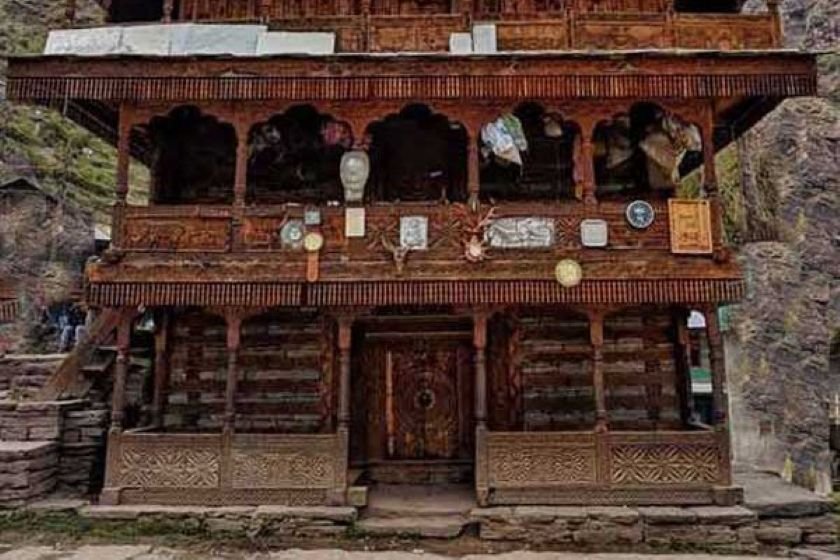
Jamlu Devta Temple, Malana
The Sacred Authority of a Himalayan Village
At a glance
- Location
- Malana village, Kullu district
- How to reach
- Via Jari; confirm the current road end and walking route before departure
Jamlu Devta’s place in Malana is understood through village worship, ceremonial authority, and boundaries that visitors must respect.
Jamlu Devta Temple belongs to the religious life of Malana in Kullu district. Its importance extends beyond the building. The deity is associated with community institutions, local ceremonies, and traditions that give the village a distinctive place within the Kullu region.
One fact should guide a visit from the outset: the official Kullu Dussehra directory states that outsiders may not enter or touch the temple. A journey to Malana is therefore a visit to permitted public parts of a village, not an invitation to inspect its sacred interior.
🌄 Location and how to reach it
Malana is approached from the Jari side of the Parvati Valley. Himachal Pradesh Tourism places the village at approximately 2,650 metres. The official deity directory lists the route through Kullu, Bhuntar, and Jari.
Google Maps: Find Malana village
- From Kullu or Bhuntar: Arrange transport towards Jari, then confirm the current Malana approach.
- From Kasol: Check the connection through the valley and agree on return arrangements.
- The last stretch: Establish where vehicles can presently reach and what walking remains. Paths, bridges, and starting points can change.
Do not base the day solely on a navigation app’s arrival time. Ask locally about the road and footpath before departure, especially after rain or disruption. A mountain-pass trek over Chanderkhani requires different preparation from a village visit.
🌸 Best time to visit
Late spring, early summer, and a clear autumn period are useful starting points for planning a journey involving mountain walking. May–June and October are commonly chosen windows, but conditions must be checked for the actual visit.
Monsoon weather can affect the approach, while winter brings the possibility of snow and ice. Carry drinking water, footwear suited to the path, rain protection, and an extra layer.
Local access arrangements matter as much as the weather. Confirm that a visit is appropriate on your chosen day and leave sufficient daylight for the return walk and drive.
🕉️ Who is Jamlu Devta?
The official directory identifies Jamlu with Jamdagni Rishi. In Malana, the deity’s significance includes the relationship between religious belief and community decision-making.
The Kullu district’s account describes village councils and the role of a Gur, a ritual intermediary through whom questions may be referred to the deity. This background helps explain why sacred rules are encountered in everyday village spaces as well as around the temple.
A visitor does not need access to those institutions to recognise their importance. Listening to a careful explanation, following notices, and respecting the residents’ privacy are more appropriate than treating local customs as a performance arranged for outsiders.
📜 Malana and the “oldest democracy” description
Malana is often introduced through a dramatic claim about being one of the world’s oldest democracies. That phrase attracts attention, but it should not be treated as a securely established global ranking.
More useful accounts describe particular institutions and the place of Jamlu within them. The district administration discusses an upper and lower council; the Indira Gandhi National Centre for the Arts also documents the connection between the village’s religious and social life.
These details give the community a history that can be discussed without relying on a superlative. Avoid turning a short encounter into a judgement about how residents should explain or preserve their traditions.
🏔️ Jamlu and the scattered deities
A legend recorded in the Kullu district’s history connects Jamlu with Chanderkhani Pass. In the story, deities carried in a basket are scattered by a strong wind, coming to rest in places where they are subsequently worshipped.
The account gives a sacred explanation for the relationship between Kullu’s valleys, settlements, and deities. Mountains become part of religious memory, and the landscape is understood through the presence of the devtas.
This is local religious tradition, rather than a literal historical description of how shrines were established. Its value lies in the connections it expresses between places and communities.
🏛️ Viewing the sacred architecture
Malana’s buildings form part of the village’s cultural interest. Their religious significance also places limits on how they may be approached.
A structure may be visible from an allowed path while its walls, platform, courtyard, or entrance remain restricted. Check where you may stand before moving closer. A photograph that requires crossing a boundary is not an appropriate part of the visit.
No independently established construction date for the present Jamlu temple is offered here. The longevity of the village’s traditions should not be used to assign the same age to every surviving building.
🎉 Festivals and ceremonial relationships
The official deity directory records Fagdi and a Shravan observance among Jamlu’s ceremonial occasions. It also describes customary arrangements associated with the deity’s participation in Kullu Dussehra.
A recorded festival is not an assurance of unrestricted access. Confirm the current calendar, the location of the observance, and whether visitors are welcome before planning a journey around it.
Some events may call for more privacy or additional restrictions. Accept the arrangements explained by the community without asking a guide to negotiate an exception.
🙏 Visitor rules and respectful behaviour
Do not enter or touch the temple. That restriction is explicit in the official visitor information. For the wider village, follow current notices and local directions.
- Remain on permitted routes and keep private entrances clear.
- Ask before photographing residents, sacred buildings, or ceremonies.
- Leave religious objects and ceremonial equipment untouched.
- Do not enter homes or enclosed courtyards without an invitation.
- Ask before initiating physical contact or handling purchases.
- Follow local guidance rather than online claims about fixed fines.
A guide can help explain boundaries, but cannot grant permission on behalf of residents or temple custodians. If an instruction is unclear, stop and ask before proceeding.
🛏️ Accommodation and the return journey
Travel reporting has described restrictions on tourist overnight stays inside Malana. Confirm the current position before travel and plan around an established base in the wider valley.
A property advertised as being near Malana may lie outside the village and involve a different approach. Ask for its exact location, road access, and return-transport options before relying on it.
Arrange the journey back before starting the walk. Leave room for delays and avoid turning a leisurely village visit into a hurried descent as daylight fades.
🏞️ Places to combine with the journey
- Jari: A useful junction for arranging the approach.
- Kasol: A possible base for a wider Parvati Valley stay.
- Manikaran: A separate pilgrimage visit farther along the valley.
- Kullu: An option for learning more about the region’s devta traditions.
Choose a manageable itinerary. High passes and multi-day treks should be planned separately, with suitable equipment, guidance, and time.
❓ Quick questions travellers ask
Can tourists enter Jamlu Devta Temple?
No. The official directory prohibits outsiders from entering or touching it.
Who is Jamlu identified with?
Jamdagni Rishi in the official Kullu Dussehra directory.
Can the temple be photographed?
Do not assume permission. Ask and remain within the permitted public areas.
Is Malana’s global historical ranking settled?
No. Its distinctive institutions are better described through their documented features than a claim to being the world’s oldest democracy.
Can I rely on an old walking-distance estimate?
No. Confirm the current road end and path before setting out.
A final thought
Jamlu’s significance is understood through the community that worships the deity. A respectful visit gives that relationship space: observing where permitted, listening without intrusion, and accepting that a meaningful encounter does not require entry to the temple.
Sources and references
- Official Kullu Dussehra directory: Jamdagni Rishi / Jamlu — identity, ceremonial occasions, and temple restrictions.
- Himachal Pradesh Tourism: Kullu — location and approach.
- District Kullu: Places of Interest — traditional community institutions.
- District Kullu: History — the Chanderkhani legend.
- IGNCA: Malana, A Lost Utopia in the Himalayas — cultural context.
- NDTV Travel: Malana’s visitor restrictions — reporting on tourist access and overnight stays; confirm present arrangements locally.