
Temple & sacred site
Kali Bari Temple, Shimla
The Goddess Behind the Hill Town’s Name
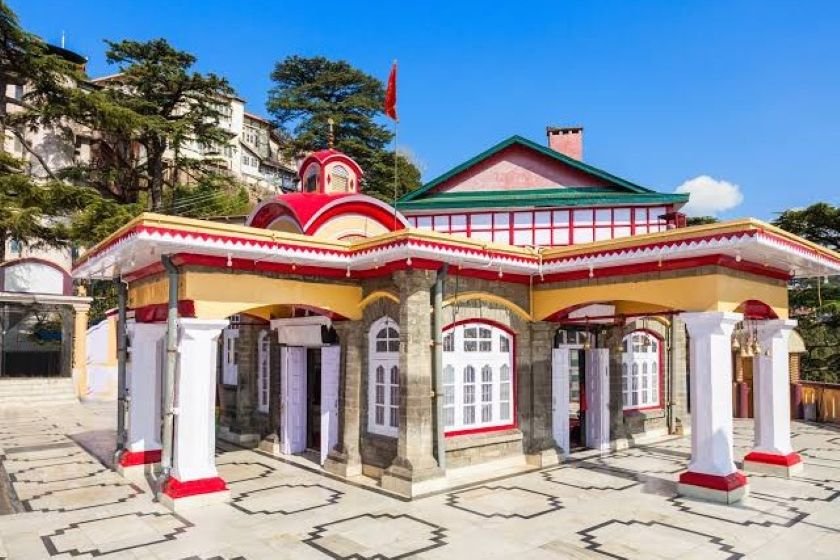
At a glance
- Location
- Central Shimla, within the Mall Road walking area
- How to reach
- Confirm the nearest permitted drop-off point and allow for slopes and steps
Kali Bari connects central Shimla with the Shyamala tradition, Bengali devotional life, and a history that extends beyond the town’s colonial landmarks.
Kali Bari Temple offers another way to understand Shimla. A walk through the hill town usually brings visitors to Mall Road, public buildings, and views from the Ridge. The temple adds the story of a goddess and the community that has maintained her worship.
The shrine is dedicated to Kali and closely associated with Shyamala Devi. That association features in an important local explanation of the town’s name. Its history, festivals, and place within everyday worship make it more than an additional stop on a sightseeing route.
🌄 Location and how to reach it
Kali Bari is in central Shimla, within the town’s walking network around Mall Road. It can be included in an outing through the heritage area, provided time is left for the approach and the temple itself.
Google Maps: Find Kali Bari Temple
- On foot: Plan the route from Mall Road or a nearby central landmark and allow for slopes.
- By vehicle: Confirm the nearest permitted drop-off point. Do not assume a taxi can reach the entrance.
- By rail: Continue from Shimla Railway Station towards the central town, arranging the walking or road connection that suits your needs.
- From an airport: Check the onward journey into Shimla and the final approach to the temple separately.
Visitors with limited mobility should ask specifically about steps, gradients, and access from the drop-off point. A location described as central can still involve a demanding walk.
🌸 Best time to visit
Spring to early summer and autumn are sensible seasons for combining darshan with walking around Shimla. March–June and September–November are useful starting windows, while actual conditions vary.
During rain, use footwear with a dependable grip and allow more time. Winter visits require preparation for cold and any snow or ice along the walking route.
An ordinary weekday may suit someone seeking a quieter visit. A festival offers a different experience, with more devotees and special arrangements. Choose according to the purpose of your journey rather than assuming both visits will feel the same.
🕉️ Kali, Shyamala, and the town’s name
The Shimla district history records a tradition connecting the town’s name with Shamla or Shyamala, associated with the goddess. It also preserves another explanation involving Shyamalaya.
The goddess-name account is therefore best presented as a prominent local tradition, rather than a conclusively settled linguistic origin. Its importance does not depend on dismissing every other explanation.
For a traveller, the tradition brings the town’s religious memory into the foreground. The hill station was shaped by colonial development, but its identity also includes older sacred associations and continuing devotion.
📜 Why published foundation dates differ
State tourism information commonly gives 1845 for Kali Bari’s establishment. A published account drawing on a temple representative describes an earlier shrine in 1823 and a trust formed in 1902.
These dates may refer to different phases of the shrine’s development, but the available accounts do not establish a complete sequence. They should not be joined into a precise relocation or rebuilding story without supporting records.
The careful description is of a historic temple with nineteenth-century roots and a longstanding Bengali association. Keeping uncertainty about a particular date is more useful than choosing the one that makes the temple sound oldest.
🌺 A Bengali connection in the hills
Kali Bari’s Bengali association is an important part of its community history. Worship carried by residents and visitors became part of the religious life of Shimla, while the temple offered a familiar setting for those arriving in the hills.
That relationship can be understood through festivals, shared worship, and the continuing use of the shrine. It is a reminder that a place acquires meaning through the people who return to it, not only the age of its walls.
Visitors interested in this history should ask questions at an appropriate moment. Temple staff may be able to explain particular customs, but daily worship and preparations take priority over a sightseeing enquiry.
🎉 Durga Puja and other observances
Durga Puja has a documented place in Kali Bari’s religious and cultural life. A 2018 report describes worship, prasad distribution, cultural activities, Sindoor Khela, and traditional drumming, alongside other observances associated with the temple.
Such reporting gives a picture of an established festival tradition, rather than a programme for the current year. Confirm the dates, timings, and arrangements for the visit you are planning.
If attending a busy observance, leave additional time for access and queues. Ask how visitors may take part, where to wait, and whether a particular activity is open to everyone present.
🏛️ Experiencing the temple as a place of worship
Leave time to enter quietly and understand how the space is being used. A visit can include darshan, a period of prayer, or simply learning about the temple’s place in the town.
Do not let a photography plan determine how close you move to the deity or an ongoing ritual. The appropriate viewing position may differ from the place that gives the clearest image.
The setting also invites a pause in a walking day. Keep entrances clear and avoid occupying spaces needed by worshippers. If you want to make an offering, ask staff about the arrangements followed at this temple.
🙏 Opening hours and visitor arrangements
No dependable current official daily timetable has been established for this guide. Public listings offer different hours, so check directly before a special journey for darshan or aarti.
The same care applies to meals, accommodation, and festival facilities. A past visitor’s experience is not confirmation that the service is available today or can be booked through an unrelated listing.
A host in Shimla may be able to help establish the day’s arrangements. Allow for the walking approach and any queue as well as the time spent inside the temple.
📷 Etiquette and practical care
- Follow instructions about footwear, clothing, and entry.
- Ask before photographing the deity, sanctum, rituals, or other worshippers.
- Keep voices low and avoid blocking the movement of devotees.
- Ask staff about offerings, donations, and participation in observances.
- Keep the grounds clean and follow the arrangements made for busy days.
Plan the visit around your own walking pace. A short distance in Shimla can involve a slope, and a comfortable itinerary leaves room for rests and changes in the weather.
🏞️ Places to combine with Kali Bari
- Mall Road and Scandal Point: Useful connections within the central walking area.
- The Ridge: An open landmark for understanding the town’s layout.
- Christ Church: Another important place of worship, with its own visitor arrangements.
- Gaiety Heritage Cultural Complex: A separate stop for architectural and cultural interest.
- Jakhoo Temple: An uphill excursion that needs its own allowance of time and effort.
Select a few places that fit comfortably. A temple visit is more rewarding when it does not have to be completed between a string of hurried photo stops.
❓ Quick questions travellers ask
Which goddess is worshipped here?
Kali, with a close association with the Shyamala tradition.
Is Shimla definitely named after Shyamala Devi?
That is an important local explanation recorded by the district administration, which also mentions an alternative origin.
Was the temple established in 1823 or 1845?
Both dates occur in published accounts. The surviving evidence should be described carefully instead of forced into one sequence.
Can a vehicle take me to the entrance?
Confirm the nearest permitted drop-off point and expect a walking approach.
Can I attend Durga Puja?
Ask the temple about the current programme and visitor arrangements.
A final thought
Kali Bari belongs to Shimla’s continuing life as much as its history. The goddess tradition, the Bengali connection, and the return of worshippers give it a place in the town that is best understood by visiting with time and attention.
Sources and references
- District Shimla: History of Shimla Town — the goddess-name tradition and alternative explanation.
- Himachal Pradesh Tourism: Shimla — the commonly published foundation date and Bengali association.
- Ministry of Tourism: Himachal Pradesh guide — location and visitor context.
- The Statesman, 2018: Shimla Kali Bari’s Durga Puja — a temple representative’s account of early history and festival traditions.
- Incredible India: Exploring Shimla on foot — the central walking itinerary.