
Travel guide
Khab Confluence Kinnaur
Where the Spiti Meets the Sutlej
At a glance
- District
- Kinnaur
- Khab Confluence marks the sacred meeting point of Spiti and Sutlej rivers near the Indo-Tibet border
- Located 32 km from Pooh on the Hindustan-Tibet Highway at approximately 2,590 meters altitude
- Best visited between May to October when roads are open and weather is favorable
- Inner Line Permit required for travel beyond Jangi as you’re approaching the restricted border area
- Limited accommodation available; stay options in nearby Pooh, Nako, or Spillo village recommended
- Introduction
- Quick Facts About Khab Confluence
- Why Visit Khab Confluence
- How to Reach Khab Confluence
- Best Time to Visit Khab Confluence
- Top Things to Do in Khab Confluence
- Where to Stay in Khab Confluence
- Local Food & Cuisine
- Practical Travel Tips for Khab Confluence
- Final Thoughts
- Frequently Asked Questions
Introduction
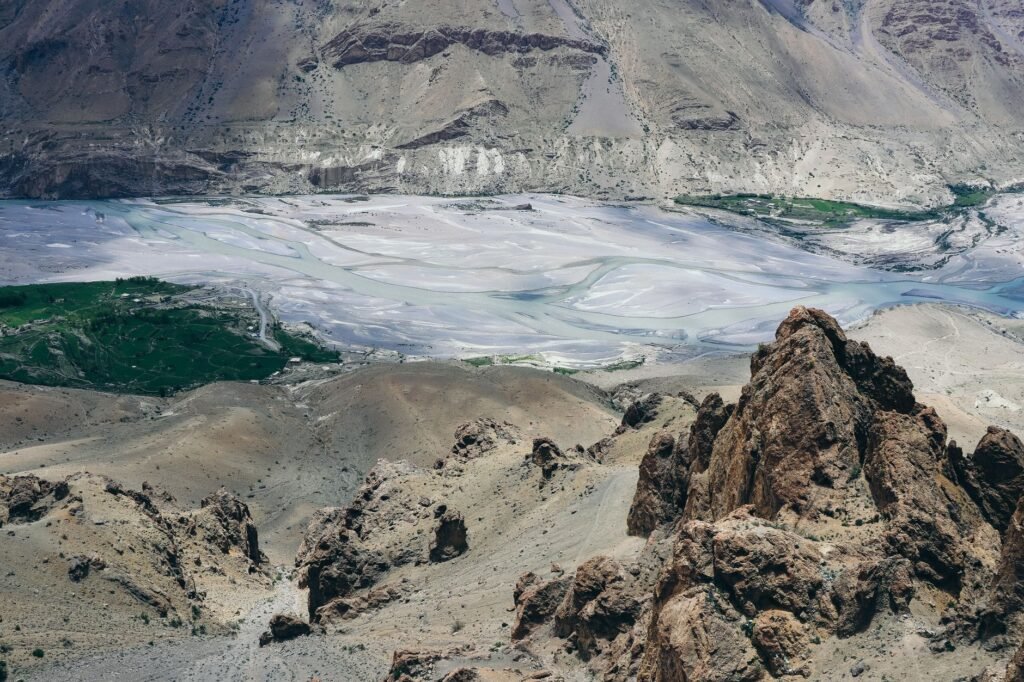
In the remote and mystical terrains of Kinnaur district in Himachal Pradesh, where the landscape transforms from verdant valleys to stark, barren mountains, lies one of nature’s most dramatic spectacles—the Khab Confluence. This is where the mighty Spiti River, having journeyed through the cold desert landscapes of Spiti Valley, surrenders itself to the powerful Sutlej River in a mesmerizing display of natural force and beauty. The word ‘Khab’ itself means confluence in the local dialect, and this extraordinary meeting point of two Himalayan rivers creates a visual symphony that leaves every traveler spellbound.
Located approximately 90 kilometers from Pooh and roughly 230 kilometers from Shimla, Khab represents more than just a geographical landmark. It marks the symbolic gateway between the lush, green valleys of Kinnaur and the stark, moon-like landscapes of Spiti. The confluence sits at an altitude where the character of the mountains changes dramatically—where the last traces of greenery give way to the austere beauty of the Trans-Himalayan region. The contrasting colors of the two rivers—the muddy brown waters of the Sutlej meeting the clearer waters of the Spiti—create a natural canvas that photographers and nature enthusiasts dream about.
What makes Khab Confluence truly exceptional is its position on one of India’s most spectacular road journeys—the route that connects Kinnaur to Spiti Valley. This location serves as a natural pause point for travelers, a place to contemplate the raw power of nature while surrounded by towering mountains that seem to touch the sky. Despite its remote location, Khab has become an increasingly popular destination for those seeking authentic Himalayan experiences, away from the commercialized tourist circuits.
Quick Facts About Khab Confluence
- Altitude
- 2,620 meters (8,596 feet)
- Best Time to Visit
- May to October (Road accessible)
- Distance from Shimla
- Approximately 230 km
- Distance from Pooh
- Approximately 90 km
- Nearest Airport
- Shimla Airport (Jubbarhatti) – 240 km; Chandigarh Airport – 450 km
- Nearest Railway Station
- Kalka – 365 km
- Permits Required
- Inner Line Permit for Indian nationals (₹200-500), Protected Area Permit for foreigners
- Temperature Range
- Summer: 10°C to 25°C; Winter: -15°C to 5°C
- Approximate Budget per Day
- ₹1,500 – ₹3,000 (Budget); ₹3,000 – ₹6,000 (Mid-range)
- Mobile Network Coverage
- Limited BSNL connectivity; Airtel/Jio sporadic
Why Visit Khab Confluence
Khab Confluence is not merely a point where two rivers meet—it’s a geographical phenomenon that showcases the raw, untamed beauty of the Himalayas in its purest form. The unique appeal of Khab lies in its position at the ecological and cultural crossroads between two distinct Himalayan landscapes. As you stand at the confluence, you’re literally witnessing the meeting point of two different worlds: the relatively greener, more forested regions of lower Kinnaur represented by the Sutlej, and the arid, desert-like terrain of Spiti Valley carried by the Spiti River.
The visual spectacle of the confluence is extraordinary. The Spiti River, often carrying glacial silt, displays a distinctive bluish-gray color, while the Sutlej flows with a deeper, brownish hue. When these waters collide, they create a swirling pattern that remains visible for several hundred meters downstream. During the summer months when both rivers are in spate from glacial melt, the force of the confluence creates turbulent waters and a continuous roar that echoes through the valley. This natural power display is both humbling and exhilarating.
What sets Khab apart from other Himalayan destinations is its pristine, uncommercial character. There are no chai stalls cluttering the landscape, no vendors selling souvenirs, and no crowds jostling for the perfect photograph. Instead, you’ll find a small cluster of traditional houses, a Buddhist monastery perched on the hillside, and prayer flags fluttering in the mountain breeze. This authenticity makes Khab a rare gem in an increasingly commercialized tourism landscape. The area around the confluence also serves as an excellent vantage point for understanding the geological history of the region, with exposed rock formations telling stories of millions of years of tectonic activity.
For photography enthusiasts, Khab offers unparalleled opportunities. The changing light throughout the day transforms the landscape dramatically—from the soft golden hues of dawn illuminating the mountains, to the harsh midday light that accentuates the stark terrain, to the magical evening light that paints the entire valley in warm tones. The surrounding mountains provide a magnificent backdrop, with peaks rising to over 5,000 meters creating a dramatic amphitheater around the confluence.
How to Reach Khab Confluence
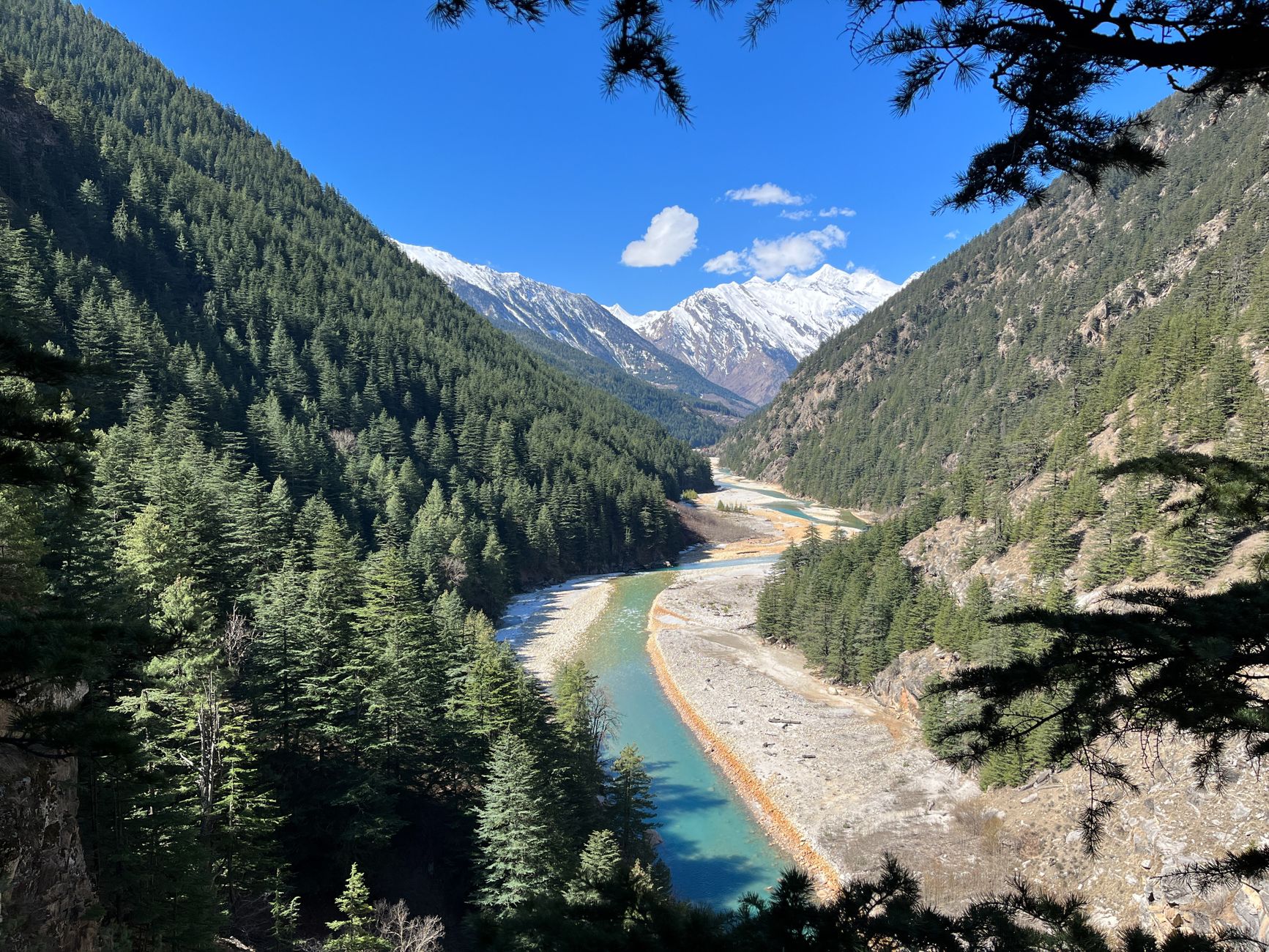
By Road from Shimla: The most common route to Khab is via the NH-5 (now renumbered as NH-505) from Shimla. The journey covers approximately 230 kilometers and typically takes 10-12 hours due to the mountainous terrain and road conditions. You’ll pass through Rampur Bushahr (130 km from Shimla), Sarahan (170 km), and Pooh (320 km total from Shimla, then back 90 km to Khab). The route offers spectacular views of the Sutlej River and numerous picturesque villages. Private taxis from Shimla to Khab cost between ₹8,000 to ₹12,000 for a one-way trip. Shared taxis are available from Rampur to Pooh (₹500-700 per person) and then to Khab (₹200-300 per person).
By Road from Manali: The alternative route is via Manali through Spiti Valley, covering approximately 360 kilometers to reach Khab. This route takes you through Rohtang Pass (now accessible via Atal Tunnel), Kunzum Pass, and down through the Spiti Valley, entering Khab from the north. This journey typically takes 14-16 hours and costs ₹15,000-20,000 by private taxi. This route is only accessible from June to October due to snow conditions at the high passes.
By Bus: HRTC (Himachal Road Transport Corporation) operates regular bus services from Shimla to Pooh (₹400-600 for semi-deluxe services). The journey takes approximately 12-14 hours with an overnight halt often required at Rampur or Sarahan. From Pooh, local buses or shared jeeps can be hired to Khab (₹150-250 per person). Buses depart Shimla early morning (around 5:00 AM) to ensure reaching Pooh before nightfall.
By Air: The nearest functional airport is Shimla’s Jubbarhatti Airport, located about 240 km from Khab. However, flights to Shimla are limited and weather-dependent. Chandigarh International Airport (450 km from Khab) is a more reliable option with better connectivity to major Indian cities. From Chandigarh, you can hire a taxi (₹10,000-14,000) or take a bus to Shimla (₹300-500) and then continue to Khab. Delhi’s Indira Gandhi International Airport (550 km) is another option with the most flight connections.
By Train: The nearest major railway station is Kalka, located 365 km from Khab. Kalka is well-connected to Delhi, Chandigarh, and other major cities. From Kalka, you can take the famous Kalka-Shimla toy train (a UNESCO World Heritage route) to Shimla (₹400-1,200 depending on class, 5-6 hours), or hire a taxi directly to Khab (₹12,000-16,000). The toy train journey, while scenic, adds considerable time to your trip.
Best Time to Visit Khab Confluence
May to June (Late Spring to Early Summer): This is considered one of the best periods to visit Khab Confluence. The winter snow has melted, making the roads accessible, though some patches of snow may still linger on higher passes. Daytime temperatures range from 15°C to 25°C, making it comfortable for exploration. The rivers are swollen with glacial melt, making the confluence particularly dramatic and powerful. The surrounding mountains are clearly visible, and the lower altitude areas begin to bloom with wildflowers. Tourist numbers are moderate, and accommodation is readily available. This is an excellent time for photography as the landscape is fresh and vibrant.
July to August (Monsoon Season): While the inner Himalayas around Khab receive less monsoon rain than lower regions due to being in a rain shadow area, this period can still be tricky. The main concern isn’t heavy rainfall at Khab itself, but rather landslides and road blockages on the approach routes, particularly between Shimla and Rampur. If you’re traveling during this time, build flexibility into your schedule. The confluence is at its most powerful and turbulent during these months. Daytime temperatures hover around 20°C to 25°C, with cooler nights at 10°C to 15°C. Tourist crowds thin out considerably, and you might have the confluence almost to yourself.
September to October (Autumn): This is arguably the finest time to visit Khab Confluence. The monsoons have cleared, leaving crystal-clear skies and exceptional visibility. The surrounding peaks, including distant snow-covered mountains, are visible in stunning clarity. Daytime temperatures range from 10°C to 20°C, with nights getting progressively colder as October advances (5°C to 10°C). The light during this period is extraordinary—crisp and golden, perfect for photography. The rivers begin to settle down from their monsoon fury, and the distinct colors of the two rivers become more apparent. The apple harvest season in lower Kinnaur adds cultural interest to your journey. By late October, you must be prepared for the possibility of early snowfall.
November to April (Winter): The region becomes largely inaccessible during these months. Heavy snowfall blocks the roads, particularly at higher passes. The confluence itself can be reached if you’re already in the region before the first heavy snowfall, but it’s not recommended for regular tourists. Temperatures plummet to -15°C to -20°C at night, with daytime highs barely reaching 0°C to 5°C. The rivers freeze partially, creating a completely different but equally spectacular sight. Only experienced winter travelers with proper equipment and local guides should attempt a winter visit. All tourist facilities close down during this period.
Top Things to Do in Khab Confluence
Witness the Dramatic Meeting of Rivers
The primary attraction is, of course, standing at the viewpoint and watching the Spiti and Sutlej rivers merge in a powerful display of nature’s force. Spend time observing how the two differently colored waters swirl and mix, creating patterns that constantly change. The best viewing times are early morning when the light is soft and the air is clear, and during the golden hour before sunset when the entire landscape glows. The roar of the confluence during peak flow season (June-August) is an unforgettable auditory experience that complements the visual spectacle.
Visit the Hu-Bu-Lan-Kar Monastery
Perched on a hillside overlooking the confluence sits the ancient Hu-Bu-Lan-Kar Monastery, a small Buddhist gompa that offers spiritual solace and spectacular views. The monastery, though modest in size, holds significant religious importance for the local Buddhist community. Inside, you’ll find beautiful thangka paintings, prayer wheels, and a serene meditation hall. The monks are usually welcoming to visitors, and if you time your visit right (early morning or evening), you might witness prayer ceremonies accompanied by traditional instruments. The 20-minute uphill walk to the monastery is steep but rewarding, offering panoramic views of both rivers and the surrounding mountains.
Photography Expeditions
Khab Confluence is a paradise for photographers, offering diverse subjects from landscape to cultural photography. Beyond the obvious confluence shots, explore the nearby villages where traditional Kinnauri and Spitian architecture creates compelling images. The changing light throughout the day transforms the landscape dramatically, so plan multiple photography sessions. During summer, the contrast between the barren mountains and the river valleys creates striking compositions. Use a polarizing filter to cut through the harsh midday light and enhance the colors of the rivers. The surrounding cliffs and rock formations also provide excellent opportunities for geological and abstract photography.
Explore Nearby Villages
The small settlement around Khab and neighboring villages like Chango and Malling offer insights into the traditional lifestyle of this remote region. The houses here display distinctive Kinnauri and Spitian architectural styles, with stone walls, wooden balconies, and slate roofs. Interact with locals who maintain a lifestyle largely unchanged for centuries, dependent on subsistence farming and livestock. You might witness traditional agricultural practices, see locals weaving traditional garments, or observe the unique method of drying vegetables and fruits for the harsh winter months. Remember to be respectful when photographing people and always ask permission first.
Trekking and Nature Walks
The area around Khab offers several trekking opportunities ranging from easy walks to challenging multi-day treks. A popular short trek leads upstream along the Spiti River for about 3-4 kilometers, offering changing perspectives of the valley and the confluence. More adventurous trekkers can attempt the trail toward Sumdo or explore the valleys branching off from the main confluence area. The terrain is challenging with loose rocks and steep gradients, so proper trekking shoes and adequate acclimatization are essential. These walks also offer excellent opportunities for bird watching, with species like the Himalayan Griffon, Lammergeier, and various high-altitude species frequently spotted.
Stargazing and Astrophotography
The remote location of Khab, far from any significant light pollution, combined with the high altitude and generally clear skies (especially in autumn and spring), creates exceptional conditions for stargazing. On a clear night, the Milky Way is visible in spectacular detail, and countless stars illuminate the sky in a display that most city-dwellers have never experienced. Bring a good quality flashlight, warm clothes, and if you’re into astrophotography, your camera equipment. The silhouette of the mountains against the star-filled sky creates magical photo opportunities. The best stargazing months are September through November when the skies are clearest and the nights are long.

Where to Stay in Khab Confluence
Budget Accommodation (₹500-1,500 per night): Accommodation options at Khab itself are extremely limited and basic. The small village has a couple of local homestays that offer simple rooms with basic amenities. Chango Homestay and Khab Village Homestay are two local options where you’ll sleep in traditional rooms, share bathrooms, and eat home-cooked local meals with the family (₹500-800 per person including meals). These homestays rarely take advance bookings and operate on a first-come, first-served basis. For more reliable budget options, consider staying in Nako (45 km from Khab), where guesthouses like Nako Heritage Homestay (₹800-1,200) and Hotel Tara (₹1,000-1,500) offer basic but clean rooms with attached bathrooms and hot water.
Mid-range Accommodation (₹2,000-4,500 per night): The nearest town with decent mid-range accommodation is Pooh (Puh), located about 90 km from Khab. Hotel Mount Kailash in Pooh (₹2,500-3,500) offers comfortable rooms with modern amenities, hot water, and an in-house restaurant serving decent Indian and Himachali cuisine. Another option is Hotel Pankaj Grand (₹2,000-3,000) which provides clean rooms and helpful staff who can arrange local transportation. In Nako, Nako Lake Resort (₹3,000-4,000) offers more comfortable accommodation with better facilities and stunning views of Nako Lake. Some travelers prefer staying in Kalpa (100 km from Khab), where Apple Pie Hotel (₹3,500-4,500) and Hotel Kinner Villa (₹2,500-3,500) provide excellent comfort with spectacular Kinner Kailash views.
Luxury/Comfortable Options (₹5,000+ per night): True luxury accommodation doesn’t exist in the immediate vicinity of Khab, but Kalpa offers the best upscale options in the region. Hotel Kinner Kailash (₹5,000-7,000) provides the most comfortable rooms with modern amenities, valley views, and professional service. The Rupin River View Kalpa (₹6,000-8,000) offers boutique-style rooms with contemporary interiors and excellent food. For those planning the journey from Spiti side, staying in Kaza and doing Khab as a long day trip is an option. Spiti Heritage Hotel in Kaza (₹5,500-7,500) and The Himalayan Cafe & Homestay (₹4,500-6,000) offer comfortable accommodation with modern facilities.
Camping: Some travelers, particularly bikers and adventure enthusiasts, choose to camp near Khab. While there are no organized campsites, you can pitch tents near the confluence with permission from locals (₹200-500 as goodwill gesture). Ensure you carry all necessary camping equipment including warm sleeping bags rated for sub-zero temperatures (even in summer, nights can be cold). Always practice responsible camping—carry out all waste, don’t disturb the natural environment, and be mindful of the sacredness of the rivers to local communities.
Local Food & Cuisine
The cuisine in and around Khab reflects the high-altitude, harsh-climate lifestyle of the region, with influences from both Kinnauri and Spitian food traditions. The food is hearty, warming, and designed to provide energy in the cold mountain environment.
Must-Try Dishes: Thukpa is a staple—a hearty noodle soup with vegetables or meat, perfectly suited for the cold climate. The local version is often richer and spicier than the standard Tibetan preparation. Siddu, a steamed bread stuffed with poppy seeds, walnuts, or jaggery, is a Kinnauri specialty that makes for a filling breakfast or snack. Chana Madra, a creamy chickpea curry cooked with yogurt and spices, represents the more Hindu-influenced Kinnauri cuisine and is delicious with local rice or bread. Khambir, a local whole wheat bread baked in a traditional clay oven, is typically served with butter tea (Namkeen Chai) or local apricot jam. The region is also famous for Chhang, a local barley beer that’s mildly alcoholic and quite refreshing after a long day of travel—though travelers should be cautious about drinking alcohol at high altitudes.
Where to Eat: Dining options at Khab itself are virtually non-existent beyond homestay meals. If staying at a local homestay, you’ll be served traditional meals cooked by your hosts (₹200-400 per meal), which is actually the most authentic culinary experience you can have. The meals are simple but wholesome—usually dal, rice, local vegetables, and sometimes mutton or chicken if available.
In Pooh, Hotel Mount Kailash Restaurant offers the most reliable dining with a mix of North Indian, Chinese, and local Himachali dishes (₹150-350 per meal). The Pooh Dhaba, located on the main road, serves good value meals including thali options (₹120-200). In Nako, Nako Cafe near the lake serves decent Tibetan food including momos, thukpa, and fried rice (₹100-250 per dish).
Many travelers stop at Kalpa for meals before or after visiting Khab. Hotel Kinner Villa Restaurant offers excellent local Himachali cuisine alongside North Indian and Chinese options in a cozy setting with great views (₹200-450 per meal). Blue Lotus Cafe in Kalpa is popular among backpackers for its relaxed atmosphere, good coffee, and decent food including pizzas, pasta, and local dishes (₹150-350 per dish).
Important tip: Carry energy bars, nuts, dried fruits, and drinking water during your journey to and from Khab, as food options on the route can be limited and unreliable. The small roadside dhabas that do exist offer basic but hot food—usually parathas, dal, rice, and chai (₹50-150 per meal).

Practical Travel Tips for Khab Confluence
Permits and Documentation: Indian nationals require an Inner Line Permit (ILP) to visit the Kinnaur-Spiti region. These can be obtained from the SDM offices in Shimla, Rampur Bushahr, Kaza, or at the Reckong Peo check post. The permit costs approximately ₹200-500 per person and requires two passport-size photographs and a photocopy of your government ID. The permit is typically valid for 7 days but can be extended. Applications can also be made online through the Himachal Pradesh government portal, though obtaining it in person is usually faster. Foreign nationals require a Protected Area Permit (PAP) or Inner Line Permit for foreigners, which must be obtained from the District Magistrate’s office in Shimla or through registered travel agents. Foreign permits cost around ₹500-1,000 and require photocopies of your passport and Indian visa, plus two photographs. Groups of two or more foreigners travel together on a single permit. Keep multiple copies of your permits as you’ll need to show them at several check posts.
Mobile Network and Connectivity: Mobile network coverage at Khab is extremely limited. BSNL provides the most reliable coverage in this region, with sporadic signal availability. Airtel and Jio may work intermittently at certain spots, but don’t count on it. Even BSNL coverage can be unpredictable. There is no Wi-Fi or internet connectivity at Khab itself. The nearest reliable internet access is in Pooh or Nako. It’s advisable to inform family and friends that you’ll be out of contact for the duration of your visit. Download offline maps before entering the region, and carry a physical map as backup.
ATMs and Cash: There are no ATMs at Khab or in the immediate vicinity. The nearest ATM is in Pooh (90 km away), where you’ll find State Bank of India and Punjab National Bank ATMs, though these frequently run out of cash or face technical issues. More reliable ATMs are available in Reckong Peo (115 km from Khab). Carry sufficient cash in small denominations (₹500 and below) for your entire trip, plus a substantial emergency reserve. Budget at least ₹5,000-7,000 per person for a 2-3 day trip including accommodation, food, and local transport. Credit cards are virtually useless in this region.
Medical Facilities: Medical facilities in this remote region are minimal. Khab has no medical facilities whatsoever. The nearest Primary Health Center is in Chango (20 km) which can handle only basic ailments. The nearest hospital with reasonable facilities is in Pooh (90 km), and for any serious medical emergency, you’d need to reach Reckong Peo (115 km) or return to Shimla (230 km). It’s absolutely essential to carry a comprehensive first-aid kit including medicines for altitude sickness (Diamox), pain relievers, anti-diarrheal medication, bandages, antiseptic cream, and any personal prescription medications. If you have any pre-existing medical conditions, consult your doctor before attempting this trip and carry a doctor’s note with your medical history.
Altitude Considerations and Acclimatization: While Khab at 2,620 meters isn’t extremely high altitude, the rapid ascent from lower elevations can cause mild altitude sickness symptoms including headaches, nausea, and shortness of breath. If approaching from Shimla, you’ll gain altitude relatively gradually, which helps with acclimatization. However, if you’re coming from Spiti (descending from higher passes), you might still experience issues. Stay well-hydrated, avoid alcohol for the first day, don’t over-exert yourself, and ascend gradually if possible. Spending a night in Pooh or Nako before visiting Khab can help with acclimatization. If you experience severe symptoms like confusion, difficulty breathing even at rest, or persistent vomiting, descend immediately and seek medical help.
What to Pack: Pack in layers for dramatically varying temperatures. Essential items include: warm jacket (even in summer, evenings are cold), thermal wear, woolen cap and gloves, comfortable trekking shoes with good grip, sunglasses with UV protection, high SPF sunscreen (the sun at this altitude is intense), lip balm with SPF, flashlight or headlamp with extra batteries, water bottle (preferably insulated), power bank for devices, basic toiletries (not available locally), toilet paper, wet wipes, hand sanitizer, and your first-aid kit. If camping, add appropriate gear including a four-season sleeping bag. Carry a sturdy backpack rather than a wheeled suitcase—the terrain doesn’t accommodate rolling luggage.
Safety Tips: The roads to Khab are narrow, winding, and can be dangerous. If driving yourself, ensure your vehicle is in excellent condition and you’re experienced with mountain driving. Hire local drivers who know the terrain if possible. Always wear seatbelts. Keep your vehicle well-maintained and carry a spare tire, jack, and basic tools. The weather can change rapidly—carry warm, waterproof clothing even if the day starts clear. Be cautious around the confluence itself; the rocks can be slippery and the currents are extremely powerful. Never attempt to wade into either river. Keep emergency contact numbers saved (and written down in case your phone dies): Police: 100, Ambulance: 108, Kinnaur DC office: +91-1786-222264.
Responsible Tourism: This pristine region is fragile both environmentally and culturally. Practice strict “leave no trace” principles—carry all your trash back with you (there’s no waste management at Khab). Don’t use plastic bottles; carry reusable bottles and purification tablets or filters. The rivers are sacred to local communities; treat them with respect and never pollute them. When visiting monasteries, dress modestly, ask permission before photographing, remove shoes before entering prayer halls, and walk clockwise around stupas and mani walls. Don’t pick plants or disturb wildlife. If photographing locals, always ask permission first and respect if someone declines. Consider shopping for local handicrafts and dried fruits from villages to support the local economy. Hire local guides and use local homestays when possible—your tourism spending should benefit local communities directly.
Best Practices for the Journey: Start early in the morning for any road journey—most of the drive to Khab should be completed in daylight as nighttime mountain driving is dangerous. Keep your permits accessible as you’ll be checked at multiple points. Carry sufficient drinking water and snacks, as roadside facilities are few and far between. Inform your accommodation about your expected arrival and departure times. If trekking or exploring, tell someone your plans and expected return time. Check road conditions before departing—landslides can close roads with little warning during monsoon season. Border Roads Organization (BRO) maintains these roads; their local offices can provide current road status information.
Final Thoughts
Khab Confluence represents the essence of Himalayan travel—remote, raw, and utterly magnificent. This isn’t a destination for those seeking comfortable luxury or Instagram-ready tourist infrastructure. Instead, it rewards the intrepid traveler with something increasingly rare in our connected world: genuine remoteness and pristine natural beauty unmarred by commercial tourism. Standing at the confluence, watching two powerful rivers merge while surrounded by towering peaks, offers a perspective that simply cannot be replicated elsewhere. The journey to reach Khab—whether through the green valleys of Kinnaur or down from the stark landscapes of Spiti—is as rewarding as the destination itself, taking you through some of the most spectacular Himalayan scenery India has to offer.
If you’re yearning for an authentic Himalayan experience that combines natural grandeur, cultural richness, and the thrill of exploration, Khab Confluence should be on your travel list. Pack your bags with appropriate gear, obtain your permits, brace yourself for basic facilities and long journeys, and set out to discover this hidden gem. Whether you’re a photographer seeking that perfect shot, a nature lover drawn to raw landscapes, a spiritual seeker looking for quiet contemplation, or simply an adventurer hungry for roads less traveled, Khab will deliver an experience that lingers in your memory long after you’ve returned to civilization. The confluence of the Spiti and Sutlej rivers awaits—a testament to the timeless, unstoppable force of nature carved into the heart of the Himalayas.
- Stop at the designated viewing point just before Khab village for the best panoramic view of the confluence with minimal traffic
- Carry sufficient cash as there are no ATMs between Pooh and Tabo; mobile network is extremely patchy
- Visit early morning between 6-8 AM for clearer river color differentiation and better photography lighting
- Keep your Inner Line Permit and ID proofs readily accessible as there are multiple checkpoints near the border
- Fuel up at Pooh as it’s the last reliable petrol pump; carry extra fuel if heading further into Spiti Valley
Frequently Asked Questions about Khab Confluence
Khab Confluence is the dramatic meeting point where the Spiti River merges with the Sutlej River in the remote Kinnaur district of Himachal Pradesh, India. Located at an altitude of 2,620 meters (8,596 feet), approximately 230 km from Shimla and 90 km from Pooh, this natural spectacle marks the symbolic gateway between the green valleys of Kinnaur and the stark landscapes of Spiti Valley.
The best time to visit Khab Confluence is from May to October when the roads are accessible and weather conditions are favorable. During summer months, temperatures range from 10°C to 25°C, making it ideal for travel and photography, while winter temperatures can drop to -15°C with road closures.
Yes, permits are required to visit Khab Confluence. Indian nationals need an Inner Line Permit costing ₹200-500, while foreign nationals require a Protected Area Permit to access this region in Kinnaur district.
Khab Confluence is approximately 230 kilometers from Shimla. The nearest airport is Shimla Airport (Jubbarhatti) at 240 km, while Chandigarh Airport is about 450 km away, and the nearest railway station is Kalka at 365 km from the confluence.
Mobile network coverage at Khab Confluence is limited with only BSNL providing relatively reliable connectivity. Airtel and Jio networks have sporadic coverage in this remote Himalayan region, so visitors should plan accordingly.
The approximate daily budget for visiting Khab Confluence ranges from ₹1,500 to ₹3,000 for budget travelers and ₹3,000 to ₹6,000 for mid-range travelers. This includes accommodation, food, and local transportation in the Kinnaur region.