
Temple & sacred site
Kungri Monastery, Pin Valley
A Living Centre of Spiti’s Nyingma Tradition
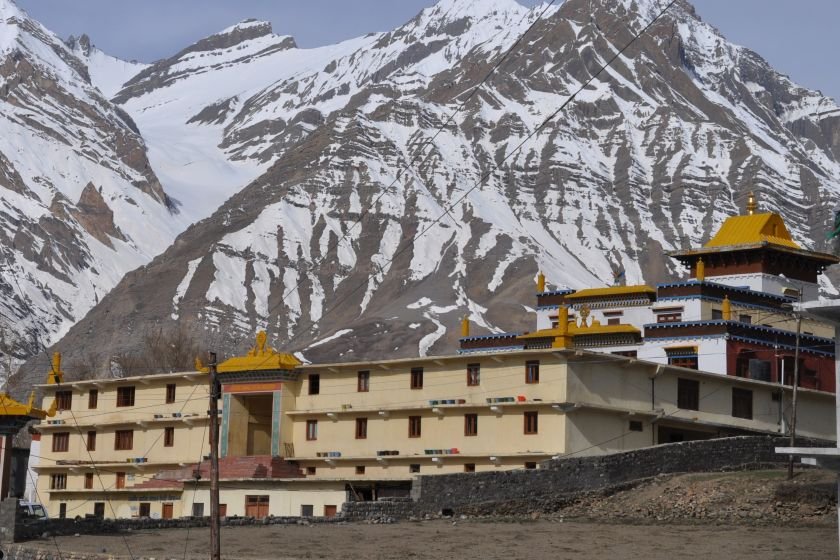
At a glance
- Location
- Kungri village, Pin Valley, Lahaul and Spiti district
- How to reach
- Road into Pin Valley; confirm the Kungri approach near Gulling
Kungri brings Pin Valley’s Nyingma heritage into view through prayer spaces, sacred art, and a ceremonial life rooted in the surrounding villages.
Kungri Monastery is one of the most rewarding cultural stops in Pin Valley. Its importance comes from the religious tradition it maintains, as well as the buildings travellers encounter. The Lahaul and Spiti district administration identifies it as a principal centre of the Nyingma school in Spiti and dates the institution to around 1330 CE.
Visit with time to understand that background. A gompa is a place of worship and learning, and access to its halls follows the needs of the people who use them. Looking at the artwork, listening to an explanation, and observing the boundaries of a working monastery can reveal more than a hurried circuit of the courtyard.
🌄 Location and how to reach it
Kungri stands in its namesake village in Pin Valley, Lahaul and Spiti district. Himachal Pradesh Tourism places it approximately 3 km from Gulling. It can be included in a valley excursion from Kaza or a wider journey linking Tabo and Dhankar.
Google Maps: Find Kungri Monastery
- By road: Confirm the diversion towards Pin Valley and the approach to Kungri with your driver before leaving.
- By public transport: Check the current service, drop-off point, and return connection. Do not assume a vehicle will be available for the last stretch.
- At the monastery: Ask which entrance and halls visitors should use, especially if prayers or other activities are underway.
A short distance on a map may still require a slow journey. Leave enough daylight for the return trip and confirm the condition of the connecting roads locally.
🌸 Best time to visit
Summer and early autumn are sensible planning periods for a wider Spiti journey, with June to September a useful starting window. The condition of the entire approach matters: a route from the Manali side and a route through Kinnaur involve different travel considerations.
Plan around current weather and services rather than treating a month as a guarantee of access. Winter visits require arrangements suited to severe cold and reduced facilities. If a religious occasion is the reason for your journey, confirm its actual date before booking transport or accommodation.
📜 History and the Padmasambhava association
The district’s monastery account describes Kungri as Spiti’s second-oldest monastery and gives an approximate fourteenth-century date. Tourism information also preserves an association with Guru Padmasambhava.
These statements concern different kinds of history. The spiritual association belongs to the monastery’s religious tradition; it should not be used to claim that Padmasambhava personally constructed a building in 1330. An institution’s foundation, the development of its buildings, and the traditions it inherits need not share a single date.
That distinction leaves Kungri’s significance intact. It allows its devotional inheritance and the published account of its age to be understood alongside one another.
🪷 Understanding the Nyingma tradition
Nyingma is commonly known as the ancient tradition of Tibetan Buddhism and gives particular importance to Padmasambhava. Knowing the school’s name helps a visitor appreciate why Kungri has its own religious character within a wider Spiti itinerary.
Painted figures and ritual objects belong to a body of teaching and practice. Their meaning is not always obvious from appearance. When an explanation is available, ask about a particular image or object rather than expecting the whole tradition to be summarised in a few minutes.
It is equally reasonable to visit quietly without understanding every symbol. Careful observation and respectful behaviour are a sound beginning.
🏛️ Buildings and sacred art
The district description records three detached rectangular blocks facing east. Tourism information draws attention to thangkas and religious objects. A thangka is a painted sacred image, usually on cloth, associated with Buddhist devotion and instruction.
Begin by understanding the arrangement of the accessible spaces. Inside a hall, look at how images, furnishings, and the space for prayer relate to one another. Avoid walking across an assembly or placing belongings on religious furniture.
An object described in a publication may be kept privately or unavailable during your visit. Let a custodian decide what can be viewed, and do not ask for closed spaces to be opened simply for a photograph.
🎭 Ceremonies and ritual dance
Kungri is associated with ceremonial performance, including traditions described in tourism information under the popular English label “Devil and Sword Dance”. District material on Pin Valley also mentions Chham and Buchen performance traditions.
These names should not make the practices sound like entertainment arranged for passing tourists. A ceremony has a religious and community setting that may not be apparent from a short description.
Confirm the current calendar and visitor arrangements locally. Ask where to stand, whether photography is permitted, and when it is appropriate to move. A normal monastery visit does not guarantee that a dance will take place.
🏔️ Kungri and the Pin Valley landscape
The district administration places Kungri village in the buffer zone of Pin Valley National Park. This connects the monastery visit with a landscape of settlements, grazing areas, and protected habitats.
Give the village and valley some time rather than adding a wildlife excursion to an already crowded day. A monastery stop does not establish a route into the national park, and a visit should not depend on a promised animal sighting.
Keep to permitted paths, respect homes and fields, and take litter away. Village life continues around the religious site.
🙏 Visiting information and etiquette
Confirm current opening arrangements, any charge, and access to particular halls before making a special journey. No dependable official daily timetable or direct visitor-office contact has been established for this guide.
- Remove footwear where instructed and speak quietly.
- Ask before entering a hall during prayers.
- Keep hands, bags, and equipment away from artwork and sacred objects.
- Obtain permission before photographing interiors, monks, or ceremonies.
- Leave residential spaces private unless invited.
Allow time for the accessible rooms and their setting, with extra room for an explanation if one is offered. Visitors concerned about steps or walking surfaces should check the final approach in advance.
🛏️ Staying nearby and planning the return
Tourism information mentions basic monastery accommodation and private places to stay in Pin Valley. Treat that as a lead to confirm, rather than an available room or a current booking arrangement.
Ask about meals, bedding, heating, arrival time, and any expectations of visitors staying in a religious institution. Your base may instead be elsewhere in the valley or at Kaza, depending on the wider itinerary.
Arrange the return vehicle before beginning the visit. Time spent waiting for a hall to open should not leave the onward journey rushed.
🏞️ Places to combine with Kungri
- Gulling and Sagnam: Nearby settlements to consider in a slower Pin Valley outing.
- Mud village: An option for extending the valley journey when time and roads permit.
- Dhankar and Tabo: Separate heritage visits that help show the variety of Spiti’s monasteries.
- Kaza: A possible base for transport and accommodation.
High mountain crossings such as Pin–Parvati and Pin–Bhaba require separate trekking preparation. They are not casual extensions of a monastery stop.
❓ Quick questions travellers ask
Which Buddhist school is Kungri associated with?
The Nyingma tradition.
How old is the institution?
The district administration dates it to approximately 1330 CE.
Can I see a ritual dance on any visit?
No. Confirm the ceremony and its visitor arrangements locally.
Can I stay at the monastery?
Basic accommodation has been mentioned in tourism information, but current availability needs direct confirmation.
May I photograph the interiors?
Ask first and follow the instructions for each space.
A final thought
Kungri’s value lies in the connection between its religious inheritance and the community around it. A patient visit leaves room for the art, the setting, and the people whose worship keeps the monastery active.
Sources and references
- District Lahaul and Spiti: Monasteries in Spiti — institutional date, Nyingma affiliation, and building arrangement.
- Himachal Pradesh Tourism: Monasteries — location, sacred art, ceremonies, and accommodation description.
- District Lahaul and Spiti: Pin Valley National Park — regional setting and cultural traditions.
- Himachal Pradesh Tourism: Nature Parks — broader Pin Valley travel context.