
Travel guide
Rajgir
Hill Walks and the World Peace Pagoda
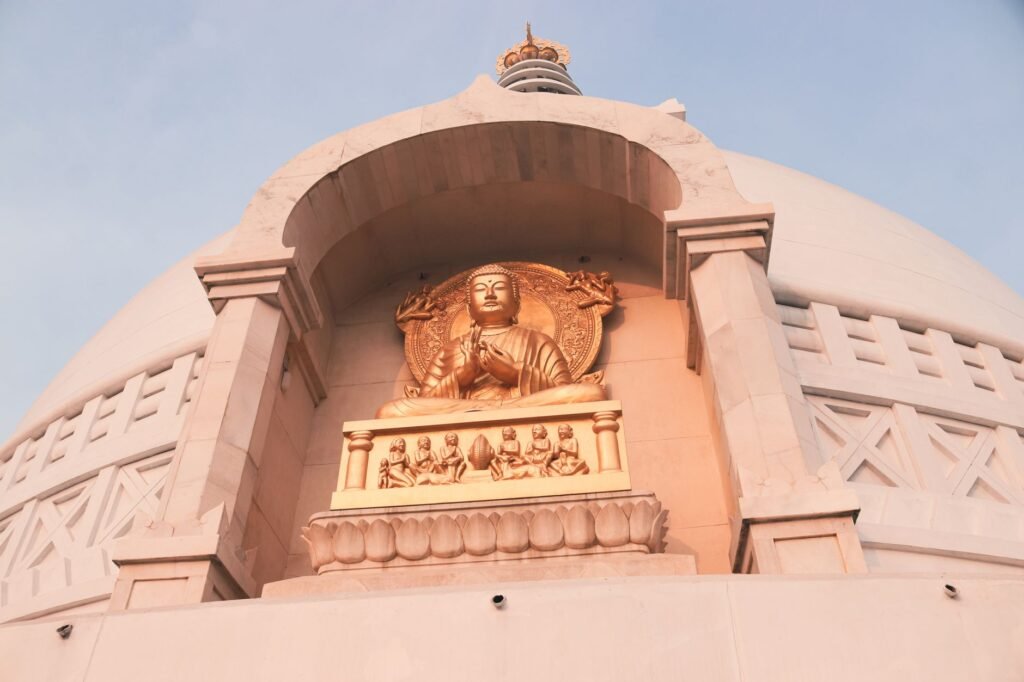
- The World Peace Pagoda sits atop Ratnagiri Hill and can be reached via a scenic ropeway ride or a 2-hour hiking trail through forests.
- Rajgir’s hill walks connect multiple Buddhist sites including Griddhakuta Peak, Saptparni Cave, and hot springs within a compact walking circuit.
- Early morning visits to the pagoda (6-8 AM) offer the best views with fewer crowds and pleasant weather for hill walking.
- The circular hiking route around Rajgir’s hills is approximately 8-10 km and can be completed in 3-4 hours at a moderate pace.
- Combine ropeway and trekking by taking the cable car up and walking down through the forested trail to experience both perspectives.
- Introduction
- Quick Facts About Rajgir: Hill Walks and the World Peace Pagoda
- Why Visit Rajgir: Hill Walks and the World Peace Pagoda
- How to Reach Rajgir: Hill Walks and the World Peace Pagoda
- Best Time to Visit Rajgir: Hill Walks and the World Peace Pagoda
- Top Things to Do in Rajgir: Hill Walks and the World Peace Pagoda
- Where to Stay in Rajgir: Hill Walks and the World Peace Pagoda
- Local Food & Cuisine
- Practical Travel Tips for Rajgir: Hill Walks and the World Peace Pagoda
- Final Thoughts
- Frequently Asked Questions
Introduction
Nestled in the verdant hills of Bihar’s Nalanda district, Rajgir stands as a testament to India’s rich spiritual and historical heritage. The journey to Rajgir: Hill Walks and the World Peace Pagoda offers travelers an extraordinary blend of ancient Buddhist pilgrimage sites, therapeutic hot springs, and panoramic hiking trails that wind through the Ratnagiri Hills. This ancient city, once the capital of the Magadha kingdom, has witnessed the footsteps of Lord Buddha and Mahavira, making it one of the most spiritually significant destinations in India. Today, it beckons both pilgrims and adventure seekers with its unique combination of religious sanctity and natural beauty.
What sets Rajgir apart from other pilgrimage destinations is its remarkable topography. Surrounded by five hills—Ratnagiri, Vipulachal, Vaibharagiri, Songiri, and Udaygiri—the town sits in a natural amphitheater that creates a mystical atmosphere, especially during sunrise and sunset. The crowning jewel of this landscape is undoubtedly the gleaming white World Peace Pagoda, perched atop Ratnagiri Hill at 400 meters, visible from miles around and accessible through an exhilarating ropeway ride or challenging hill walks that test your stamina while rewarding you with breathtaking vistas.
Whether you’re a history enthusiast eager to explore the ruins where Buddha preached, a nature lover seeking serene hill trails, or simply someone looking to escape the chaos of urban life, Rajgir offers an experience that seamlessly weaves together spirituality, adventure, and tranquility. The town’s compact size makes it perfect for a weekend getaway, while its depth of attractions ensures that even a week-long stay would leave you with memories to cherish and stories to share.
Quick Facts About Rajgir: Hill Walks and the World Peace Pagoda
- Altitude
- 400 meters (World Peace Pagoda), Town at 73 meters
- Best Time to Visit
- October to March
- Distance from Nearest City
- Patna – 102 km, Gaya – 78 km, Bodh Gaya – 85 km
- Nearest Airport
- Gaya International Airport (78 km), Patna Airport (102 km)
- Nearest Railway Station
- Rajgir Railway Station (in town), Bakhtiyarpur Junction (80 km)
- Permits Required
- None for Indian nationals, Foreign nationals should carry passport copy
- Temperature Range
- Winter: 8°C-25°C, Summer: 25°C-45°C, Monsoon: 25°C-35°C
- Approx Budget per Day in INR
- ₹1,500-₹2,500 (budget), ₹2,500-₹5,000 (mid-range), ₹5,000+ (luxury)
Why Visit Rajgir: Hill Walks and the World Peace Pagoda
Rajgir possesses a unique magnetism that distinguishes it from other Buddhist circuit destinations. The World Peace Pagoda, constructed by Japanese Buddhist monks between 1969 and 1973, represents one of approximately 80 peace pagodas built worldwide by the Nipponzan Myohoji Buddhist order. What makes this particular stupa extraordinary is its dramatic hilltop location, offering 360-degree views of the entire Rajgir valley, the ruins of ancient Nalanda University in the distance, and the patchwork of agricultural fields that paint the plains in varying shades of green and gold depending on the season.
The hill walks themselves are a revelation for anyone accustomed to flat pilgrimage routes. The main trekking trail from Rajgir town to the pagoda takes approximately 45-60 minutes, following ancient stone paths that Buddhist monks traversed over two millennia ago. Along the way, you’ll encounter smaller shrines, natural rock formations, and dense clusters of sal and bamboo forests that provide welcome shade. The trail occasionally opens up to reveal stunning valley views, particularly at the halfway point where a natural rock formation serves as a perfect rest stop. Early morning trekkers often report encounters with langurs, peacocks, and a variety of Himalayan bird species that migrate to these hills during winter.
Unlike the more commercialized Buddhist sites, Rajgir retains an authentic, unhurried atmosphere. The hot springs at Tapkund and Brahmakund, believed to have medicinal properties, add a wellness dimension to your visit that’s genuinely therapeutic rather than merely touristic. The ancient cyclopean walls—massive stone fortifications built without mortar—stretch for approximately 40 kilometers around the outer hills, representing some of the oldest surviving stone structures in India. These walls, dating back to the 6th century BCE, can be explored through multiple trekking routes that vary in difficulty from easy walks to challenging climbs requiring moderate fitness levels.

How to Reach Rajgir: Hill Walks and the World Peace Pagoda
By Air: The most convenient airport is Gaya International Airport, located 78 kilometers from Rajgir. Regular flights connect Gaya with Delhi, Kolkata, Bangkok, and other major cities, with domestic fares ranging from ₹3,000 to ₹8,000 depending on the season. From Gaya Airport, prepaid taxis charge approximately ₹2,000-₹2,500 for the 90-minute drive to Rajgir. Alternatively, Patna Airport (Jay Prakash Narayan International Airport) lies 102 kilometers away, with more flight options but a longer transfer time of approximately 2.5-3 hours by taxi, costing ₹2,500-₹3,000.
By Train: Rajgir has its own railway station, though it’s a small halt with limited train connections. More convenient is Bakhtiyarpur Junction (80 kilometers away), which connects to major cities including Delhi, Kolkata, Mumbai, and Varanasi. From Bakhtiyarpur, local buses (₹60-₹80) and shared taxis (₹150-₹200 per person) are readily available. The journey takes about 2 hours. Patna Junction, being the state capital’s main station, offers the most extensive rail connectivity and lies 102 kilometers from Rajgir, with regular buses and taxis available.
By Road: Bihar State Tourism Development Corporation (BSTDC) operates daily AC and non-AC buses from Patna to Rajgir, with fares ranging from ₹150 (non-AC) to ₹300 (AC). The journey takes approximately 3-4 hours depending on road conditions. Private buses and shared Bolero jeeps are also available from Patna’s Gandhi Maidan and Mithapur bus stands, charging ₹100-₹250 per person. If you’re traveling from Bodh Gaya (85 kilometers), taxis cost ₹2,000-₹2,500 for the 2-hour journey, while shared taxis charge approximately ₹200-₹300 per person.
By Self-Drive: The roads from Patna and Gaya to Rajgir are well-maintained state highways, making self-drive a viable and pleasant option. From Patna, take NH-31 toward Bihar Sharif, then turn onto State Highway 78 to Rajgir. From Bodh Gaya, the route via NH-98 and NH-82 passes through scenic rural landscapes. Fuel stations are available in Bihar Sharif (24 kilometers from Rajgir) and along the main highways.
Best Time to Visit Rajgir: Hill Walks and the World Peace Pagoda
Winter (October to March): This is undoubtedly the best time to visit Rajgir, with temperatures ranging from 8°C to 25°C creating perfect conditions for hill walks and outdoor exploration. October and November offer clear skies and excellent visibility, making the views from the World Peace Pagoda particularly spectacular. December and January bring cooler temperatures, with early mornings often misty and atmospheric—ideal for photography but requiring light woolens. This is peak tourist season, especially during Buddhist festivals when international pilgrims flock to the site. The ropeway operates smoothly during these months, and all trekking trails remain accessible. Expect slightly higher accommodation rates and advance booking requirements during December-January.
Summer (April to June): Summer in Rajgir can be intensely hot, with temperatures soaring to 45°C during May and June. Hill walks become challenging during midday, though early morning treks (starting before 6 AM) remain feasible. The hot springs become particularly popular during this season, as the contrast between the heat and the therapeutic waters is said to enhance their medicinal benefits. This is considered off-season, so hotel rates drop by 30-50%, and you’ll have attractions largely to yourself. If you can tolerate the heat and plan activities for early morning and late evening, summer offers budget advantages and crowd-free experiences. Carry ample water, sunscreen, and light, breathable cotton clothing.
Monsoon (July to September): The monsoon transforms Rajgir’s landscape into a lush green paradise, with the surrounding hills covered in fresh vegetation and numerous seasonal waterfalls appearing along trekking routes. However, this season presents challenges—the ropeway may be suspended during heavy rainfall, trekking paths become slippery and potentially dangerous, and leeches appear on forest trails. If you do visit during monsoon, waterproof trekking shoes are essential, and it’s advisable to hire a local guide for hill walks. The World Peace Pagoda often sits shrouded in dramatic clouds, creating an ethereal atmosphere. Accommodation rates remain low, and spiritual seekers often prefer this season for its meditative ambiance, despite the weather constraints.
Top Things to Do in Rajgir: Hill Walks and the World Peace Pagoda
Trek to the World Peace Pagoda
The primary attraction is the challenging yet rewarding trek from Rajgir town to the World Peace Pagoda atop Ratnagiri Hill. The well-marked trail begins near the ropeway base station and ascends through forest paths, ancient stone steps, and open hillside sections. The 45-60 minute climb tests your endurance but offers multiple scenic viewpoints where you can pause to catch your breath and absorb the panoramic vistas. At the summit, the gleaming white stupa with its golden Buddha statues facing four directions creates a powerful spiritual atmosphere, while the surrounding observation areas provide unobstructed views stretching dozens of kilometers across the Bihar plains.
Ride the Rajgir Ropeway
For those preferring a less strenuous ascent, the Rajgir Ropeway (also called the aerial ropeway) offers a thrilling alternative. India’s oldest chairlift-style ropeway, operational since 1960s and recently renovated, transports visitors from the base station to the World Peace Pagoda in approximately 7-10 minutes. The single-person chairs provide an exhilarating open-air ride with breathtaking views as you ascend the hillside. The ropeway operates from 8:00 AM to 5:00 PM (timings vary slightly by season) and costs ₹105 for a round trip and ₹70 for one-way journey. Weekend and holiday queues can be substantial, so arrive early or during afternoon hours for shorter waits.
Experience the Therapeutic Hot Springs
Rajgir’s natural hot springs, known as Tapkund or Brahmakund, have attracted wellness seekers for over 2,000 years. The main bathing complex at Lakshmi Narayan Mandir features separate sections for men and women, where water emerges from underground sources at temperatures reaching 45°C. The water is rich in sulfur and minerals believed to treat skin conditions, joint pain, and various ailments. Modern bathing facilities with private rooms are available for ₹20-₹50, while the open bathing area is free. Early morning (6:00-8:00 AM) is the best time to visit when the water is freshest and the crowds minimal.
Explore the Griddhakuta (Vulture’s Peak)
Griddhakuta Hill holds immense Buddhist significance as the place where Buddha delivered many important sermons, including the Heart Sutra. The moderate trek to the summit takes 20-30 minutes from the base and follows ancient stone pathways lined with prayer flags. The hilltop features meditation caves, a small shrine, and a platform where Buddha is believed to have sat while teaching. The sunset views from Vulture’s Peak are legendary, casting the entire valley in golden light. Local guides (₹200-₹300 for the tour) can share detailed stories about Buddha’s time here and point out archaeological significance along the route.
Visit Venuvana (Bamboo Grove)
Venuvana, meaning “bamboo grove,” was gifted to Buddha by King Bimbisara and served as one of Buddhism’s first monasteries. Today, the site features beautifully maintained gardens, a modern Japanese temple with distinctive architecture, and peaceful meditation areas. The tall bamboo groves create natural shade and a serene rustling soundtrack. The adjacent meditation center offers drop-in meditation sessions daily at 6:00 AM and 5:00 PM (free of charge), open to visitors of all faiths. The complex also houses a small museum displaying archaeological findings and historical information about Buddhism in Rajgir.
Mountain Biking the Ancient Fortification Walls
For adventure enthusiasts, mountain biking along the trails following Rajgir’s ancient cyclopean walls offers an exciting way to explore the outer hills. Several local operators near the bus stand rent basic mountain bikes for ₹300-₹500 per day. The circular route around the fortification walls covers approximately 15-20 kilometers of mixed terrain—some paved sections, some rough mountain paths—and takes 2-3 hours for moderately fit cyclists. The ride passes through rural villages, forested sections, and offers numerous photo opportunities of the massive stone walls that date back over 2,500 years. Carry water, snacks, and a basic first-aid kit, as these routes are remote.

Where to Stay in Rajgir: Hill Walks and the World Peace Pagoda
Budget Options (₹500-₹1,500 per night): The Gautam Vihar Guest House near the bus stand offers clean, basic rooms with attached bathrooms for ₹600-₹900, including facilities like hot water and room service. Buddha International Guest House provides simple accommodation for ₹800-₹1,200 with the advantage of being within walking distance of most attractions. For backpackers, Nalanda Tourist Complex run by Bihar Tourism offers dormitory beds for ₹400 and private rooms for ₹1,000-₹1,500, though facilities are basic and somewhat dated. Many small dharamshalas near the hot springs area offer extremely budget rooms for ₹300-₹600, particularly catering to pilgrims but open to all tourists.
Mid-Range Options (₹2,000-₹4,500 per night): The Indo Hokke Hotel, managed by Japanese Buddhist organizations, provides comfortable rooms for ₹2,500-₹3,500 with excellent cleanliness, helpful staff, and an in-house restaurant serving both Indian and Japanese cuisine. Hotel Tathagat International offers well-appointed rooms for ₹2,200-₹3,800 with amenities including Wi-Fi, 24-hour hot water, and room service. The Centaur Rajgir (formerly Hotel Centaur), though showing its age, provides decent accommodation for ₹3,000-₹4,500 with a swimming pool (operational October to March) and multi-cuisine restaurant. These properties typically include breakfast and can arrange local transportation and guided tours.
Splurge Options (₹5,000+ per night): The Rajgir Residency by BSTDC offers the town’s most upscale accommodation, with spacious rooms priced at ₹5,500-₹8,000 featuring modern amenities, well-maintained gardens, and professional service. The property includes a quality restaurant, travel desk, and can organize private vehicles for sightseeing. Nature Vilas Resort, located slightly outside town, provides cottage-style accommodation for ₹6,000-₹10,000 per night with a focus on wellness, including yoga sessions, Ayurvedic treatments, and organic meals. The Heritage Villas at Rajgir offer luxury suites for ₹8,000-₹15,000 with private gardens, premium dining, and curated heritage walks with expert guides.
Local Food & Cuisine
Rajgir’s cuisine reflects Bihar’s rich culinary traditions while also catering to the vegetarian preferences of Buddhist pilgrims from around the world. Litti Chokha reigns as Bihar’s most iconic dish—wheat flour balls stuffed with roasted gram flour (sattu), spices, and herbs, roasted over coal or cow dung fire, served with mashed potato, brinjal, and tomato (chokha). The smokiness and earthy flavors make it unforgettable. Sattu Paratha, flatbreads stuffed with roasted gram flour mixture, provide an excellent breakfast or lunch option, often served with tangy mango pickle and curd. Khichdi, while simple, reaches delicious heights in Rajgir, particularly the Bihar-style khichdi made with rice, lentils, and local vegetables, seasoned with ghee and mild spices—perfect comfort food after a long trek. Ghugni, a spiced dried pea curry served with chopped onions, chilies, and lemon, makes for an excellent street snack found at small stalls throughout the town.
Yama Restaurant at Indo Hokke Hotel (₹200-₹400 per person) serves excellent vegetarian thalis alongside Japanese dishes like ramen and tempura, catering to international pilgrims. The food is fresh, hygienic, and the service attentive. Green Hotel Restaurant near the bus stand (₹150-₹300 per person) offers authentic Bihari cuisine in a no-frills setting, with their litti chokha being particularly acclaimed by locals. Nalanda Restaurant opposite the hot springs (₹100-₹250 per person) provides generous portions of North Indian and Chinese dishes in a clean environment, popular with domestic tourists. For quick bites, the street food stalls near Gandhi Maidan in the evening (₹30-₹100 per item) serve fresh samosas, jalebis, and sattu-based snacks. Manas Restaurant at Tathagat International Hotel (₹250-₹500 per person) offers more upscale dining with a varied menu including South Indian, Chinese, and Continental options alongside traditional Bihari dishes.

Practical Travel Tips for Rajgir: Hill Walks and the World Peace Pagoda
Permits and Documentation: Indian nationals require no special permits to visit Rajgir or any of its attractions. Foreign nationals should carry passport copies and may need to present them at hotels for registration. The ropeway and World Peace Pagoda are freely accessible with no entry fees, though the ropeway ride costs ₹105 round trip. Venuvana charges no entry fee but accepts donations.
Mobile Network and Connectivity: Airtel and Jio provide the most reliable mobile coverage in Rajgir, with 4G connectivity available in town and even atop Ratnagiri Hill near the World Peace Pagoda. BSNL coverage is acceptable but less reliable. Some trekking routes through forests experience signal drops. Wi-Fi is available in most mid-range and upscale hotels, though speeds may be moderate.
ATMs and Banking: State Bank of India has an ATM near the bus stand, and there’s a Punjab National Bank ATM near Gandhi Maidan. However, ATMs occasionally run out of cash, especially on weekends, so withdraw sufficient cash in advance or carry backup from Patna or Gaya. Most budget accommodations and local restaurants accept only cash, while better hotels accept credit/debit cards.
Medical Facilities: Rajgir has a government Primary Health Centre near the bus stand for basic medical needs. For serious medical issues, Nalanda Medical College Hospital in Bihar Sharif (24 kilometers away) provides better facilities. Carry a basic first-aid kit, any prescription medications, and over-the-counter medicines for common ailments like stomach upset, headache, and fever. Several pharmacies near the bus stand stock essential medicines.
What to Pack: For hill walks, sturdy trekking shoes with good grip are essential, as trails can be rocky and steep. Carry a daypack with 2-3 liters of water, energy snacks, sunscreen (SPF 50+), sunglasses, and a wide-brimmed hat. A light rain jacket is advisable even during dry season for unexpected showers. Winter visitors (November-February) should pack light woolens for early morning and evening. If planning to bathe in hot springs, carry swimwear and a towel. A flashlight or headlamp helps during early morning treks. Modest clothing is recommended—covering shoulders and knees shows respect at religious sites.
Safety Tips: Rajgir is generally very safe for solo travelers, including women. However, avoid trekking alone on remote trails; either join other tourists or hire a local guide (₹300-₹500 per trek). Keep valuables secure and don’t display expensive jewelry or large amounts of cash. During monsoon, avoid hill walks entirely due to slippery conditions and potential rockfalls. Stay hydrated during summer treks, starting early morning before temperatures peak. Respect local customs at religious sites—remove shoes where required, speak quietly, and ask permission before photographing monks or religious ceremonies.
Responsible Tourism: Rajgir’s natural beauty and spiritual significance deserve preservation. Carry a small bag for trash during treks and dispose of waste properly in town. The hills have no dustbins, so pack out everything you bring. Avoid single-use plastics; carry a reusable water bottle that can be refilled at hotels. Don’t disturb wildlife or pick plants along trekking routes. At religious sites, maintain quiet and don’t interrupt meditation or prayer. When photographing, be respectful—many Buddhist monks prefer not to be photographed. Support local economy by purchasing handicrafts directly from artisans rather than middlemen. Consider donating to the maintenance funds at temples and monasteries if you appreciate their upkeep.
Final Thoughts
Rajgir represents a rare confluence of natural beauty, ancient history, and living spirituality that few destinations can match. The hill walks winding through these sacred mountains offer not just physical exercise but a journey through time—treading paths where Buddhist monks walked millennia ago, discovering meditation caves carved into rock faces, and experiencing sunrises that have inspired spiritual seekers for generations. The World Peace Pagoda stands as both a architectural marvel and a symbol of humanity’s aspirations for harmony, its white dome gleaming against the blue sky like a beacon of hope. Whether you spend your days trekking challenging mountain trails, soaking in therapeutic hot springs, or simply sitting in quiet contemplation watching the sun set over the valley, Rajgir works its magic subtly, leaving you refreshed and introspective.
As you plan your journey to this remarkable destination, remember that Rajgir rewards the prepared traveler—those who come equipped for hill walks, with realistic expectations about accommodation standards, and with hearts open to spiritual experiences. The town may lack the polish of more developed tourist circuits, but this very quality preserves its authenticity and charm. So lace up your trekking shoes, charge your camera batteries, and prepare for an adventure that will challenge your body, calm your mind, and perhaps even touch your soul. The hills of Rajgir are calling, and the World Peace Pagoda awaits your discovery. This is not just another destination to tick off your bucket list—it’s an experience that will stay with you long after you’ve descended from the mountains and returned to everyday life.
- Hire a local guide from the Rajgir Tourism Office near the ropeway base to discover hidden meditation caves and lesser-known Buddhist circuits not marked on standard maps.
- Carry sufficient water as only one small refreshment stall operates near the pagoda; the hill trails have no water sources along the route.
- Wear proper trekking shoes with good grip as the stone steps on Griddhakuta Peak trail become slippery during monsoons and early mornings due to dew.
- Visit the Japanese Temple near the ropeway base station first thing in the morning to attend the 6 AM prayer ceremony before starting your hill walk.
- Book ropeway tickets online during peak season (October-March) to avoid 1-2 hour queues, especially on weekends and Buddhist festival days.
Frequently Asked Questions about Rajgir: Hill Walks and the World Peace Pagoda
The best time to visit Rajgir and the World Peace Pagoda is from October to March when the weather is pleasant with temperatures ranging from 8°C to 25°C. During these months, the hill walks are comfortable and the skies are clear, offering stunning views from the pagoda perched at 400 meters on Ratnagiri Hill.
The World Peace Pagoda on Ratnagiri Hill can be reached through two main ways—an exhilarating ropeway ride that offers panoramic views, or by challenging hill walks that test your stamina while rewarding you with breathtaking vistas. The pagoda sits at 400 meters altitude and is visible from miles around due to its gleaming white structure.
Rajgir is located 102 km from Patna, 78 km from Gaya, and 85 km from Bodh Gaya. The nearest airports are Gaya International Airport (78 km) and Patna Airport (102 km), while Rajgir has its own railway station in town with Bakhtiyarpur Junction 80 km away as an alternative.
Rajgir is uniquely surrounded by five hills—Ratnagiri, Vipulachal, Vaibharagiri, Songiri, and Udaygiri—creating a natural amphitheater with a mystical atmosphere, especially during sunrise and sunset. This remarkable topography sets Rajgir apart from other pilgrimage destinations and was once the capital of the Magadha kingdom where Lord Buddha and Mahavira walked.
The approximate daily budget for Rajgir ranges from ₹1,500-₹2,500 for budget travelers, ₹2,500-₹5,000 for mid-range travelers, and ₹5,000+ for luxury travelers. The town’s compact size makes it perfect for a weekend getaway while offering enough attractions for even a week-long stay.
No permits are required for Indian nationals visiting Rajgir and the World Peace Pagoda. Foreign nationals should carry a copy of their passport while exploring this ancient Buddhist pilgrimage site in Bihar’s Nalanda district.