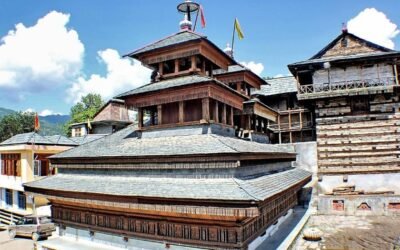
Above Banjar, on the old route towards Chehni Kothi, Shringa Rishi is worshipped not only as a sage from epic memory, but as the ruling devta whose presence still protects the valley below.
Some temples are important because of the deity inside them. Shringa Rishi Temple is important because the deity also belongs to the landscape outside it. The shrine stands near Bagi / Baggi village in the Banjar Valley of Kullu district, close to the walking route that continues towards Chehni Kothi. Here, Shringa Rishi / Shringi Rishi is remembered as a great sage, a local protector, and one of the major devtas of the Kullu region. The temple is not only a stop for travellers going towards Jibhi and Chehni; it is one of the sacred centres through which Banjar understands itself.
🌄 Location & How to Reach It
Shringa Rishi Temple is located near Bagi / Baggi village in Banjar Valley, Kullu district, Himachal Pradesh. It is commonly placed about 6–7 km from Banjar, around 60 km from Kullu, and roughly 65 km from Mandi. The temple sits above the Banjar side of the valley, close to the path that many visitors use for the Chehni Kothi walk.
Google Maps: Get Directions
- By road: The usual route is Aut – Banjar – Bagi / Baggi, with onward access towards the temple by local road and short walking depending on where the vehicle stops. Travellers coming from Jibhi usually approach through Banjar/Bagi side.
- By rail: The nearest broad-gauge railhead is Chandigarh or Kiratpur Sahib, followed by road travel towards Mandi, Aut, Banjar, and Bagi.
- By air: The nearest airport is Bhuntar Airport near Kullu, followed by road travel through Aut and Banjar.
This is not a difficult pilgrimage by high-Himalayan standards, but it is still a hill route. Roads can be narrow, parking can be limited near village approaches, and the climb towards Chehni Kothi beyond the temple should be treated as a proper uphill walk.
🌸 Best Time to Visit
The best months to visit Shringa Rishi Temple are usually March to June and September to November. Spring and early summer bring clear village views, pleasant walking weather, and green slopes around Banjar. Autumn is especially good for travellers who want sharper mountain light and less monsoon slush on walking paths.
Monsoon can make the route slippery, especially if you are combining the temple with the Chehni Kothi walk. Winter is possible on clear days, but cold weather, road conditions, and local access should be checked before travelling.
For the devotional side, ask locally about the Banjar fair and other devta movements connected with Shringa Rishi. The fair tradition is associated with Shringa Rishi as the chief deity of Banjar, and several local deities may participate. Dates can vary according to the local calendar and arrangements, so they should be confirmed in Banjar before planning.
There is no need to assume fixed tourist-style timings. Visit during daylight, respect the temple’s local rules, and ask before entering inner areas or photographing ritual objects.
🕉️ The Sage With Horns and the Memory of the Epics
Shringa Rishi is connected with the wider Indian tradition of Rishyasringa, the horned sage known from the Ramayana and Mahabharata traditions. In the Ramayana tradition, Rishyasringa is remembered as the sage who performed the Putrakameshti Yajna for King Dasharatha, after which Rama, Bharata, Lakshmana, and Shatrughna were born.
The official Kullu Dussehra devta record gives a local version of Shringa Rishi’s birth. It says he was born from the womb of a hind, after a dev kanya had been transformed because of a curse. The infant was left near the ashram of Rishi Vibhandak, who raised him. Later, Shringa Rishi is said to have performed long meditation at Sakiran Jot, because of which he was also called Sakiran Rishi.
This is where the temple becomes interesting. The same sage who belongs to pan-Indian epic memory also becomes a local devta of Banjar. He is not only remembered in scripture-like tradition; he is worshipped through the living Kullu devta system, with a seat, followers, fairs, processions, and a relationship with the valley.
🕉️ From Rishi to Devta of Banjar
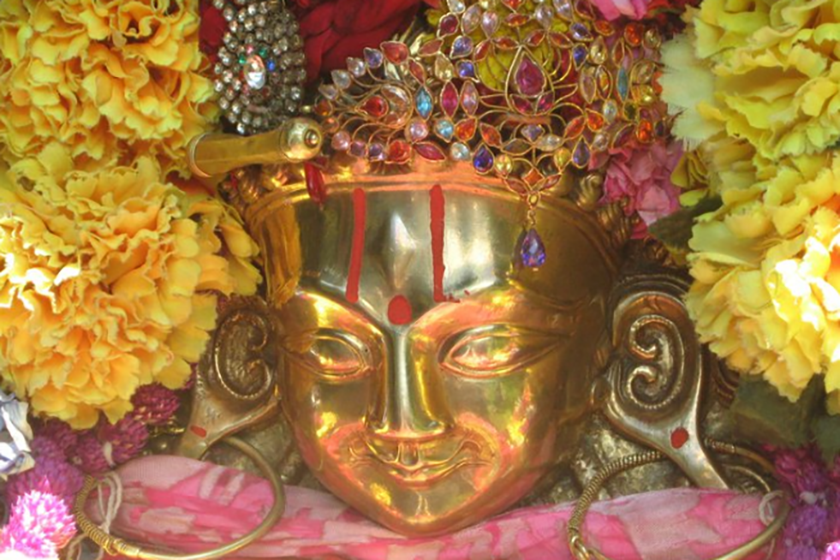
In Kullu, a devta is not simply an idol inside a temple. A devta has territory, followers, rituals, a palanquin, decisions, festivals, and social presence. Shringa Rishi belongs to that world. He is widely described as the chief deity of Banjar and is also counted among the important deities of the Kullu Valley.
This changes how the temple should be understood. Shringa Rishi is not only a sage of the past. In Banjar, he continues as a local guardian. People approach him for protection, blessings, community well-being, and ritual guidance. His importance is not locked inside mythology; it continues through village life.
The temple’s location near Bagi also matters. It stands on a route that connects sacred worship with one of the most striking heritage structures of the valley, Chehni Kothi. Many visitors come to the area for the tower, but the temple explains the older sacred order of the place. Before Chehni becomes architecture, Shringa Rishi gives the route its devotional centre.
🙏 What Shringa Rishi Temple Is Known For
Shringa Rishi Temple is known for its association with Shringa Rishi / Shringi Rishi, the ruling or chief deity of Banjar Valley. Local belief treats him as a protector of the region, and many accounts describe the temple as one of the important religious centres for people of Banjar and nearby villages.
The temple is also known for its link with the larger Kullu devta tradition. In this tradition, deities are not distant symbolic figures. They travel, attend fairs, receive invitations, and participate in the social-religious life of the valley. Shringa Rishi’s identity as a major Banjar devta gives the temple a role beyond ordinary darshan.
For travellers, the shrine is often known as the starting or near-starting point for the walk towards Chehni Kothi, but that should not reduce the temple to a tourist landmark. The better way to see it is this: Chehni Kothi gives the area its architectural drama; Shringa Rishi gives it its sacred authority.
🏛️ Wood, Stone, and the Banjar Devta Style
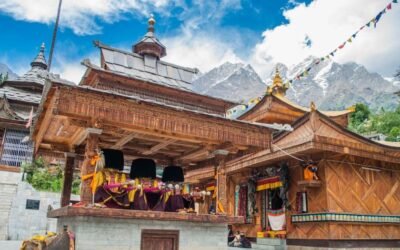
The temple stands in a region where local architecture uses wood, stone, slate, and steep-roofed mountain forms. The surrounding Banjar–Jibhi belt still carries many examples of traditional Himachali building styles, and Chehni Kothi nearby is famous for its old Kath-Kuni architecture.
Shringa Rishi Temple has the feel of a living hill temple rather than a silent monument. Its beauty is not in polished symmetry. It is in its mountain setting, wooden details, local craftsmanship, carved elements, flags, bells, and the way the shrine belongs to village movement.
A visitor arriving on a quiet day may notice how the temple sits between road, slope, forest, and village life. The air is cooler than the market below. The path towards Chehni rises nearby. People may be moving with ordinary village work while the shrine remains at the centre, still and watchful.
During festival days, the atmosphere changes completely. The devta tradition brings sound, colour, palanquin movement, musicians, local participation, and the unmistakable dignity of Kullu’s living deity culture.
📜 Banjar, Chehni, and the Sacred Order of the Valley
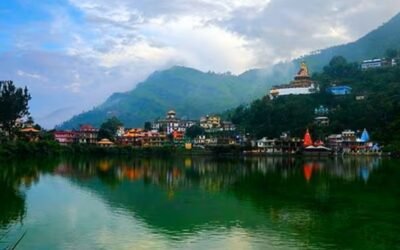
Banjar Valley is often introduced today through Jibhi, Tirthan, waterfalls, cafes, homestays, and trekking routes. But long before tourism shaped the language of the place, the valley had its own sacred order. Shringa Rishi is part of that order.
The temple’s location near the Chehni route is important because it shows how sacred and defensive architecture once lived close together. Chehni Kothi is a tall traditional tower associated with local power, protection, and mountain construction. Shringa Rishi Temple, nearby, represents the devta authority of the region.
Together, they tell a stronger story than either one alone. One is the tower of the old hill community; the other is the spiritual authority of the valley. Travellers who only photograph Chehni Kothi and skip the temple miss half of the meaning of the route.
This is also why Banjar cannot be understood only as a scenic valley. It is a devta landscape. Shringa Rishi is one of the names through which that landscape speaks.
🎉 Festivals and Devotion
- Banjar Fair: The fair is associated with Shringa Rishi, the chief deity of Banjar. Several other local deities may also participate, making it an important expression of the valley’s devta culture.
- Kullu Dussehra Connection: Shringa Rishi is listed among the devtas of the Banjar region in the Kullu Dussehra devta records. Like other Kullu deities, his identity belongs to the living network of valley gods and local traditions.
- Devta Processions: During festivals or special occasions, the deity may be carried in a ceremonial palanquin with music, attendants, and village participation. Visitors should observe respectfully and avoid treating the ritual as a performance staged for tourists.
- Local Worship: Devotees visit the temple for protection, blessings, family welfare, and community well-being.
- Fair Planning Note: Dates and arrangements should be confirmed locally in Banjar, because devta calendars and village-level events do not always follow fixed tourist schedules.
🏞️ While You’re in the Area
- Chehni Kothi: A remarkable traditional tower above Bagi, known for its wood-and-stone construction and commanding village setting. It is usually combined with Shringa Rishi Temple.
- Banjar: The nearest main town and practical base for transport, food, local guidance, and onward movement into Tirthan and Jibhi valleys.
- Jibhi: A popular nearby village known for forest walks, homestays, wooden houses, and easy access to short hikes.
- Tirthan Valley: A river valley known for trout streams, village stays, and access towards the Great Himalayan National Park side.
- Jalori Pass: A high road pass above Banjar and Jibhi, often combined with Serolsar Lake and wider valley travel.
- Serolsar Lake: A sacred lake beyond Jalori Pass, associated with Budhi Nagin Mata, best visited as a separate walk in good weather.
- Great Himalayan National Park: A UNESCO-listed conservation landscape near the Tirthan side, suitable for longer nature-focused trips with proper permits and guides.
🙏 Getting in Touch
There is no widely verified official visitor centre or public booking system for Shringa Rishi Temple. For ritual timing, festival dates, devta movement, priest availability, or local restrictions, ask in Banjar, Bagi / Baggi, or nearby villages.
If you are combining the visit with Chehni Kothi, ask locally about the walking path, weather, and current access. The route is short but uphill, and it can feel tiring for visitors who are not used to steep village trails.
Photography should be handled respectfully. Do not photograph the deity, inner sanctum, palanquin, ritual objects, or local ceremonies unless permission is clearly given.
❓ Quick Questions Travellers Ask
Where is Shringa Rishi Temple located?
It is near Bagi / Baggi village in Banjar Valley, Kullu district, Himachal Pradesh.
How far is Shringa Rishi Temple from Banjar?
Most travel references place it about 6–7 km from Banjar.
Who is Shringa Rishi?
Shringa Rishi, also known as Shringi Rishi / Rishyasringa, is a sage connected with epic tradition and worshipped locally as the chief devta of Banjar.
Can Shringa Rishi Temple be combined with Chehni Kothi?
Yes. Many visitors combine the temple with the walk to Chehni Kothi, but the path is uphill and should be done in daylight.
Is the temple part of the Kullu devta tradition?
Yes. Shringa Rishi is part of the living Kullu devta system and is associated with Banjar’s local religious identity.
A Last Word
Shringa Rishi Temple should not be treated as only a stop before Chehni Kothi. The tower may catch the eye first, but the temple holds the older authority of the route. It tells you that Banjar is not only a valley of views, cafes, rivers, and homestays. It is a valley watched by devtas.
Shringa Rishi stands at the meeting point of epic memory and local faith. In one story, he belongs to the Ramayana world of sages and yajnas. In Banjar, he belongs to the people, the villages, the fairs, the palanquin, the mountain path, and the living rhythm of the valley. That is what makes the temple powerful. It does not only remember a rishi. It keeps him present.
Fact-check note: Shringa Rishi Temple’s location near Bagi / Baggi village in Banjar Valley, its approximate distance of 6–7 km from Banjar, and its common pairing with the Chehni Kothi walk are supported by available travel and local references. The identity of Shringa Rishi as an important Banjar devta and one among the major deities of Kullu is supported by Kullu Dussehra devta records and regional references. The birth story from a hind, the link with Rishi Vibhandak, and the meditation at Sakiran Jot are taken from the Kullu Dussehra devta tradition and treated as sacred local tradition. The wider Ramayana connection to Rishyasringa and the Putrakameshti Yajna is part of epic tradition, but this article does not force a direct historical line between the epic sage and the Banjar temple beyond the living devotional identification.