
Temple & sacred site
St. John in the Wilderness Church, Dharamshala
A Gothic Church That Survived the Kangra Earthquake
At a glance
- Location
- Forsyth Ganj, near McLeod Ganj, Kangra district
- How to reach
- Confirm road access and the walking approach through the church grounds
Dark stone, coloured glass, a forested churchyard, and a surviving nineteenth-century building reveal another chapter of Dharamshala’s history.
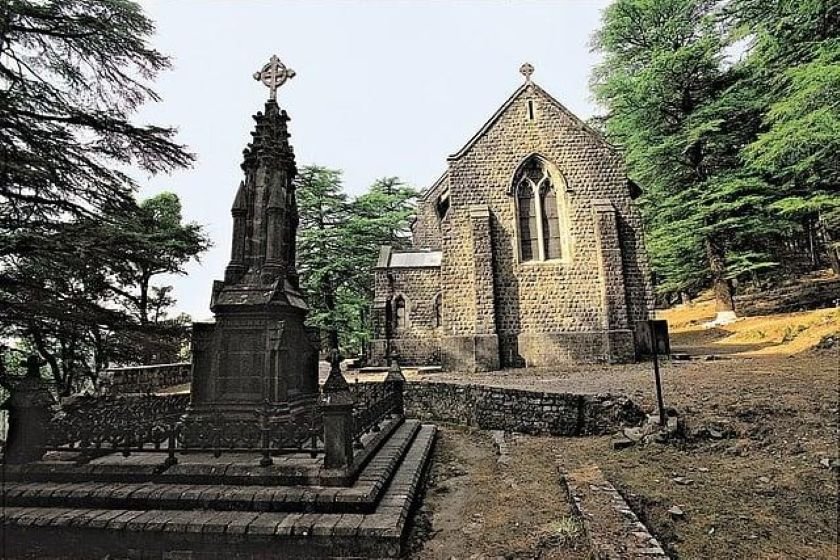
St. John in the Wilderness stands among deodar trees at Forsyth Ganj, near McLeod Ganj. Its setting is part of the appeal, but a visit also brings together Christian worship, colonial history, and the care owed to a place of burial.
Built in 1852, the church belongs to an earlier phase of Dharamshala’s development. The building survived the 1905 earthquake, although its bell tower was badly damaged. That history is more revealing than a simple claim that the church emerged untouched.
🌄 Location and how to reach it
The church is on the Dharamshala–McLeod Ganj side of the region, in Kangra district. Use the full name when arranging transport so it is not confused with another St. John’s Church.
Google Maps: Find St. John in the Wilderness
- By road: Confirm the appropriate stopping point and the walking approach to the grounds.
- From McLeod Ganj: A walking visit may be possible according to your route and fitness; allow for the uphill return.
- From Dharamshala: Arrange transport and establish the return connection before beginning the visit.
- With limited mobility: Ask about surfaces, gradients, and steps inside the grounds as well as the church entrance.
A roadside location does not make every part of the compound accessible. Follow the permitted paths through the site.
🌸 Best time to visit
Spring to early summer and autumn are sensible periods for combining the church with other Dharamshala-area visits. Daylight is useful for seeing the stonework and reading accessible memorials.
During the monsoon, allow for rain, slippery paths, and road delays. In winter, prepare for cold conditions and check the approach before setting out. The forest’s appearance changes with weather, but mist or a particular photographic effect cannot be guaranteed.
If the stained glass or interior is your main interest, confirm opening arrangements first. Clear weather and an open church are separate parts of the plan.
📜 The church’s nineteenth-century origins
Official visitor information dates the church to 1852 and identifies its dedication to John the Baptist. A historic photograph in the National Army Museum’s collection also documents the building within Dharamshala’s colonial-era setting.
This context helps explain its place in the region. The church served a Christian community in a developing British hill settlement, while the town around it acquired further identities over time.
A present-day visit can recognise those layers without reducing Dharamshala to a single historical period. The church, nearby monasteries, and other sacred sites each have their own stories.
🏛️ Stonework and neo-Gothic form
The building’s neo-Gothic character is visible in its pointed windows and openings. Dark masonry and the surrounding trees give it a distinctive appearance, particularly when compared with more brightly finished religious buildings elsewhere in the region.
Look at the complete outline before moving closer to individual details. The relationship between the walls, openings, and forest is easier to appreciate from a respectful viewing position than through a hurried close-up.
Inside, if access is permitted, notice how the room directs attention towards worship. Keep movement quiet, and leave furnishings in place rather than rearranging them for a photograph.
🪟 The stained-glass windows
The church is known for stained glass associated in official tourism accounts with Lady Elgin. These windows provide a delicate counterpart to the substantial stone exterior.
Coloured glass changes the experience of a room according to available light. Appreciate what is visible during the visit rather than expecting the same effect as a photograph taken at a different hour.
Ask about photography before taking out equipment. Access to see a window does not necessarily include permission to photograph the altar or other people at prayer.
⚰️ Lord Elgin and the churchyard
The grounds contain the burial place of Lord Elgin, who died in Dharamshala in 1863 while serving as Viceroy. His memorial connects the site with the wider history of British rule.
The churchyard is also a place of remembrance for others whose names may be less familiar. Read accessible inscriptions carefully and remain on permitted routes. A burial site should not become a platform, seat, or prop for a photograph.
Historical interest and respectful conduct belong together here. Looking closely does not require touching a fragile inscription or stepping onto a grave.
🌍 The 1905 earthquake and later care
The National Army Museum’s account states that the church survived the 1905 earthquake but that the bell tower was badly damaged. This makes it important to distinguish survival from an absence of damage.
Repair and continued care form part of a heritage building’s history. What visitors see today reflects people’s efforts to maintain worship and preserve the site after disruption.
Instead of repeating an unsupported claim that every feature is original, consider which elements can be documented and which need further evidence. The building’s historical importance does not depend on it having remained unchanged.
🌲 The forest setting
The deodar surroundings give the churchyard much of its character. Paths, tree cover, masonry, and memorials form a connected setting, rather than a building isolated from its grounds.
Keep to the visitor routes and avoid damaging vegetation or taking shortcuts through burial areas. After rain, allow more time on shaded surfaces instead of seeking an off-path viewpoint.
The site lies near a busy travel corridor. Its quieter atmosphere is easier to preserve when visitors keep voices low and let the surroundings be experienced without loud music or staged activity.
🙏 Worship and visiting arrangements
The church’s religious identity remains important. Confirm the current service schedule if attending worship is the purpose of your journey.
No dependable current official daily visitor timetable, admission arrangement, or direct visitor-office contact has been established for this guide. Access to the grounds and access to the interior may differ.
Ask locally before making a special journey for Christmas, Easter, Sunday worship, or a particular service. The general Christian calendar does not determine the programme followed at every church.
📷 Etiquette and photography
- Keep quiet during prayer and follow instructions about entry.
- Ask before photographing interiors, services, or people.
- Do not climb on graves or memorials.
- Leave historic stonework, inscriptions, and glass untouched.
- Keep pathways clear and take litter away.
- Respect any part of the compound closed to visitors.
Leave time for the exterior, the allowed churchyard route, and an interior visit if available. Add any walking from your accommodation and the return journey separately.
🏞️ Places to combine with the visit
- McLeod Ganj: A possible base and connection for a wider visit.
- Tsuglagkhang: A separate Buddhist religious site with its own access arrangements.
- Bhagsunag: A separate temple-area outing requiring additional travel and walking time.
- Dharamshala and its museum: Options for exploring more of Kangra’s cultural history.
Choose a few compatible stops. A churchyard visit, a temple visit, and a longer forest walk each deserve their own allowance of time.
❓ Quick questions travellers ask
When was the church built?
In 1852, according to official visitor information and the National Army Museum.
Was it untouched by the 1905 earthquake?
No. It survived, but the bell tower was badly damaged.
Who is buried in the grounds?
Lord Elgin is among those commemorated and buried there.
Is interior access guaranteed?
No. Check current opening and worship arrangements.
Can I photograph the cemetery?
Follow local instructions and avoid any photograph that intrudes on worship, remembrance, or restricted areas.
A final thought
St. John in the Wilderness brings together architecture, worship, and remembrance in a distinctive forest setting. A patient visit makes room for all three, rather than treating the grounds as scenery around an old building.
Sources and references
- Incredible India: St. John in the Wilderness Church — dedication, setting, stained glass, and Lord Elgin.
- National Army Museum: Church Dharamshala, circa 1868 — construction date and damage to the bell tower in 1905.
- Himachal Pradesh Tourism: Dharamshala — regional visitor context.
- Himachal Pradesh Town and Country Planning Department: Dharamshala planning material — heritage context and stained glass.