
Temple & sacred site
Parshuram Kothi, Nirmand
The Sage, Ambika and the Old Village Shrines
At a glance
- Location
- Nirmand, Outer Seraj, Kullu district
- How to reach
- Approach from the Rampur Bushahr side and walk through Nirmand to the Kothi
In Nirmand, the Parshuram Kothi stands close to the Ambika shrine, two stops that help explain the sacred history of this Outer Seraj settlement.
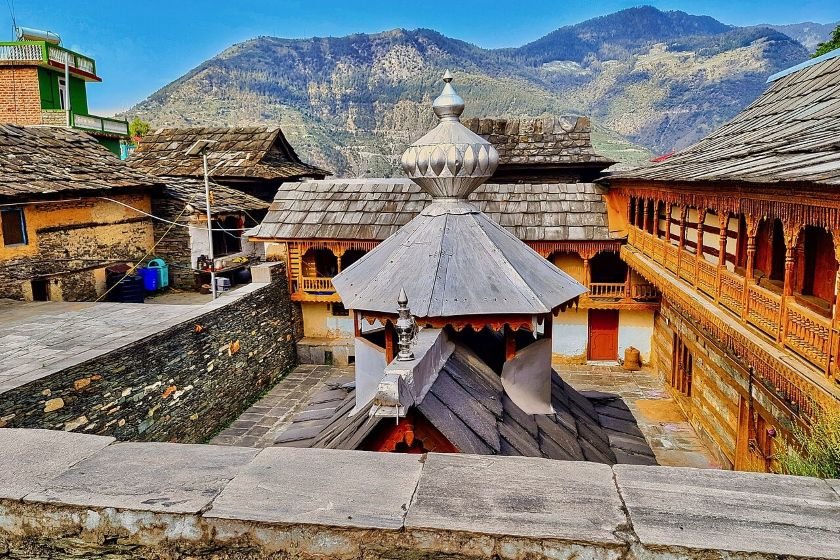
The Kullu district history identifies Nirmand’s Parshuram temple with the tradition that the sage lived in the valley. An archaeological traveller who visited in the early twentieth century recorded carvings, images and a distinctive hill building at the Kothi. The two accounts give the visitor different ways to understand the place, through worship and through what people preserved here.
🌄 Location and how to reach it
The Kothi is in Nirmand, in the Outer Seraj area of Kullu district. Rampur Bushahr is a useful road reference for travellers coming along the Sutlej. When you reach Nirmand, ask for Parshuram Ji ki Kothi in the old settlement.
Google Maps: Find Parshuram Kothi, Nirmand
- By road: From the Rampur side, take the local connection across the Sutlej towards Nirmand. Ask where to park before entering the older village lanes.
- By public transport: Check at Rampur for the current Nirmand bus and last return. If you hire a taxi, agree on a pickup point near the part of the village you plan to walk.
- On foot: Ask for the Kothi and the nearby Ambika shrine. Allow time for slopes and steps between the road and the places of worship.
🌸 Best Time to Visit
Choose a daylight visit if you want to see the lanes and carvings. For Parshuram Jayanti, check the temple committee’s programme. Local reporting describes worship, havan and devotional singing at the Kothi for the occasion. The rarer Bhunda observance follows its own arrangements and should be checked with organisers.
📜 Parshuram in Outer Seraj
Parshuram is revered as an incarnation of Vishnu. In the Nirmand tradition he is closely tied to the settlement and to accounts of land granted to Brahmin families. Kullu district’s history places these associations within the wider sacred geography of the valley. Across Himachal, Parshuram’s story has other centres, including Renuka Ji in Sirmaur, where worship recalls his return to his mother. At Nirmand, the focus is the Kothi and the traditions of the village around it.
🪵 What the Kothi Reveals
A. H. Francke’s archaeological account, published in 1914, records sculptures set into the walls and a metal image of Parshuram kept inside. He noted that the image was shown on particular ritual occasions. His description is a record of the Kothi and its practices at the time of his visit. Present-day worshippers and caretakers can say which spaces are open and what can be seen.
Look for the relationship between the timber building and the stone pieces around it. The old lanes place the Kothi near other shrines, including the Ambika temple. If both are accessible, give each a separate stop.
🪔 Bhunda and the Ceremonial Image
Research published by Himachal Pradesh University discusses the association between the Bhunda observance and the ceremonial display of Parshuram’s image. It places Nirmand among several places along the Sutlej connected with the tradition. Accounts describe particular ritual arrangements, so check any contemporary programme locally before planning to attend.
🙏 Visiting with Respect
Ask which doors and courtyards are open to visitors. Keep to public areas and ask before photographing carvings, ceremonies or sacred objects. During a village event, leave passages clear for residents and the people taking part.
❓ Quick Questions Travellers Ask
- Is this the Parshuram temple at Renuka Ji? This guide is for the Kothi in Nirmand, Kullu district. Renuka Ji is a separate pilgrimage in Sirmaur.
- Can I see the ceremonial image on an ordinary visit? Ask at the Kothi. Historical accounts describe it being displayed on specific occasions.
- What else should I look for nearby? Ask for the Ambika shrine and take time to walk the older lanes between the two.
A Final Thought
Go to Nirmand with time for both the Kothi and its neighbourhood. The nearby shrines and village lanes help place the story of Parshuram in the settlement that still keeps it.