In the low hills of Sirmaur, a lake shaped by forest, faith, and old grief carries one of Himachal’s most tender sacred stories — the yearly return of a son to his mother.
Some sacred places are built around a temple. Renuka Ji feels the other way around. Here, the lake comes first — long, quiet, green-edged, and held between two lines of hills — while temples, fairs, stories, boats, forests, and pilgrim paths gather around it slowly. The place belongs to Mata Renuka, revered as the mother of Lord Parshuram, and the lake itself is understood by many devotees as her living presence. That is what gives Renuka Ji its unusual emotional weight: it is not only a shrine of worship, but a landscape of memory, motherhood, obedience, loss, and reunion.
🌄 Location & How to Reach It
Renuka Ji is in Sirmaur district of Himachal Pradesh, near Dadahu, about 37 km from Nahan and around 60 km from Paonta Sahib. The lake sits at roughly 672 metres above sea level, in a warmer, lower Himalayan belt where sal forests, village fields, and sacred geography meet before the hills rise higher towards Churdhar and the inner ranges.
Google Maps: Get Directions
Elevation: about 672 metres
- By road: Renuka Ji is road-connected and is commonly approached from Nahan, Paonta Sahib, Solan, Chandigarh, or Dehradun. The district page lists it at 315 km from Delhi, while HPTDC gives Chandigarh to Renuka Ji at about 130 km and Dehradun to Renuka Ji at about 100 km.
- By rail: Practical railheads include Chandigarh, Ambala, Kalka, and Dehradun, followed by road travel by taxi or bus. District information mentions Ambala, Dehradun, and Chandigarh as rail-linked access points for Renuka Ji.
- By air: The nearest practical airports are Chandigarh and Dehradun, with taxis and buses available onward towards Renuka Ji.
This is not a difficult mountain journey by Himachal standards. It is a proper road-accessible pilgrimage and lake destination, best planned as a day trip from Nahan or as a quiet overnight stay near the lake.
🌸 Best Time to Visit
The best months for most travellers are October to March, when the weather around Renuka Ji is comfortable and the low hills feel gentler. Spring is also pleasant, especially for visitors who want lake views, forest walks, and a slower trip without the fair crowd.
The most important devotional season is around October–November, when the International Shri Renuka Ji Fair is held. In 2025, the official district event page listed the fair from 31 October to 5 November at Sri Renuka Ji. Because the fair follows the Hindu calendar, the exact dates change each year and should be confirmed locally before planning.
Summer can be hot in this lower belt of Sirmaur, especially in the afternoon. Monsoon brings humidity and heavy rain, and the surrounding slopes and roads should be treated with normal hill-road caution. There is no need to chase fixed temple timings here unless you are planning a specific ritual; for ordinary travellers, arriving during daylight is the practical approach.
🕉️ The Mother Who Became the Lake
The sacred story of Renuka Ji is one of the most emotionally charged legends in Himachal’s temple landscape. According to local tradition, Mata Renuka was the wife of Rishi Jamadagni and the mother of Lord Parshuram, the warrior-sage who is revered as the sixth incarnation of Lord Vishnu.
The legend is difficult, and that is part of its power. In the traditional telling, Jamadagni orders Parshuram to kill his mother. Parshuram obeys the command of his father, and after the act is done, Mata Renuka’s presence becomes connected with the lake. Later, Parshuram asks for his mother to be restored, and the story turns from tragedy to reunion.
This is not a story that should be flattened into a simple miracle line. It carries older ideas of obedience, tapasya, parental command, divine testing, and the pain inside dharma when duty and love collide. At Renuka Ji, that old tension is not kept inside a book. It is remembered through the lake, the temples, the annual fair, and the belief that Parshuram returns to meet his mother.
These legends are not archaeological proof, and they should not be treated as such. But they are central to how devotees understand the place. For many pilgrims, Renuka Ji is sacred because the lake is not merely beside the temple — the lake is part of the temple’s living meaning.
🕉️ The Yearly Reunion of Mother and Son
The most moving part of Renuka Ji’s devotional life is the annual fair. Each year, around the time of the Shri Renuka Ji International Fair, the story of mother and son is brought into public ritual. Local accounts and wetland records describe decorated palanquins carrying idols of Lord Parshuram and other local deities in procession towards the sacred lake area.
This is what makes the fair different from an ordinary mela. It is not only trade stalls, crowds, music, and movement. At its heart is the idea of Parshuram coming back to his mother’s abode. The lake becomes a meeting ground. Devotees come not only to see the fair, but to witness a relationship being ritually remembered.
In recent years, the fair has also been publicly described as a symbol of the devotion of Lord Parshuram towards Goddess Renuka Ji. A 2025 report from the concluding ceremony also noted the introduction of a daily aarti initiative at Renukaji lake, praised as a way to preserve the sacred and cultural heritage of the site.
The best way to experience the fair is with patience. Roads become busier, accommodation needs advance planning, and the quiet lake changes into a public pilgrimage centre. For those who prefer silence, visit outside the fair. For those who want to understand Renuka Ji as a living tirtha, the fair is the time when the site reveals its full public face.
🙏 What Renuka Ji Is Known For
Renuka Ji is known above all for three things: Mata Renuka, Lord Parshuram, and Renuka Lake.
For devotees, Mata Renuka is worshipped as a mother goddess, while Lord Parshuram’s presence gives the site its strong Vaishnav and puranic connection. The relationship between the two is the emotional centre of the pilgrimage. Unlike many temples where the deity is contained inside a sanctum, Renuka Ji spreads its sacredness across the entire lake setting.
The district administration describes Renuka Ji as one of the popular temples of Himachal Pradesh, situated on the bank of the lake. The Himachal Pradesh Council for Science, Technology & Environment also notes that the wetland is revered as a pilgrim centre and that the lake is shaped like a sleeping woman, a detail often repeated in local and cultural descriptions of the site.
Visitors come here for temple darshan, lake parikrama, boating, the fair, family outings, and quiet time near the water. The site is also associated with the surrounding Renuka Wildlife Sanctuary, a mini zoo, and rich plant and animal life, so it is one of those rare Himachal places where pilgrimage, ecology, and leisure sit very close to each other.
🏞️ The Lake That Holds the Shrine
Renuka Lake is often described as the largest natural lake in Himachal Pradesh. HIMCOSTE records the wetland area as 20 hectares, while district tourism material describes the broader lake setting and notes its importance as both a tourist and religious place. The lake is oblong, held between two steep hill lines, and surrounded by forest that gives the water its quiet, enclosed feeling.
A road runs near parts of the lake, and the visitor experience is simple: water on one side, trees and slopes on the other, with temple spaces, ghats, small stops, and views opening at intervals. The lake does not feel like a high-altitude Himalayan tarn. It has a warmer, older, more settled character. There are turtles and fish in the water, birds around the wetland, and forested slopes rising close enough to remind you that this sacred place is also an ecological one.
That is why Renuka Ji should be approached with restraint. The lake is not just a picnic background. It is a Ramsar wetland, a pilgrim centre, and a fragile living water body. The same water that reflects lamps during worship also supports aquatic life, birds, and the surrounding forest system.
🏛️ Temples, Ghats, and the Atmosphere of the Place
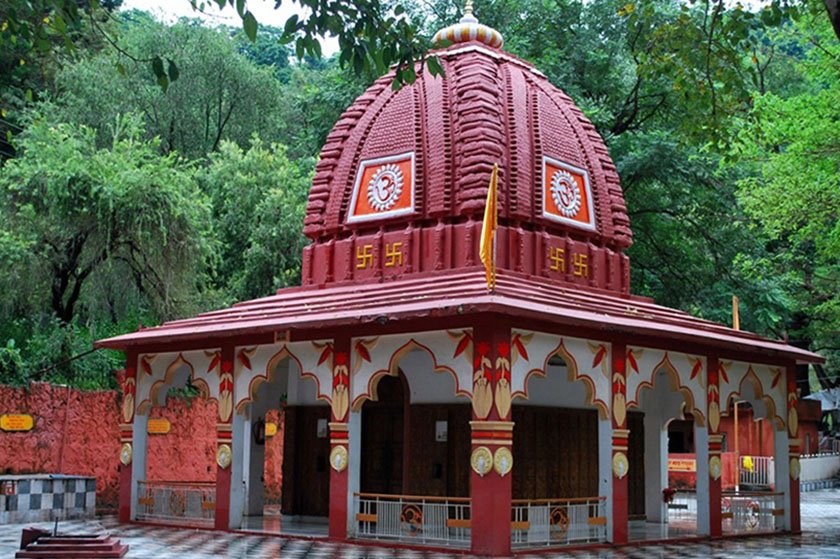
The temple area around Renuka Ji is not about grand stone architecture or towering shikhara drama. Its power comes from setting. The shrine, the water, the ghats, the trees, and the sound of movement around the lake all work together.
A visitor may first notice the ordinary human details: families walking slowly, children looking into the water, priests and devotees near the shrine, vendors during busy periods, and the quiet shift of light across the lake. In the morning, the water holds the hills softly. By afternoon, the low-altitude sun can feel sharp. In the evening, especially during devotional periods, the lake takes on a more intimate mood.
The architecture here should not be judged like an old stone temple of Chamba or a carved wooden devta shrine of Kullu. Renuka Ji is a sacred lakeside complex. Its real structure is circular: the lake draws people around it, and the temples give that movement religious meaning.
📜 A Sacred Wetland, Not Just a Pilgrimage Stop
One reason Renuka Ji deserves careful writing is that it belongs to more than one category. It is a temple site. It is a lake. It is a fair ground. It is a wildlife zone. It is also a wetland of international importance.
HIMCOSTE records Renuka Wetland as a Ramsar Site declared in 2005, noting its biodiversity, perennial water body character, seasonal streams, internal springs, and surrounding forest life. The same source mentions more than 440 faunal species, including aquatic life, birds, and animals in the surrounding landscape.
This matters because Renuka Ji is easy to overuse. A sacred lake close to roads, hotels, fairs, boating, and crowds needs more care than a remote shrine. Pilgrimage should not become pressure on the very water that makes the place sacred. For travellers, the simplest form of respect is practical: avoid plastic, do not feed wildlife carelessly, keep noise low near worship areas, and treat the lake as a living sacred ecosystem.
🎉 Festivals and Devotion
- International Shri Renuka Ji Fair: The main annual event, usually held around October–November according to the Hindu calendar. Official dates vary each year; in 2025, the district listed it from 31 October to 5 November.
- Parshuram’s symbolic arrival: The fair is centred on the devotional memory of Lord Parshuram returning to Mata Renuka, often represented through processions and palanquins.
- Lake worship and aarti: Recent public reporting mentions a daily aarti initiative at Renukaji lake, connected with preserving the site’s sacred tradition. Visitors should confirm the current practice locally before planning around it.
- Temple darshan: Ordinary worship continues outside the fair season as well, especially for devotees visiting Mata Renuka and Lord Parshuram’s associated shrines.
- Local devta participation: During the fair, local deity traditions and decorated palanquins form an important part of the devotional atmosphere. Exact participation can vary by year, so festival details should be locally confirmed.
🏞️ While You’re in the Area
- Nahan: The old Sirmaur town is the most practical base for Renuka Ji, with colonial-era character, markets, and access to other nearby sites.
- Paonta Sahib: A major Sikh pilgrimage town on the Yamuna, often combined with Renuka Ji by travellers exploring southern Sirmaur.
- Renuka Wildlife Sanctuary / Mini Zoo: The forested surroundings of the lake support wildlife and bird life, making the visit more than only a temple stop.
- Dadahu: The nearest local settlement for basic access, local guidance, and everyday supplies before or after visiting the lake.
- Suketi Fossil Park: A useful add-on for families and heritage travellers moving between Nahan and the lower Sirmaur belt.
- Churdhar region: A higher, more demanding sacred mountain landscape in Sirmaur, suitable for a separate trip rather than a quick add-on to Renuka Ji.
🙏 Getting in Touch
There is no single widely verified public temple-office contact that travellers should depend on without local confirmation. For rituals, fair dates, priest availability, or local arrangements, ask in Dadahu, Nahan, or at the temple area during daylight.
For accommodation near the lake, HPTDC lists The Renuka, Renukaji with address at Renukaji, District Sirmour, H.P. 173022, along with phone and email details on its official hotel page. Travellers planning during the fair period should book early and confirm current availability directly.
❓ Quick Questions Travellers Ask
Where is Renuka Ji located?
Renuka Ji is in Sirmaur district, near Dadahu, about 37 km from Nahan and around 60 km from Paonta Sahib.
Who is worshipped at Renuka Ji?
The site is mainly associated with Mata Renuka, mother of Lord Parshuram. The lake itself is deeply connected with her sacred legend.
Is Renuka Lake the largest lake in Himachal Pradesh?
It is widely described as the largest natural lake in Himachal Pradesh, with official wetland material also identifying it as the largest natural lake in the state.
When is the Renuka Ji Fair held?
The fair is generally held in October–November, according to the Hindu calendar. Dates change every year, so confirm the official schedule before planning.
Is Renuka Ji suitable for a family trip?
Yes. It is road-accessible, has lake views, temple darshan, nearby accommodation options, and a gentle travel pace compared with remote Himalayan shrines.
A Last Word
Renuka Ji stays in the mind because its sacredness is not locked inside one temple room. It moves across water, forest, procession, fairground, and family memory. The lake is quiet on ordinary days, but its story is not small. It holds a mother, a son, a difficult legend, and a yearly return.
A traveller may come for boating, a pilgrim may come for darshan, and a family may come for a day beside the lake. But the place asks for something more careful than sightseeing. Renuka Ji is a reminder that in Himachal, sacred geography is often emotional geography too. Here, the hills do not simply surround the shrine. They seem to keep watch over a mother waiting by the water.
Fact-check note: Renuka Ji’s location in Sirmaur district, its distance of about 37 km from Nahan and 60 km from Paonta Sahib, and its elevation of about 672 metres are supported by the official District Sirmaur tourism page. The lake’s identity as a major sacred wetland, its 20-hectare wetland area, its description as Himachal’s largest natural lake, and its 2005 Ramsar Site status are supported by HIMCOSTE wetland material. The annual fair’s 2025 dates are taken from the official District Sirmaur event page, but future fair dates should be confirmed locally because they follow the Hindu calendar. The Parshuram–Renuka legend is treated here as sacred local tradition rather than archaeological history.