
Temple & sacred site
Kaleshwar Mahadev Temple, Kangra
Visiting from Una and the Legend of the Sinking Shivling
At a glance
- Location
- Kalesar near Pragpur, Kangra district
- How to reach
- Road towards Pragpur and the local turn to Kalesar on the Beas
From the Una side, the road to Kaleshwar leads across district lines to a Beas-side shrine and a story told on the scale of an age.
The temple described in this guide is Shri Kalinath Kaleshwar Mahadev at Kalesar, Kangra district. Pilgrims approaching from Amb or Chintpurni may hear about it as a stop from Una. Use Kalesar and Pragpur as your destination names. Our main Kaleshwar Mahadev guide covers the temple and its setting; this article follows the route from the Una side and the story of the low-set lingam.
🌄 Location and how to reach it
Kaleshwar stands on the Beas River near Pragpur (Paragpur), in Kangra district. Kangra’s district guide lists the shrine as Kaleshwar, Kalinath Kaleshwar and Kalesar.
Google Maps: Find Kalinath Kaleshwar Mahadev Temple, Kangra
- By road: From Amb or Chintpurni, check the onward route towards Pragpur and ask for the temple turn to Kalesar. Make sure the map result puts the shrine on the Beas near Pragpur.
- By rail and road: If arriving at Amb Andaura, plan the road transfer from the station. Confirm the ride back before leaving for the temple.
- At the river: Use the established entrance to the temple and ask which paths to the kund are open. After heavy rain, check access before setting off.
🌸 Best Time to Visit
Come in daylight and allow time for the last road stretch. Kangra district lists a Baisakhi fair at Kaleshwar, when more pilgrims come for darshan and bathing. If your visit falls in the monsoon, check river conditions and local access before including the kund or the banks in your plans.
🕉️ The Lingam and the End of an Age
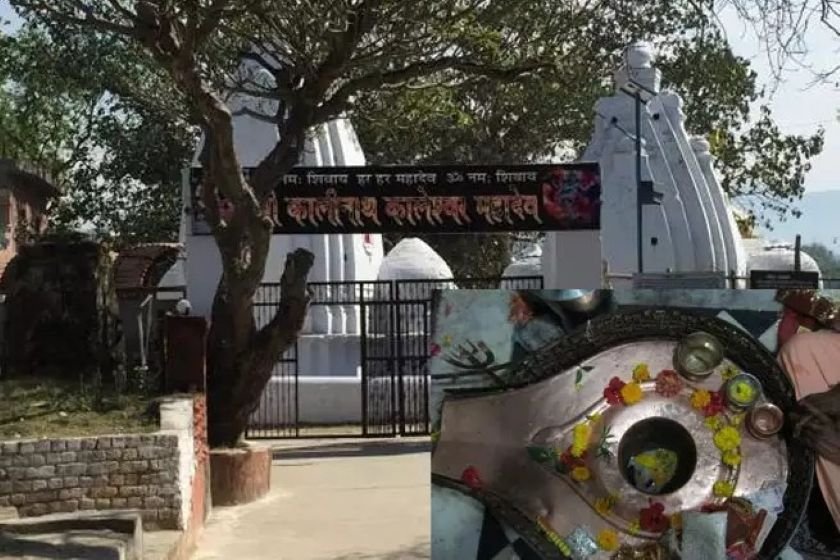
The lingam is set below the level of the sanctum floor. Kangra’s district guide records the belief that it is slowly sinking. In one version told about the temple, it descends by the size of a grain each year. When it disappears, Kali Yuga, the present age in Hindu cosmology, is said to reach its end. The grain belongs to the telling; it is not a recorded measurement.
The shrine has another story about a moment when destruction was held back. After a battle with demons, Kali’s rage continued. Shiva lay in her path. When she stepped on him, she recognised him and calmed, and in the local telling she came to the Beas to do penance. The name Kalinath recalls the encounter of Kali and Shiva. The Kali of that story and the Kali Yuga of the sinking lingam are different ideas, even though both stories are told at the same shrine.
💧 The Panchtirthi Kund and Chintpurni Connection
The name Panchtirthi Kund refers to five sacred places. Local tradition says waters from five tirthas were brought together here, and some accounts credit the Pandavas. Ask which part of the complex is open before going down to the water.
The Chintpurni temple trust identifies Kaleshwar as the eastern Shiva guardian of its shrine. That tradition explains why a visitor may hear about Kaleshwar in Chintpurni even though the sites stand in different districts. Allow each its own travel and darshan time if combining them.
🙏 Visiting with Respect
Leave footwear at the designated spot, follow the queue and ask before taking photographs. If you have come to see the river, keep to permitted areas and give bathers space.
❓ Quick Questions Travellers Ask
Is this temple in Una? The Beas-side temple described here is in Kangra district. Amb and Chintpurni are useful approach points from Una.
Is Kalesar a different shrine? Kalesar is another name used for this Kaleshwar site.
What does the grain in the story mean? It represents the slow passage of Kali Yuga in a local telling of the lingam’s descent.
A Final Thought
At Kaleshwar the two things a visitor can see are the low place of the lingam and the river outside. The traditions give each of them a much longer sense of time.