On the banks of the Beas River near Pragpur stands a Shiva temple where the sacred lingam is said to be sinking, one barley grain’s width at a time, toward a prophecy about the end of an age.
Some temples draw pilgrims through spectacle, others through quiet detail — and Kaleshwar Mahadev Temple manages to offer both at once. It carries a founding myth that reaches back to the gods pacifying an uncontrollable Kali, a documented history running through the Katoch dynasty and British-era archaeology, and, running underneath all of that, a single strange, slow-motion belief: that the underground Shivling at its center is very gradually disappearing into the earth, and that its final disappearance will mark something far larger than the end of one temple.
🌄 Location & How to Reach It
- Location: Kaleshwar village, near Pragpur, Kangra district, Himachal Pradesh, on the banks of the Beas (Vyas) River
- Distance: Reports vary meaningfully — anywhere from roughly 8 km to 16 km from Pragpur depending on the source, with Jawalamukhi cited as the nearest larger town at roughly 12 km
- Google Maps: Get Directions
- GPS Coordinates: Not independently verified for this piece — use the map link above, or search “Kaleshwar Mahadev Temple, Kangra” directly on Google Maps for a precise pin before travelling
- Elevation/terrain: A riverside setting along the Beas, with the temple positioned directly on the bank rather than up on a ridge — a notably different, lower-lying setting than most other Kangra-district shrines in this series
- By road: Well-connected by buses and taxis from Kangra, Jawalamukhi, and Pathankot; local buses and taxis are also available roughly 7 km away at a stop called Sadba
- By rail: Amb Andaura station in Una district is the closest option at roughly 29 km, served by the Himachal Express; Kangra and Pathankot stations are the other regional alternatives, at greater distance
- By air: Gaggal Airport (Kangra) is the nearest, roughly 55 km away
The approach here is gentle and riverside rather than a hill climb, and the temple area maintains simple accommodation through its Mandir Committee, with more comfortable heritage-style lodging available nearby in Garli village for those who prefer it.
🌸 Best Time to Visit
Maha Shivratri is by far the temple’s biggest occasion, bringing night-long bhajans, havans, and a full fair to the riverbank. The month of Shravan (Saawan) is also considered especially auspicious, with special Mondays marked by abhishekam rituals, and sadhus are present at the temple in steady numbers throughout the year regardless of season. The Baisakhi fair held here is a further major draw, described as a state-level mela with cultural programs rather than a purely local gathering. Regular temple timings run from roughly 5:00 AM to 8:30 PM, with morning aarti around 6:00 AM and evening aarti around 7:00 PM, though it’s worth confirming locally since timings can shift slightly.
🕉️ The Legend: Kali’s Rage, Shiva’s Stillness
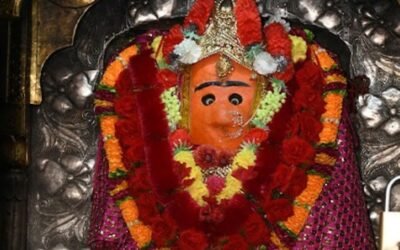
The most authoritative account of this temple’s origin, drawn from official regional sources, traces back to Satyug, the first age of Hindu cosmology. Demons — named in different versions as Jalandhar or Raktabeej — were terrorizing creation, and the gods turned to Shiva for help. Shiva called on Yogmaya, understood here as an incarnation of Mahakali, to take form and destroy them. She succeeded, but her rage in the aftermath of battle grew uncontrollable, threatening to consume creation itself along with the demons she’d defeated. To stop her, Shiva lay down directly in her path. When Kali’s foot came down on him and she realized what she’d done, her fury broke; she sought forgiveness and performed penance on the banks of the Beas at this exact spot. That act gave the place its name — Kalinath, “Lord of Kali,” later rendered as Kaleshwar.
A second, widely repeated tradition roots the temple instead in the Mahabharata: the Pandavas are said to have stayed near this site during their period of exile, offering prayers to Shiva here and, according to several accounts, beginning the temple’s actual physical construction themselves, with the Katoch dynasty continuing and expanding the structure in later centuries. A further, less commonly cited version names Uma (Parvati) rather than Kali as the goddess connected to the site, describing her sitting in meditation for 12,000 years to attain moksha, with Shiva granting her wish for a temple to be built here once satisfied by her devotion. A separate, single-source tradition even connects the spot to Parashuram performing penance. Given how many of these accounts overlap and compete, the Kali-pacification story is treated here as the primary, most institutionally documented tradition, with the Pandava-exile account as a strong secondary tradition and the Uma and Parashuram versions noted as less consistently attested variants.
Running alongside all of this is the detail that gives the temple its most distinctive local reputation: the Shivling inside the sanctum is said to be sinking into the earth by roughly the width of a barley grain every year. Local belief holds that once the lingam has fully submerged, it will mark the end of Kalyug, the current and final age in Hindu cosmology. It’s an unusually specific, almost measurable piece of prophecy for a temple legend, and it’s repeated consistently enough in regional accounts to be treated as a genuine, longstanding local tradition rather than a recent embellishment.
🙏 What the Deity Is Known For
Shiva is worshipped here as Kalinath Kaleshwar, or Maha Rudra, and is specifically understood in local tradition as linked to Mata Chintpurni, one of the recognized Shakti Peeths — a theological pairing that gives Kaleshwar Mahadev a kind of complementary status alongside that much larger Shakti shrine, rather than standing entirely apart from it. Devotees come here seeking the general blessings associated with Shiva worship, but the site’s specific reputation as a place of moksha, or liberation, is unusually strong, reinforced by the cremation ghat that sits directly alongside the temple on the riverbank. The temple is sometimes referred to locally as the “Mini Haridwar of Himachal,” a comparison to the great Ganges pilgrimage town that reflects how seriously the site is taken as a place for both ritual bathing and end-of-life rites.
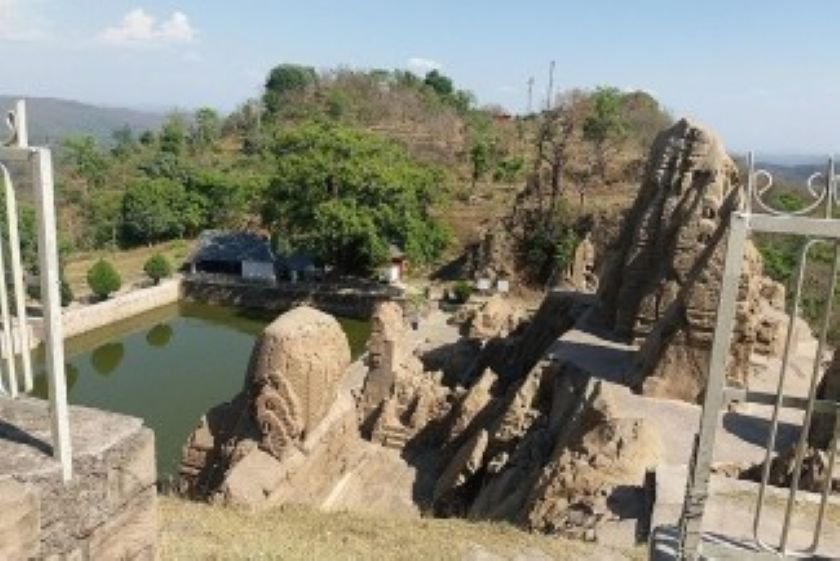
Adding to that reputation for holiness is the nearby Panchtirthi Kund, a holy pond believed to contain waters from five major pilgrimage tirthas — sites like Haridwar and Prayag are specifically mentioned — mixed together here, according to tradition, by the Pandavas or by divine forces. Bathing in this pond is understood to carry the combined merit of visiting all five sacred sites at once.
🏛️ The Temple Itself
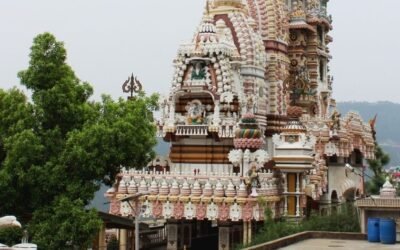
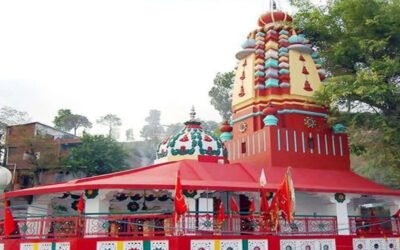
Kaleshwar Mahadev’s sanctum houses the central Shivling in a subterranean chamber so small that only one devotee can enter at a time — an intimate, almost private form of darshan rare among temples of this size and historical importance. Representations of Maha Kali, Maha Lakshmi, and Maha Saraswati are also present within the complex, reflecting the site’s dual Shiva-Shakti character rather than a purely Shaiva focus. The temple grounds feature genuinely fine stonework and carvings depicting Vedic and Puranic deities, and the whole site sits directly beside the Beas River, with a Hindu cremation ghat immediately adjacent, reinforcing the temple’s role in both daily worship and final rites.
One further natural phenomenon reported by temple caretakers and locals deserves mention: each monsoon season, the Beas River is said to rise steadily until its waters reach the jalahri, the base of the Shivling itself — at which point the flow reliably subsides. Whether read as coincidence, careful local observation of seasonal patterns, or genuine devotional sign, it’s treated by those who live nearby as a real, recurring feature of the site rather than a one-time story.
📜 Regional Context: Ancient Roots, Documented History
Unlike several of the more purely legend-driven temples in this series, Kaleshwar Mahadev has a genuinely documented historical record layered on top of its mythology. The site is generally described as ancient in mythological terms — with some accounts placing its roots anywhere from 1,000 to 4,000 years back — while its current physical structure is more consistently dated to around 400 years old, reflecting substantial expansion under the patronage of the Katoch dynasty, the historic rulers of Kangra. In 1913, British archaeologist Henry Shuttleworth formally documented the site, and it has since been recognized as a monument of national importance, with the Archaeological Survey of India reportedly involved in protection planning. That combination — deep myth, dynastic expansion, and formal archaeological recognition — places Kaleshwar Mahadev in a different category from smaller, purely oral-tradition shrines elsewhere in this district.
🎉 Festivals and Devotion
- Maha Shivratri: The temple’s largest annual occasion, marked by night-long bhajans, havans, and a full riverside fair.
- Shravan (Saawan) month: Special Mondays observed with abhishekam rituals, drawing steady crowds of devotees and sadhus throughout the month.
- Baisakhi fair: A major state-level mela with cultural programming, drawing visitors well beyond the immediate local area.
- Daily worship: Morning aarti around 6:00 AM and evening aarti around 7:00 PM, within general temple hours of roughly 5:00 AM to 8:30 PM.
🏞️ While You’re in the Area
- Garli Village: About 4 km from Pragpur, known for its heritage architecture, including the 19th-century Rajah’s Palace, and home to the area’s more comfortable heritage-style accommodation.
- Jwala Ji Temple: Roughly 12 km away, one of the 51 Shaktipeeths, famous for its naturally occurring eternal flames.
- Chintpurni Temple: About 40 km away, the Shakti shrine specifically linked to Kaleshwar Mahadev’s own Maha Rudra identity, making the pairing especially meaningful for pilgrims tracing that connection.
- Kangra Fort: Roughly 60 km away, a UNESCO-recognized site and one of the largest forts in the Himalayan region.
- Dada Siba Temple: About 25 km away, another ancient Shiva temple worth combining with a wider circuit of the district’s Shaiva sites.
- Dehra Gopipur: Around 12 km away, a small riverside town known for its natural beauty along the Beas.
❓ Quick Questions Travellers Ask
Is the Shivling really sinking, or is that just a story? There’s no independent verification of this beyond consistent local tradition, but the belief — that the lingam descends by roughly a barley grain’s width each year, with its full submersion marking the end of Kalyug — is a genuinely longstanding and widely repeated local prophecy, not a recent invention.
How old is the temple, exactly? This depends on which layer of the story you mean — mythologically, the site’s roots are placed anywhere from 1,000 to 4,000 years back, while the physical structure most visitors see today is generally dated to around 400 years old, following expansion under the Katoch dynasty.
Why is this temple sometimes called the “Mini Haridwar of Himachal”? Because of its riverside setting, its adjacent cremation ghat, and its strong local reputation as a place of moksha and ritual bathing — a comparison to the much larger pilgrimage town of Haridwar on the Ganges, reflecting the seriousness with which locals treat its spiritual significance.
What’s the Panchtirthi Kund, and is it safe to bathe in? It’s a holy pond near the temple believed to contain mixed waters from five major pilgrimage sites, granting bathers the merit of all five at once according to tradition; as with any natural pond, check current conditions locally before entering, particularly during monsoon season when the nearby river can rise significantly.
Is this an easy stop to combine with Jwala Ji or Chintpurni? Yes — both are within a reasonable driving distance (roughly 12 km and 40 km respectively), and the Chintpurni pairing in particular carries extra devotional meaning given Kaleshwar Mahadev’s own local identity as tied to that goddess.
A Last Word
Kaleshwar Mahadev holds together several things that don’t always coexist in one place — a founding myth about a goddess’s rage and a god’s stillness, a documented four centuries of dynastic expansion, formal archaeological recognition, and a quiet, almost mathematical prophecy ticking away underground, one grain at a time. Whatever brings you to its riverbank, it’s a temple that asks you to hold both the ancient and the exact in mind together, which is a rarer combination than it might first sound.
Fact-check note: The Mahakali-pacification origin story, drawn from an official regional government source, is treated here as the primary tradition, given its institutional sourcing; the Pandava-exile and construction account is a strong, widely repeated secondary tradition. The Uma/Parvati-moksha account and the single mention of Parashuram’s penance appear in far fewer sources and are noted as less-attested variants rather than dismissed outright. The temple’s age is reported inconsistently — mythological origins are described as 1,000 to 4,000 years old, while the physical structure is more consistently dated to roughly 400 years, following Katoch-dynasty expansion; both figures are presented rather than resolved into one. The sinking-Shivling prophecy and the river’s seasonal rise-and-subside pattern are consistently reported as local tradition and observation, not independently verified natural or physical phenomena. Distance from Pragpur varies across sources (roughly 8–16 km); no single figure is treated as definitive. No exact GPS coordinates or official contact details could be verified, and none are invented here.