
Temple & sacred site
Hu-Bu-Lan-Kar Gompa, Kalpa
A Buddhist Shrine in the Old Village
At a glance
- Location
- Old Kalpa village, Kinnaur district
- How to reach
- Drive up from Reckong Peo to Kalpa, then walk through the village lanes
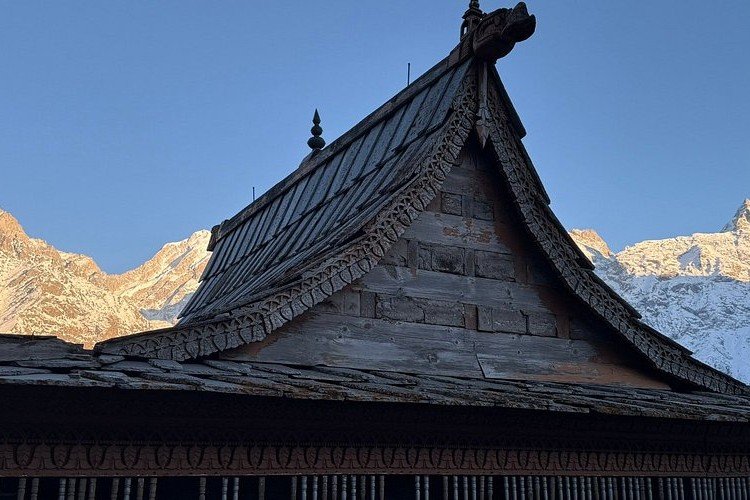
In the lanes of old Kalpa, a white chorten and prayer wheels mark a village monastery traditionally linked with the translator Rinchen Zangpo.
Hu-Bu-Lan-Kar belongs to the older walking part of Kalpa. It is close to the Narayan-Nagini temple, and a visit to both is a good way to see how the village’s places of worship sit side by side. The gompa also has a connection to the wider Buddhist history of the western Himalaya through its founding tradition.
🌄 Location and how to reach it
The gompa is in old Kalpa, above Reckong Peo in Kinnaur district. Official references use spellings including Hu-Bu-Lan-Kar and Hu-Bu-Lan-Car. Ask for the old village gompa near Narayan-Nagini if a map gives several monastery results.
Google Maps: Find Hu-Bu-Lan-Kar Gompa, Kalpa
- By road: Drive from Reckong Peo to Kalpa and use a suitable parking or drop-off point. The old lanes are best approached on foot.
- By public transport: Check the current Kalpa connection from Reckong Peo and the last return. Ask where the vehicle stops relative to the old village.
- On foot: Walk towards the Narayan-Nagini temple area and ask for the gompa. Allow for slopes and narrow passages between the village buildings.
🌸 Best Time to Visit
A daylight visit gives you time for the lanes and the courtyard. If you are travelling in winter or after snowfall, check the approach and surfaces underfoot. Ask locally whether the hall is open before planning your day around an interior visit.
📜 The Rinchen Zangpo Tradition
Kinnaur’s district guide says the gompa is traditionally credited to Rinchen Zangpo. Remembered as a translator of Buddhist texts, he is also associated with other monasteries in the western Himalaya. Himachal Tourism links his work with Nako, farther up the Kinnaur route. These traditions give visitors a way to connect the small village gompa with a wider history of translation and Buddhist learning.
The traditional attribution concerns the monastery’s origins. The official summaries give no construction date for the individual timber elements visible today. If you want to learn about repairs or changes to the building, ask the people who look after the gompa.
🪷 What to See From the Courtyard
Himachal Tourism mentions a white chorten, prayer wheels and carved dragons on wooden pillars. Start with what you can see from the visitor area, then ask whether you can enter the hall. The nearby Narayan-Nagini temple makes a natural second stop. Give each its own time and follow the separate rules at the two worship spaces.
🙏 Visiting with Respect
Keep the doorway and prayer wheels clear for worshippers. Ask before taking pictures or entering the prayer hall, and follow any directions about footwear. If the hall is closed, a walk around the village still gives context to the gompa and its setting.
❓ Quick Questions Travellers Ask
- Is this Brelengi Gompa? Hu-Bu-Lan-Kar is in old Kalpa. Brelengi is a separate monastery near Reckong Peo.
- Can I visit the gompa and Narayan-Nagini together? Yes. They are close enough to visit on the same village walk.
- Which spelling should I use? Try Hu-Bu-Lan-Kar or Hu-Bu-Lan-Car with Kalpa in the search.
A Final Thought
Allow enough time to find the gompa on foot and look at its details from the courtyard. Its place in the village is part of what makes it worth visiting.