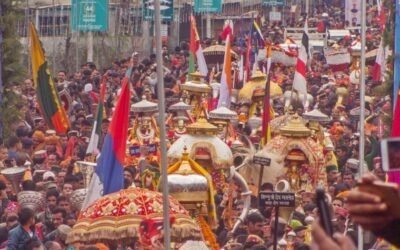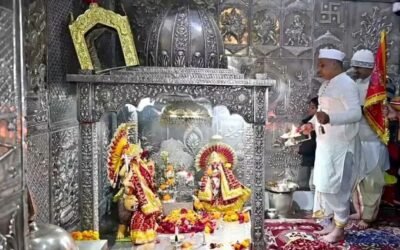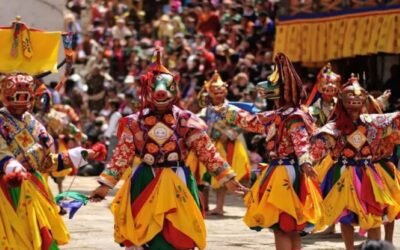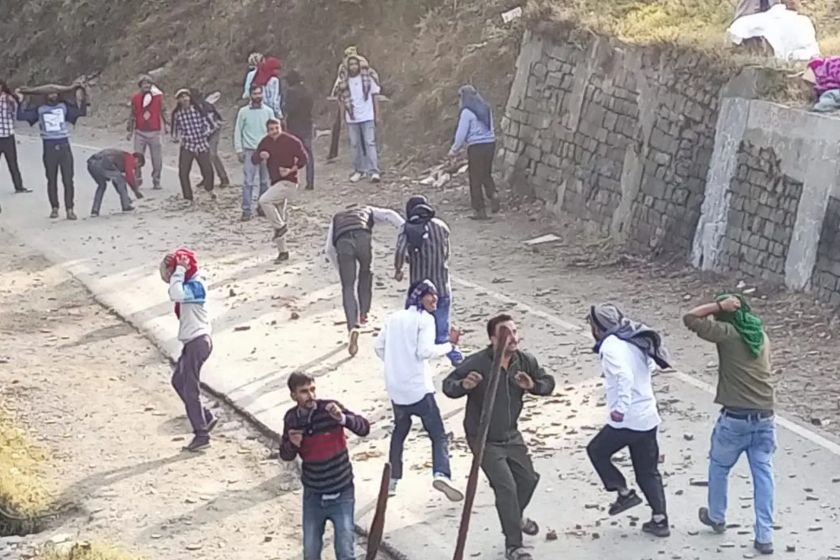
On the day after Diwali, the usually quiet hills around Dhami near Shimla witness one of Himachal Pradesh’s most unusual living traditions. Villagers gather on opposing sides of an open space, prayers are offered to the local goddess, and selected participants begin throwing stones towards the opposite group.
The ritual continues only until one participant is injured and blood appears. The stone throwing then stops, and blood from the injured person is traditionally used as a symbolic offering or tilak to the presiding deity.
Known as Pathar Ka Khel, Pathar Mela, Pattharon Ka Mela or the Dhami stone-pelting fair, the event is held annually at Halog in the former princely state of Dhami. It combines local faith, royal history, community participation and an inherited ritual that remains controversial because of the obvious risk of injury.
| Quick Detail | Information |
|---|---|
| Festival | Pathar Ka Khel or Pathar Mela |
| Location | Halog, Dhami |
| District | Shimla, Himachal Pradesh |
| Usual date | The day after Diwali |
| Festival type | Religious and community ritual |
| Presiding deity | Local tradition associates the ritual with the goddess worshipped at Dhami |
| Main ceremony | Symbolic stone throwing between two groups |
| Ritual conclusion | The ceremony stops when a participant begins bleeding |
| Ideal visit duration | Half day |
| Nearest major city | Shimla |
| Distance from Shimla | Approximately 25–30 kilometres, depending on the route |
| Best suited for | Responsible cultural travellers and documentary photographers |
| Safety level | High caution required |
| Date advice | Confirm the annual timing and public arrangements locally |
Where Pathar Ka Khel Is Held
Pathar Ka Khel is organised at Halog in the Dhami area of Shimla district. Halog once served as the seat of the former Dhami princely state and continues to preserve traditions connected with the erstwhile royal family and surrounding villages.
The gathering takes place in a hilly open area where spectators watch from slopes and elevated positions. The terrain is uneven, and the ceremony attracts a dense crowd despite its relatively short duration.
Dhami should not be confused with the better-known tourist neighbourhoods of central Shimla. It is a rural settlement reached by mountain roads, and facilities around the ritual venue are limited.
When Is Pathar Ka Khel Celebrated?
The festival is traditionally held on the day after Diwali.
Because Diwali follows the Hindu lunar calendar, the Gregorian date changes every year. The ritual usually takes place during October or November.
Visitors should confirm:
- The exact festival date
- Ceremony timing
- Road and parking arrangements
- Safe spectator areas
- Police restrictions
- Weather conditions
The main stone-throwing ritual may last only a short time. Arriving late can mean missing it completely.
The Beginning of the Ceremony
Before the stone throwing begins, worship is performed according to local tradition.
Members connected with the former royal family, temple functionaries, community representatives and participants gather for ceremonial prayers. Some accounts describe a procession connected with the local deity before the participants move towards the ritual ground.
The stone throwing does not begin as an uncontrolled fight. It follows a locally recognised sequence and is conducted between designated groups representing communities associated with the tradition.
Spectators are expected to remain outside the active area.
How Pathar Ka Khel Takes Place
Participants assemble on two opposing sides of the ritual space. After the ceremonial signal, they begin throwing stones towards the other group.
The stones are usually picked from the surrounding ground. Participants attempt to protect themselves while continuing to throw towards the opposing side.
The ritual stops as soon as one person is struck and begins bleeding. The injured participant is then taken forward, and the blood is traditionally used to apply a symbolic tilak to the local goddess.
After the offering, the competitive phase ends. Music, singing and community celebration may follow.
Recent reporting from Dhami continues to describe two groups participating until blood is drawn, after which the ritual is stopped and the deity is honoured.
Who Participates in the Stone Throwing?
Local descriptions commonly identify one side with representatives associated with the former Dhami royal establishment and the other with people from neighbouring villages or local communities.
Accounts differ regarding the precise names and composition of the participating groups. This may reflect changes in local organisation or differences in how outsiders have recorded the ceremony.
The participants are not random visitors. They are members of communities connected with the inherited tradition.
Tourists should never enter the active area, pick up stones or attempt to join the ritual.
The Story Behind the Tradition
The exact historical origin of Pathar Ka Khel has not been conclusively documented.
The most widely repeated local explanation connects the ritual with an earlier practice of sacrifice to a goddess. According to this tradition, stone throwing eventually replaced a more severe form of offering, and the small quantity of blood drawn from an injured participant became the symbolic sacrifice.
Another version associates the change with a queen of the former Dhami royal family who opposed human sacrifice. In this narrative, she offered herself or intervened so that the older practice would end, after which the symbolic blood offering through stone throwing was established.
These stories form part of Dhami’s oral tradition. They should not be presented as verified historical fact because versions differ and surviving documentation is limited.
What can be stated more carefully is that local participants understand the blood offering as a religious act intended to honour the deity and seek protection, peace and prosperity for the area.
Connection with the Former Dhami Royal Family
The former royal family of Dhami remains associated with the organisation and ceremonial opening of the fair.
Members of the family traditionally participate in worship and may perform the first symbolic act before the stone throwing begins. Their presence reflects the ritual’s connection with the political and religious traditions of the former princely state.
However, the event today depends equally on the participation of local villagers, temple functionaries, organisers, police, medical teams and the wider community.
Religious Meaning of the Blood Offering
For participating communities, the appearance of blood marks the completion of the ritual.
The blood is not viewed simply as the result of an injury. It is interpreted as an offering to the deity and as a sign that the ceremonial requirement has been fulfilled.
Once blood appears, the throwing stops. Continuing after that point would go against the accepted ritual sequence.
Local belief associates the offering with protection from disease, misfortune and natural calamity, as well as with peace and prosperity. These interpretations belong to the community’s religious tradition and should be described as belief rather than established historical or scientific fact.
Is Pathar Ka Khel Dangerous?
Yes. Throwing stones at people creates a genuine risk of injury.
Participants may suffer cuts, bruises, head injuries, eye injuries or fractures. Spectators can also be harmed if they enter an unsafe area or stand within the path of a stray stone.
Claims that serious injury cannot occur because the deity protects participants should be understood as expressions of faith, not as a safety guarantee.
Modern arrangements may include:
- Police deployment
- Crowd barriers
- Designated spectator zones
- Medical personnel
- Ambulance support
- Local volunteers
- Controlled access to the ritual area
Visitors must follow all official instructions, even when local spectators appear to stand closer.
Where Spectators Should Stand
The ritual is normally watched from surrounding slopes, paths and elevated areas.
Choose a location that:
- Is clearly outside the throwing zone
- Has been accepted by police or organisers
- Does not block an emergency route
- Provides stable footing
- Is not directly behind either participant group
- Allows a safe exit after the ceremony
Do not move downhill towards the participants once stone throwing has started.
A long camera lens is safer than trying to photograph the event from close range.
Visiting with Children
Pathar Ka Khel is not an ideal event for small children.
The combination of flying stones, steep slopes, large crowds and limited escape routes creates risks that may be difficult for parents to control.
Families who still attend should:
- Remain far from the active area
- Follow police instructions
- Keep children beside an adult at all times
- Avoid crowded slopes
- Leave before the crowd begins dispersing
- Carry water and basic medicines
- Never allow children to pick up or throw stones
Elderly visitors and anyone with limited mobility should also choose a stable viewing area well away from the main crowd.
Responsible Photography
Pathar Ka Khel attracts photographers because of its dramatic movement and unusual ritual. However, the ceremony should not be treated as a stunt arranged for cameras.
Photographers should:
- Stay outside the active zone
- Avoid blocking participants and officials
- Use a telephoto lens
- Protect equipment from dust and flying debris
- Avoid flash during worship
- Ask before photographing an injured participant closely
- Never request that a ritual action be repeated
- Avoid sensational images that remove the event from its cultural context
Drone use should not be attempted without clear administrative permission. A drone above a crowded stone-throwing ceremony could distract participants and create an additional safety hazard.
What Visitors Can Expect
Pathar Ka Khel is a local ritual rather than a large tourism fair.
Visitors should expect:
- A rural mountain setting
- Limited parking
- Steep and uneven walking paths
- Dense crowds near the venue
- Few permanent visitor facilities
- A short main ritual
- Police restrictions
- Religious ceremonies before and after the stone throwing
- Traditional music and community gathering
- Possible mobile-network congestion
There may be small local stalls, but visitors should not expect the scale of a major state fair such as Kullu Dussehra or Mandi Shivratri.
Best Time to Arrive
Reach Dhami several hours before the expected ceremony.
An early arrival allows time to:
- Find authorised parking
- Walk to the venue
- Identify a safe viewing position
- Observe the preliminary worship
- Understand police instructions
- Avoid rushing through the crowd
The exact ritual time may be influenced by religious ceremonies and local decisions. Maintain flexibility rather than planning an immediate onward journey.
How to Reach Dhami
Dhami is reached by road from Shimla and adjoining parts of the district.
From Shimla
The road journey from Shimla generally covers approximately 25 to 30 kilometres, depending on the chosen route and starting point.
Travel time may be around one to one-and-a-half hours under ordinary conditions, but Diwali traffic and event-day congestion can make the journey longer.
Visitors should begin early and avoid relying completely on online travel-time estimates.
From Chandigarh
Travellers from Chandigarh can first reach Shimla or use an appropriate connecting road depending on local conditions.
Because the festival ritual is brief and local transport is limited, an overnight stay near Shimla is more practical than attempting a tightly scheduled same-day journey from Chandigarh.
By Bus
Local or regional buses may operate towards Dhami and surrounding settlements, but frequency can be limited on holidays.
Special arrangements may occasionally be made during the fair, but they should not be assumed. Confirm return transport in advance.
By Train
Shimla Railway Station, on the Kalka–Shimla narrow-gauge line, is the nearest practical railway connection. From Shimla, visitors must continue by road.
By Air
Shimla Airport at Jubbarhatti is geographically close but has limited flight connectivity. Chandigarh Airport is the most practical major airport for many travellers.
Where to Stay
Accommodation in Dhami itself is limited.
The most practical bases are:
- Shimla
- Totu
- Ghanahatti
- Shoghi
- Nearby homestays, where available
Shimla offers the widest range of hotels and transport services.
Visitors staying outside the town should confirm road access, parking and return arrangements because the festival takes place immediately after Diwali, when transport availability may be reduced.
Weather and What to Carry
The event is held during autumn, when days around Shimla can be pleasant but mornings and evenings are cool.
Carry:
- A warm jacket
- Shoes with strong grip
- Drinking water
- Personal medicines
- Power bank
- Sun protection
- Some cash
- A small first-aid kit
- Dust protection for camera equipment
Avoid loose footwear because the slopes around the viewing area may be covered with stones, dry leaves or uneven soil.
Cultural Etiquette
Pathar Ka Khel is a community religious tradition, not a recreational stone fight.
Visitors should:
- Remain outside the participant area
- Never throw a stone
- Do not touch ritual objects
- Respect the procession and temple worship
- Ask before close photography
- Avoid mocking or provoking participants
- Follow police and organiser instructions
- Keep emergency paths clear
- Do not consume alcohol at the venue
- Carry all waste back
It is possible to discuss the risks of the custom while still treating the local community with respect.
Tradition and Modern Safety Concerns
Pathar Ka Khel raises a difficult question: how should a community preserve a living tradition that involves deliberate physical risk?
For local participants, the ceremony represents faith, identity and continuity with previous generations. For administrators and visitors, the possibility of injury creates legitimate safety concerns.
A responsible account should neither romanticise the violence nor dismiss the people who preserve the ritual.
The safest approach is to document the tradition accurately, recognise its religious meaning and support measures that reduce harm. Visitors should observe only from authorised areas and must never treat participation as an adventure activity.
Nearby Places to Visit
A journey to Dhami can be combined with selected destinations around Shimla.
Shimla: The state capital, known for the Ridge, Mall Road, Christ Church and colonial architecture.
Tara Devi Temple: A prominent hilltop temple on the Shimla–Kalka side.
Chadwick Falls: A seasonal waterfall reached through forested surroundings near Summer Hill.
Indian Institute of Advanced Study: A historic building at Observatory Hill in Shimla.
Sankat Mochan Temple: A popular Hanuman temple overlooking the Shimla hills.
Do not schedule a distant attraction immediately after the ritual. Crowd dispersal and traffic can make departure slow.
Frequently Asked Questions
What is Pathar Ka Khel?
Pathar Ka Khel is an annual ritual at Dhami in which two designated groups throw stones towards each other until a participant begins bleeding.
Where is it held?
It is held at Halog in the Dhami area of Shimla district.
When does Pathar Ka Khel take place?
It is traditionally organised on the day after Diwali. The exact Gregorian date changes every year.
Why do participants throw stones?
Local tradition understands the ritual as a symbolic blood offering to the presiding goddess and as a replacement for an older form of sacrifice.
How does the ritual end?
The stone throwing stops when a participant is injured and blood appears. The blood is traditionally used to apply a tilak to the deity.
Can tourists participate?
No. Visitors should remain in authorised spectator areas and should never enter the ritual or throw stones.
Is the event safe to watch?
There is a real risk from stray stones, steep terrain and crowding. Safety depends on remaining well outside the active zone and following official instructions.
Is there an entry fee?
General viewing is normally not associated with a formal entry fee, but parking or local arrangements may change.
How long does the stone throwing continue?
The duration is unpredictable because the ceremony ends as soon as blood is drawn. It may be over within a short period.
Is Pathar Ka Khel suitable for children?
It is not recommended for small children because of flying stones, crowds and uneven terrain.
Final Words
Pathar Ka Khel is one of Himachal Pradesh’s most striking and complex living traditions. Its power comes from the tension between faith and physical danger, royal history and village participation, continuity and modern safety concerns.
For the communities of Dhami, the ritual is not performed to entertain outsiders. It is an inherited religious obligation connected with the local deity and the identity of the former princely region.
Visitors should witness it from a safe distance, avoid sensationalising injuries and respect the boundaries established by organisers. Seen responsibly, Pathar Ka Khel offers a rare insight into how old Himalayan traditions continue to survive while confronting the realities of the present.