Sujanpur Tira Fort is one of the most important hidden heritage places in Hamirpur district of Himachal Pradesh. Located near Sujanpur town on the banks of the Beas River, this old fort is closely connected with the Katoch dynasty, Raja Sansar Chand, Kangra-style art, old temples, the famous Chaugan ground, and the royal history of lower Himachal.
Sujanpur Tira is not a crowded hill station or a polished palace destination. It is a quiet historical town where ruins, temples, old walls, open grounds, and local life still carry the memory of a powerful hill kingdom. For travellers who enjoy heritage walks, old forts, photography, temple architecture, and lesser-known stories of Himachal, Sujanpur Tira Fort is a meaningful place to explore.
Quick Information About Sujanpur Tira Fort
| Detail | Information |
|---|---|
| Place | Sujanpur Tira Fort |
| District | Hamirpur, Himachal Pradesh |
| Near | Sujanpur town |
| Best Known For | Katoch dynasty history, old fort ruins, Baradari, temples, Chaugan ground |
| Built / Developed By | Katoch rulers of Kangra |
| Important Historical Figure | Raja Sansar Chand |
| Approximate Distance from Hamirpur | Around 22 km |
| Ideal Visit Duration | 2 to 4 hours |
| Best Time to Visit | October to March |
| Suitable For | Heritage lovers, photographers, families, history travellers |
| Travel Type | Hidden Gem / Heritage Fort / Historical Town |
Why Sujanpur Tira Fort is a Hidden Gem
Sujanpur Tira Fort is a hidden gem because it has strong history but does not receive the attention that many better-known forts and palaces get. Many travellers pass through Hamirpur district without realising that Sujanpur was once an important centre of power, art, architecture, and royal culture.
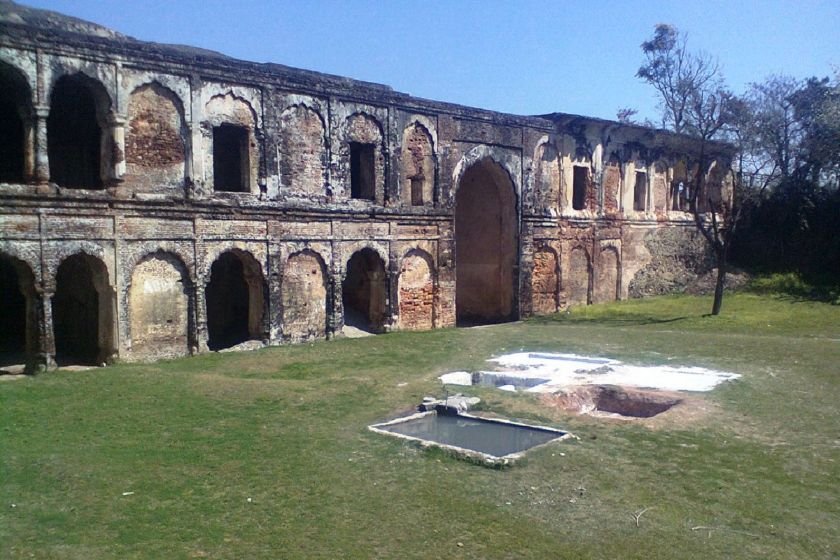
The fort area does not feel like a fully restored monument. Some sections are in ruins, and that raw condition gives the place a different kind of charm. The old walls, open spaces, temple remains, Baradari, and views around the area create a quiet historical atmosphere.
Sujanpur Tira is ideal for travellers who like places with layers. It is not only about one fort. It is about the fort, the town, the Chaugan, the temples, the Beas-side setting, and the old Katoch legacy together.
History of Sujanpur Tira
Sujanpur Tira is closely linked with the Katoch dynasty of Kangra. The fort is generally associated with Raja Abhay Chand and later with Raja Sansar Chand, one of the most important rulers of the Katoch line. The official Hamirpur district information also identifies Sujanpur Fort as connected with the historical Katoch dynasty.
Raja Sansar Chand is remembered as a major patron of Kangra art, especially the Kangra school of miniature painting. During his time, Sujanpur became an important cultural and political centre. The town and fort area developed as a royal seat where art, architecture, temples, and courtly life flourished.
This connection makes Sujanpur Tira more than a simple fort ruin. It is part of the wider cultural history of Kangra and lower Himachal.
Connection with Raja Sansar Chand
Raja Sansar Chand played a major role in shaping the identity of Sujanpur Tira. He is remembered for his love of art, architecture, temples, and royal patronage. Under his influence, Sujanpur became closely associated with Kangra-style paintings and court culture.
The remains around Sujanpur still carry the memory of that period. The Baradari, temples, and old structures reflect the artistic and royal environment that once existed here.
For travellers interested in Himachal’s cultural history, Raja Sansar Chand’s connection gives Sujanpur Tira a very special place.
The Fort Area and Old Ruins
The fort area of Sujanpur Tira is spread over a raised side near the town. Today, visitors can see remains of old walls, gateways, structures, and open spaces that give a sense of the site’s former importance.
The fort is not maintained like a grand palace museum, so visitors should come with realistic expectations. Its beauty lies in its age, silence, and historical feeling rather than polished restoration.
Walking through the fort area, you can imagine how this place once functioned as a royal and administrative centre. The views around the fort, combined with the old stone and brick remains, make it a good place for photography and slow exploration.
Baradari of Raja Sansar Chand
One of the important heritage features of Sujanpur Tira is the Baradari, often associated with Raja Sansar Chand. A Baradari is a pavilion-style structure traditionally used for gatherings, courtly meetings, or leisure.
The Hamirpur district information mentions the Bara-Dari or court room of Raja Sansar Chand at Sujanpur. This makes it one of the key heritage points connected with the old royal setting of the town.
The Baradari adds to the historical value of Sujanpur because it reflects the court culture and architectural style of the period.
Sujanpur Chaugan
Sujanpur is also famous for its large Chaugan, an open ground that gives the town a unique identity. The official district information describes Sujanpur as famous for its Chaugan ground, which is among the largest in the state.
The Chaugan is not just an empty field. Historically, such grounds were important for gatherings, fairs, sports, public events, and royal activity. Even today, it gives Sujanpur a spacious and distinctive character.
The fort, temples, and Chaugan together create a complete heritage town experience.
Old Temples of Sujanpur Tira
Sujanpur Tira is also known for its old temples. These temples are important because they show the religious and architectural character of the Katoch period.
The area is associated with temples such as Gauri Shankar Temple, Murli Manohar Temple, and Narvdeshwar Mahadev Temple. The Hamirpur district information mentions Gauri Shankar Temple from 1793, Murli Manohar Temple from 1790, and Narvdeshwar Mahadev Temple built in 1823.
These temples make Sujanpur Tira more than a fort destination. They connect the place with local faith, royal patronage, and Kangra-region architecture.
Gauri Shankar Temple
Gauri Shankar Temple is one of the important temples associated with Sujanpur Tira. It is connected with the time of Raja Sansar Chand and adds strong religious and historical value to the area.
The temple is dedicated to Lord Shiva and Goddess Parvati. Its presence near the fort region shows how royal sites and religious spaces were closely connected in hill states.
For visitors, this temple is a meaningful stop during a Sujanpur heritage walk.
Murli Manohar Temple
Murli Manohar Temple is another important temple in Sujanpur town. It is dedicated to Lord Krishna and is associated with the late 18th-century period.
The temple adds to the devotional and cultural identity of Sujanpur. Along with the fort and other temples, it helps visitors understand how Sujanpur developed as a centre of both power and faith.
Narvdeshwar Mahadev Temple
Narvdeshwar Mahadev Temple is one of the most beautiful temples in Sujanpur. It is known for its old wall paintings, temple architecture, and sacred atmosphere.
The temple is especially important for travellers interested in art and religious heritage. Its murals and design reflect the artistic environment that flourished in this region.
If you are visiting Sujanpur Tira Fort, Narvdeshwar Mahadev Temple should be included in the same trip.
Kangra Painting and Cultural Legacy
Sujanpur Tira has a strong connection with the Kangra school of painting. Raja Sansar Chand is widely remembered as one of the greatest patrons of this art tradition.
Kangra paintings are known for their delicate lines, graceful figures, natural settings, devotional themes, and refined use of colour. The royal patronage at places like Sujanpur helped this style flourish.
This artistic connection makes Sujanpur Tira important not only for history lovers but also for art lovers. The town represents a period when Himachal’s hill courts supported painting, architecture, music, and temple culture.
Beas River and Town Setting
Sujanpur is located near the Beas River, and the town has a peaceful lower-Himalayan setting. Unlike the high mountain destinations of Himachal, Sujanpur has a softer landscape with river-side influence, open spaces, gentle hills, and old town character.
This setting makes Sujanpur suitable for a relaxed heritage day trip. The fort ruins, temples, Chaugan ground, and town lanes can be explored slowly.
The place is especially good for people who enjoy heritage without heavy crowds.
Best Time to Visit Sujanpur Tira Fort
The best time to visit Sujanpur Tira Fort is from October to March. During these months, the weather is comfortable for walking, photography, and exploring the fort and temples.
Summer can be hot in the lower Himachal belt, especially during the afternoon. If visiting in summer, plan your visit early in the morning or late in the evening.
Monsoon brings greenery, but old stone areas and uneven paths can become slippery. Travel carefully during heavy rain.
Winter is pleasant for a slow heritage walk and is one of the best seasons to explore Sujanpur.
How to Reach Sujanpur Tira Fort
Sujanpur Tira Fort is best reached by road. Sujanpur town is well connected with Hamirpur, Nadaun, Kangra, Palampur, and other nearby regions.
From Hamirpur
Sujanpur is around 22 km from Hamirpur town. This is the most practical route for many travellers. The drive is short and suitable for a half-day or one-day trip.
From Kangra
Travellers from Kangra can reach Sujanpur by road through the lower Kangra-Hamirpur side. It can be included in a heritage route with Pragpur, Garli, or other nearby places depending on the plan.
From Palampur
Palampur is another useful access point. Travellers staying in Palampur can plan Sujanpur Tira Fort as a day trip if they start early.
From Chandigarh
Travellers coming from Chandigarh can plan Sujanpur as part of a Hamirpur-Kangra heritage route. It is better suited for an overnight or multi-stop itinerary rather than a rushed same-day visit.
Suggested Half-Day Plan
Start from Hamirpur, Kangra, or Palampur in the morning and reach Sujanpur. First explore the fort area and Baradari. Spend time understanding the old structures and views.
After that, visit the Chaugan ground and nearby temples such as Murli Manohar Temple, Gauri Shankar Temple, and Narvdeshwar Mahadev Temple if time allows.
Keep the plan slow. Sujanpur is best experienced as a heritage town, not just a quick fort stop.
Nearby Places to Visit
Sujanpur Tira Fort can be combined with several nearby places in Hamirpur and Kangra region.
Sujanpur Chaugan
The Chaugan is one of the most important landmarks of Sujanpur. It gives the town a wide and open character and is strongly connected with local events and public life.
Narvdeshwar Mahadev Temple
Narvdeshwar Mahadev Temple is an important temple known for its heritage value and religious importance. It should be included with a Sujanpur visit.
Hamirpur Town
Hamirpur is the main town and district headquarters. It works as a practical base for food, transport, stay, and nearby travel.
Nadaun
Nadaun is located on the Beas River side and is known for its peaceful setting and historical references. It can be included in a lower Himachal route.
Pragpur and Garli
Pragpur and Garli are beautiful heritage villages in Kangra district. They can be combined with Sujanpur in a broader heritage itinerary.
Travel Tips for Sujanpur Tira Fort
Wear comfortable footwear because the fort area may have uneven surfaces and old pathways.
Carry drinking water, especially during summer.
Visit early morning or late afternoon for better weather and softer light for photography.
Do not climb unsafe walls or damaged structures. Old ruins should be respected and explored carefully.
Avoid writing on walls, scratching stones, or damaging heritage remains.
Respect temples and local customs. Dress modestly and ask before photographing interiors or rituals.
Keep the fort and temple areas clean. Do not leave plastic bottles, food packets, or waste behind.
If exploring with family or children, be careful around broken sections and open edges.
Who Should Visit Sujanpur Tira Fort?
Sujanpur Tira Fort is ideal for heritage lovers, photographers, families, history travellers, art lovers, and people interested in the old hill kingdoms of Himachal.
It is also suitable for travellers who enjoy quiet towns, temple architecture, old ruins, and cultural routes.
This place may not suit visitors looking for luxury cafés, nightlife, adventure activities, shopping streets, or highly commercial tourist entertainment. Sujanpur Tira is best enjoyed by people who appreciate history, silence, and slow exploration.
Final Words
Sujanpur Tira Fort is one of the most meaningful hidden heritage gems of Himachal Pradesh. With its Katoch dynasty history, Raja Sansar Chand connection, Baradari, old temples, Kangra painting legacy, Chaugan ground, and Beas-side setting, it offers a rich and quiet travel experience.
It may not be as famous as many tourist places in Himachal, but its historical value is strong. Sujanpur Tira reminds visitors that Himachal’s heritage is not limited to hill stations and famous temples. It also lives in old forts, royal towns, art traditions, and forgotten courtyards.
For travellers who want to explore the cultural and historical side of lower Himachal, Sujanpur Tira Fort deserves a proper visit.