Long after the lamps of Diwali have faded elsewhere, fire once again illuminates the mountain villages of Sirmaur. Bundles of wood are turned into flaming torches, drums echo through the cold night, traditional songs continue until dawn, and families gather to celebrate a festival inherited through generations.
Known as Buddhi Diwali, Budhi Diwali or locally by names such as Mashrali, this distinctive celebration is observed in parts of the Shillai, Sangrah and adjoining hill regions of Sirmaur. It usually takes place several weeks after the main Diwali festival, although its exact date and customs vary from village to village.
Buddhi Diwali is not simply a delayed version of the festival celebrated across India. In the Trans-Giri region, it is closely connected with the agricultural calendar, local deities, ancestral traditions, community feasts, folk music and torch-lit ceremonies.
| Quick Detail | Information |
|---|---|
| Festival | Buddhi Diwali |
| Main region | Shillai, Sangrah and parts of the Trans-Giri area |
| District | Sirmaur, Himachal Pradesh |
| Other local names | Budhi Diwali, Mashrali or Manshari in some communities |
| Usual period | Several weeks after the main Diwali |
| Festival type | Seasonal, religious and community celebration |
| Main attractions | Torch processions, folk songs, traditional dances and village feasts |
| Duration | Varies by village, commonly several days |
| Best place to experience it | A participating village with local guidance |
| Nearest major road base | Paonta Sahib |
| Best suited for | Cultural travellers and responsible photographers |
| Date advice | Confirm the village-specific date before travelling |
Where Buddhi Diwali Is Celebrated
In Himachal Pradesh, Buddhi Diwali is associated with selected communities in parts of Sirmaur, Shimla, Kullu and Mandi. The customs, names and dates are not identical across these regions.
Within Sirmaur, the festival is particularly connected with villages in and around:
- Shillai
- Sangrah
- Haripurdhar
- Rajgarh
- Rohnat
- The wider Trans-Giri belt
Accounts of the festival frequently mention Shillai and Sangrah as important centres of the tradition. However, each village follows its own inherited calendar and ceremonial practices. A ritual observed in one settlement should not automatically be described as common to the entire district.
Why Is It Called Buddhi Diwali?
“Buddhi” or “Budhi” Diwali is commonly understood as “Old Diwali” or a Diwali celebrated after the main festival.
A widely repeated explanation says that news of Lord Rama’s return to Ayodhya reached remote Himalayan settlements several weeks late, leading local communities to celebrate Diwali after the rest of the country.
This is an important part of popular oral tradition, but it should not be treated as the only established origin of the festival.
Local people and researchers also connect Buddhi Diwali with:
- The end of agricultural work
- The completion of the seasonal harvest
- Community worship after crops have been stored
- Local deity traditions
- Ancestral remembrance
- Protection from harmful forces
- The beginning of the winter social season
In some villages, residents do not accept the delayed-news explanation as the complete history of their celebration. This suggests that Buddhi Diwali developed through several overlapping religious, agricultural and community traditions rather than from one universally agreed event.
When Is Buddhi Diwali Celebrated?
Buddhi Diwali is generally observed several weeks after the main Diwali, often during November or December. The exact date may be decided according to the local lunar calendar, village custom or instructions associated with the presiding deity.
Some villages celebrate it annually, while the timing and scale may differ elsewhere.
Visitors should not rely on the previous year’s date. Before planning a journey, confirm the schedule through:
- The local gram panchayat
- Village residents
- Temple or devta committee
- Sirmaur district administration
- Local tourism authorities
- A trusted homestay owner or guide
The most significant rituals may take place late at night, before sunrise or over several days, making accurate local information essential.
The Torch-Lit Celebration
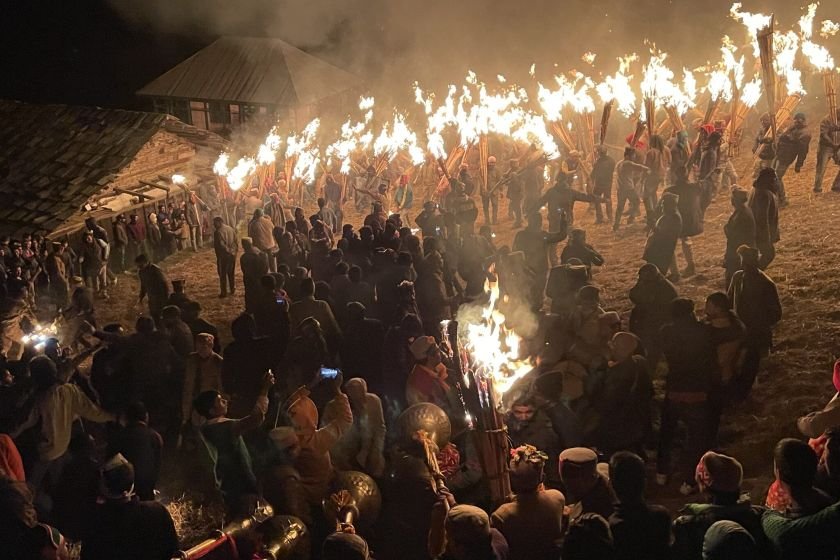
The most recognisable feature of Buddhi Diwali in Sirmaur is the procession of flaming torches.
Villagers gather bundles of dry wood or resin-rich material and bind them together to create long torches. At an appointed time, usually after dark or before dawn, these torches are lit and carried through village lanes or towards a common ceremonial space.
The flames illuminate traditional houses, courtyards and narrow mountain paths while drums and folk instruments accompany the gathering. In some communities, the torch procession is associated with driving away darkness, misfortune or harmful influences.
The ceremony may also represent collective strength and the renewal of social ties as villagers move together rather than celebrating separately inside their homes.
Visitors must keep a safe distance. The torches produce intense heat, falling sparks and smoke, and the procession routes are often narrow.
Bonfires and Community Gatherings
After the torch procession, villagers may gather around a large communal fire.
The fire becomes a focal point for:
- Ritual offerings
- Folk singing
- Traditional dancing
- Storytelling
- Community announcements
- Meetings among relatives and neighbours
- Sharing locally prepared food
In some areas, grains or homemade food preparations are offered into the sacred fire during a havan. Reports from Sirmaur describe the use of roasted grain preparations and the singing of traditional folklore as part of the celebration.
The precise meaning of the bonfire differs between villages. It may be associated with purification, protection, thanksgiving or the symbolic end of one agricultural cycle.
Traditional Songs and Harul
Folk singing is central to Buddhi Diwali.
Groups may perform local narrative songs that preserve stories of deities, warriors, historical conflicts, relationships and community memory. Harul is among the musical traditions associated with the wider Trans-Giri and neighbouring hill regions.
These songs are often performed collectively and may continue for hours. Their meaning cannot always be understood through a direct translation because the lyrics may contain local dialect, symbolic references and names known mainly within the community.
Drums and other traditional instruments maintain the rhythm while participants sing or dance in village courtyards.
Visitors should listen respectfully rather than treating such performances merely as entertainment. Many of these songs function as oral records of local society.
Traditional Dance and Village Participation
Dance during Buddhi Diwali is usually participatory rather than staged exclusively for tourists.
Men and women may form lines or circles and move slowly to the rhythm of drums and folk songs. The steps, formation and clothing vary by village.
In larger celebrations, local cultural organisations may arrange formal performances. These may include:
- Harul singing
- Tandi-style group performances
- Regional folk dances
- Dramatic presentations
- Traditional musical competitions
Formal stage programmes are a modern addition in some locations, while household and courtyard celebrations continue to preserve the festival’s community character.
Role of Local Deities
The living deity tradition remains influential across many parts of Sirmaur.
A village deity may determine or influence the ceremonial calendar, procession route, offerings and sequence of events. Temple officials, hereditary functionaries, musicians and community elders can all have designated responsibilities.
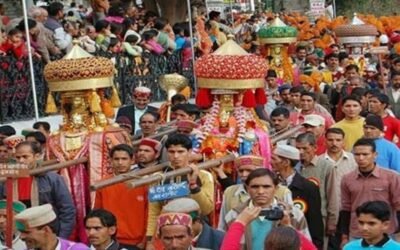
In some villages, the deity’s palanquin may be brought into a public space or carried during the celebration. In others, worship remains centred around the temple or a sacred fire.
These traditions should not be generalised. Visitors should follow local instructions and avoid touching:
- A deity’s palanquin
- Ritual weapons
- Musical instruments
- Ceremonial ornaments
- Sacred offerings
- Temple objects
Permission should be requested before photographing a deity, priest, oracle or private ceremony.
Agricultural Meaning of the Festival
Buddhi Diwali traditionally falls after important seasonal agricultural work has been completed.
By this time, grain and other produce have usually been collected and stored, allowing households to participate in an extended celebration before the harsher winter period begins.
This agricultural timing explains why the festival includes:
- Grain offerings
- Community meals
- Visits between relatives
- Household preparation of special dishes
- Collective singing and dancing
- Expressions of gratitude for the harvest
The celebration creates a social pause between the end of fieldwork and the beginning of the deepest winter months.
Traditional Food Prepared During Buddhi Diwali
Food customs vary throughout the Trans-Giri region, but families commonly prepare grain-based dishes, sweets and recipes suited to the winter season.
Depending on the village, these may include:
- Muda or mura made from roasted grain
- Asakali or asakli
- Shakuli
- Gulgule
- Local breads
- Seasonal pulses
- Meat dishes in communities where customary
- Homemade sweets
- Traditional fermented preparations
Some dishes are prepared for the household, while others may be shared with relatives, neighbours or guests.
Food terminology and recipes differ between villages. The same name may refer to slightly different preparations in adjoining areas.
How Long Does Buddhi Diwali Continue?
The celebration may continue for several days, and some reports describe week-long observances in parts of Sirmaur.
However, not every day includes a large public programme. The overall festival may involve separate stages such as:
- Household cleaning and preparation
- Collection of wood and torch-making material
- Worship of local deities
- Lighting of torches
- Processions and community bonfires
- Folk singing and dancing
- Visits to relatives
- Community meals
- Concluding religious ceremonies
Visitors should identify the main ceremonial day rather than expecting the same level of activity throughout the festival.
What Visitors Can Expect
Buddhi Diwali is primarily a village celebration, not a professionally managed tourism event.
A visitor may experience:
- Cold winter evenings
- Narrow and steep village paths
- Torch processions after dark
- Heavy smoke around bonfires
- Drumming that continues late into the night
- Limited public transport
- Simple local accommodation
- Few restaurants or tourist facilities
- Ceremonies whose timings change locally
The most meaningful experience usually comes from staying in a participating village with a local host who can explain where visitors may stand and which rituals should remain private.
Arriving without confirming the date or village programme may result in missing the main celebration entirely.
Best Places to Experience Buddhi Diwali in Sirmaur
Shillai is the best-known road base for exploring the Buddhi Diwali traditions of eastern Sirmaur. Sangrah, Haripurdhar and surrounding villages are also associated with related celebrations.
There is no single central fairground that represents the entire festival. The most authentic ceremonies take place within individual villages.
Before selecting a location, ask:
- Is Buddhi Diwali being celebrated there this year?
- Which night is the torch procession?
- Is accommodation available?
- Can outside visitors attend?
- Is photography permitted?
- Will the road remain open after dark?
- Is a local guide required?
A smaller village celebration may be culturally richer than a larger staged programme, but it also requires greater sensitivity from visitors.
How to Reach Shillai
Shillai is located in the eastern part of Sirmaur district and is connected by road with Paonta Sahib and other settlements along National Highway 707.
From Paonta Sahib
Paonta Sahib is the most practical major base for reaching Shillai. The mountain road passes through smaller settlements before climbing into the Trans-Giri region.
Travel time can increase considerably because of roadworks, landslides, fog or winter conditions.
From Nahan
Travellers starting from Nahan can reach the Trans-Giri area through road connections towards Renuka Ji, Sangrah or Paonta Sahib, depending on their final village.
The best route should be confirmed locally because the shortest-looking route may not always have the best road conditions.
From Solan or Shimla
Visitors from Solan or Shimla may travel through Rajgarh and adjoining hill roads towards the selected destination.
These routes are scenic but can involve long sections of narrow mountain road. Avoid arriving after dark unless accompanied by someone familiar with the area.
By Air
Dehradun Airport is a practical air connection for travellers approaching through Paonta Sahib. Chandigarh Airport offers a wider range of flights but requires a longer road journey.
By Train
Dehradun and Chandigarh are useful broad-gauge railway stations for onward road travel. There is no railway connection to Shillai.
Where to Stay
Accommodation in the interior villages can be limited.
Possible bases include:
- Shillai
- Paonta Sahib
- Sangrah
- Haripurdhar
- Rajgarh
- Local homestays in participating villages
Paonta Sahib offers a wider selection of hotels but may be too far away for a late-night ceremony in a remote village.
A village homestay is generally more practical when the main torch procession takes place at night or before dawn. Confirm heating, hot water, meals, parking and road access before booking.
Weather and What to Carry
Buddhi Diwali is celebrated during a cold part of the year. Nights in higher villages can be very cold, and frost or occasional snowfall may affect some routes.
Carry:
- A proper winter jacket
- Thermal innerwear
- Woollen cap and gloves
- Shoes with good grip
- Small torch or headlamp
- Power bank
- Drinking water
- Personal medicines
- Some cash
- Basic first-aid supplies
Do not stand too close to a fire while wearing loose synthetic clothing. Sparks from resinous wood can travel farther than expected.
Safety Around Torch Processions
Traditional fire ceremonies require particular caution.
Visitors should:
- Maintain a safe distance from flaming torches
- Never enter the centre of a moving procession
- Avoid blocking narrow village lanes
- Keep children away from fire
- Protect cameras from heat and sparks
- Avoid loose scarves near open flames
- Follow directions given by residents
- Never handle a ceremonial torch without permission
- Avoid flying drones over crowds or fires
Alcohol consumption and careless behaviour around open flames can create serious danger and should be avoided.
Cultural Etiquette for Visitors
Buddhi Diwali survives because local communities continue to practise it as their own festival. Visitors should not expect ceremonies to be altered for photography or convenience.
Respectful behaviour includes:
- Asking before entering a private courtyard
- Seeking permission before close photography
- Avoiding flash during rituals
- Not photographing people eating without consent
- Giving musicians and dancers sufficient space
- Not interrupting songs for explanations
- Dressing appropriately for a village religious event
- Avoiding loud personal music
- Taking all waste back
- Accepting food politely without wasting it
Some ritual spaces may be restricted to village residents or designated participants. Such boundaries must be respected.
Responsible Photography
The fire-lit processions of Buddhi Diwali are visually powerful, but photography should never become disruptive.
Use available light whenever possible and avoid placing a tripod in a procession route. Do not ask torch carriers to repeat movements or pose while handling fire.
Drone photography should only be attempted with explicit community and administrative permission. Apart from privacy concerns, a drone above a crowded torch procession can create distraction and a serious safety risk.
The best photographs come from observing quietly from an approved position.
Nearby Places to Visit
A Buddhi Diwali journey through Sirmaur can be combined with selected destinations depending on the village and route.
Paonta Sahib: A major Sikh pilgrimage town on the banks of the Yamuna.
Haripurdhar: A hill settlement associated with Maa Bhangayani Temple and panoramic mountain views.
Renuka Ji: Known for Renuka Lake, temples and forested surroundings.
Churdhar: A major mountain and pilgrimage destination, although winter access must be assessed carefully.
Rajgarh: A peaceful hill town surrounded by orchards and forested ridges.
Nahan: The district headquarters of Sirmaur, known for its old town, temples and lakes.
Do not plan remote sightseeing immediately after a late-night festival. Winter road conditions and fatigue can make early-morning driving unsafe.
Frequently Asked Questions
What is Buddhi Diwali?
Buddhi Diwali is a traditional Himalayan festival celebrated several weeks after the main Diwali in selected parts of Himachal Pradesh. In Sirmaur, it includes torch processions, community fires, folk music, dancing and village rituals.
Where is Buddhi Diwali celebrated in Sirmaur?
It is associated particularly with villages in the Shillai, Sangrah, Rajgarh and wider Trans-Giri regions.
Why is it celebrated after Diwali?
One popular oral tradition says that news of Lord Rama’s return reached remote mountain settlements late. Other interpretations connect the festival with harvest completion, local deities and older seasonal traditions.
Is Buddhi Diwali celebrated on the same date everywhere?
No. Dates, duration and rituals vary between villages. Travellers should confirm the local schedule before visiting.
What is the main attraction?
Torch-lit processions accompanied by drums, folk songs and community gatherings are among its most distinctive features.
Can tourists attend Buddhi Diwali?
Visitors may attend public celebrations where welcomed, but they should arrange local guidance and respect private or restricted rituals.
Is accommodation available in Shillai?
Basic accommodation and homestays may be available, while Paonta Sahib offers a broader range of hotels. Advance confirmation is important.
Is Buddhi Diwali suitable for children?
Children can attend with close supervision, but fire, smoke, darkness, cold weather and crowded village paths require caution.
Final Words
Buddhi Diwali is one of Sirmaur’s most distinctive living traditions. Its meaning lies not only in the flames carried through dark village lanes but also in the relationships sustained around them—between families, neighbours, ancestors, local deities and the agricultural landscape.
For an outsider, the festival offers a rare opportunity to understand the Trans-Giri region beyond its scenery. It reveals a society in which oral history, seasonal work, music, ritual and community life remain closely connected.
Those who visit should arrive as respectful guests, confirm local arrangements in advance and allow the celebration to unfold according to the rhythm of the village. Buddhi Diwali is most powerful when witnessed without interruption: fire rising into the winter night, drums echoing across the hills and an old tradition continuing in the place where it still belongs.