For decades, no one drove past this cliff without slowing down. A new tunnel changed that — but the goddess hasn’t gone anywhere
Ask any long-haul truck driver or seasoned Manali road-tripper about Hanogi Mata, and you’ll usually get some version of the same superstition: you don’t pass this stretch of highway without stopping, even briefly, even just a honk and a nod out the window. For generations, that’s simply been the etiquette of driving the Mandi–Manali road. What’s changed recently, and what most existing write-ups about this temple haven’t caught up to yet, is that a new four-lane highway tunnel now bypasses this stretch entirely — meaning a shrine that used to greet every single vehicle heading into the mountains can now be missed altogether unless you deliberately choose to visit it.
That’s worth knowing before you go, and it’s also, in its own way, a genuinely interesting moment in this temple’s story.
🌄 Location & How to Reach It
- Location: Near Kun village, on the old NH-21/NH-3 stretch near Pandoh, Mandi District, Himachal Pradesh – 175124
- GPS Coordinates: 31.6915° N, 77.1293° E
- Google Maps: Get Directions
- Altitude: Roughly 1,200 metres
- Distance: About 41 km from Kullu town, 30 km from Mandi, roughly 80 km from Manali
Worth being precise here, since several older listings place this temple in Kullu district — it actually sits in Mandi district, close to the Pandoh Dam, on what was until recently the main Mandi–Manali highway. This is the detail most in need of updating: the completion of a 12.5 km twin-tube tunnel between Pandoh Dam and Aut, part of the wider Kiratpur–Manali four-lane highway project, now routes through-traffic underground and past this stretch entirely, bypassing the temple. Recent visitor reports describe it as roughly a 10-minute detour off the new highway rather than something every vehicle passes automatically, as it once was. If you’re planning a stop here specifically, it’s worth building in that short diversion rather than assuming you’ll pass it on the main route.
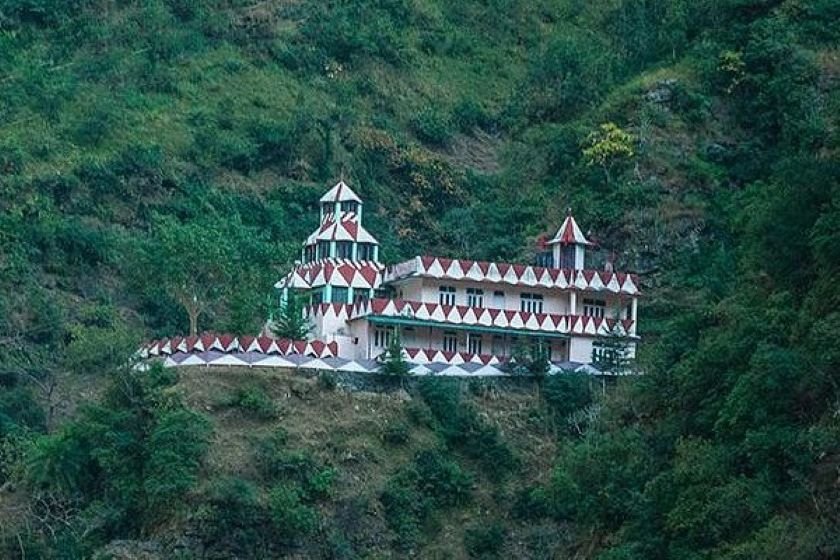
By road: Once you’re on the old route or have taken the short detour, parking is available at the roadside near the temple, with a stone stairway (several hundred steps by most accounts) climbing to the shrine itself, perched on a cliff above the Beas River.
Getting to the wider area first: The nearest airport is Bhuntar (~33 km), and the nearest railhead is Joginder Nagar (~81–110 km depending on the route, or Pathankot at roughly 250 km) — this remains firmly hill-country, reached overwhelmingly by road.
🌸 Best Time to Visit
Because it sits at a relatively modest altitude of around 1,200 metres, Hanogi Mata is genuinely accessible year-round, unlike many of the higher temples elsewhere in this valley. March to June brings comfortable temperatures for the climb up the steps. September to November offers particularly clear views over the Beas River and the pine-covered slopes surrounding the temple. Monsoon months bring a real, documented risk here — this stretch has a history of landslides, including damage to the temple itself in recent years, so travelling this route during heavy rain warrants genuine caution regardless of whether you’re stopping at the temple or simply passing through.
Temple timings: The temple complex itself is open 24 hours, in keeping with its role as a highway shrine that travellers stop at any time of day or night, though early morning or evening remains the most atmospheric time for photographs, with the light hitting the river below.
🕉️ Inside the Sanctum
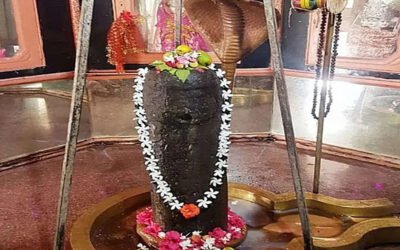
The temple enshrines Hanogi Mata, widely described locally as a form of Goddess Saraswati, goddess of wisdom and learning, though some devotees also invoke her fiercer, protective aspect closer to Durga — the two associations coexist here rather than competing, and most visitors don’t find that combination unusual, given how many regional goddesses in Himachal blend more than one identity. Alongside Hanogi Mata’s main image, the sanctum is also home to an idol locally referred to as Koyla Mata — and one circulating local legend ties directly to that name, holding that the goddess first appeared from a lump of coal that fell during a thunderstorm, a suitably dramatic origin for a deity so strongly associated with sudden misfortune and its opposite, protection.
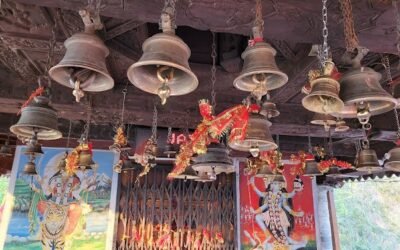
The temple’s real reputation, though, rests less on elaborate ritual and more on its function: this is a shrine people stop at specifically to ask for safe passage. Truck drivers, bus operators, and private vehicles alike have long treated a brief pause here — even just slowing down rather than stopping fully — as standard practice on this historically dangerous stretch of road, prone to landslides and, in the past, to serious accidents. Devotees typically offer red cloth, coconuts, and sweets, and the temple carries a secondary local reputation for helping childless couples and those seeking resolution to disputes, a common thread across several roadside and hill goddess shrines in this region.
📜 The Road Engineer’s Temple
The most consistently told origin story here is a distinctly modern one, and it’s worth taking seriously precisely because it’s unusually well corroborated across multiple sources rather than lost in the fog of older oral legend. According to local accounts, this stretch of highway was so accident-prone and difficult to engineer safely that a road engineer, brought in specifically to recommend structural fixes, suggested something rather different: build a temple. The idea, as it’s told, was that a roadside shrine would encourage drivers to genuinely slow down as they approached the treacherous curve — and whether through faith, habit, or simple caution induced by the stop itself, the accident rate on this stretch reportedly did fall afterward.
The shrine itself is credited to Baba Narayan Hari, a saint who reportedly settled in the Kullu-Mandi region after arriving from what is now Pakistan around 1940, and who is also linked to founding the Shri Guru Nanak Ji Gurudwara at Manikaran — a detail that turns up consistently enough across independent sources to be treated as reasonably solid, even if a temple with this kind of oral history rarely comes with hard documentary proof attached.
A quick honest note on a claim you may encounter elsewhere: you may see references online to a supposed 5,000-year-old stone idol of “Tunga Mata,” said to have been carried from a specific mountain range by a named Tantric sage. This detail doesn’t appear in any properly sourced account of the temple, and it isn’t corroborated anywhere independently — it’s very possibly a fabricated addition that’s crept into some online write-ups, and it’s been left out here rather than repeated.
🏛️ A Cliffside Shrine Built for the View
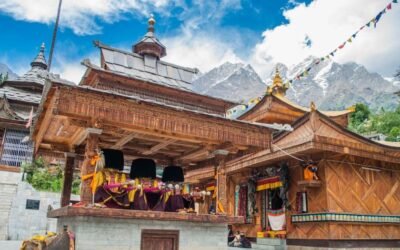
Architecturally, Hanogi Mata is unpretentious — a temple built in traditional Himachali style, with a sloping roof, wooden detailing, and brightly painted walls rather than elaborate stone carving. What makes the setting genuinely memorable isn’t the structure itself but its position: perched on a cliff directly above the Beas River, with a stone stairway climbing up from roadside parking and delivering, at the top, one of the more striking highway views anywhere in Himachal Pradesh — pine-covered slopes on one side, the river cutting through the valley floor below, mountains rising beyond.
Several accounts mention a rope trolley or small ropeway crossing the river, connecting to a second, related shrine on the opposite bank — some local tellings describe the roadside temple as effectively a more accessible companion to an original shrine that’s otherwise difficult to reach. As with several details here, exact accounts of which temple is the “original” and which the “replica” vary depending on who’s telling the story, and it’s worth treating that as local nuance rather than a settled fact.
The temple has not been immune to the region’s geological instability. A significant landslide caused real damage here in 2020, striking the temple complex and nearby shops directly, though the inner sanctum itself reportedly survived intact — and further landslide activity has continued to affect this stretch of road in the years since, including reports from 2023. It’s a sobering reminder that this cliffside setting, as beautiful as it is, sits on genuinely unstable ground.
🎉 Festivals and Highway Devotion
- Navratri: By far the temple’s most significant occasion, drawing large crowds for nine nights of worship, closely tied to the temple’s association with Saraswati and Durga alike.
- Hanogi Mata Mela: A local fair, reported in some sources as held around August, celebrating the goddess.
- Daily devotion: Constant and informal — travellers stopping for even a minute or two, offering a quick prayer for safe passage, form the temple’s real, ongoing rhythm of worship more than any scheduled ritual.
🏞️ While You’re in the Area
- Pandoh Dam: A scenic reservoir on the Beas River, close by.
- Rewalsar Lake: A multi-faith sacred site revered by Hindus, Buddhists, and Sikhs alike, a worthwhile detour from Mandi.
- Mandi Town: Known for its own cluster of old temples and colonial-era architecture.
- Aut and the new highway tunnel: Worth a mention simply because it’s now part of how most travellers experience this stretch of road, even if they don’t stop at the temple itself.
🙏 Getting in Touch
Unlike several of the more remote hill temples on this list, Hanogi Mata does have a publicly listed contact number in some tourism directories: +91 94595 67889 — worth verifying independently before relying on it for anything time-sensitive, since public listings for informal highway shrines like this one can go out of date. For current road conditions, especially given the area’s landslide history, checking with local authorities or recent traveller reports before setting out during monsoon season is genuinely worthwhile.
❓ Quick Questions Travellers Ask
Will I still pass this temple automatically on the drive to Manali? Not necessarily anymore. Since the Pandoh–Aut tunnel opened as part of the four-lane highway project, through-traffic can bypass this stretch entirely. If you want to visit, plan for a short detour off the new route rather than assuming it’s directly on your path.
Is there an entry fee? No, entry is free, though donations toward the temple’s upkeep are commonly offered.
How many steps are there to climb? Accounts vary, but expect several hundred stone steps from the roadside parking area up to the temple — a moderate climb rather than a difficult one, manageable for most visitors.
Is it safe to visit during monsoon? Exercise real caution. This stretch of highway has a documented history of landslides, including damage to the temple itself in recent years. Checking current road and weather conditions before travelling here during heavy rain is a genuinely sensible precaution, not just an overcautious suggestion.
Is there anywhere to stay nearby? Some visitor reports mention a dharamshala (pilgrim rest house) associated with the temple, though it’s worth confirming current availability locally, as this kind of informal accommodation can change over time. Mandi and Kullu both offer more substantial options if needed.
A Last Word
There’s something quietly touching about a temple built not around an ancient myth or a slain demon, but around a simple, practical human problem: too many accidents on a difficult stretch of road, and an engineer who suggested faith might succeed where structural fixes alone couldn’t. Whether you read that as genuine intervention or simply the psychological effect of forcing thousands of drivers to slow down and breathe for a moment, the result has held for decades. Now, with traffic increasingly routed underground and past the cliff entirely, the temple faces a strange new test — whether people will still choose to climb those steps when the road no longer forces the question. Something tells you the answer, for a good many travellers on this route, will still be yes.
Fact-check notes: The earlier draft of this article, published on the site, included the same “three pindis — Maha Kali, Maha Lakshmi, Maha Saraswati” paragraph found in two other temple articles on the site — this is incorrect here as well and has been removed. It also referenced a supposed 5,000-year-old “Tunga Mata” idol brought by a named Tantric sage; this detail could not be verified anywhere and does not appear in any independent source, so it has been treated as unsubstantiated and left out rather than repeated. This rewrite adds an important, currently developing update that the earlier draft missed entirely: the completion of the Pandoh–Aut highway tunnel means through-traffic now bypasses this temple, a significant change to how travellers actually encounter the site today. Location was also corrected to Mandi district (not Kullu, as several sources list it) based on its position near Pandoh. Verified GPS coordinates were pulled from live location data, along with a publicly listed contact number, which is noted as worth independently confirming.