Deep in the tea gardens outside Dharamshala sits a small rock shrine with a strange, specific reputation: a stone inside it stays permanently damp, and locals say the day it finally dries out is the day it starts to rain.
Among Himachal’s Shaktipeeth temples — the network of shrines said to mark where pieces of the goddess Sati’s body fell to earth — most lean on the weight of that mythology alone to draw pilgrims. Kunal Pathri does that too, but it’s carried an equally strong reputation for something smaller and stranger: a single stone, inside a rock-cut sanctum, that the local community has watched and trusted as an informal weather forecaster for generations. That combination — cosmic myth and folk meteorology sharing the same small shrine — is what makes this temple worth knowing beyond its Shaktipeeth status alone.
🌄 Location & How to Reach It
- Location: Kunal Pathri, off Sarah Road, Dharamshala, Kangra district, Himachal Pradesh
- Distance: Roughly 6–7 km from Dharamshala town; about 11 km from McLeod Ganj
- Google Maps: Get Directions
- GPS Coordinates: Not independently verified for this piece — use the map link above, or search “Kunal Pathri Temple, Dharamshala” directly on Google Maps for a precise pin before travelling
- Elevation/terrain: One source places the temple at roughly 2,000 metres above sea level; this figure appears only once in research and should be treated as approximate rather than confirmed, though the surrounding tea-garden and forest terrain is consistently described across sources
- By road: A scenic drive from Dharamshala through forest and tea garden roads; the route is popular enough on foot that some visitors walk it entirely from town
- By rail: Kangra’s narrow-gauge station is the closer regional option; Pathankot Junction, roughly 85–90 km away, is the nearest broad-gauge station with wider connections
- By air: Gaggal Airport (Kangra), the closest airport to Dharamshala generally, serves this area
The approach here is unusually pleasant by any measure — a quiet forest and tea-garden drive rather than a steep climb, with occasional wildlife (rabbits, and reportedly the odd leopard sighting according to visitor accounts) along the way.
🌸 Best Time to Visit
The temple’s annual fair falls in March/April, making that the liveliest window if you want the site at full festival energy. Outside of that, visitors report pleasant, uncrowded conditions across most of the year, with February specifically mentioned by past visitors as quiet and comfortable. Navratri is also cited as a period of heightened devotional activity, drawing more visitors than an average week.
🕉️ The Legend: Where the Goddess’s Skull Came to Rest
Kunal Pathri’s core legend places it among the 51 Shaktipeeths — the network of shrines across the subcontinent said to mark the spots where parts of the goddess Sati’s body fell after Shiva, consumed by grief, carried her charred remains through the sky in the Tandava, his dance of cosmic destruction. At Kunal Pathri, tradition holds that it was her skull — kapal, in Sanskrit — that fell here, giving the resident goddess her name: Kapaleshwari, “the one of the skull.” A less common variant of the story names her shoulder rather than her skull as what landed at this spot, though the skull version is by a clear margin the one repeated most consistently across sources and is treated here as the primary tradition.
The temple’s physical form leans into that origin directly. The sanctum is built around a natural rock formation understood to represent the goddess herself, rather than a carved or cast idol in the usual sense — the stone is the deity, not a container for her. And within that rock sits the detail every visitor mentions first: a stone slab that remains permanently moist, regardless of season or rainfall. Local belief holds that the moment this stone begins to dry out, rain follows shortly after — a piece of folk meteorology so consistently reported across sources that it functions almost as the temple’s second, quieter legend, running alongside the grander Shaktipeeth story above it.
🙏 What the Deity Is Known For
Kapaleshwari is approached, like most Shakti forms, for health, protection, fertility, and the general fulfillment of sincere wishes — standard ground for a goddess temple of this kind. But two more specific beliefs attach themselves particularly to this shrine. First, water gathered from around the sacred stone — sometimes described by visitors as coming from the goddess’s “kapal” itself — is said by some devotees to help with kidney stone ailments and, in a belief specifically extended to children, to support mental clarity and cognitive function; these are informally and inconsistently reported claims rather than documented medical tradition, and are worth treating as devotional folklore rather than established fact. Second, and more central to the temple’s identity, is the wet-stone rain prediction described above — a belief locals appear to take seriously as practical, observable folk wisdom rather than abstract myth.
🏛️ The Temple Itself
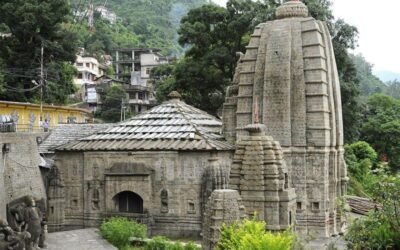
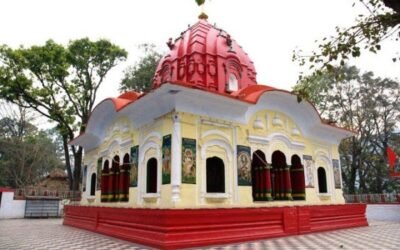
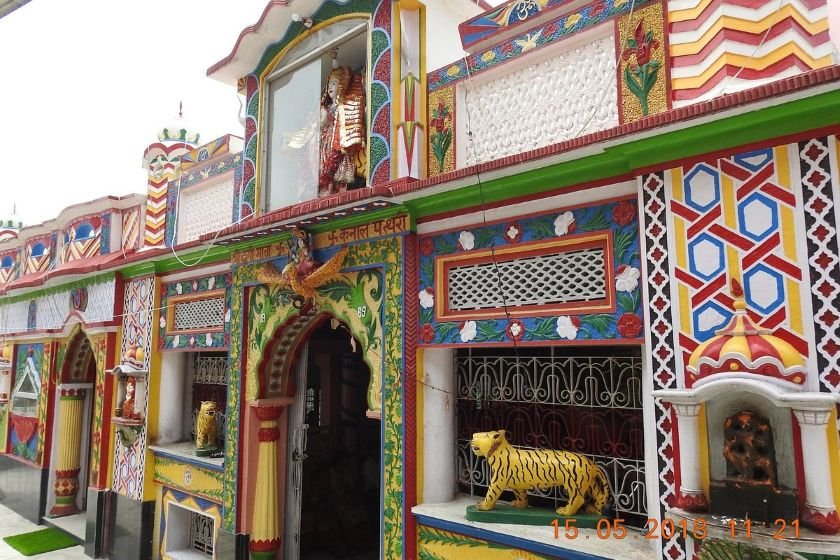
Kunal Pathri is a rock-cut shrine — carved from a single rock formation rather than built up from separate stone blocks, giving it a cave-like, enclosed character distinct from the open-courtyard village temples common elsewhere in the region. A stone staircase and gated entrance lead up to the main shrine, and the interior carries carvings of gods and goddesses along with painted depictions of mythological scenes. One source describes the shrine as dating back to the 8th century; this claim appears in only a single account found during research, so it should be treated as an interesting possibility rather than an established fact. Within the temple complex, a secondary shrine to Shiva sits alongside the main sanctum, and the whole site is wrapped in dense tea garden and forest, with views out toward the Dhauladhar range and the lower valley greenery.
📜 Regional Context: A Quiet Corner of a Major Shaktipeeth Network
Dharamshala and the wider Kangra district sit within one of the densest concentrations of Shakti worship in North India, home to well-known Shaktipeeths like Jwala Devi, Chintpurni, and Brajeshwari Devi, each drawing large-scale pilgrimage and centuries of recorded royal patronage. Kunal Pathri belongs to that same mythological network, but functions on a much smaller, quieter scale — closer in spirit to the kind of local rock-cut and forest shrines found throughout the Himalayan foothills, consecrated by regional tribal communities rather than built under dynastic sponsorship. It’s a useful reminder that the 51 Shaktipeeths aren’t uniformly grand pilgrimage complexes; several, like this one, remain modest, community-tended sites even while carrying the same cosmic origin story as their far larger counterparts elsewhere in India.
🎉 Festivals and Devotion
- Annual fair (March/April): The temple’s main yearly festival, drawing devotees for a lively, well-attended occasion.
- Navratri: A period of heightened worship and visitation, in keeping with most Shakti temples across the region.
- Daily worship: Regular prayer and quiet darshan, with visitors consistently noting the peaceful, uncrowded atmosphere outside festival periods.
🏞️ While You’re in the Area
- Bhagsu Nag Temple & Waterfall: A Shiva and Nag Devta shrine with healing spring associations, a popular stop near McLeod Ganj.
- Dal Lake & Naddi Viewpoint: Scenic Himalayan lake and viewpoint spots, good for a change of pace from temple visits.
- Namgyal Monastery & Tsuglagkhang: The Dalai Lama’s residence and a major Tibetan Buddhist spiritual center, offering a completely different devotional experience nearby.
- Kotwali Bazaar: Dharamshala’s main market area, useful for combining a temple visit with everyday town life and shopping.
- Kareri Lake: For those wanting to extend the trip into a longer trek, this alpine lake sits further into the surrounding hills.
❓ Quick Questions Travellers Ask
Is Kunal Pathri really one of the 51 Shaktipeeths? It’s consistently described as such across most sources and treated as one of that network by both religious tradition and general tourist information, making it a genuine, if smaller-scale, part of that pan-Indian Shakti pilgrimage system.
What’s the deal with the wet stone — is that actually reliable as a weather sign? There’s no scientific basis offered for it in any source, but it’s a strongly and consistently repeated piece of local belief; treat it as devotional folklore worth knowing about rather than a literal forecasting tool.
Is the temple difficult to reach? Not at all — it’s a pleasant, mostly flat or gently graded drive or walk through tea gardens and forest from Dharamshala, considerably easier than hilltop shrines like Jakhani Mata near Palampur.
Is there an entrance fee? No fee is mentioned in any source reviewed; as with most small community shrines in the region, voluntary donations are the norm rather than a formal ticket.
Can I combine this with a McLeod Ganj day trip? Yes — at around 11 km from McLeod Ganj, it works well as a quieter counterpoint to a day otherwise spent around Dharamshala’s more built-up Tibetan Buddhist sites.
A Last Word
Kunal Pathri doesn’t ask to be experienced the way its more famous Shaktipeeth cousins are — there’s no vast courtyard, no roaring crowds, no centuries of royal inscription to read through. What it offers instead is smaller and, in its way, stranger: a stone that stays wet without explanation, tended and watched by a community that’s learned to read it the way farmers read clouds. Whatever you make of the goddess whose skull is said to rest here, the quieter miracle — a rock that never quite dries, and a village that still trusts what that means — is the part of Kunal Pathri that tends to stay with visitors longest.
Fact-check note: The skull-of-Sati origin story and Shaktipeeth status are the most widely and consistently repeated claims across sources and are treated here as the temple’s established primary tradition; a minor variant naming the shoulder rather than the skull appears in a single source and is noted as such. The temple’s reported 8th-century age and its approximate 2,000-metre elevation each appear in only one source found during research and are flagged as unverified rather than confirmed. Claims about the sacred water’s health benefits (for kidney stones or children’s cognitive function) are informally and inconsistently reported and are presented as devotional folklore, not medical fact. No exact GPS coordinates, entrance fees, or official contact details could be verified, and none are invented here.