High above Palampur’s tea gardens, past a hydro-project checkpost and a stretch of tunnels most visitors are told to ignore, sits a goddess who shares her name with one of India’s great Shaktipeeths — and a thousand-metre waterfall that most pilgrims only discover after they’ve already committed to the climb.
Not every Himachal shrine rewards the drive up with a parking lot and a courtyard. Some make you work for it — a rough track, a checkpost, an hour of climbing before the temple even comes into view. Vindhyavasini Temple, tucked into the hills above Bandla village near Palampur, is squarely in that second category. It borrows its name from the great Vindhyavasini Devi of Vindhyachal on the banks of the Ganga, one of India’s most visited Shakti shrines — but this Himachali namesake has almost nothing else in common with that vast pilgrimage complex, and that contrast is worth understanding before you plan a visit.
🌄 Location & How to Reach It
- Location: Near Bandla village (Bandla Khas), Palampur, Kangra district, Himachal Pradesh
- Distance: Roughly 2.7–3 km from Palampur market as the crow flies, though the actual access route is considerably longer and rougher than that figure suggests; about 22 km from Dharamshala
- Google Maps: Get Directions
- GPS Coordinates: Not independently verified for this piece — use the map link above, or search “Vindhyavasini Temple, Bandla, Palampur” directly on Google Maps for a precise pin before travelling
- Elevation/terrain: Roughly 6,900 feet (about 2,100 metres) above sea level, set in the Dhauladhar foothills — a meaningfully higher and more rugged setting than most other temples in this series
- By road: A rough track suitable only for motorcycles, jeeps, or trucks leads up toward the temple, passing near the Neugal Hydro Electric Project tunnel; the original hilltop temple is described as reachable by this dirt road only in good weather
- On foot: For those trekking rather than driving, the route runs from Palampur’s ISBT by local bus to Upper Bandla (Saaw) — buses reportedly run only between roughly 10:00 AM and 2:00 PM, so early planning matters, with a taxi as the alternative if you miss the window. From the bus stop, it’s about a 3 km walk to a hydro-project checkpost (no documents required), after which a genuine climb begins: roughly an hour uphill to a workers’ settlement, followed by a stretch of road walking where several tunnels are deliberately bypassed, and a final 30–45 minute walk to the temple gate itself
- By rail: Palampur’s narrow-gauge station is the nearest regional option, with Pathankot Junction the closest broad-gauge station further away
- By air: Gaggal Airport (Dharamshala/Kangra) is the nearest, with a drive of roughly an hour or more onward
This is, without question, the most physically demanding approach in this series of temples — closer in spirit to a proper hill trek than a temple visit, and worth planning for accordingly rather than treating as a casual stop.
🌸 Best Time to Visit
Given the rough track and trekking route involved, the drier months are the sensible choice — the dirt road up to the original temple is specifically described as passable only in good weather, and a wet-weather climb through this terrain is a genuinely different proposition from a dry one. The temple’s major devotional occasion is Sharadiya Navratri (the autumn Navratri), when a Shatchandi Yagna — a large-scale fire ritual invoking the goddess in her hundredfold form — is performed, drawing devotees from across the region for what is clearly the temple’s most significant annual event.
🕉️ The Goddess and Her Name: A Local Devi, Not a Branch Shrine
It’s worth being direct about something before going further: this temple’s name is shared with, but not administratively or mythologically identical to, the much larger and more famous Vindhyavasini Temple of Vindhyachal in Uttar Pradesh — one of the major Shakti Pitha temples in India, situated on the Ganga and drawing millions of pilgrims, particularly during Navratri. Vindhyavasini is also recognized more broadly as one of nine forms of the goddess represented among the eternal flames at Jwala Devi Temple elsewhere in Kangra district itself. What that tells us is that “Vindhyavasini” functions as a recognized name and form of Durga across multiple, unconnected devotional traditions, rather than this specific Palampur shrine being a formal offshoot or branch of the Uttar Pradesh temple. Devotees here worship a local manifestation of the same broadly recognized goddess-name, in a temple that has developed its own distinct local character, legend, and pilgrimage pattern, largely separate from its far larger namesake.
No single, well-corroborated founding legend for this specific Palampur shrine turned up consistently across sources during research — unlike Gasota Mahadev or Jhanyari Devi, where a clear origin story dominates the record, Vindhyavasini’s local story here appears to live primarily in oral and regional tradition rather than in the written accounts available online. What is consistent is the temple’s identity as a Durga shrine tied to this specific hill above Bandla, and the fact that devotees treat the site and its Shatchandi Yagna with real seriousness rather than as an offbeat curiosity.
🙏 What the Deity Is Known For
As a Durga shrine, Vindhyavasini here is approached in the way most Shakti temples are — for strength, protection, and the fulfillment of sincere devotion — but the character of worship at this specific site is shaped heavily by its physical remoteness. This isn’t a temple where a large crowd gathers casually on an ordinary weekday; the difficulty of the climb itself functions as a kind of natural filter, meaning most who make the trip are doing so with clear devotional or trekking intent rather than passing through incidentally. The annual Shatchandi Yagna during Sharadiya Navratri stands out as the temple’s central devotional event, drawing dedicated pilgrims willing to make the climb specifically for that occasion.
🏛️ The Temple Itself
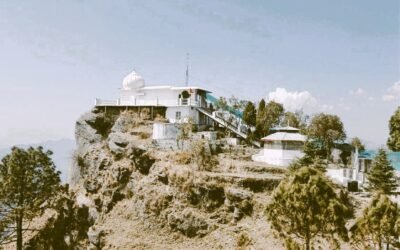
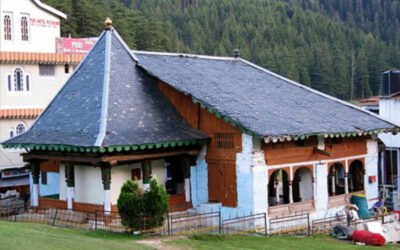
The temple complex actually consists of two structures: an older shrine, perched on the hilltop amid genuinely striking natural surroundings, and a newer structure, both dedicated to the goddess. The older temple is the one reached by the rough dirt track or the trekking route described above, and it includes a small hut for the resident priest rather than any larger built-up complex — this is a modest, functional shrine rather than an architecturally elaborate one. Beside the temple, a waterfall with an estimated drop of around 1,000 metres adds a striking natural feature to the site, and a small park on the far side of the temple grounds gives visitors somewhere to rest after the climb, with a rivulet to cross carefully nearby. From that park, a further trail continues upward toward a spot known locally as Okhal Mool, for those interested in extending the trek beyond the temple itself.
📜 Regional Context: A Shared Name in a Region Full of Shakti Worship
Kangra district’s devotional landscape is thick with Shakti worship in many forms — Jwala Devi’s eternal flames, Chamunda Devi on the Baner river, Chintpurni, Brajeshwari Devi, and the more local hilltop shrines like Jakhani Mata near the same town of Palampur. Vindhyavasini’s presence here, sharing a name with the great Ganges-side Shaktipeeth far to the east, reflects how widely certain goddess names and forms circulate across Hindu devotional geography, taking root locally wherever a community chooses to build and maintain a shrine, regardless of formal connection to the namesake site. It’s a useful reminder that shared names across Indian temples don’t necessarily indicate a shared founding story, administrative link, or even a shared specific legend — often, as appears to be the case here, it’s simply devotion to a recognized form of the goddess taking root in a new, specific place.
🎉 Festivals and Devotion
- Sharadiya Navratri (autumn Navratri): The temple’s major annual occasion, marked by the performance of a Shatchandi Yagna, drawing devotees willing to make the climb for the ritual.
- Daily/regular worship: Maintained by a resident priest at the hilltop shrine, in what is clearly a modest, ongoing devotional presence rather than a site with elaborate daily ritual infrastructure.
🏞️ While You’re in the Area
- Neugal Khad: The valley and stream system connected to the same hydro-project route used to access the temple, offering scenic walking terrain in its own right.
- Palampur Tea Gardens: A short distance back down toward town, offering a complete change of pace after the climb.
- Jakhani Mata Temple: Another hilltop Durga shrine near Palampur, offering a thematically related but considerably more accessible temple-and-view experience for comparison.
- Baijnath Temple: Roughly 14 km away, a well-known, over a thousand-year-old Shiva temple with detailed historical inscriptions, offering a very different, much more architecturally developed contrast to Vindhyavasini’s rugged simplicity.
- Andretta Artist Village: A cultural stop in the wider Palampur area for those wanting a non-devotional detour.
❓ Quick Questions Travellers Ask
Is this the same Vindhyavasini Temple that’s famous in Uttar Pradesh? No — it shares the goddess’s name and general form, but this is a distinct, local Himachal shrine with its own history and character, not a branch or affiliate of the much larger Vindhyachal temple on the Ganga.
Do I need to be an experienced trekker to visit? Reasonable fitness is genuinely required if you’re walking the route — it involves a real, sustained climb of roughly an hour or more beyond the checkpost — though the dirt-road option by motorcycle, jeep, or truck exists for those who’d rather not hike the whole way.
What’s the best time of year to attempt the visit? Dry months are strongly preferable, since the access track is specifically described as passable only in good weather; Sharadiya Navratri is the standout time if you want to combine the visit with the temple’s major annual ritual.
Is there anywhere to rest once I reach the temple? Yes — a small park sits on the far side of the temple grounds, near the waterfall, giving visitors a place to recover before heading back down or continuing further along the trail toward Okhal Mool.
Are there two separate temples here, or just one? Two structures exist at the site — an older hilltop shrine and a newer temple — both dedicated to the same goddess, so a visit can take in both if time and stamina allow.
A Last Word
Vindhyavasini’s Himachal shrine doesn’t ask for reverence through legend or scale — it asks for it through effort. There’s no grand founding myth dominating the record here the way there is at Gasota or Jhanyari Devi, no dynasty attached to its walls, just a goddess’s name, a rough track through tea country and hydro-project tunnels, and a waterfall that greets you only once you’ve already committed to the climb. For a region full of temples built around dramatic stories, this one earns its place simply by making devotion a genuinely physical act.
Fact-check note: This Himachal Vindhyavasini Temple near Bandla, Palampur, is confirmed across multiple sources as distinct from, though sharing a name and general goddess-form with, the major Vindhyavasini Shaktipeeth of Vindhyachal, Uttar Pradesh; the two should not be conflated. No single, well-corroborated founding legend specific to this Palampur shrine was found across the sources reviewed, unlike several other temples in this series — this is stated plainly rather than invented. The temple’s elevation (approximately 6,900 feet) and its Sharadiya Navratri Shatchandi Yagna are consistently reported. Access route details (bus timings, walking distances, checkpost procedures) come from a single detailed trekking account and should be treated as a helpful but unverified guide rather than official, current information — conditions on hydro-project access roads can change, so confirming locally before attempting the trek is advisable. No exact GPS coordinates or official contact/priest details could be verified, and none are invented here.