At the last village in the valley, past roads that most maps politely call “under construction,” a fierce form of Kali watches over a pass that shepherds still cross on faith
There’s a moment in the Mahabharata that most retellings rush past: after ruling their kingdom for decades, the five Pandava brothers and Draupadi set out together into the high Himalaya, walking toward heaven itself, and one by one, they simply began to die along the way. Draupadi went first. In most versions of the epic, that’s treated as tragedy and moved past quickly, en route to Yudhishthira’s eventual arrival at the gates of Swarga. In this remote corner of Chamba district, though, that moment didn’t get left behind on the mountainside. Local tradition holds that Draupadi’s body, in dying, became the vessel through which Goddess Kali entered these mountains — and that she never really left.
🌄 Location & How to Reach It
- Location: Banni village, near Tundah, Bharmour Tehsil, Chamba District, Himachal Pradesh – 176324
- GPS Coordinates: 32.5407° N, 76.4611° E
- Google Maps: Get Directions
- Altitude: Roughly 2,600 metres (8,500 feet)
- Distance: About 35 km from Bharmour, roughly 4 km beyond Manda village
Be honest with yourself about what this journey actually involves before setting out. Multiple recent visitor accounts describe the final stretch as genuinely difficult, narrow, off-road terrain — in some tellings 19-20 km of rough track from Bharmour, with sections passable only on foot, and at least one final kilometre that visitors specifically describe as risky walking rather than driving, regardless of vehicle. A road has been improving access toward Tundah in recent years, cutting down what was once a much longer trek, but “improved” here still means something considerably rougher than a paved highway. This is not a casual detour on a Chamba sightseeing trip — it’s a deliberate, committed journey to one of the more remote temple sites in this entire guide.
By road: From Chamba, the route runs via Bharmour, then onward toward Tundah, with the final approach to Banni village requiring careful driving or, in the roughest stretches, walking.
Getting to the wider area: The nearest airport is Gaggal (Kangra), roughly 32 km from Chamba town itself, and the nearest railhead is Pathankot, around 170 km away. This is genuinely deep Chamba Valley territory, reached overwhelmingly by road and considerable patience.
🌸 Best Time to Visit
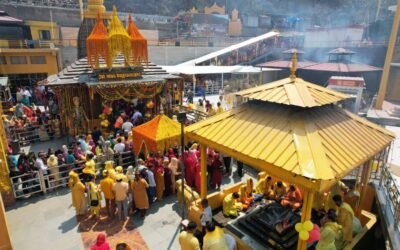
Given the altitude and the difficulty of the approach roads, timing matters more here than almost anywhere else on this list. May to June and September to October offer the most reasonable combination of accessible roads and manageable weather, avoiding both the snow that can close this route for much of the winter and the worst of monsoon landslide risk on an already rough track. The temple’s major fair, held in the Bhadrapad month (roughly August–September), draws the largest crowds of the year and is, for many devotees, the single most important reason to make this particular journey — though it’s worth being mentally prepared for what that festival actually involves (more on that below).
Temple timings: Generally listed as 9:00 AM to 5:00 PM daily, though given how remote this site is and how weather-dependent the roads are, treat these hours as a helpful guide rather than a guarantee, and build real flexibility into any visit here.
🕉️ The Goddess Who Was Once a Queen
According to the legend told across this region, the Pandavas and Draupadi, after fulfilling their earthly duties, set out for the Himalaya in search of heaven. They pushed higher into the Pir Panjal range, reaching a place called Charola, where the terrain turned genuinely hostile — steep, snow-covered, riddled with crevices. One by one, the group succumbed to the mountain’s conditions, Draupadi among the first. Only Yudhishthira, the eldest, is said to have reached Swarga itself.
Draupadi’s mortal remains, though, are believed to have been inhabited by Goddess Kali — Draupadi having long been understood in parts of Hindu tradition as an incarnation of the goddess in her own right. At Charola, local legend holds that a massive rock split vertically to reveal three tridents, still pointed to today as physical evidence of the goddess’s arrival in these mountains. From there, she’s said to have first taken up residence at Lyundi, at the foot of the Pir Panjal, before finally settling permanently in Banni village — surrounded, as the name suggests, by dense ban (oak) forest, which gave both the village and the temple their name.
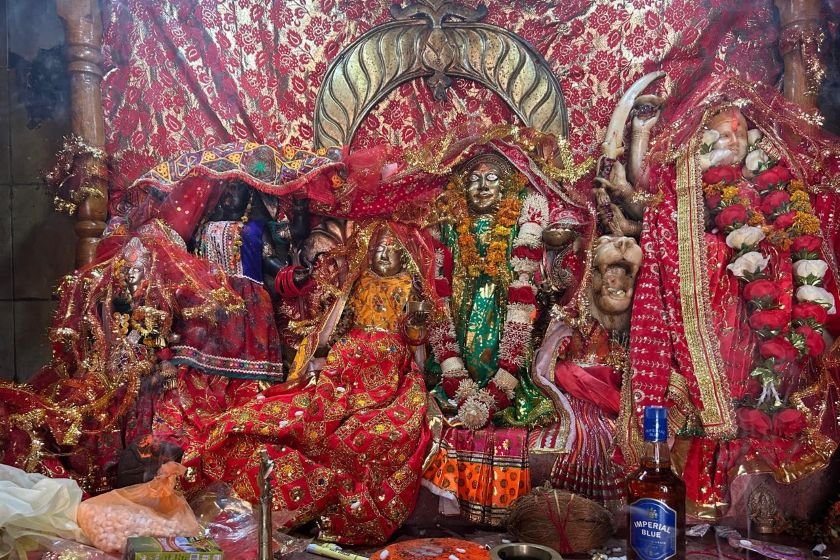
Alongside Banni Mata, the temple complex also houses shrines to Chamunda Devi, Kelang Wazir, and Digu Wazir — a small pantheon reflecting the layered, interconnected nature of devotional worship typical of this region, where a single temple site often gathers several related deities under one roof rather than standing in isolation.
🩸 Worship That Doesn’t Soften Itself
This is worth addressing directly and respectfully rather than glossing over: Banni Mata’s worship, particularly during the annual Bhadrapad fair, includes animal sacrifice, and the temple’s resident Chela (a shaman or medium understood to channel the goddess directly) is described across multiple independent accounts as drinking blood from sacrificed goats during the ceremony, along with taking offered liquor, as an expression of direct communion with Kali. This isn’t a detail to sanitize or omit for the sake of a gentler travel narrative — it’s a genuine, still-practiced part of Shakta devotional tradition in this part of the Himalaya, tied to Kali’s fiercer aspect rather than her more commonly depicted gentler forms.
Devotees also come to Banni Mata for more everyday concerns: childless couples seeking blessings, and villagers and travellers offering red cloth and prayers for protection. Perhaps most practically, this temple has long served as a genuine spiritual checkpoint for shepherds crossing the Kali Chho pass into Lahaul — a demanding, high-altitude route where the pass itself takes its name from the goddess (Kali) and a nearby waterfall (chho). One recent visitor account specifically notes that anyone hoping to use the temple as a base camp for that crossing is expected to seek the resident priest’s permission and observe the site’s rituals with genuine respect first — a good reminder that, however remote this temple feels, it remains an active, living site of real local significance, not simply a scenic stop.
🏛️ A Shrine Built for Extreme Weather
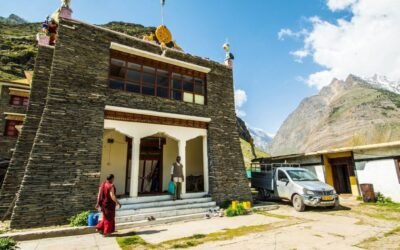
The temple itself is modest but distinctive: a sanctum with a copper-plated roof and golden finials, set on marble flooring — a level of finish that stands out given the sheer difficulty of transporting building materials to a site this remote and this high. Surrounded by dense oak forest, the temple commands views directly across to Manimahesh Peak and out over the wider Chamba Valley, with more than one visitor specifically mentioning clear sightlines to Kailash-adjacent peaks on a good day.
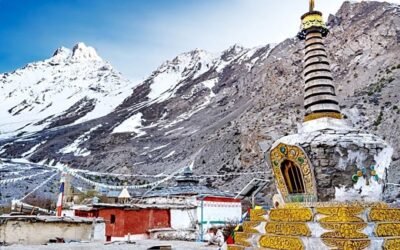
The temple sits within the Tundah Wildlife Sanctuary, a roughly 64-square-kilometre protected area known for its snow-fed landscapes and genuine biodiversity — ibex, Himalayan tahr, musk deer, leopard, and Himalayan fox among the species recorded here, giving the whole approach to the temple a real sense of wilderness rather than a manicured pilgrimage route.
📜 A Region Shaped by the Same Dynasty
Understanding Banni Mata’s place in the wider region helps explain why this remote valley holds so many old and significant temples. Bharmour, the nearest substantial town, served as the ancient capital of the Chamba kingdom — founded, according to regional chronicles, by Raja Meru in the 6th century CE after he arrived from Ayodhya and settled the upper Ravi valley. Bharmour remained the seat of power for roughly four centuries before Raja Sahil Varman shifted the capital to Chamba town itself around 920 CE, reportedly at his daughter Champavati’s request — the very Champavati after whom Chamba is said to be named. That dynasty, beginning with Raja Meru, is recorded as having ruled continuously, through 67 successive rajas, until Chamba finally merged with independent India in 1948.
🎉 Festivals and Devotion
- Bhadrapad Fair (roughly August–September): The temple’s major annual event, marked by animal sacrifice, blood ritual, and the Chela’s trance-communion with the goddess — drawing devotees from across Bharmour and the wider Chamba region.
- Navratri and Kali Puja: Marked with bhajans, aartis, and community feasting.
- Daily worship: Morning and evening aartis, ghee lamps, and chanting of the Durga Saptashati.
🏞️ While You’re in the Area
- Manimahesh Lake and Kailash Peak: The major Shiva pilgrimage site of the region, visible from parts of the Banni Mata approach.
- Chaurasi Temple Complex, Bharmour: The historic cluster of 84 shrines at the heart of the old Chamba capital.
- Lyundi and Charola: The earlier waypoints in Banni Mata’s own legend, still drawing pilgrims further up the mountain.
- Kali Chho Pass: The high-altitude shepherd’s route into Lahaul, for which this temple serves as a traditional spiritual staging point.
🙏 Getting in Touch
Unlike several of the more remote temples in this guide, Banni Mata does have a publicly listed contact number: +91 82197 28148 — genuinely useful here given how weather- and road-dependent access to this site is. Calling ahead to check current road conditions before setting out is a sensible precaution rather than an overcautious one, particularly outside the main summer travel window.
❓ Quick Questions Travellers Ask
How difficult is the road, really? Genuinely difficult by most accounts — narrow, partly unpaved, and requiring careful driving or walking for at least the final stretch. This isn’t a casual add-on to a Chamba itinerary; treat it as a dedicated, full-day undertaking with real respect for the terrain.
Is the animal sacrifice something I’ll definitely witness? It’s specifically associated with the Bhadrapad fair rather than being a constant, daily occurrence. If witnessing or avoiding this is important to your travel plans, it’s worth timing your visit accordingly and asking locally before you go.
Do I need permission to use the temple as a base for the Kali Chho pass crossing? According to visitor accounts, yes — seeking the resident priest’s permission and observing temple rituals respectfully is expected of anyone planning to use the site as a staging point for that high-altitude crossing.
Is there anywhere to stay nearby? Some listings associated with the temple mention basic guest accommodation; given the remoteness of the site, confirming availability directly via the temple’s contact number before travelling is strongly advisable rather than assuming a room will be available on arrival.
Is this trip suitable for casual tourists? Honestly, this is better suited to committed pilgrims, trekkers, and genuinely adventurous travellers than casual sightseers. The reward — a rarely visited, atmospheric, and historically rich temple with real mountain views — is considerable, but so is the effort required to reach it.
A Last Word
Most temples dedicated to Kali lean into her ferocity as spectacle. Standing at Banni Mata, surrounded by oak forest at the edge of a wildlife sanctuary, at the end of one of the roughest roads in this entire guide, that ferocity feels less like spectacle and more like simple fact — the same unforgiving mountain conditions that took Draupadi’s life on her own journey toward heaven are still very much present here, in the road, the altitude, the weather that can close this route without warning. It’s fitting, in its way, that a goddess born from that specific kind of hardship should choose to remain somewhere that still demands real effort from anyone who wants to reach her.
Fact-check notes: This rewrite draws on Wikipedia, multiple independent pilgrimage-travel accounts, and current Google Places visitor reviews and contact data, cross-checked for consistency. The earlier version of this article on the site was broadly accurate but thin on practical detail regarding just how difficult the approach road genuinely is — this has been substantially expanded using recent, specific visitor accounts rather than generic descriptions. The animal sacrifice and blood-ritual elements of the Bhadrapad fair are presented directly and respectfully rather than downplayed, since accurately representing the temple’s actual devotional practices matters more than smoothing them over for a gentler narrative. Verified GPS coordinates, current opening hours, and a publicly listed contact number were pulled from live location data.