At the edge of Chamba’s old bazaar lanes, a stone temple rises with the quiet force of Shakti — not as a roadside stop, but as one of the town’s older memories carved into pillars, walls, and worship.
Chamba is a town where temples do not feel separate from daily life. They stand near markets, old houses, palace walls, river bends, and narrow lanes, as if sacred architecture has grown naturally into the rhythm of the town. Among these shrines, Vajreshwari Temple holds a special place because it is both intimate and powerful: a temple dedicated to the goddess of lightning, built in stone, remembered for its carvings, and tucked into the living movement of Jansali Bazaar.
This is not the more widely known Bajreshwari Devi Temple of Kangra. Chamba’s Vajreshwari Temple has its own personality. Its importance lies in the way it gathers Shakti worship, old Chamba stone craftsmanship, and bazaar-side devotion into one compact sacred space.
🌄 Location & How to Reach It
Vajreshwari Temple is located at the end of Jansali Bazaar in Chamba town, Himachal Pradesh. The temple sits within the older urban fabric of Chamba, not far from the town’s main market areas and other historic shrines. Chamba itself stands on the banks of the Ravi River, with the Sal River meeting it nearby, and the town has long been known for its temples, palaces, paintings, craft traditions, and layered hill-state history.
Google Maps: Get Directions
Elevation: Chamba town is generally given at around 1,006 m / 3,300 ft above sea level.
- By road: Chamba is well connected by road with Dalhousie, Banikhet, Pathankot, Bharmour, and other parts of Himachal Pradesh. From within Chamba town, the temple is reached through the Jansali Bazaar side and can be visited on foot from nearby market areas.
- By rail: The nearest major railway station is Pathankot, from where travellers continue by road to Chamba.
- By air: The nearest commonly used airports are Pathankot Airport and Kangra / Gaggal Airport, followed by road travel to Chamba.
This is an easy town temple to visit. It does not require a trek, but because it sits within bazaar lanes, the best way to experience it is slowly, on foot, while also exploring Chamba’s older temple circuit.
🌸 Best Time to Visit
Vajreshwari Temple can be visited through most of the year because it is located inside Chamba town rather than on a remote mountain route. The most comfortable months are usually March to June and September to November, when the weather is pleasant for walking through the town and visiting nearby temples.
The temple becomes especially meaningful during Navratri, when worship of the goddess takes on a more public and festive character. Some travel sources also mention a fair associated with the goddess around Amavasya in March, but travellers should confirm current dates locally before planning a visit around it.
Winter in Chamba is generally easier than high-altitude parts of the district, though cold mornings and evenings should be expected. Monsoon months can bring rain and road delays in the wider region, so road conditions matter if you are travelling from outside Chamba.
There is no need to expect a heavily managed tourist system here. This is a living temple in an old town setting. Visit during daylight, dress respectfully, and ask locally if you need details about daily worship, special rituals, or festival timings.
🕉️ The Goddess of Lightning
Vajreshwari is commonly understood as a powerful form of the goddess, associated with lightning, strength, and fierce divine energy. The name itself carries the idea of the vajra — the thunderbolt, a symbol of force, clarity, and unbreakable power.
At Chamba, the goddess is approached not as an abstract idea but as a local presence inside an old stone temple. Some accounts identify her as a manifestation of Parvati, while others connect her more broadly with Durga and Shakti worship. The safest way to understand this is to see Vajreshwari as part of the wider Himalayan tradition of the divine feminine, where the goddess may be remembered through many names, forms, and moods.
She is not a soft decorative figure here. The temple’s language is strength. Stone pillars, carved deities, and the compact form of the shrine all seem to suit a goddess whose name is tied to lightning. Yet the atmosphere is not harsh. Like many Chamba temples, it carries both firmness and quietness — power held inside proportion.
🏛️ A Shrine That Belongs to Old Chamba
Vajreshwari Temple is often described as an ancient temple, but sources do not all agree on its exact age. Some call it more than a thousand years old; some describe it as an 11th-century shrine; other tourism references use broader language and simply emphasise its antiquity.
Rather than forcing one exact date, it is better to place the temple within the wider architectural world of old Chamba. Chamba town is known for a strong cluster of early and medieval temples, many built in the Shikhara or North Indian Nagara style. The famous Lakshmi Narayan Temple complex, for example, belongs to the older sacred core of Chamba and is closely associated with the town’s royal and religious history.
Vajreshwari Temple may not always receive the same attention as Chamba’s most famous temple complexes, but it belongs to the same sacred landscape. Its location near Jansali Bazaar also gives it a different kind of life. It is not isolated on a hilltop. It stands near trade, footsteps, voices, shops, and everyday movement. That closeness to ordinary life is part of its character.
🙏 What Vajreshwari Temple Is Known For
Vajreshwari Temple is known first as a shrine of Goddess Vajreshwari, the goddess associated with lightning and Shakti. Devotees come here to bow before the goddess, seek strength, offer prayers, and participate in the living worship of Chamba’s old temple tradition.
It is also known for its stone architecture and carved pillars. Several descriptions of the temple highlight its delicate stonework, sculptural detail, and carvings of Hindu deities. The temple is not merely a place where the deity is housed; the building itself becomes a devotional object. Its pillars, walls, doorway, and recesses help express the sacred mood of the goddess.
Another important point is distinction. Many people hear the name Vajreshwari or Bajreshwari and immediately think of Kangra’s Bajreshwari Devi Temple, the famous Shakti Peetha at ancient Nagarkot. Chamba’s Vajreshwari Temple should not be confused with that shrine. It has a separate location, separate historical setting, and separate architectural personality. Its story belongs to Chamba town and its own temple heritage.
🏛️ Stonework, Pillars, and the Shikhara Form
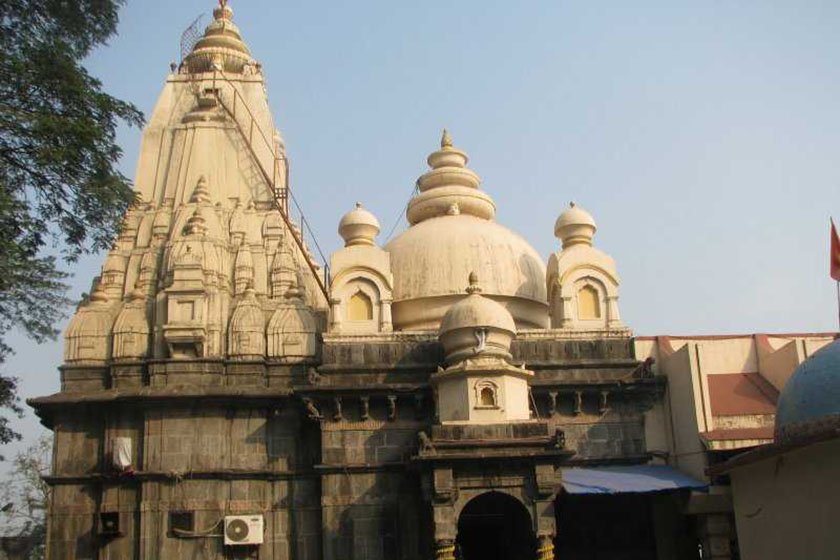
The temple is generally described as being built in Shikhara-style architecture, a form strongly associated with North Indian temple design. In simple terms, the shikhara is the rising tower above the sanctum, visually pulling the eye upward from the earth toward the divine.
At Vajreshwari Temple, the stonework is one of the key attractions. The pillars are especially noted for their carvings, with figures of various Hindu deities worked into the temple’s surfaces. This is the kind of detail that rewards slow looking. A hurried visitor may see only an old shrine; a careful one notices how much labour has been placed into the stone.
Some accounts also mention images of Goddess Durga seated on a lion and a form of Lord Vishnu nearby. These details are important because they show the temple as part of a broader sacred visual world, where the goddess, Vishnu, guardian figures, and other divine forms may share the same architectural frame.
The temple’s beauty is not loud. It is in proportion, carving, age, and placement. Stone holds the coolness of morning. Bazaar noise softens near the sanctum. The old surfaces carry a different pace from the market outside.
📜 Chamba’s Sacred Townscape
To understand Vajreshwari Temple properly, it helps to understand Chamba itself. Chamba is not a town with one isolated temple. It is a town of temple clusters, old royal memory, local festivals, and artistic traditions. The Lakshmi Narayan Temple complex, Champavati Temple, Hari Rai Temple, Chamunda Devi Temple, and other shrines together create a sacred map of the town.
This temple map is tied to Chamba’s older identity as a hill state centre. The town’s temples show influences from North Indian stone architecture, local climatic adaptation, and the artistic tastes of Chamba’s rulers and craftsmen. In such a setting, Vajreshwari Temple should be seen not as a single monument but as one voice in a larger conversation.
Its Jansali Bazaar location also matters. A bazaar-side temple is experienced differently from a remote pilgrimage shrine. Devotion here is woven into daily movement. Someone may stop for darshan while shopping, while passing through town, or while visiting other shrines. The goddess is not far from ordinary life. She is placed within it.
🎉 Festivals and Devotion
- Navratri: As a goddess temple, Vajreshwari Temple becomes especially significant during Navratri, when worship of Shakti is performed with greater devotion. Visitors should confirm current local arrangements before planning around exact dates.
- Amavasya fair tradition: Some travel accounts mention a fair in honour of Goddess Vajreshwari around Amavasya in March. Since local festival dates and scale can vary, it is best to confirm in Chamba before travelling specifically for this event.
- Daily worship: The temple continues to function as a living shrine. Visitors should behave accordingly, especially near the sanctum.
- Shakti devotion: The goddess is worshipped as a powerful feminine form connected with lightning, strength, and protection.
- Town temple circuit: Many visitors combine Vajreshwari Temple with other Chamba temples, making it part of a wider day of darshan rather than a single isolated visit.
🏞️ While You’re in the Area
- Lakshmi Narayan Temple Complex: One of Chamba’s most important temple complexes, known for its Shikhara-style shrines and deep connection with the town’s royal and sacred history.
- Champavati Temple: A historically important temple associated with the story of Princess Champavati and the founding memory of Chamba town.
- Hari Rai Temple: A beautiful Vaishnavite temple in Chamba, known for its association with Lord Vishnu and old stone temple architecture.
- Chaugan: The open heart of Chamba town, useful for walking, local movement, festival atmosphere, and getting a sense of the town’s public life.
- Bhuri Singh Museum: A valuable stop for understanding Chamba’s paintings, inscriptions, royal history, and artistic traditions.
- Chamunda Devi Temple: A hill-facing temple connected with goddess worship and offering a wider view of Chamba’s sacred geography.
- Ravi River side: The river gives Chamba its deeper landscape setting and helps visitors understand why the town developed where it did.
🙏 Getting in Touch
There is no widely verified official visitor centre, booking system, or public temple contact available for Vajreshwari Temple, Chamba. For current worship timings, festival dates, priest availability, or local customs, ask in Jansali Bazaar or check with local residents in Chamba town.
Because the temple is located within the town, access is usually easier than remote village shrines. Even so, visitors should avoid assuming that all inner areas are open for photography or casual entry. Ask before taking photographs inside the shrine, remove shoes where required, and keep the visit respectful.
❓ Quick Questions Travellers Ask
Where is Vajreshwari Temple located?
Vajreshwari Temple is located at the end of Jansali Bazaar in Chamba town, Himachal Pradesh.
Which goddess is worshipped here?
The temple is dedicated to Goddess Vajreshwari, commonly associated with lightning, strength, and Shakti.
Is this the same as Bajreshwari Devi Temple in Kangra?
No. Chamba’s Vajreshwari Temple is different from the famous Bajreshwari Devi Temple of Kangra. The Chamba temple belongs to Chamba town’s own sacred and architectural tradition.
How old is Vajreshwari Temple, Chamba?
Sources vary. Some describe it as more than a thousand years old, while others identify it with an 11th-century tradition. The exact date should be treated cautiously.
What is special about the temple architecture?
The temple is known for Shikhara-style architecture, delicate stonework, carved pillars, and sculptural details of Hindu deities.
Can it be visited with other Chamba temples?
Yes. It can be combined with Lakshmi Narayan Temple, Champavati Temple, Hari Rai Temple, Chaugan, and Bhuri Singh Museum.
Is there a trek to reach the temple?
No. It is located inside Chamba town and can be reached through the Jansali Bazaar area.
What is the best time to visit?
The temple can be visited through most of the year, but March to June and September to November are generally comfortable for exploring Chamba town.
Are photos allowed inside?
Photography rules may depend on temple custom at the time of visit. Ask locally before taking photographs inside the shrine.
Is there a major festival here?
Navratri is important for goddess worship. Some sources also mention an Amavasya fair in March, but dates and scale should be confirmed locally.
A Last Word
Vajreshwari Temple does not need distance or difficulty to feel meaningful. Its power comes from being part of Chamba’s everyday sacred fabric. It stands where the bazaar narrows, where stone meets footsteps, where the goddess is not removed from the town but placed within its movement.
Many travellers come to Chamba for the famous temple complexes and the old Chaugan. Vajreshwari Temple asks for a slower eye. Look at the pillars. Notice the stone. Remember that the goddess here is linked with lightning — not only as force from the sky, but as sudden clarity, strength, and protection.
At the end of Jansali Bazaar, Chamba’s noise does not disappear. It changes. It becomes the background to worship, and the stone goddess remains.
Fact-check note: Vajreshwari Temple’s location at Jansali Bazaar in Chamba town, its dedication to Goddess Vajreshwari / Bajreshwari, and its reputation for stonework, carved pillars, and Shikhara-style architecture are consistently supported by available tourism references. Sources differ on the temple’s exact age: some describe it as more than a thousand years old, while others place it around the 11th century. This article therefore treats the date cautiously instead of forcing one precise founding year. Details about Navratri worship and the March Amavasya fair are included as commonly cited devotional traditions, but travellers should confirm current festival dates locally before planning a visit around them.