In Dholra, Bilaspur remembers a deity who did not arrive through conquest or monument-building, but through a royal marriage, a queen’s suffering, and the wooden kharaun that still stand for his living presence.
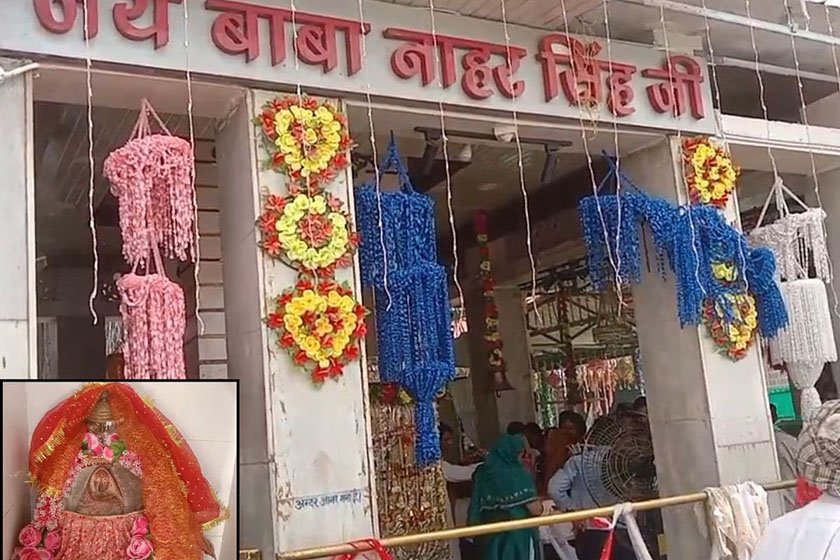
Bilaspur has many sacred places, but Baba Nahar Singh Temple at Dholra carries a different kind of power. It is not centred on a stone idol in the usual way. It is not remembered only through architecture. Its deepest identity comes from a local devta tradition in which presence is felt through kharaun — the sacred wooden slippers of Baba Nahar Singh Ji.
Baba Nahar Singh Ji is widely revered in Bilaspur as a Pratyaksh Devta, a manifest or living deity. He is also remembered by names such as Bajia, Peepal Wala, and Dalian Wala. The temple at Dholra is one of the most important places connected with him, and the legend behind it links Bilaspur with Naggar, the old capital of Kullu, through the marriage of Raja Deep Chand and Queen Lai Dei, also remembered as Naggar Dei.
This is not a temple story that can be understood only by looking at the building. It has to be listened to like a local memory — part royal history, part folk devotion, part healing story, and part continuing faith.
🌄 Location & How to Reach It
Baba Nahar Singh Temple is located at Dholra / Dhaulra in Bilaspur town, Himachal Pradesh. The temple belongs to the town’s local sacred landscape and is commonly associated with the Bilaspur side near Gobind Sagar Lake. For many local devotees, it is not a distant pilgrimage but a familiar darbar visited for blessings, vows, fairs, and family prayers.
Google Maps: Get Directions
Elevation: A precise temple-specific elevation is not consistently published in reliable public sources. Bilaspur town lies in the lower hill region of Himachal Pradesh near the Gobind Sagar landscape.
- By road: Bilaspur is well connected by road with Shimla, Mandi, Hamirpur, Ghumarwin, Swarghat, Kiratpur Sahib, and Chandigarh. From Bilaspur town, visitors can ask locally for Dholra Mandir or Baba Nahar Singh Temple.
- By rail: The nearest practical broad-gauge railway access is generally through Kiratpur Sahib, Chandigarh, or Punjab-side stations, followed by road travel to Bilaspur.
- By air: The nearest commonly used airports are Chandigarh Airport and Kullu-Manali Airport at Bhuntar, followed by road travel. For most visitors, road access is the most practical option.
This is not a trekking shrine. It is a town-region temple and can be visited easily while exploring Bilaspur’s local sacred sites.
🌸 Best Time to Visit
Baba Nahar Singh Temple can be visited through most of the year because it is located in the Bilaspur town-region. The most comfortable months are generally October to March, when the lower hills are cooler, and March to June if visiting in the morning or evening.
Bilaspur can be hot in summer, so early morning and evening visits are usually more comfortable. Monsoon months may bring rain and humidity, but the temple remains a local town shrine.
The most important recurring devotional time is Tuesday, especially during the month of Jeth, which usually falls around mid-May to mid-June. Local references mention that fairs are organised at the temple on Tuesdays during Jeth. Since the exact dates follow the traditional calendar and local arrangements, visitors should confirm the current schedule before planning a special visit.
There is no need to treat the temple like a tourist monument. It is a living devta shrine. Visit respectfully, follow local customs, and ask before photographing inner sacred spaces or ritual objects.
🕉️ The Devta From Naggar
The story of Baba Nahar Singh Ji begins beyond Bilaspur, in Naggar, the old capital of Kullu. Local tradition remembers Baba Nahar Singh as the deity of Naggar. His arrival in Bilaspur is linked to a royal marriage during the reign of Raja Deep Chand of Bilaspur, who ruled in the 17th century.
The king married a princess from Kullu named Lai Dei, who later came to be known as Naggar Dei. When she came to Bilaspur, she began to suffer repeated attacks of unconsciousness. The people of Bilaspur and those devoted to the deity searched for the cause.
The conclusion, according to the tradition, was that Baba Nahar Singh had accompanied the queen from Naggar. The deity had not been left behind in Kullu. He had travelled with her, and he needed to be formally established with proper rituals in Bilaspur.
Raja Deep Chand then established Baba Nahar Singh Ji at Dholra. From that point, the deity became part of Bilaspur’s sacred identity.
This is a beautiful and unusual story because it shows a deity moving through marriage, devotion, and feminine presence. The queen does not arrive alone. Her devta comes with her.
👑 Rani Naggar Dei and the Pain That Revealed the Deity
The legend of Rani Lai Dei / Naggar Dei is central to the temple’s emotional meaning. Her repeated unconsciousness was not understood only as illness. In the sacred logic of the story, it was a sign that something divine had travelled with her and was demanding recognition.
This does not need to be read as medical history. It belongs to the language of devta tradition, where the body, dream, illness, omen, and ritual all become ways through which a deity communicates.
The queen’s suffering became the route through which Baba Nahar Singh Ji was revealed in Bilaspur. Her condition forced the king and the people to ask what had been overlooked. The answer was not punishment alone; it was presence. The devta had come.
In many Himachali traditions, deities are not treated as abstract symbols. They move, speak, demand, protect, travel, and claim place. Baba Nahar Singh Ji’s arrival from Naggar to Dholra is part of that living devta world.
The story also quietly shows the sacred importance of women in hill-state memory. Through Rani Naggar Dei, a Kullu deity became a Bilaspur deity. Her journey changed the religious map of the town.
🙏 The Kharaun That Stand for Baba’s Presence
One of the most important features of Baba Nahar Singh Temple is that Baba Ji is worshipped through his kharaun, the sacred wooden slippers. These kharaun symbolise his presence and are placed in the temple.
This is different from conventional idol worship. The deity is not represented primarily through a sculpted figure. The slippers become the sign that Baba Ji is present, active, and accessible. In the Indian devotional imagination, the feet of a saint or deity carry immense meaning. To bow at the feet is to surrender ego, seek protection, and accept grace.
The kharaun therefore are not ordinary objects. They are the devotional centre of the shrine.
This also explains why Baba Nahar Singh Ji is remembered as Pratyaksh Devta. The word suggests living presence — a deity who is not only remembered from the past but experienced as active in the present. Devotees do not come only to honour history. They come because they believe Baba Ji listens, blesses, and helps.
🌳 Bajia, Peepal Wala, Dalian Wala
Baba Nahar Singh Ji is also known by local names such as Bajia, Peepal Wala, and Dalian Wala. These names matter because they show how intimate local devotion can be. A deity may have a formal name, but the people also give names shaped by place, tree, presence, and relationship.
Peepal Wala suggests a connection with the peepal tree, a tree deeply sacred in Indian religious life. Peepal trees often become centres of worship, vows, lamps, and village memory. Dalian Wala may point toward local association with branches or a specific remembered setting. Bajia is the affectionate name by which many devotees address him.
These names make Baba Nahar Singh Ji feel less distant. He is not only a royal devta brought from Naggar. He is also the Baba of Bilaspur’s people, called by names that feel close to the tongue and heart.
In local religion, this closeness is important. A deity who protects a community is not addressed only with formal titles. He is spoken to like a living elder, guardian, and giver.
🏛️ A Temple of Devta Presence, Not Monumental Display
Baba Nahar Singh Temple should not be judged only through architecture. Its importance lies in devta presence, ritual memory, and local faith.
Many temples in Himachal are famous for stone shikharas, wooden carvings, inscriptions, or royal patronage. This temple is different. The central sacred object is the kharaun. The power of the place lies in darshan, fairs, vows, offerings, and the way devotees continue to treat Baba Ji as actively present.
A visitor may notice the temple building, the setting, the activity, and the views around Bilaspur. But the real meaning is inside the devotional relationship. People come to Baba Nahar Singh Ji because they trust him.
Some come with illness, fear, family difficulty, court matters, uncertainty, or a need for protection. Some return in gratitude. Some attend the Tuesday fairs in Jeth. Some simply bow and go, keeping the relationship alive through repeated visits.
The temple is therefore less a monument and more a darbar.
📜 Raja Deep Chand and Bilaspur’s Seventeenth-Century Memory
The temple’s core legend is connected with Raja Deep Chand, who ruled Bilaspur in the 17th century. The story places the establishment of Baba Nahar Singh Ji at Dholra during or after his marriage with the Kullu princess Lai Dei / Naggar Dei.
This link gives the temple both royal and devotional importance. It connects Bilaspur with Kullu, Dholra with Naggar, and local worship with the political relationships of old hill states.
In earlier times, royal marriages were not only family events. They connected regions, deities, customs, and ritual obligations. When a princess moved from one hill state to another, she carried more than personal belongings. She carried memory, culture, and sometimes the presence of her native devta.
Baba Nahar Singh Temple preserves this kind of hill-state connection. It reminds us that Himachal’s sacred geography was shaped not only by saints and pilgrims, but also by marriage alliances, royal households, local crises, and ritual settlements.
🎉 Festivals and Devotion
- Tuesday worship: Tuesday is especially associated with Baba Nahar Singh Ji’s temple devotion.
- Jeth fairs: Local references mention fairs held on every Tuesday in the month of Jeth, roughly mid-May to mid-June. Visitors should confirm current dates and arrangements locally.
- Kharaun darshan: The sacred kharaun of Baba Nahar Singh Ji are central to worship and symbolise his living presence.
- Devta reverence: Baba Ji is worshipped as a Pratyaksh Devta, a manifest deity believed to bless and protect devotees.
- Local vows and gratitude: Devotees may visit with personal vows, prayers for relief, or offerings of thanks after receiving blessings.
- Community gatherings: On important days, the temple becomes a centre of local gathering, faith, and shared devotion.
🏞️ While You’re in the Area
- Laxmi Narayan Mandir, Bilaspur: A town temple dedicated to Lord Vishnu and Goddess Lakshmi, located near the Bilaspur bus stand side.
- Maa Santoshi Temple, Dholra: A local shrine dedicated to Maa Santoshi, especially meaningful for Friday vrat devotees.
- Vyas Cave: A sacred site associated with Sage Vyasa and one of Bilaspur’s older mythological memories.
- Gobind Sagar Lake: The large reservoir that defines Bilaspur’s modern landscape and is closely tied to the story of Old Bilaspur’s submergence.
- Bhakra Dam: One of North India’s major engineering landmarks, often connected with Bilaspur travel where access and permissions allow.
- Naina Devi Temple: A major Shakti shrine in Bilaspur district and one of Himachal’s most important pilgrimage destinations.
- Rukmani Kund: A sacred water site in Bilaspur district, associated with local legend and often included in regional religious travel.
🙏 Getting in Touch
There is no widely verified official website, booking system, or formal public temple contact number consistently available for Baba Nahar Singh Temple, Dholra in accessible public sources. For current darshan access, Jeth fair dates, Tuesday arrangements, priest availability, and local customs, ask locally in Dholra / Dhaulra or Bilaspur town.
If you plan to visit during the Jeth Tuesday fairs, confirm locally before travelling, as crowd levels and arrangements can differ from ordinary days.
As with all living devta shrines, remove shoes where required, keep the visit respectful, avoid touching sacred objects unless permitted, and ask before photographing the kharaun or inner ritual areas.
❓ Quick Questions Travellers Ask
Where is Baba Nahar Singh Temple located?
Baba Nahar Singh Temple is located at Dholra / Dhaulra in Bilaspur town, Himachal Pradesh.
Who is Baba Nahar Singh Ji?
Baba Nahar Singh Ji is revered in Bilaspur as a Pratyaksh Devta, also known as Bajia, Peepal Wala, and Dalian Wala.
What is worshipped in the temple?
Baba Ji is especially represented through his sacred kharaun, or wooden slippers, which symbolise his living presence.
What is the main legend of Baba Nahar Singh Temple?
The legend says Baba Nahar Singh Ji came from Naggar in Kullu with Queen Lai Dei / Naggar Dei after her marriage to Raja Deep Chand of Bilaspur. He was then established at Dholra with proper rituals.
Is Baba Nahar Singh connected with Kullu?
Yes. Local tradition remembers him as the deity of Naggar, the old capital of Kullu.
When are fairs held at the temple?
Local references mention fairs on every Tuesday in the month of Jeth, roughly mid-May to mid-June. Confirm dates locally before visiting.
Is there a trek to reach the temple?
No. It is a Bilaspur town-region temple and does not require a trek.
What is the best day to visit?
Tuesday is especially meaningful for devotees. Ordinary visitors can visit on other days as well, but local access and timings should be confirmed.
Can it be combined with other Bilaspur temples?
Yes. It can be combined with Laxmi Narayan Mandir, Maa Santoshi Temple, Vyas Cave, and other Bilaspur sacred sites.
Are photos allowed inside?
Photography rules may depend on local custom. Ask before photographing the kharaun, sanctum, or ritual areas.
A Last Word
Baba Nahar Singh Temple at Dholra is not only a place of worship. It is a story of movement — a deity moving from Naggar to Bilaspur, a queen carrying more than anyone first understood, and a town learning to recognise a presence that demanded its own seat.
The kharaun make the story intimate. They remind devotees that the sacred does not always need a carved image or a towering shrine. Sometimes a pair of wooden slippers can hold enough presence for generations to bow before them.
In Bilaspur, Baba Nahar Singh Ji remains close to the people. Called Bajia, Peepal Wala, Dalian Wala, and Pratyaksh Devta, he is remembered not as a distant figure from the past, but as a living guardian whose darbar still listens.
Fact-check note: Baba Nahar Singh Temple is consistently identified in available local references as located at Dholra / Dhaulra in Bilaspur town. A local institutional source states that Baba Nahar Singh Ji is worshipped across Bilaspur, is also known as Bajia, Peepal Wala, and Dalian Wala, and is revered as a Pratyaksh Devta. The same source preserves the core legend connecting Baba Ji with Naggar in Kullu, Raja Deep Chand of Bilaspur, and Queen Lai Dei / Naggar Dei, and states that Baba Ji is symbolised by his kharaun in the temple. It also notes fairs on every Tuesday in the month of Jeth. Exact construction details, formal management contacts, daily timings, and temple-specific elevation are not firmly verified in accessible public sources, so this article avoids forcing those claims.