The village wasn’t always called Kamru — it used to be Mone, until the day a goddess from Assam moved in and the whole place quietly took her name instead.
Most temples are named for the place that holds them. This one worked the other way around. High in Kinnaur’s Baspa Valley, inside a thousand-year-old wooden fort, sits a goddess whose arrival was significant enough to overwrite the identity of the village itself — and whose home she still shares, a little uneasily, with another god entirely.
🌄 Location & How to Reach It
The temple sits inside Kamru Fort, in Kamru village, about 2 km from Sangla in Kinnaur’s Baspa Valley, at an elevation of roughly 2,600 meters. Reckong Peo, the district headquarters, is around 20 km away.
Google Maps: Get Directions
- By road: Well connected via Sangla; cars reach a point at the base of the hill, from which it’s roughly a 30-minute walk up through apple orchards to the fort itself.
- By rail: No direct access — Shimla is the nearest practical railhead, several hours away by road.
- By air: Shimla Airport is closest, though most travelers arrive via Chandigarh and drive up through Kinnaur.
The climb itself is gentle rather than punishing — a smooth path through orchards with mountain views the whole way — genuinely manageable even for visitors who don’t consider themselves hikers.
🌸 Best Time to Visit
The fort is generally open from 8:00 AM to 6:00 PM, with a nominal entry fee. March to June and September to November offer the most pleasant weather for both the climb and the views. Note that the temple’s main interior is only accessible to the resident priest — most visitors experience it from the courtyard, verandah, and surrounding structure rather than stepping fully inside, so timing matters less here than at temples built for direct daily darshan.
🕉️ The Goddess Who Renamed a Village
According to local tradition, this village wasn’t always called Kamru — its older name was Mone. Everything changed, the story goes, when the goddess Kamakhya was established here, brought, by most tellings, directly from her original seat at Nilachal Hill in Assam — home of the Kamakhya Temple, one of the most significant Shakti Peethas in the subcontinent and a major center of Tantric worship. Her arrival was treated as significant enough that the village itself took on a new identity to match hers, becoming Kamru. It’s a quiet but telling detail: most places lend their name to a temple; here, the temple’s own goddess renamed the place that held her.
🕉️ The House She Shares With Badrinath
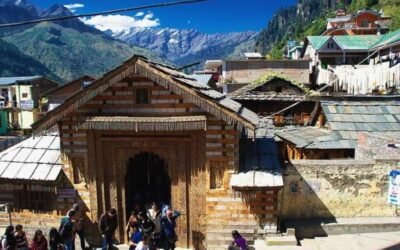
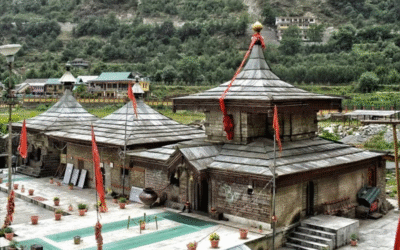
The second story worth knowing here isn’t about Kamakhya alone — it’s about her curious domestic arrangement. Kamru Fort also houses a shrine to Lord Badrinath, dating, by some accounts, to the 15th century, sharing the same complex as the goddess. Local tradition holds that when Kamakhya Devi is ceremonially brought out of the fort during festivals, and Kamru’s Badrinath likewise emerges from his own shrine, the two deities are said to take up temporary residence together in nearby village cottages — a striking image of two very different traditions, a fierce Tantric goddess and a Vaishnavite god, sharing lodging rather than staying strictly separate. It’s a small but genuine piece of religious cohabitation, unusual even by Kinnaur’s already syncretic standards.
🙏 What the Goddess Is Known For
Kamakhya is worshipped here as an embodiment of feminine and generative power — desire, fertility, and Shakti in its rawest form, consistent with her identity at the original Assam temple. Entry customs reflect that intensity: visitors are asked to wear a traditional Kinnauri cap and tie a Gachhi, a ceremonial waist-belt, before entering, provided by the temple’s caretaker, as a mark of respect to the deities within. In keeping with Tantric Kamakhya tradition more broadly, menstruating women are asked not to enter the temple — a practiced restriction rather than a story, worth stating plainly and respectfully rather than glossing over. Locally, the fort as a whole is believed to house 33 crore gods and goddesses, said to guard the entire valley against natural disaster and evil spirits — Kamakhya treated not as a solitary deity but as the presiding figure over an entire community of protective divinity.
🏛️ The Temple Itself
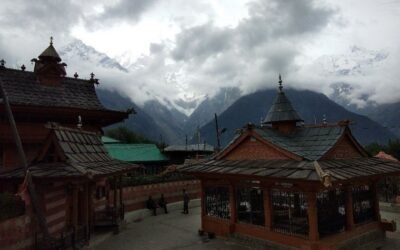
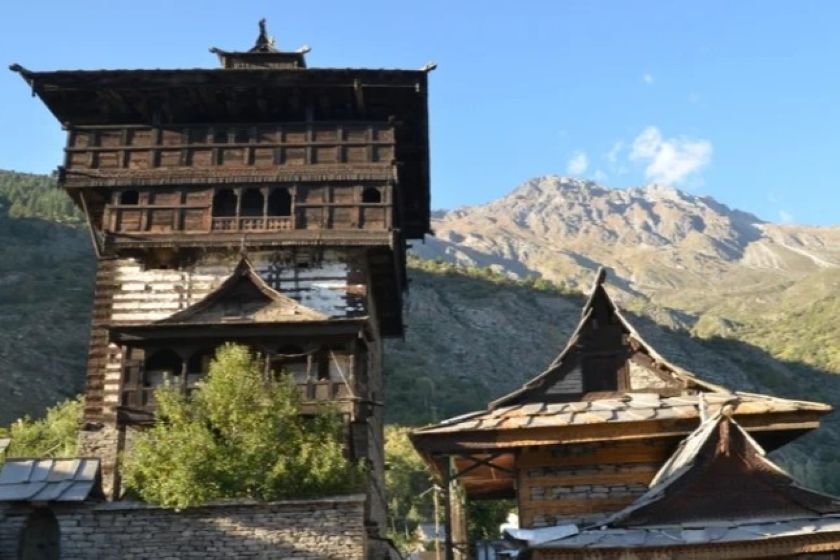
Kamru Fort itself is a five-story tower, built in kath-kuni style — interlocked wood and stone — resting on a 55-square-foot stone platform, believed to be over a thousand years old and among the oldest surviving forts in Himachal Pradesh. The top floor holds two intricately carved wooden verandahs and a miniature wooden temple, prized for its craftsmanship. The Kamakhya idol itself — sources place it variously on the second or third floor — is said to have been carried here from Guwahati centuries ago. Much of the main structure remains in fragile condition, and general visitors are typically not permitted past the courtyard and verandah areas; only the resident priest has regular access to the innermost chambers.
📜 The First Capital of a Himalayan Dynasty
Kamru’s importance goes well beyond its temple. This was the first capital of the Bushahr princely state, the same dynasty whose later seats we’ve already visited — Sarahan, and eventually Rampur — and whose lineage, by tradition, traces back to Pradyumna, son of Krishna, the very figure said to have ruled the region after Banasura’s defeat in the war over Usha and Aniruddha. It’s a satisfying thread to pull all the way through: the demon king falls at Sarahan, his conqueror’s line eventually rules from Kamru, and centuries later a goddess from Assam moves into the same fortress and gives the village her name.
🎉 Festivals and Devotion
- Triennial fair — held once every three years, during which the deity is ceremonially taken all the way to Gangotri, the source of the Ganga, a journey covering serious distance for a temple procession
- Festival processions — when Kamakhya and Kamru’s Badrinath are both brought out and said to share lodging in nearby cottages
- Daily worship — maintained by the resident priest, with most devotee interaction happening at the courtyard level rather than inside the sanctum itself
🏞️ While You’re in the Area
- Sangla village — the main base for reaching Kamru, with its own markets and guesthouses
- Baspa Valley viewpoints — some of Kinnaur’s most photographed orchard-and-mountain scenery
- Chitkul — the last Indian village before the border, a natural extension of a Sangla Valley trip
- Kinnaur Kailash range — visible from various points around Kamru, tying the fort into the region’s larger sacred geography
❓ Quick Questions Travellers Ask
Can visitors go inside the main temple sanctum? Generally no — access is largely restricted to the resident priest, with most visitors experiencing the temple from the courtyard and verandah.
What should I wear to visit? A traditional Kinnauri cap and a Gachhi (waist-belt) are provided at entry and expected to be worn as a mark of respect.
Is there a restriction for menstruating visitors? Yes — this is a practiced restriction at the temple, consistent with broader Kamakhya worship tradition.
How difficult is the climb to the fort? Moderate — roughly a 30-minute walk from where vehicles stop, along a smooth path through orchards.
What’s the connection to Assam’s Kamakhya Temple? Local tradition holds the idol here was brought directly from Nilachal Hill in Assam, linking Kamru to one of India’s most significant Shakti Peethas.
A Last Word
There’s something quietly remarkable about a goddess whose presence was strong enough to make an entire village give up its old name. Climbing up through the orchards to stand before her weathered wooden fort, sharing its floors with another god entirely, it’s worth remembering that Kamru’s real story isn’t just about who built this place — it’s about who moved in, and how completely everything around her rearranged itself to fit.
Fact-check note: Sources disagree on which floor houses the Kamakhya idol (second vs. third) and on the exact age of the Badrinath shrine within the fort; both discrepancies are presented as-is rather than resolved arbitrarily. No independently verified GPS coordinates were found, so a search-based Maps link is provided. The “33 crore gods” belief and the menstruation-based entry restriction are both reported as documented local practice/belief rather than editorialized. This is the third piece touching this site (an existing Kamakhya Devi piece and a separate Kamru Fort piece both precede it); this article leads with the village’s name-change origin story and the Kamakhya-Badrinath cohabitation tradition, along with the Pradyumna/Bushahr dynasty link connecting this piece to the site’s existing Bhimakali, Chandika, and Usha Devi articles — none of which the earlier two pieces develop in this way.