Most goddesses in these hills are worshipped because someone asked for her help before disaster struck — this one was given a temple because, once, she’d already delivered.
There’s a familiar shape to most Himachal temple stories: a vision in a dream, a wandering deity asking to be housed, a sage rewarded for years of devotion. Katasan Devi’s story runs the other way. This is a temple that exists, by most accounts, because of a battle that had already been won — not a plea for protection, but a payment of gratitude after the fact. Somewhere in the forested hills between Nahan and Paonta Sahib, a king built a shrine not to secure the goddess’s favor, but to acknowledge that she’d already given it, and that debt of thanks is still, in its own quiet way, being paid off by everyone who visits today.
🌄 Location & How to Reach It
Katasan Devi Temple sits along the Paonta Sahib–Nahan Road in Sirmaur district, tucked into pine forest on rolling hill terrain. Distances quoted for it vary depending on which town you’re measuring from — commonly cited as around 19 km from Nahan, and somewhere between 20–30 km from Paonta Sahib, so treat any single figure as approximate rather than exact.
Google Maps: Get Directions
- By road: The temple sits directly on NH-7 (the Nahan–Paonta Sahib highway), making it an easy stop for anyone already driving that route rather than a dedicated detour.
- By bus: Regular buses running the Nahan–Paonta Sahib corridor pass close by, with local transport available for the final stretch.
- By rail/air: The nearest railhead and airport connections run through Dehradun or Chandigarh, followed by a road journey into Sirmaur district.
Unlike the hilltop climbs at Tara Devi or Jakhoo, Katasan Devi doesn’t ask much of its visitors physically — it’s a roadside forest shrine you can reach comfortably by car, which makes it a natural stop rather than a destination requiring its own full day.
🌸 Best Time to Visit
Sirmaur’s climate follows the familiar hill-district pattern: March to June for pleasant, dry weather; the monsoon months bring heavier rain and less comfortable travel on the forest road; and autumn through early winter offers clear skies and cooler temperatures. Navratri is by far the busiest and most meaningful time to visit — devotees travel in from across Himachal, Punjab, and Haryana, and the otherwise quiet forest clearing fills with the sound of bhajans and the smell of offerings.
🕉️ The Legend — A Victory, Not a Vision
The story most consistently told locally places the temple’s origin in the closing decades of the 18th century, a genuinely turbulent period across northern India. Ghulam Qadir Khan, a Rohilla chieftain notorious in real history for his brutal campaigns around Delhi and the plains — including the blinding of Emperor Shah Alam II in 1788 — is remembered here as having pushed raiding forces into the Himalayan foothills, threatening Sirmaur itself. According to the temple’s own tradition, it was here, in the hills around Katasan, that the army of Sirmaur met and defeated Ghulam Qadir’s advancing men, sparing the kingdom the destruction that had already befallen towns on the plains below. In gratitude — not as a plea for future protection, but as thanks for a battle already won — the Raja of Sirmaur commissioned a temple to the goddess on the site, most sources placing its construction somewhere in the late 18th to early 19th century. Inside, alongside the goddess, the sanctum is also said to house an image of Lord Parshuram, a detail less commonly mentioned but repeated in local accounts.
A more elaborate version of the story circulates in some local retellings, naming a specific local leader who rallied villagers to the resistance and a folk ballad still sung in his memory. It’s a vivid telling, but it rests on far thinner, less independently corroborated ground than the core Ghulam Qadir account, and the specific names attached to it don’t appear consistently across sources — so it’s worth holding at arm’s length as a richer local elaboration rather than settled history. What’s more broadly agreed on is simpler and, honestly, more interesting for its restraint: a kingdom under threat, a battle that went the defenders’ way, and a temple built afterward not out of fear but out of thanks.
🙏 What the Goddess Is Known For
Katasan Devi is worshipped here as a form of Durga in her warrior aspect — protector of the land, invoked especially by those seeking courage, justice, and safety rather than the more everyday wishes (wealth, marriage, health) that dominate at many local shrines. Given the temple’s own founding story, it’s unsurprising that devotees particularly associate her with strength in the face of threat and with the kind of collective resolve that, in local memory, once held off an invading army. This isn’t a grand pilgrimage circuit shrine on the scale of Renuka Ji or Bala Sundari elsewhere in the district — it’s a modest forest temple with a specific, martial character to its devotion, visited as much out of respect for regional history as pure ritual practice.
🏛️ The Temple Itself
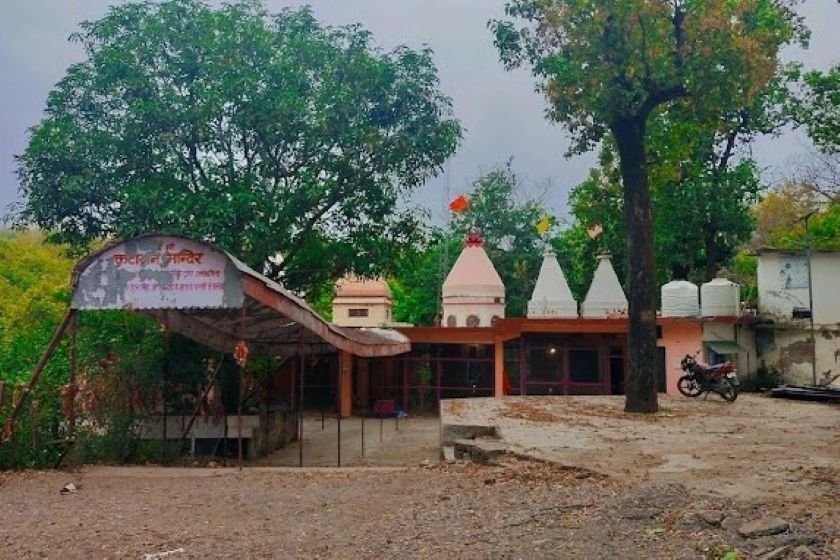
Katasan Devi is not an architecturally showy temple, and that’s largely the point of visiting it — a modest structure set in dense pine forest, with the Markanda River tracing its source in the hills nearby. The sanctum houses the goddess’s image, with Parshuram’s image alongside it in some accounts, and the overall atmosphere leans toward stillness rather than spectacle: birdsong, wind through pine needles, and a quiet that visitors describe as more monastic retreat than bustling pilgrimage stop. It’s a place people mention for its peace and its parking as much as for grand carvings — practical, comfortable, unfussy devotion rather than an architectural showcase.
📜 Regional Context — Sirmaur’s Frontier Memory
Sirmaur sits at Himachal’s southeastern edge, historically a frontier zone between the hill kingdoms and the plains — which is precisely the geography that put it in the path of raiders like Ghulam Qadir in the first place. The district carries several sites tied to this frontier history and to the region’s own royal lineage, from Fort Jaitak to the Gurudwara at Paonta Sahib associated with Guru Gobind Singh’s time in the area. Katasan Devi’s origin story fits neatly into that pattern: a temple less about a deity’s own arrival myth and more about a specific, dateable moment when the kingdom’s survival was credited to divine intervention — a different flavor of sacred memory than the vision-and-installation stories more common further north in the state.
🎉 Festivals and Devotion
- Navratri (both cycles): The temple’s peak season, drawing devotees from across Himachal Pradesh, Punjab, and Haryana in large numbers, especially during the Chaitra and Shardiya Navratri periods.
- Regular Tuesday and Friday visits: Locally observed as auspicious days for Devi worship, bringing a steady stream of visitors beyond the festival crowds.
- Twice-yearly visits by locals: Many nearby residents make a point of visiting at least twice a year regardless of festival timing, treating it as a standing devotional habit rather than an occasional pilgrimage.
🏞️ While You’re in the Area
- Gurudwara Paonta Sahib – A major Sikh pilgrimage site associated with Guru Gobind Singh’s residence in the town; an easy pairing given its proximity on the same road corridor.
- Renuka Lake – Himachal’s largest lake, tied to the legend of the goddess Renuka and sage Parshuram — a thematically fitting stop given Parshuram’s presence in Katasan Devi’s own sanctum.
- Fort Jaitak – A historic Gorkha-era fort nearby, useful for travellers interested in the district’s wider military history.
- Simbalbara Wildlife Sanctuary – A quieter nature stop in the same district for those extending the trip.
- Maa Bala Sundari Temple, Trilokpur – Another well-known Devi shrine in Sirmaur district, worth combining if you’re doing a temple circuit through the region.
❓ Quick Questions Travellers Ask
Is there an entry fee at Katasan Devi Temple? No, entry is free, as is typical for most local Devi shrines in the district.
Is the temple hard to get to? No — it sits directly on the Nahan–Paonta Sahib highway, making it one of the more accessible temples in the district, reachable by car or bus without any real trek involved.
Is there food available nearby? Small dhabas operate near the temple, though quality is inconsistent according to visitor accounts — worth treating as a casual snack stop rather than a planned meal.
When is it busiest? Navratri, by a wide margin — expect significant crowds and traffic on the approach road during both Navratri periods each year.
Are there monkeys or wildlife concerns, like at some other hill temples? Some visitors note occasional monkey activity around the temple grounds, though it’s considerably less of a factor here than at temples like Jakhoo.
A Last Word
There’s a certain dignity in a temple that doesn’t ask to be remembered as miraculous, only as grateful. Katasan Devi isn’t built around a dazzling vision or a promise made across centuries — it’s built around a kingdom that survived something it might not have, and a Raja who thought that deserved marking in stone rather than left to fade into memory. Standing in that quiet pine forest today, with the Markanda River tracing its source somewhere in the hills above, it’s not hard to understand why gratitude, expressed simply and left alone for two centuries, can hold its own kind of weight.
Fact-check note: The temple’s location on the Paonta Sahib–Nahan Road, its dedication to Durga/Katasan Devi, and the broadly repeated tradition connecting its founding to a Sirmaur victory over Ghulam Qadir Khan Rohilla’s raiding forces are corroborated across several independent tourism and regional sources, including a Hindi-language regional guide that also notes an accompanying Parshuram idol and an 18th–19th century construction estimate. Ghulam Qadir Khan Rohilla himself is a documented historical figure from this period. However, the specific named hero, ballad, and precise year sometimes attached to this story in more elaborate retellings appear in only a single source found and could not be cross-verified, so they are presented above with clear caution rather than as settled fact. Exact distances from Nahan and Paonta Sahib vary meaningfully across sources and are given as approximate ranges. No verified GPS coordinates, temple timings, or priest contact details could be confirmed, so none are stated above.