A mother who chose to spend eternity as a lake, and a son who visits her only once a year — not because he has to, but because that was the deal they struck.
Most mother-son temple stories in this series involve a single decisive act and then silence. Renuka Ji is different: it’s built around a promise that repeats, every year, on schedule, in front of thousands of witnesses. Goddess Renuka doesn’t simply rest here as a static presence to be visited — she is, according to the belief that structures the entire site, still emerging from the water once annually to meet her son, and the temple dedicated to that son exists largely to receive her when she does. It’s less a monument to a single mythic moment than to an ongoing, yearly-renewed relationship, which is a rarer and in some ways more moving thing for a temple to be built around.
🌄 Location & How to Reach It
The Parshuram Temple stands on the shores of Renuka Lake, in Renuka Ji, Sirmaur district, immediately adjacent to the smaller Parshuram Tal and close to the main Renuka Temple complex.
Google Maps: Get Directions
- By road: Renuka Ji is roughly 37–40 km from Nahan and well connected by a good road network; Chandigarh, the nearest major airport and rail connection, is around 130 km away, about 3.5 hours by car.
- By rail: No direct rail access; Chandigarh, Kalka, and Dehradun serve as the nearest practical railheads, followed by a road journey in.
- By air: Chandigarh Airport is the nearest with regular daily flights from across the country.
Once you’ve arrived at Renuka Ji, the Parshuram Temple itself requires no further trek or climb — it sits within easy walking distance of the main lake and the Renuka Temple, making the whole complex comfortably explorable on foot in a single visit.
🌸 Best Time to Visit
Renuka Lake’s setting makes it a pleasant destination for much of the year, with the cooler months from October through March offering the most comfortable weather for walking the lakeside parikrama path. But there’s really only one time that matters most here: the Renuka Fair, a five-day festival held in November around Devprabodhini Ekadashi — the specific day on which Renuka is believed to rise from the lake to meet her son. If you can time a visit to coincide with it, you’ll see the Shobha Yatra, a grand procession carrying Lord Parshuram’s silver palanquin from Jamu Koti village to the Renuka Temple, along with folk dances, lake rituals, and a scale of devotion the site simply doesn’t have on an ordinary day.
🕉️ A Promise Renewed Every Year
Two different stories explain how Renuka came to be so closely bound to this lake, and they don’t fully agree with each other — worth knowing both, since you’ll hear either depending on who you ask.
The more widely repeated version involves a test of loyalty gone wrong. Sage Jamadagni, Renuka’s husband, grew disappointed in his wife over some transgression the stories rarely specify in detail, and in anger ordered his youngest son, Parshuram, to behead her. Parshuram obeyed without hesitation — an act less celebrated for its violence than for the absolute filial loyalty it demonstrated — and Jamadagni, pleased by his son’s obedience, offered him a boon in return. Parshuram’s request was immediate and unambiguous: restore his mother’s life. She was revived, and this site is remembered as the place where that entire sequence, obedience and mercy both, played out.
A second, quite different story explains the lake itself rather than the beheading. In this version, the powerful king Sahasrarjuna (also called Sahasrabahu or Kartavirya Arjuna) attempted to abduct Renuka; fleeing him, she leapt into the waters here to escape, and the lake is said to have taken on the shape of a reclining woman at that moment, merging permanently with her form. Later, after Sahasrarjuna killed Jamadagni in a dispute over a wish-granting cow the sage had been entrusted to guard, Parshuram avenged his father, restored him to life, and came to the lake’s edge to plead with his mother to return to the world of the living. She refused to leave the water permanently — but she made him a promise instead: that she would rise from the lake each year on Devprabodhini Ekadashi to meet him, and that anyone present to witness that reunion would receive her blessing too.
Both stories involve Parshuram pleading for his mother’s return after a death; both end with her restored, in one form or another. But only the second gives you an annual, repeating ritual to actually witness — which may be why it’s the version that shapes the Renuka Fair as it’s celebrated today, whatever the more dramatic beheading story contributes to the site’s deeper emotional register.
🙏 What Parshuram Is Known For
Parshuram — the axe-wielding sixth avatar of Vishnu, one of the Chiranjivis believed to remain alive and active in the world to this day — is worshipped elsewhere in India chiefly for his fierce restoration of dharma and his destruction of corrupt Kshatriya rule. Here at Renuka Ji, that fierce reputation sits alongside a much gentler one: devotees come to this specific temple seeking forgiveness, clarity in difficult family decisions, and peace for ancestors, drawing directly on the emotional weight of a son who, however violent the myth’s details, ultimately begged for his mother’s life rather than accepting her loss. It’s this dual identity — warrior-sage and devoted son — that gives the temple its particular character: visitors treat it less as a place to request material favors and more as a place to sit with questions of duty, guilt, and reconciliation.
🏛️ The Temple Itself
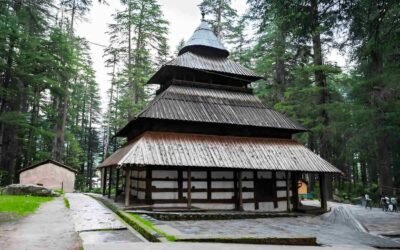
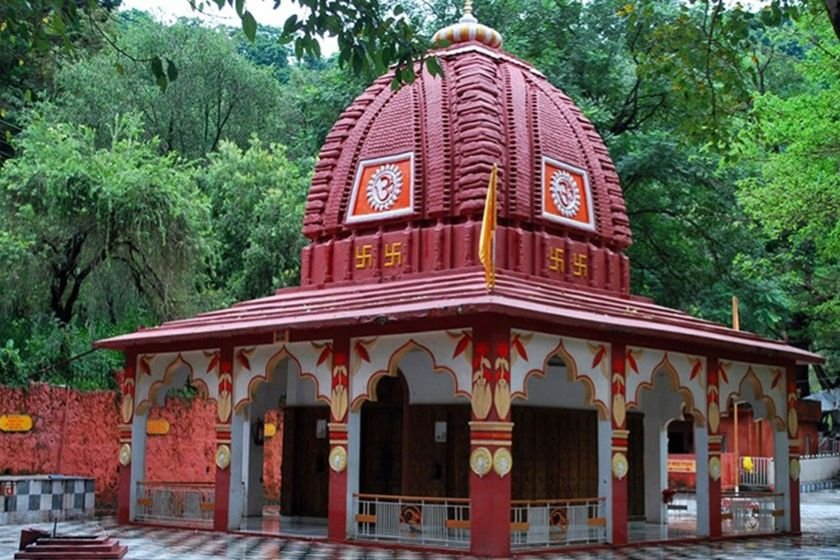
The Parshuram Temple is a modest stone structure, its sanctum housing an idol of Parshuram shown with his iconic axe; a separate, man-sized standing idol of Parshuram is also situated near the temple, close to the main road through the complex. Just outside, a rock formation known as Parshuram Shila is pointed out as the spot where he is said to have meditated or prayed. The temple sits a short walk from Parshuram Tal, a smaller companion lake fed by a gravel channel from Renuka Lake itself, home to fish that visitors commonly feed, and monkeys that, as at many lakeside shrines in the hills, are worth keeping half an eye on. The wider Renuka Ji complex includes several temples in close proximity — dedicated variously to Renuka, Vishnu, and Shiva — making Parshuram’s shrine one stop within a small but dense cluster of sacred sites rather than an isolated destination.
📜 Regional Context — A Lake at the Center of a Princely State’s Devotion
Renuka Lake sits within what was once the princely state of Sirmaur, whose capital, Nahan, was established in 1621 by Raja Karam Prakash — and the lake’s religious prominence long predates and outlasted that particular political history, referenced in older Puranic material well before Sirmaur’s more recent royal lineage took shape. The main Renuka Temple itself, known locally as “the Math,” was built by an invading force of Gurkhas in 1814, a detail that quietly folds a moment of regional conflict into what’s now one of Himachal’s most visited pilgrimage sites. Today, Renuka Lake is also a designated Ramsar wetland site, recognized since November 2005, and forms the core of the Renuka Wildlife Sanctuary — layering ecological significance on top of the mythological weight the site already carried.
🎉 Festivals and Devotion
- Renuka Fair (November, around Devprabodhini Ekadashi): The complex’s defining event — a five-day festival built around the belief that Renuka rises from the lake to meet her son, featuring the Shobha Yatra procession of Parshuram’s silver palanquin, folk dances including the traditional Sirmauri Natti, boat rituals, and idol immersions.
- Daily darshan and lakeside parikrama: Outside festival season, visitors still walk the circumference of the lake as a form of devotion, feeding the fish at Parshuram Tal along the way.
🏞️ While You’re in the Area
- Renuka Temple (“The Math”) – The main shrine to Goddess Renuka herself, just steps away, built in 1814.
- Jamu Peak – About 8 km from the lake, said to be where Sage Jamadagni once meditated; a small temple atop the peak offers sweeping views of the lake and surrounding hills.
- Renuka Wildlife Sanctuary – Home to leopards, sambar deer, barking deer, and abundant birdlife, with a mini zoo and lion safari enclosure near the lake for those travelling with children.
- Parshuram Tal – The smaller companion lake immediately beside the temple, worth a slow walk in its own right.
- Dadahu – The nearest town, roughly 2 km from the sanctuary, useful for transport connections and basic amenities.
❓ Quick Questions Travellers Ask
Is there an entry fee at the Parshuram Temple? No, entry is free, as with the rest of the Renuka Ji temple complex.
When is the best time to see the site at its most vibrant? During the Renuka Fair in November, when the Shobha Yatra procession and lake rituals bring the whole complex to life — though it’s also, unsurprisingly, the most crowded time to visit.
How does the Parshuram Temple relate to the main Renuka Temple? They’re part of the same close-knit pilgrimage complex, a short walk apart, and are generally visited together as a single mother-son circuit.
Is boating available on the lake? Yes, boating is offered on Renuka Lake, and it’s a popular way to take in the lake’s distinctive reclining-figure shape from the water.
Are the two lakes (Renuka Lake and Parshuram Tal) connected? Yes — Parshuram Tal receives water from Renuka Lake via a small gravel channel, making it something of a companion pool to the main lake rather than a fully separate body of water.
A Last Word
There’s something quietly remarkable about a goddess who chose permanence in water over permanence in the world, and a son who accepted that choice rather than fighting it — settling instead for one guaranteed day together every year. Most of the temples in this series mark a moment that already happened. This one marks a moment that, by the belief of everyone who gathers here each November, is still happening, on schedule, again and again.
Fact-check note: Renuka Lake’s status as Himachal’s largest natural lake, its Ramsar wetland designation (2005), the 1814 construction of the main Renuka Temple by Gurkha forces, and the November Renuka Fair with its Shobha Yatra procession are corroborated across multiple independent sources, including a detailed Grokipedia entry citing the Padma Purana’s reference to the site. Two distinct and not fully reconcilable legends exist regarding Renuka’s connection to the lake — the beheading-and-restoration story, and the Sahasrarjuna-abduction/lake-merger story — and both are presented above without asserting one as more authoritative, since sources are genuinely split on which is considered primary. Exact distances from Nahan and other towns vary slightly across sources. No verified GPS coordinates, specific temple timings, or priest contact details could be confirmed, so none are stated as fact above.