
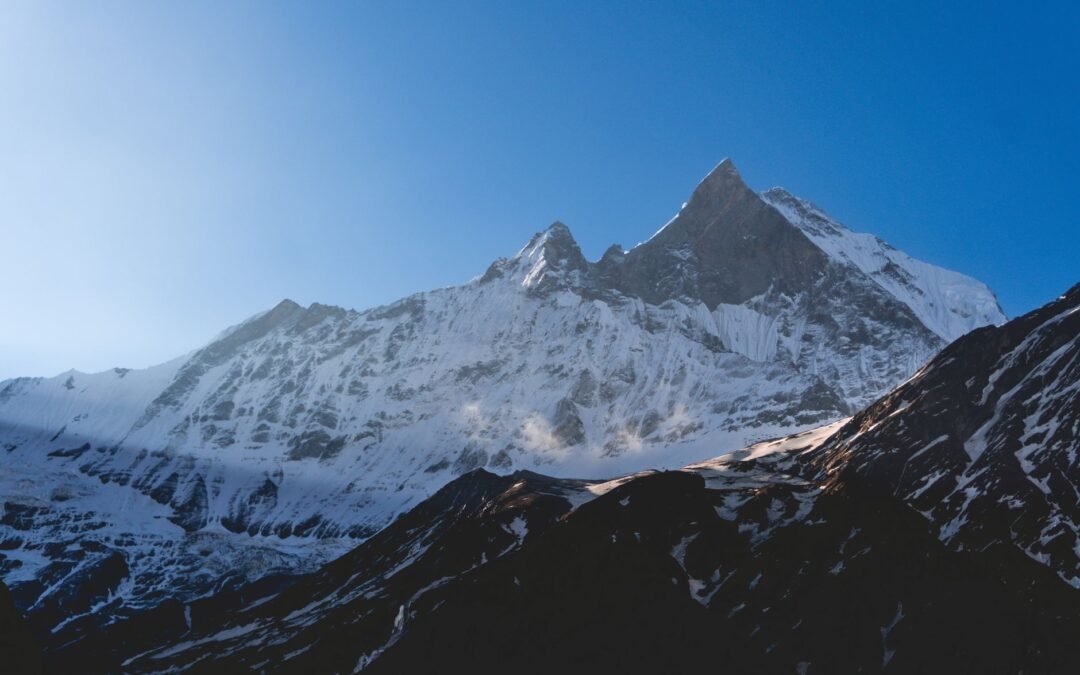
- Annapurna Base Camp sits at 4,130 meters and requires 7-12 days trekking from Pokhara with TIMS card and ACAP permits mandatory.
- Best trekking seasons are October-November and March-May with clear mountain views and stable weather conditions.
- The trek follows the Modi Khola valley through diverse landscapes from terraced fields to alpine meadows and glacial zones.
- Teahouses along the route provide accommodation and meals, eliminating the need for camping equipment on this trek.
- Acclimatization at Machapuchare Base Camp and proper layered clothing are essential for safe trekking at high altitude.
- Introduction
- Quick Facts About Annapurna Base Camp
- Why Visit Annapurna Base Camp
- How to Reach Annapurna Base Camp
- Best Time to Visit Annapurna Base Camp
- Top Things to Do in Annapurna Base Camp
- Where to Stay in Annapurna Base Camp
- Local Food & Cuisine
- Practical Travel Tips for Annapurna Base Camp
- Final Thoughts
- Frequently Asked Questions
Introduction
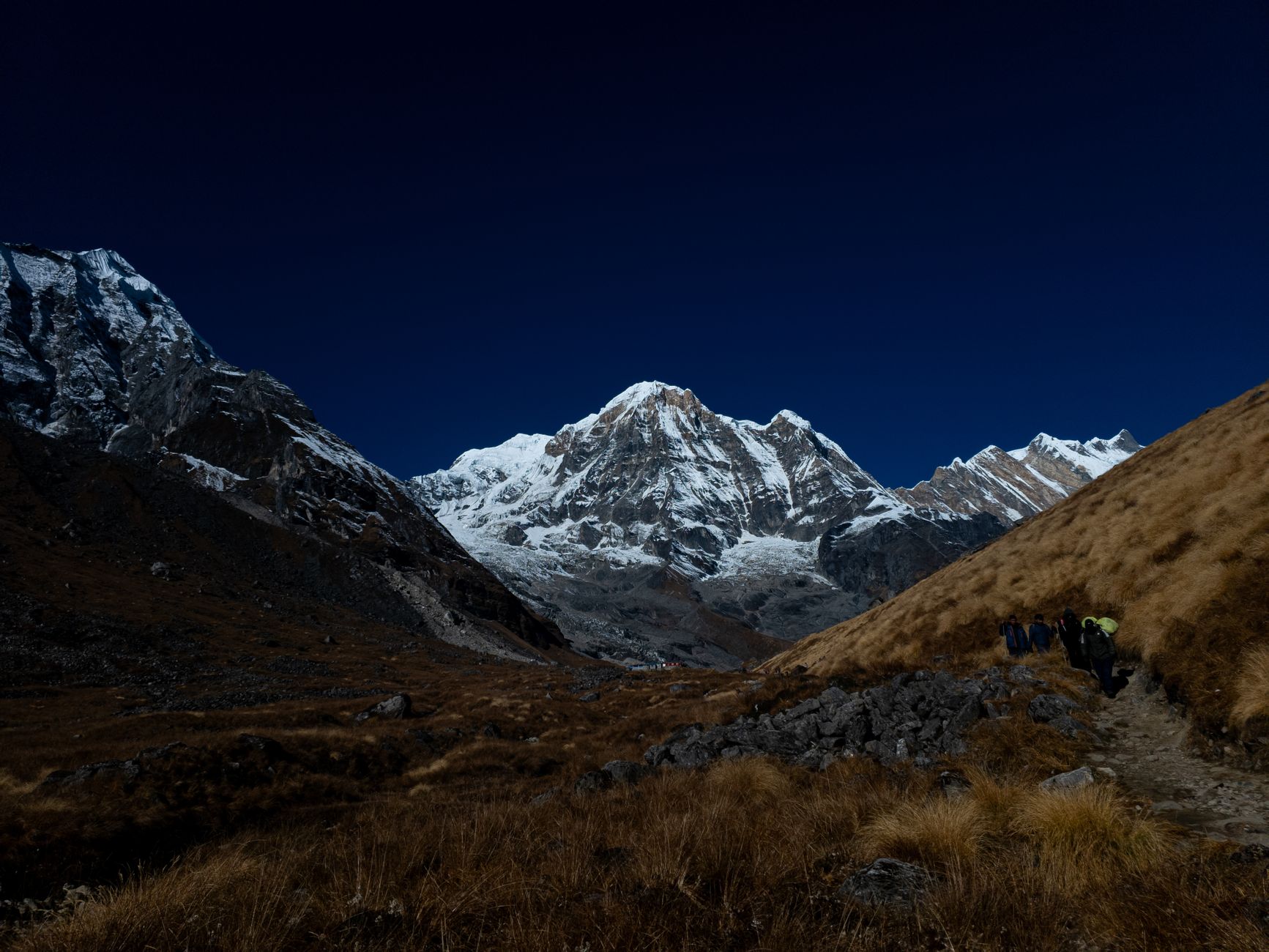
Nestled in the heart of the majestic Annapurna massif, Annapurna Base Camp (ABC) stands as one of the most spectacular trekking destinations in the entire Himalayan range. At an elevation of 4,130 meters (13,549 feet), this natural amphitheater offers trekkers an intimate encounter with some of the world’s highest peaks, including the tenth-highest mountain on Earth, Annapurna I (8,091 meters). Unlike many high-altitude base camps that require technical climbing skills, ABC remains accessible to determined trekkers with moderate fitness levels, making it a bucket-list destination for adventurers from India and across the globe.
The journey to Annapurna Base Camp is not merely a trek; it’s a transformative experience that takes you through diverse landscapes ranging from subtropical forests alive with rhododendron blooms to alpine meadows and finally to the stark, magnificent beauty of the high Himalayas. Along the way, you’ll traverse traditional Gurung and Magar villages, cross suspension bridges over roaring glacial rivers, and witness the dramatic transformation of terrain that has captivated mountaineers and trekkers for decades.
What truly sets ABC apart is the 360-degree panorama of towering peaks that surround the base camp—Annapurna South (7,219m), Hiunchuli (6,441m), Machapuchare or “Fishtail” (6,993m), Gangapurna (7,455m), and numerous other giants create a natural sanctuary that leaves even seasoned travelers speechless. Whether you’re an Indian trekker seeking your first Himalayan adventure or an international explorer adding another jewel to your trekking portfolio, Annapurna Base Camp promises an unforgettable journey into the world’s most dramatic mountain landscapes.
Quick Facts About Annapurna Base Camp
| Feature | Details |
|---|---|
| Altitude | 4,130 meters (13,549 feet) |
| Best Time to Visit | March-May and September-November |
| Distance from Pokhara | 42 km (to trekking start point at Nayapul) |
| Nearest Airport | Pokhara Airport (11 km from city center) |
| Permits Required | TIMS Card and Annapurna Conservation Area Permit (ACAP) |
| Temperature Range | -10°C to 20°C (varies with season and altitude) |
| Approx Budget per Day | NPR 3,500-5,000 (INR 2,200-3,100) including accommodation and meals |
| Trek Duration | 7-12 days (round trip from Nayapul) |
Why Visit Annapurna Base Camp
Annapurna Base Camp offers something truly exceptional that distinguishes it from other Himalayan treks. The sanctuary itself—a massive glacial basin surrounded by peaks exceeding 7,000 meters—creates an almost spiritual atmosphere where you feel cradled by giants. At sunrise, when the first golden rays illuminate the south face of Annapurna I, revealing its massive ice walls and fluted ridges, you’ll witness one of nature’s most dramatic light shows. The mountain reflects hues ranging from deep crimson to brilliant gold, a phenomenon that has been photographed countless times yet never loses its power to mesmerize.
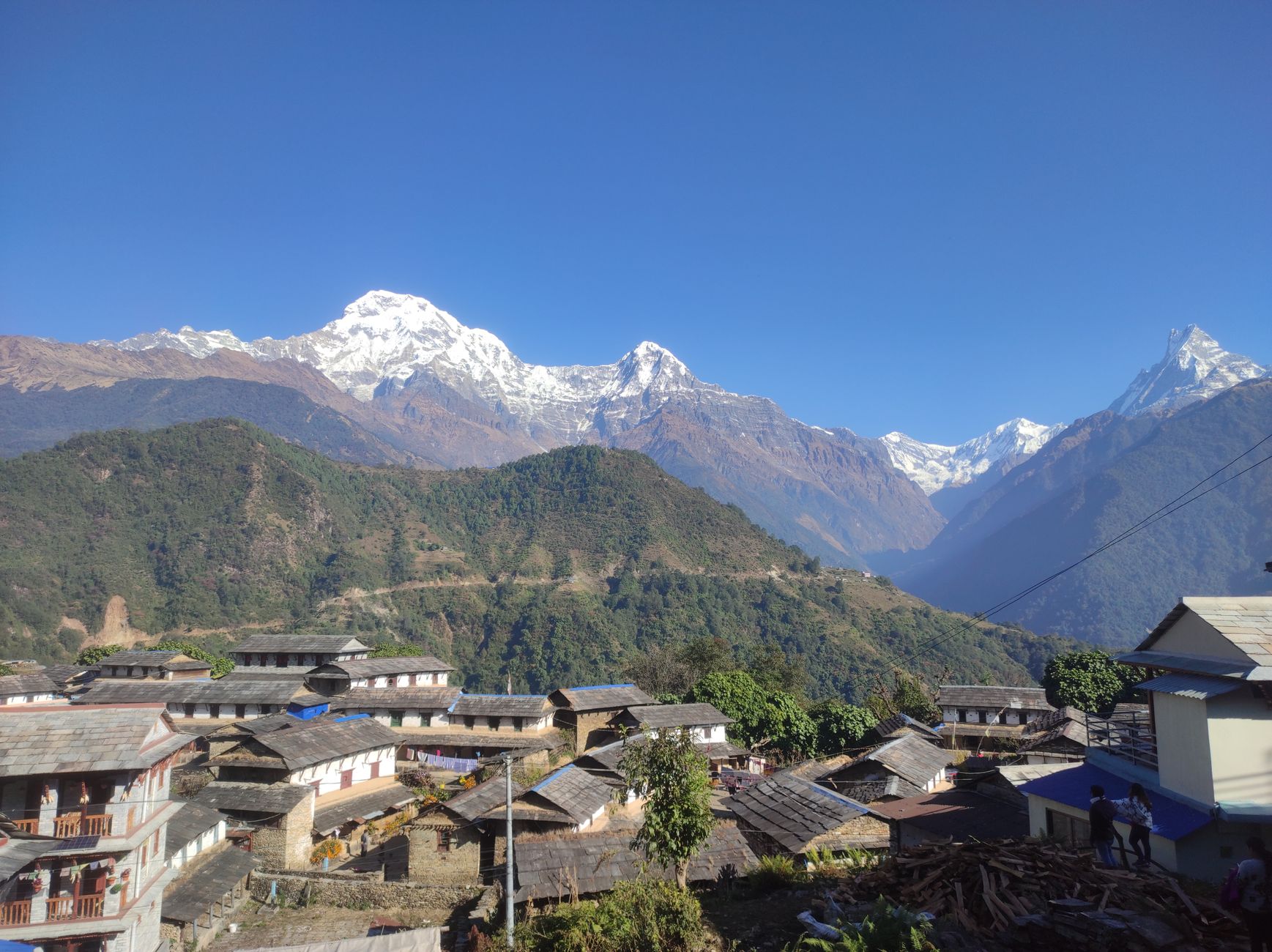
The cultural richness of the Annapurna region adds profound depth to the trekking experience. The trail passes through authentic Gurung villages like Chhomrong and Sinuwa, where traditional stone houses with slate roofs cling to mountainsides, and prayer flags flutter in the Himalayan winds. Unlike more commercialized trekking routes, villages along the ABC trail maintain their traditional character. You’ll encounter locals engaged in terrace farming, witness age-old customs, and experience the renowned hospitality of the mountain communities. Many teahouse owners are themselves from generations of mountain dwellers who can share stories of the region’s history and mountaineering heritage.
The biodiversity of the Annapurna Conservation Area, through which the trek passes, is genuinely remarkable. The lower elevations harbor subtropical forests where langur monkeys swing through the canopy and over 100 species of orchids bloom during the right season. As you ascend through temperate forests, you’ll walk beneath towering rhododendrons—Nepal’s national flower—which create tunnels of crimson, pink, and white blossoms in spring. The region is also home to the elusive snow leopard, Himalayan tahr, and numerous bird species including the colorful Danphe (Himalayan Monal), Nepal’s national bird. This ecological diversity, combined with the dramatic change in landscapes over relatively short distances, creates a trekking experience that engages all the senses.

How to Reach Annapurna Base Camp
The journey to Annapurna Base Camp begins in Pokhara, Nepal’s adventure capital, which is well-connected to both Kathmandu and India. For Indian travelers, there are multiple convenient routes to access Pokhara.
By Air to Pokhara: The fastest route is flying directly to Pokhara. From Kathmandu’s Tribhuvan International Airport, domestic flights to Pokhara operate multiple times daily (25-30 minutes, NPR 4,000-8,000 or approximately INR 2,500-5,000). Buddha Air, Yeti Airlines, and Shree Airlines operate regular services. For Indian travelers, you can fly to Kathmandu from major cities like Delhi (2.5 hours, starting from INR 8,000), Mumbai, Bangalore, and Kolkata, then connect to Pokhara. Alternatively, direct flights from Delhi to Pokhara are occasionally available during peak season.
By Road from Kathmandu: Tourist buses operate daily between Kathmandu and Pokhara (200 km, 6-7 hours, NPR 700-1,500 or INR 440-940). Luxury coaches with air-conditioning cost NPR 1,500-2,000 (INR 940-1,250). The Prithvi Highway offers scenic views of the Trishuli River and terraced hillsides. Greenline Tours and other operators provide comfortable options with meal stops. Private taxis can be hired for approximately NPR 8,000-12,000 (INR 5,000-7,500) offering flexibility in stops.
From Indian Border Towns: Indian travelers often enter Nepal through Sunauli (nearest to Gorakhpur) or Raxaul (near Bihar). From Sunauli, direct tourist buses to Pokhara cover 160 km in about 6-7 hours (NPR 600-1,000 or INR 375-625). Many Indian trekkers take trains to Gorakhpur from Delhi, Mumbai, or other cities, then taxi to Sunauli border (3-4 hours, INR 2,000-3,000 shared).
From Pokhara to Trek Starting Point: Most trekkers begin at Nayapul, 42 km from Pokhara (1.5 hours by jeep/taxi, NPR 1,500-2,500 or INR 940-1,560). Local buses are cheaper (NPR 200-300 or INR 125-190) but take longer. Some trekkers drive further to Jhinu Danda or Kimche to shorten the trek, though this reduces the experience. Private jeeps can be hired in Pokhara’s tourist areas, particularly around Lakeside.
Best Time to Visit Annapurna Base Camp
Spring Season (March to May): This is arguably the finest time for the ABC trek. March brings moderate temperatures with daytime highs reaching 15-20°C at lower elevations, though base camp remains cold at -5°C to 5°C. April and May see the rhododendron forests explode into vibrant blooms, painting the hillsides in spectacular colors. Visibility is generally excellent with clear mountain views, though afternoon clouds can develop in late May. Trails are busy but not overcrowded, and all teahouses operate at full capacity. For Indian trekkers planning during school holidays, April is ideal.
Pre-Monsoon (Late May to June): Late May and June bring increasing temperatures and afternoon cloud buildup. While mornings often provide clear views, afternoons can be misty. This period sees fewer trekkers, offering more solitude. However, leeches appear in lower forest sections, and the risk of pre-monsoon showers increases. Budget travelers benefit from lower teahouse prices and easier accommodation availability.
Monsoon Season (July to August): The monsoon period is generally not recommended for ABC. Heavy rainfall makes trails slippery and potentially dangerous, leeches are abundant below 3,000 meters, and mountain views are frequently obscured by clouds. The risk of landslides increases significantly. Many experienced trekkers avoid this period entirely, though determined adventurers seeking complete solitude do occasionally trek with proper precautions.
Autumn Season (September to November): This is peak trekking season and for good reason. September sees the tail end of monsoon clearing, with fresh, crystal-clear air providing phenomenal mountain visibility. October offers the most stable weather—daytime temperatures are comfortable (10-20°C at lower elevations), nights are cool but manageable, and rainfall is minimal. The post-monsoon clarity creates stunning photography conditions. November brings colder temperatures, especially at higher altitudes where base camp can drop to -15°C at night, but skies remain clear. Trails are busiest in October, so booking teahouse accommodation in advance is advisable.
Winter Season (December to February): Winter trekking to ABC is challenging but possible for experienced, well-equipped trekkers. Heavy snowfall can block higher sections, particularly above Deurali (3,230m). Temperatures at base camp plummet to -20°C or lower. Many teahouses at higher elevations close, limiting accommodation options. However, those who brave the cold are rewarded with pristine snowy landscapes, virtually empty trails, and absolute clarity when weather permits. This period is recommended only for experienced trekkers with proper winter gear.
Top Things to Do in Annapurna Base Camp
Experience Sunrise at Annapurna Base Camp
Waking before dawn and stepping out into the frigid pre-sunrise air at base camp is an unforgettable experience. As the first light touches the peaks, Annapurna South catches fire first, followed by the massive south face of Annapurna I. The interplay of shadows and golden light across the glacier-carved amphitheater creates a moment of profound beauty. Photographers should arrive at the viewpoint near the base camp monuments at least 30 minutes before sunrise to secure positions and prepare equipment for the rapidly changing light conditions.
Visit Machapuchare Base Camp
Located at 3,700 meters, just before the final push to ABC, Machapuchare Base Camp (MBC) offers spectacular close-up views of the sacred Machapuchare peak, whose distinctive fishtail shape has never been summited due to its religious significance. The teahouses here provide excellent vantage points, and spending a night at MBC helps with acclimatization. The proximity to Machapuchare’s soaring walls, with its permanent snow and ice formations, provides photographic opportunities distinct from those at ABC itself.
Trek Through the Rhododendron Forests
Between Chomrong and Sinuwa, the trail passes through magnificent rhododendron forests that feel almost enchanted. During spring (March-April), the canopy bursts with blooms ranging from deep crimson to pale pink and white. The gnarled, moss-covered branches create cathedral-like spaces, and the forest floor is carpeted with fallen petals. These sections offer welcome shade during warmer days and excellent opportunities for botanical photography and bird watching, with species like the Himalayan Monal frequently spotted.
Explore Traditional Gurung Villages
Chhomrong village (2,170m) is the largest settlement en route and offers authentic insight into Gurung culture. Take time to wander the stone-paved paths between traditional houses, visit the local monastery, and interact with residents. Many families operate teahouses and are happy to share stories about their lives in the mountains. Purchasing locally made handicrafts—woven baskets, woolen items, or prayer flags—directly supports the community and provides meaningful souvenirs of your journey.
Soak in Natural Hot Springs at Jhinu Danda
Located approximately 1.5-2 hours walk down from Chhomrong (or accessible on the return journey), the natural hot springs at Jhinu Danda offer therapeutic relief for trek-weary muscles. A 15-minute descent from Jhinu village leads to pools beside the Modi Khola river where naturally heated water (around 40°C) emerges from underground sources. The setting is spectacular, surrounded by lush vegetation with mountain views. Most trekkers visit on their return from ABC, making this a perfect reward after days of hiking. Entry costs NPR 100 (INR 62).
Photography at Himalaya Hotel Area
The section around Himalaya Hotel and Deurali (3,230m) offers some of the trek’s most dramatic photography opportunities. The valley narrows here, with towering walls on both sides, and the perspective changes dramatically from lower elevations. During winter and early spring, this section often features ice formations, frozen waterfalls, and snow-laden trees. The contrast between the narrow gorge section and the sudden opening into the sanctuary creates powerful compositional opportunities for landscape photographers.
Where to Stay in Annapurna Base Camp
Accommodation along the ABC trek consists primarily of teahouses—simple mountain lodges offering basic rooms and meals. As you ascend, facilities become more basic and prices increase due to limited supplies. Most teahouses have adopted standardized pricing in cooperation with local committees.
Budget Options (NPR 200-500 or INR 125-310 per night for room)
Basic teahouses offer simple rooms with twin beds, thin mattresses, and shared bathroom facilities. At lower elevations (Chhomrong, Bamboo, Sinuwa), you’ll find establishments like Chhomrong Cottage and Bamboo Guest House charging around NPR 300-500 (INR 190-310) per room. Hot showers cost extra (NPR 200-300 or INR 125-190). At higher elevations, base lodges like Annapurna Base Camp Lodge and Sanctuary Lodge charge NPR 500-700 (INR 310-440) per room. Blankets are provided but bringing a sleeping bag is advisable at higher altitudes. Most budget lodges expect guests to take meals at their establishment, which is standard practice throughout the trek.
Mid-Range Options (NPR 700-1,500 or INR 440-940 per night)
Better-maintained teahouses with slightly more comfortable facilities fall into this category. Himalaya Hotel at Deurali, The Sanctuary Lodge at MBC, and Excellent View Lodge at various points offer rooms with better mattresses, cleaner facilities, and sometimes attached bathrooms with basic hot water. At Chhomrong, Hotel Chhomrong Mountain View provides relatively comfortable accommodation with mountain-facing rooms, solar-powered lighting, and reasonably maintained bathrooms. These establishments typically have larger dining areas with heating (wood-burning stoves) and more varied menu options.
Relatively Better Options (NPR 1,500-2,500 or INR 940-1,560 per night)
At base camp and MBC, a few lodges offer marginally better facilities during peak season. Grand View Lodge and Dream Palace Lodge at base camp provide rooms that are better insulated against the cold, with thicker mattresses and higher-quality blankets. Some rooms may have attached bathrooms, though water availability is limited. These lodges also offer better dining experiences with somewhat more varied menus and more efficient heating. However, it’s important to maintain realistic expectations—even the “best” accommodation at 4,130 meters is basic by any standard measure.
Note: Room prices are often nominal as lodges earn primary income from food. Many lodges offer free rooms if you commit to eating all meals there. During peak season (October), booking ahead through trekking agencies is advisable for popular stops like Chhomrong and base camp.
Local Food & Cuisine
Teahouse menus along the ABC trek offer a mix of Nepali, Tibetan, Indian, and Western dishes. As you ascend, menus become simpler and prices increase due to porter costs for supplies. Food is generally safe if you choose cooked items, and most teahouses maintain good hygiene standards.
Dal Bhat: The staple meal throughout Nepal, dal bhat consists of steamed rice, lentil soup (dal), vegetable curry, pickle (achar), and sometimes papad. This nutritionally balanced meal provides sustained energy for trekking and comes with free refills at most teahouses—making it the best value option (NPR 500-800 or INR 310-500 depending on altitude). The Gurung version often includes locally grown vegetables and sometimes includes spinach or nettle greens. Every teahouse serves their own variation, making it interesting to compare as you trek.
Thukpa: This hearty Tibetan noodle soup is perfect for cold mountain evenings. Made with vegetables, sometimes egg or chicken, and hand-pulled noodles in a flavorful broth seasoned with garlic and ginger, thukpa provides comfort and warmth. Prices range from NPR 350-600 (INR 220-375) depending on ingredients and altitude. At higher elevations like MBC and ABC, a steaming bowl of thukpa is often the most satisfying dinner option.
Momos: These Tibetan-style dumplings filled with vegetables, cheese (paneer), or buffalo meat are available at most teahouses. Served steamed or fried with spicy tomato-based achar, momos make an excellent lunch or snack (NPR 250-450 or INR 155-280 for a plate of 8-10 pieces). The vegetable versions are generally safer for sensitive stomachs and taste remarkably good at altitude.
Tibetan Bread: A filling breakfast option, this deep-fried bread is served with jam, honey, or cheese. Light and fluffy inside with a crispy exterior, it pairs excellently with lemon tea or milk coffee (NPR 200-350 or INR 125-220). Many trekkers develop a morning routine of Tibetan bread with peanut butter and honey, which provides substantial energy for the day’s trek.
Recommended Eating Establishments
Chhomrong Garden Restaurant in Chhomrong village offers one of the most extensive menus on the trail with particularly good dal bhat and fresh vegetable preparations sourced from local farms. Meals range from NPR 400-700 (INR 250-440). The mountain-view dining area is especially pleasant for afternoon tea.
Himalaya Hotel Restaurant at Deurali (3,230m) serves reliable food with good portion sizes. Their garlic soup (NPR 250 or INR 155) is famous among trekkers for its supposed altitude-sickness-preventing properties. The wood-burning stove creates a cozy atmosphere during cold evenings.
Sanctuary Lodge Restaurant at MBC provides hot meals even in harsh conditions. While the menu is limited to basics like dal bhat, thukpa, and noodles (NPR 600-900 or INR 375-565), the food is freshly prepared and the portions generous. Their lemon-ginger-honey tea (NPR 150 or INR 94) is particularly soothing.
Base Camp Lodge Dining Hall at ABC itself offers simple but satisfying meals. Despite limited supplies, they manage to serve hot dal bhat, fried rice, noodles, and soups (NPR 700-1,000 or INR 440-625). The communal dining experience here, with trekkers from around the world sharing stories around the stove, is memorable in itself.
Practical Travel Tips for Annapurna Base Camp
Permits and Documentation
Two permits are mandatory for the ABC trek. The TIMS Card (Trekkers’ Information Management System) costs NPR 2,000 (approximately INR 1,250) for individual trekkers and NPR 1,000 (INR 625) for organized groups. The Annapurna Conservation Area Permit (ACAP) costs NPR 3,000 (INR 1,875) for foreigners including SAARC nationals. These can be obtained in Kathmandu at the Nepal Tourism Board office or in Pokhara at the Tourist Service Center. You’ll need two passport-sized photos and passport copies. Permits are checked at multiple points along the trail, so keep them accessible. Some trekking agencies include permit processing in their packages.
Mobile Network and Connectivity
Ncell and Nepal Telecom provide coverage along most of the trek, though signal strength weakens at higher elevations. Ncell generally offers better coverage and data speeds. SIM cards are available in Pokhara (NPR 400-600 or INR 250-375 including initial data). At base camp, connectivity is intermittent. Most teahouses offer WiFi services (NPR 300-500 or INR 190-310 per day, or NPR 500-700 or INR 310-440 for unlimited use), though speeds are very slow at higher altitudes due to satellite connections. For important communications, consider purchasing a local SIM with adequate data package before starting the trek.
ATM and Money Matters
The last reliable ATMs are in Pokhara. No ATMs exist along the trek route, so carry sufficient Nepali Rupees in cash. Calculate approximately NPR 3,500-5,000 (INR 2,200-3,100) per day for food, accommodation, and beverages, plus extra for permits, emergency supplies, tips for guides/porters, and contingencies. Bring small denominations (NPR 100, 500) as teahouses often lack change. Some teahouses in Chhomrong accept Indian Rupees but at poor exchange rates. Credit cards are not accepted anywhere on the trek.
Medical Facilities and Health Precautions
Basic health posts exist in Chhomrong and other larger villages, but facilities are limited. The nearest proper medical facilities are in Pokhara. Altitude sickness is the primary health concern—ascend slowly, stay hydrated (3-4 liters daily), and recognize symptoms (headache, nausea, dizziness). If symptoms worsen, descend immediately. Carry a basic first aid kit including altitude sickness medication (Diamox), pain relievers, anti-diarrheal medication, bandages, and any personal prescriptions. Water purification tablets or a filter system are essential as drinking untreated water risks gastrointestinal issues. Teahouses sell boiled water (NPR 100-200 per liter or INR 62-125, increasing with altitude) but this is expensive and environmentally unfriendly due to fuel consumption.
What to Pack
Layering is crucial for dealing with varying temperatures and altitudes. Essential items include: moisture-wicking base layers, insulating mid-layers (fleece or down jacket), waterproof and windproof outer shell, trekking pants (quick-dry), warm hat and gloves, sun hat, quality trekking boots (broken in before the trek), comfortable camp shoes, sleeping bag rated to -10°C or lower (can be rented in Pokhara for NPR 150-300 or INR 95-190 per day), trekking poles (highly recommended for knee protection), headlamp with extra batteries, sunglasses (UV protection essential at altitude), sunscreen (SPF 50+), lip balm, water bottles or hydration system, water purification method, personal toiletries, toilet paper, hand sanitizer, and any personal medications. Keep your pack weight reasonable—10-12 kg maximum if carrying yourself, or hire a porter (NPR 1,500-2,000 per day or INR 940-1,250).
Safety Considerations
The ABC trek is generally safe, but awareness is important. Trek during daylight hours only—trails can be dangerous in darkness. Suspension bridges require careful crossing, especially when wet or icy. During monsoon or winter, landslide and avalanche risks increase in certain sections. Always inform your teahouse host of your next destination and expected arrival time. Consider travel insurance that covers trekking up to 4,500 meters and emergency helicopter evacuation, which can cost USD 3,000-5,000 if needed. Trek with a companion or group when possible, and hire a licensed guide if you’re inexperienced in mountain trekking (NPR 2,500-3,500 per day or INR 1,560-2,190 plus expenses).
Responsible Tourism Practices
The Annapurna region’s pristine beauty depends on responsible trekker behavior. Carry out all non-biodegradable waste including batteries, plastic wrappers, and toiletries—no littering under any circumstances. Use refillable water bottles and purification methods instead of buying countless plastic bottles. Stick to established trails to prevent erosion. Respect local customs and dress modestly in villages. Ask permission before photographing people. Use biodegradable soap minimally and never in streams. Wood is scarce at high altitudes—choose teahouses with kerosene or gas stoves over wood-burning ones when possible. Support local economies by purchasing genuine handicrafts directly from artisans and paying fair prices for services. Many teahouses now collect waste for proper disposal—support these initiatives.
Final Thoughts
Annapurna Base Camp represents far more than a trekking destination—it’s a journey into one of Earth’s most magnificent natural sanctuaries, an opportunity to test your physical limits, and a chance to experience the warmth of mountain hospitality. Standing at base camp, surrounded by peaks that have captivated mountaineers for generations, you’ll understand why this trek has earned its place among the world’s classic mountain journeys. The sense of achievement as you watch sunrise paint the amphitheater of giants, the cultural richness of traditional villages, the camaraderie with fellow trekkers, and the profound connection with the Himalayan wilderness combine to create memories that endure long after you’ve returned to sea level.
Whether you’re an Indian trekker seeking adventure beyond the Himachal peaks or an international traveler discovering Nepal’s mountain magic, Annapurna Base Camp welcomes you with open arms and towering peaks. The journey demands physical effort, requires mental determination, and rewards you with experiences that transform how you see mountains, challenge, and your own capabilities. So lace up your boots, pack your sense of adventure, and set forth on the trail to Annapurna’s sanctuary. The mountains are calling, and the amphitheater of giants awaits your arrival. Namaste, and may your journey to Annapurna Base Camp be filled with clear skies, warm hearts, and unforgettable moments in the embrace of the Himalayas.
- Start your trek from Jhinu Danda instead of Nayapul to skip crowded lower trails and enjoy natural hot springs on day one.
- Carry enough Nepali rupees as ATMs disappear after Pokhara and teahouses charge premium rates for card payments above 3,000 meters.
- Book teahouse accommodation where you eat dinner to get better room rates, as most lodges profit from meals rather than beds.
- Descend to Bamboo or Sinuwa after reaching ABC instead of sleeping at base camp to avoid severe altitude headaches at night.
- Pack water purification tablets as buying bottled water costs 300-500 NPR per liter above Machapuchare Base Camp.
Frequently Asked Questions about Annapurna Base Camp
Annapurna Base Camp is located at an elevation of 4,130 meters (13,549 feet) in the heart of the Annapurna massif in Nepal. This natural amphitheater offers trekkers a 360-degree panorama of towering peaks including Annapurna I (8,091m), Machapuchare (6,993m), and several other giants exceeding 7,000 meters.
The best time to visit Annapurna Base Camp is during March-May (spring) and September-November (autumn). These months offer the most favorable weather conditions, clear mountain views, and comfortable trekking temperatures ranging from -10°C to 20°C depending on altitude and season.
The Annapurna Base Camp trek typically takes 7-12 days for a round trip from Nayapul, the trekking start point located 42 km from Pokhara. The duration varies depending on your pace, acclimatization needs, and chosen itinerary through diverse landscapes from subtropical forests to alpine meadows.
Trekkers need two permits for the Annapurna Base Camp trek: the TIMS Card (Trekkers’ Information Management System) and the Annapurna Conservation Area Permit (ACAP). These permits help regulate trekking activities and contribute to conservation efforts in the protected area.
The approximate daily budget for the Annapurna Base Camp trek ranges from NPR 3,500-5,000 (INR 2,200-3,100 or approximately $27-38 USD), including accommodation and meals. This makes it a relatively affordable Himalayan trekking destination, with the total cost depending on trek duration and personal preferences.
No, Annapurna Base Camp does not require technical climbing skills, making it accessible to determined trekkers with moderate fitness levels. Unlike many high-altitude base camps, ABC is a trekking destination suitable for adventurers seeking their first Himalayan experience, though good physical conditioning is recommended.