
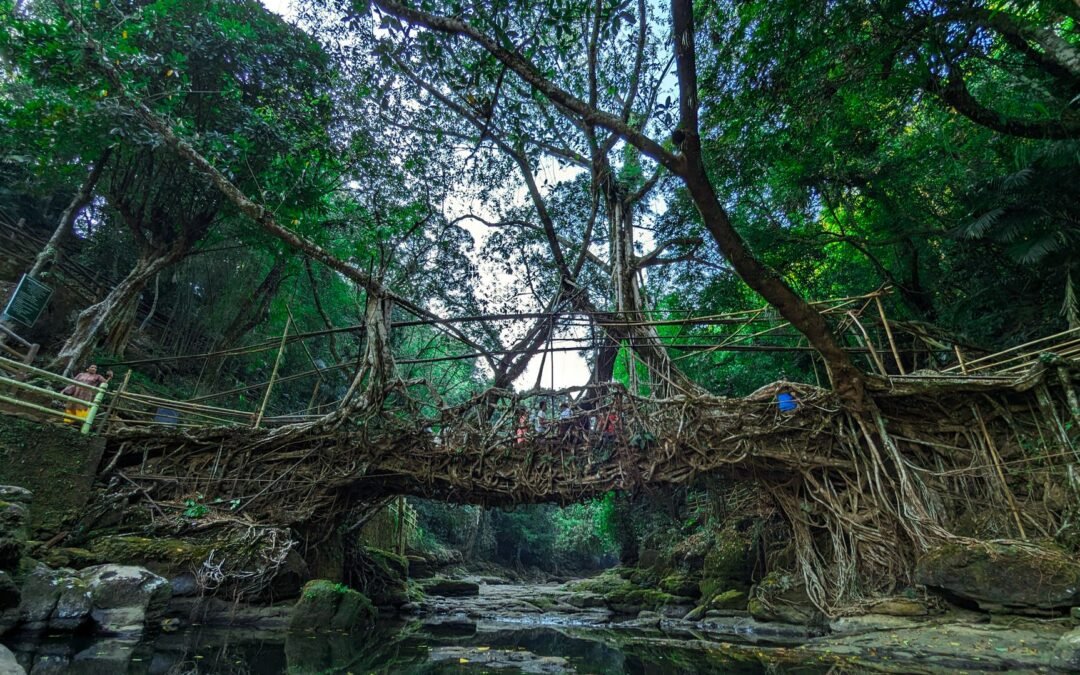
- The Double Decker Root Bridge in Nongriat village requires 3,500 steps descent and is best visited October to March
- Living Root Bridges are created by the Khasi tribe using aerial roots of Ficus elastica trees over 15-30 years
- Cherrapunji and Mawlynnong village host the most accessible living root bridges with basic homestay facilities
- Hire local Khasi guides from village tourism committees for safe navigation and authentic cultural insights
- Waterproof trekking shoes with good grip are essential as trails remain slippery year-round due to high rainfall
- Introduction
- Quick Facts About Living Root Bridges
- Why Visit Living Root Bridges
- How to Reach Living Root Bridges
- Best Time to Visit Living Root Bridges
- Top Things to Do in Living Root Bridges
- Where to Stay in Living Root Bridges
- Local Food & Cuisine
- Practical Travel Tips for Living Root Bridges
- Final Thoughts
- Frequently Asked Questions
Introduction
Imagine bridges that breathe, grow, and strengthen with age—structures so ingenious they could only be crafted by nature herself, guided by human patience spanning generations. The Living Root Bridges of Meghalaya represent one of India’s most extraordinary examples of bioengineering, where the Khasi and Jaintia tribes have coaxed the aerial roots of rubber fig trees (Ficus elastica) across rivers and streams, creating suspension bridges that can last for 500 years or more. These aren’t merely functional pathways; they’re living, breathing monuments to sustainable architecture, weaving together ecology, culture, and sheer human determination in the wettest place on Earth.
Nestled in the dense rainforests of Meghalaya’s southern regions, particularly around Cherrapunji and Mawlynnong, these root bridges solve a practical problem: how do you build bridges that withstand flash floods, torrential monsoons delivering over 11,000mm of annual rainfall, and the rot that would destroy any wooden structure within years? The answer lay not in concrete or steel, but in patience—guiding the pliable roots of trees across ravines using hollowed-out betel nut trunks, a process taking 10-15 years to create a usable bridge and another 20-30 years to reach full strength.
Today, these architectural marvels draw trekkers, photographers, and culture enthusiasts from across the globe, offering a rare glimpse into harmonious coexistence between humans and nature. The most famous among them, the Double Decker Living Root Bridge near Nongriat village, has become an icon of Northeast Indian tourism, but dozens of lesser-known bridges await discovery in the emerald depths of Meghalaya’s forests, each with its own story, guardian village, and unique character.
Quick Facts About Living Root Bridges
| Aspect | Details |
|---|---|
| Altitude | 600m to 1,400m above sea level (varies by location) |
| Best Time to Visit | October to May (November-February ideal) |
| Distance from Nearest City | Shillong: 54 km; Guwahati: 148 km |
| Nearest Airport | Shillong Airport (30 km); Guwahati (Lokpriya Gopinath Bordoloi): 148 km |
| Permits Required | Inner Line Permit for foreign nationals (₹100 for 15 days) |
| Temperature Range | 15°C-25°C (winter); 20°C-30°C (summer); 18°C-23°C (monsoon) |
| Approx Budget per Day | ₹1,500-₹2,500 (budget); ₹3,000-₹5,000 (mid-range); ₹6,000+ (comfortable) |
Why Visit Living Root Bridges
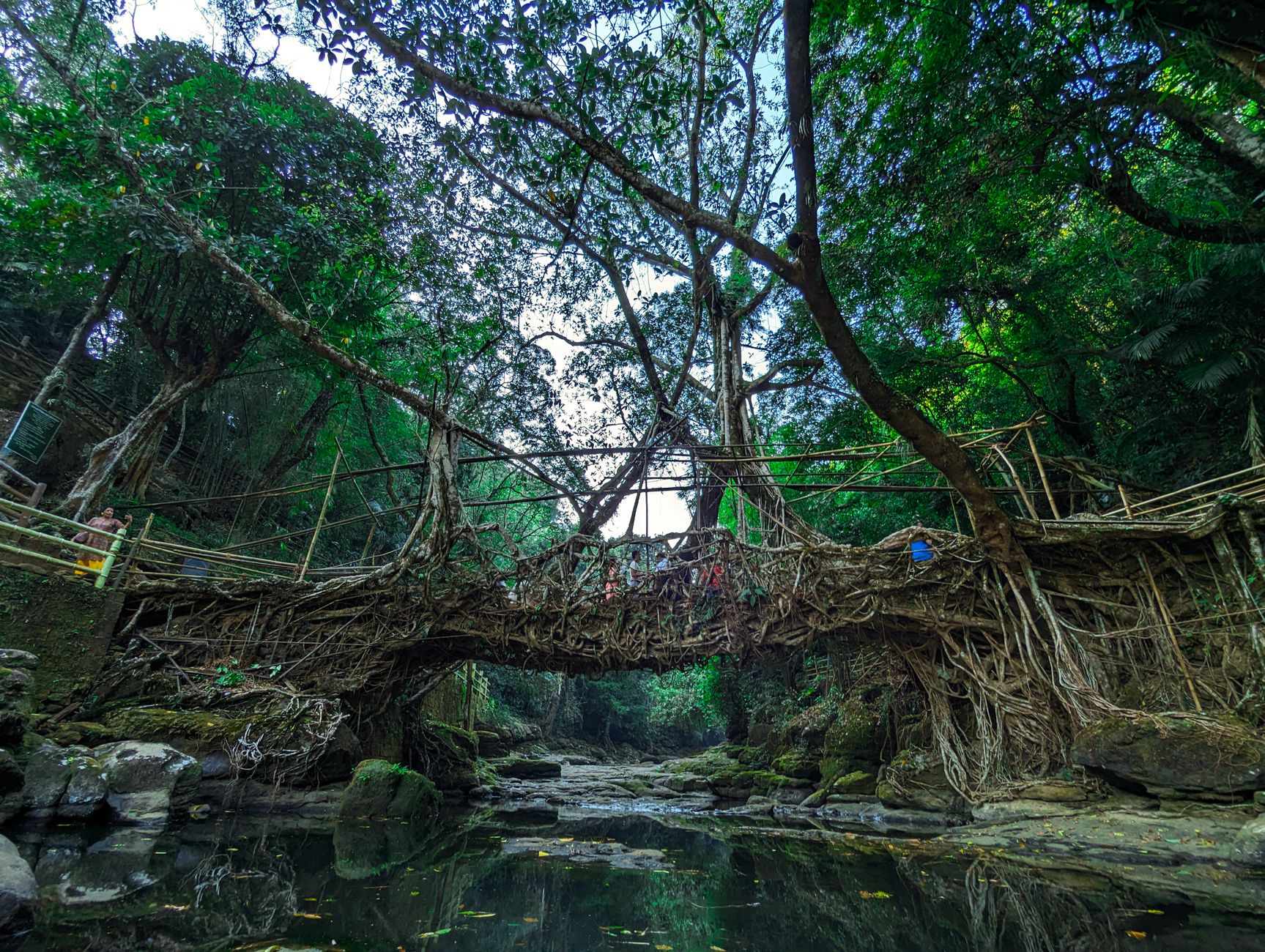
The Living Root Bridges aren’t just tourist attractions—they’re living proof of indigenous wisdom that modern sustainable architecture is only now beginning to appreciate. Unlike conventional bridges with predetermined lifespans, these structures actually grow stronger over time, their roots thickening and intertwining more densely with each passing year. Some bridges, like the Umshiang Double Decker, can support 50 or more people simultaneously, with roots so thick they resemble braided cables of organic steel.
What sets this experience apart is the journey itself. Reaching the Double Decker Root Bridge requires descending approximately 3,500 steps through pristine rainforest, passing through villages where Khasi culture remains vibrantly intact, crossing streams on smaller root bridges, and witnessing an ecosystem so biodiverse that new species are still being discovered. The trek takes you through canopies echoing with birdsong—hornbills, laughingthrushes, and drongos—past waterfalls that appear without warning, and into villages where bamboo homes perch on hillsides and betel nut palms sway overhead.
Culturally, visiting these bridges means engaging with the Khasi people’s matrilineal society, where property and clan names pass through the female line, and where traditional ecological knowledge has preserved both forest and culture for centuries. Each bridge has a custodian village responsible for its maintenance—not through modern engineering, but through the ancient practice of guiding new roots, pruning, and strengthening. Visitors witness firsthand how indigenous communities have created infrastructure that improves with age while leaving virtually no carbon footprint, offering lessons in sustainability that resonate far beyond Meghalaya’s borders.
How to Reach Living Root Bridges
By Air: The nearest major airport is Lokpriya Gopinath Bordoloi International Airport in Guwahati, Assam (148 km from Cherrapunji). Daily flights connect Guwahati with Delhi (₹4,000-₹8,000), Mumbai (₹5,500-₹10,000), Kolkata (₹3,500-₹6,500), and Bangalore (₹6,000-₹12,000). From the airport, hire a taxi to Cherrapunji (₹3,500-₹4,500, 3.5-4 hours) or take a shared taxi to Shillong first (₹300-₹400 per person, 3 hours), then onward transport to Cherrapunji (₹800-₹1,200, 2 hours).
By Train: Guwahati Railway Station is the nearest railhead (135 km from Cherrapunji). Major trains include Saraighat Express from Howrah, Kamrup Express from Bangalore, and Northeast Express from Delhi. From Guwahati station, shared sumos to Shillong depart regularly from Paltan Bazaar (₹250-₹350 per seat, 3 hours). Private taxis cost ₹3,000-₹4,000 for the entire journey to Cherrapunji.
By Road: Meghalaya State Transport Corporation (MSTC) buses run from Guwahati to Shillong (₹150-₹250, frequent departures) and Shillong to Cherrapunji (₹80-₹120, every hour from 7 AM-3 PM). For reaching specific root bridge locations like Nongriat village (home of Double Decker), hire local taxis from Cherrapunji to Tyrna village (₹400-₹600, 20 km, 45 minutes), which serves as the trekking starting point. Private vehicles can be rented in Shillong for ₹2,500-₹3,500 per day including driver.
Local Transport: From Tyrna village, the trek to Nongriat and the Double Decker Root Bridge is entirely on foot—3,500 steps down (2-3 hours descent, 3-4 hours ascent). Local guides are available at ₹500-₹800 for the entire trek. For other bridges like Umkar, Mawsaw, or Rangthylliang (near Pynursla), local taxis from Cherrapunji charge ₹800-₹1,500 depending on distance and waiting time.
Best Time to Visit Living Root Bridges
Winter (November to February): This is the absolute best time to visit the Living Root Bridges. Temperatures range from 15°C to 25°C, with clear skies, minimal rainfall, and comfortable trekking conditions. The steps can be tackled without worry of slippery conditions, and visibility is excellent for photography. Waterfalls have reduced flow but the surrounding forest remains lush. Expect moderate crowds, especially during Christmas and New Year weeks. Accommodation should be booked at least 2-3 weeks in advance during December-January.
Spring (March to May): Pleasant weather continues with temperatures climbing to 20°C-30°C. March and April see fewer tourists, making it ideal for those seeking solitude. The forest is verdant, wildflowers bloom, and bird activity increases as migratory species arrive. May brings occasional pre-monsoon showers that can make steps slippery, so trek with caution. This period offers the best balance of good weather and fewer crowds.
Monsoon (June to September): Meghalaya transforms into the wettest place on Earth, with Cherrapunji receiving torrential rainfall almost daily. While the forests are at their absolute most spectacular—waterfalls roar to life, every surface drips with moss, and the greenery is impossibly vibrant—trekking becomes genuinely challenging and potentially dangerous. The 3,500 steps turn treacherously slippery, leeches emerge in force, and flash floods can occur. Only experienced trekkers with proper gear should attempt visits during July-August. However, for photographers and adventurers, monsoon offers dramatic cloudscapes and waterfalls at peak flow. Budget extra time as roads may be blocked by landslides.
Post-Monsoon (October): An excellent shoulder season combining monsoon’s lush greenery with improving weather. Rainfall decreases significantly, though occasional showers persist. Waterfalls remain impressive, the forest gleams with recent rain, and tourist numbers are still low. Temperatures range from 18°C to 26°C. The steps remain somewhat slippery, requiring careful footing, but conditions are manageable. This is ideal for budget travelers as accommodation rates haven’t yet reached winter-season peaks.
Top Things to Do in Living Root Bridges
Trek to the Double Decker Living Root Bridge
The crown jewel of Meghalaya’s root bridges, this two-tiered marvel near Nongriat village is approximately 3 kilometers from Tyrna village via 3,500 stone steps that descend through pristine rainforest. The bridge itself spans about 30 meters and is estimated to be 180 years old, with some sections potentially much older. Plan 5-7 hours for the round trip, starting early (by 7 AM) to avoid midday heat and afternoon crowds. The trek passes through intermediate villages including Nongthymmai, where you can purchase fresh orange juice (₹30-₹50) and interact with local families who maintain the pathway.
Visit Rainbow Falls Beyond the Double Decker
After reaching the Double Decker Bridge, continue another 45 minutes (approximately 1 km with 500 additional steps down) to discover Rainbow Falls, a stunning cascade that creates natural rainbows in its mist during morning hours when sunlight strikes at the right angle. The pool at the base is perfect for swimming—bring swimwear and enjoy the incredibly refreshing mountain water. Very few tourists make it this far, so you’ll often have this paradise to yourself, surrounded by boulder-strewn streams and dense forest canopy.
Explore the Single Decker Root Bridge at Riwai Village
Less crowded than Nongriat, the Riwai root bridge offers an easier trek (approximately 1 hour descent, 1.5 hours ascent) with equally impressive bioarchitecture. Located about 8 km from Cherrapunji, this bridge demonstrates a different construction style where roots have been trained across a wider but shallower stream. The surrounding area features natural pools perfect for swimming, and the village offers authentic homestay experiences where families share traditional Khasi meals. The trek showcases cultivation practices unique to Meghalaya, including betel nut plantations and broom grass farming on steep slopes.
Photograph the Umkar Root Bridge
This lesser-known bridge near Mawlynnong (Asia’s Cleanest Village) offers exceptional photographic opportunities with its graceful arch spanning a crystal-clear stream. The approach is relatively easy—just 20 minutes from the village—making it accessible even for those unable to tackle the challenging Nongriat trek. The bridge sits in a picturesque setting with smooth boulders, shallow pools, and dappled forest light creating perfect conditions for photography, especially during morning golden hour (6:30-8:30 AM) when mist often lingers in the ravine.

Stay Overnight in Nongriat Village
Rather than attempting the exhausting same-day return climb, stay overnight in one of Nongriat’s homestays to experience village life. Evenings bring incredible stargazing opportunities (light pollution is zero), and you’ll wake to birdsong and mist rising from the valley. Homestay hosts typically serve traditional Khasi dinners featuring red rice, local fish, and pork preparations, sharing stories about bridge maintenance and village traditions. Morning treks to the Double Decker are far more enjoyable when you’re already at the bottom, with fresh legs and better light for photography.
Combine with Mawlynnong Village Tour
Located 90 km from Cherrapunji (approximately 3 hours by road), Mawlynnong’s famous cleanliness and living root bridge make it an excellent addition to your itinerary. The village features a sky-view platform built in a massive tree (entry ₹20), offering views into Bangladesh on clear days, and showcases community-based tourism done right. The root bridge here is smaller but equally fascinating, and the entire village experience—from bamboo dustbins to immaculate pathways lined with flowers—demonstrates the Khasi people’s commitment to environmental stewardship. Combined trips can be arranged from Cherrapunji for ₹3,500-₹4,500 including vehicle and driver for the full day.
Where to Stay in Living Root Bridges
Budget (₹500-₹1,500 per night): Homestays in Nongriat village offer the most authentic and affordable experience. Serene Homestay Nongriat (₹800-₹1,000 per person including meals) provides basic but clean rooms with shared bathrooms, home-cooked Khasi meals, and incredibly hospitable hosts who share stories about maintaining the bridges. In Tyrna village, Traveller’s Nest (₹600-₹800 for doubles) offers simple accommodation before or after your trek. Cherrapunji has numerous budget options like Polo Orchid Resort’s dormitory (₹500 per bed) and Coniferous Resort’s basic rooms (₹1,200-₹1,500), though these lack the cultural immersion of village homestays.
Mid-Range (₹2,000-₹4,000 per night): Kutmadan Resort in Cherrapunji (₹2,500-₹3,500) offers comfortable rooms with valley views, hot water, and an in-house restaurant serving both Indian and local cuisine. Sa-I-Mika Resort (₹3,000-₹4,000) provides excellent service, spacious rooms, and can arrange guides and transport for root bridge treks. In Laitkynsew village near Nongriat, The Roots Lodge (₹2,800-₹3,200) has emerged as a mid-range option with better amenities than village homestays while maintaining proximity to the bridges—just 2 km from Tyrna.
Splurge (₹5,000+ per night): Polo Orchid Resort in Cherrapunji (₹5,500-₹8,000) offers luxury accommodation with modern amenities, a multi-cuisine restaurant, spa services, and stunning views of the surrounding valleys and waterfalls. Jiva Resort (₹6,500-₹9,000) provides upscale cottages with private balconies, excellent service, and can arrange private guides and customized trekking experiences. For ultimate comfort, Ri Kynjai in Shillong (₹12,000-₹18,000), though 54 km from Cherrapunji, offers five-star luxury on a serene lake, perfect as a base for exploring the region with day trips to the bridges, returning each evening to superior comfort.
Local Food & Cuisine
Jadoh: This is Meghalaya’s signature dish—red rice cooked with pork, chicken, or fish, flavored with local spices, ginger, and sometimes black sesame. The red rice has a distinctive nutty flavor and slightly chewy texture, providing excellent energy for trekking. It’s typically served with sides of tungrymbai (fermented soybean curry) and fresh vegetables. The best jadoh is found in village homestays where it’s cooked over wood fires in traditional pots.
Dohneiiong: A rich pork curry made with black sesame paste, dried chilies, and minimal spices, allowing the meat’s flavor to dominate. The black sesame gives it a distinctive dark color and nutty, slightly bitter taste that’s absolutely addictive. This dish pairs perfectly with red rice and is considered a delicacy for special occasions, though many restaurants serve it daily for tourists.
Tungrymbai: Fermented soybean preparation mixed with pork, dried fish, or served vegetarian with local herbs and minimal oil. It has a strong, pungent flavor similar to natto or other fermented bean products, and is rich in protein—ideal for trekkers. First-timers might find the flavor challenging, but it’s nutritionally excellent and deeply traditional to Khasi cuisine.
Pukhlein: A sweet snack made from rice flour, jaggery, and sometimes coconut, deep-fried into crispy, irregular-shaped fritters. These are sold by vendors in Cherrapunji and Shillong (₹10-₹20 per piece) and make excellent trekking snacks, providing quick energy and satisfying sweet cravings after a long descent and climb.
Where to Eat: Orange Roots Café in Cherrapunji (meals ₹200-₹400) serves excellent Khasi thalis featuring jadoh, dohneiiong, and tungrymbai, along with continental options for less adventurous eaters. The café supports local farmers and uses organic ingredients. Café Cherrapunjee (₹250-₹500 per person) offers both local and North Indian cuisine with spectacular valley views, perfect for post-trek meals. In Nongriat and other villages, homestay meals (included in accommodation, or ₹200-₹300 if dining only) provide the most authentic experience, with families preparing traditional dishes using ingredients from their own gardens and local markets. Jiva Resort’s restaurant (₹400-₹800 per person) offers upscale versions of local dishes alongside Indian and Chinese cuisine, with impeccable service and presentation for those seeking comfort after challenging treks.
Practical Travel Tips for Living Root Bridges
Permits: Indian citizens require no permits for Meghalaya. Foreign nationals need an Inner Line Permit (ILP) available online at meghalayaonline.gov.in or from Meghalaya House in major cities (Kolkata, Guwahati, New Delhi) for ₹100 valid for 15 days. The permit can be extended for another 15 days for an additional ₹100 at the Deputy Commissioner’s office in Shillong. Always carry multiple photocopies as checkpoints are common, and digital copies on your phone are helpful but not always accepted.
Mobile Network Coverage: Airtel and Jio provide the most reliable coverage in Cherrapunji and major villages. BSNL works intermittently. However, expect zero connectivity in Nongriat and during much of the trek to the Double Decker—download offline maps (Maps.me or Google Maps offline) before departing. Tyrna village has sporadic connectivity. This digital detox is part of the experience, but inform family/friends in advance about communication blackouts.
ATM and Cash: The last reliable ATMs are in Cherrapunji (State Bank of India, Meghalaya Rural Bank). These frequently run out of cash, especially on weekends and holidays, so withdraw sufficient funds in Shillong before heading to root bridge areas. Carry cash in small denominations (₹10, ₹20, ₹50, ₹100) for village purchases, homestays, and guides. UPI payment is available in some Cherrapunji establishments but nowhere in remote villages. Budget ₹5,000-₹8,000 cash for a 3-4 day trip covering accommodation, meals, guides, and emergencies.
Medical Facilities: Cherrapunji has a Primary Health Centre with basic facilities. Serious medical issues require travel to Shillong’s Ganesh Das Hospital (54 km) or North Eastern Indira Gandhi Regional Institute of Health & Medical Sciences (NEIGRIHMS). Carry a comprehensive first-aid kit including bandages, antiseptic (extremely important as any cut can get infected in humid conditions), pain relievers, anti-diarrheal medication, oral rehydration salts, and any personal prescription medicines. Leech bites, while not dangerous, are common during monsoon—carry salt or leech-repellent socks.
What to Pack: Sturdy trekking shoes with excellent grip are non-negotiable—the stone steps can be treacherously slippery. Pack two pairs as one will likely get soaked. Quick-dry clothing, moisture-wicking layers, a reliable rain jacket (even in dry season), trekking poles (highly recommended for knee protection on descent and stability on ascent), water bottles or hydration pack (2-3 liters capacity), energy snacks, sunscreen, insect repellent, and a headlamp for early starts or overnight stays. A dry bag protects electronics and documents. Don’t overpack—every kilogram feels multiplied on those 3,500 steps.
Safety Tips: Start treks early (6-7 AM) to avoid midday heat and have ample time to return before dark. The ascent takes significantly longer than descent—factor 4-5 hours climbing versus 2-3 hours descending. Stay hydrated but don’t drink stream water without purification. Inform your accommodation about your trekking plans and expected return time. During monsoon, avoid trekking during heavy rainfall due to flash flood risk in stream crossings. Leeches are harmless but unsettling—check your legs and shoes every 20-30 minutes during monsoon months and remove them with salt rather than pulling, which can cause infection.
Responsible Tourism: These bridges are living heritage, maintained by local communities. Never damage roots or carve initials into the bridges. Carry all trash back—plastic is particularly problematic as there’s no waste management infrastructure in villages. Use homestays and local guides to ensure tourism money benefits custodian communities directly. Ask permission before photographing people, especially in villages. Respect local customs—the Khasi people are generally welcoming but appreciate modest dress and courteous behavior. Don’t offer money to children, as this encourages begging; instead, buy crafts or snacks from their parents. Some villages have implemented small entry fees (₹20-₹50) for bridge access—pay these cheerfully as they fund maintenance and community development.
Final Thoughts
The Living Root Bridges of Meghalaya offer something increasingly rare in our modern world—a travel experience that challenges both body and mind while revealing profound truths about sustainability, community, and our relationship with nature. These aren’t bridges you merely photograph and walk away from; they’re invitations to reconsider what’s possible when human ingenuity works with, rather than against, natural systems. The physical challenge of descending and climbing those thousands of steps becomes a meditation, each stone a reminder that worthwhile experiences require effort, patience, and respect.
Whether you’re an Indian traveler seeking to explore the incredible diversity within your own nation or an international visitor discovering India beyond the typical circuits, Meghalaya’s living bridges deserve a place on your itinerary. They represent the best of what travel can offer: adventure, beauty, cultural insight, and the opportunity to support communities preserving ancient wisdom in a rapidly changing world. Start planning your journey, pack your trekking shoes, and prepare for an experience that will fundamentally change how you think about architecture, nature, and the extraordinary capabilities of human communities living in harmony with their environment. The roots are calling—will you answer?
- Start your trek to Double Decker Bridge by 6 AM to avoid afternoon heat and complete the return climb before dark
- Book homestays in Tyrna village the night before trekking to Nongriat to avoid the long drive from Cherrapunji on trek day
- Carry at least 3 liters of water per person and ORS packets as there are limited refill points on the steep trail
- Visit the lesser-known Mawsaw Root Bridge near Mawsynram for a crowd-free experience with equally stunning natural architecture
- Wear quick-dry clothing and pack extra socks as you’ll need to cross multiple streams barefoot during the trek
Frequently Asked Questions about Living Root Bridges
The best time to visit the Living Root Bridges is from October to May, with November to February being the ideal period. During these months, the weather is pleasant with temperatures ranging from 15°C-25°C, and you can avoid the heavy monsoon rains that make trekking challenging.
It takes 10-15 years to create a usable Living Root Bridge by guiding the aerial roots of rubber fig trees (Ficus elastica) across rivers using hollowed-out betel nut trunks. The bridge requires another 20-30 years to reach full strength, and these bioengineered structures can last for 500 years or more.
Yes, foreign nationals require an Inner Line Permit to visit the Living Root Bridges in Meghalaya. The permit costs ₹100 and is valid for 15 days.
The Living Root Bridges are located in the dense rainforests of Meghalaya’s southern regions, particularly around Cherrapunji and Mawlynnong. The most famous Double Decker Living Root Bridge is near Nongriat village, approximately 54 km from Shillong and 148 km from Guwahati.
The approximate daily budget for visiting Living Root Bridges ranges from ₹1,500-₹2,500 for budget travelers, ₹3,000-₹5,000 for mid-range travelers, and ₹6,000 or more for comfortable travel. This covers accommodation, food, local transportation, and trekking expenses.
The Living Root Bridges were built by the Khasi and Jaintia tribes to solve the challenge of creating durable bridges in one of the wettest places on Earth, which receives over 11,000mm of annual rainfall. Unlike wooden structures that would rot within years due to flash floods and torrential monsoons, these living bridges made from rubber fig tree roots withstand extreme weather and grow stronger with age.