
- Inner Line Permit required for Indian nationals; Protected Area Permit needed for foreign tourists to visit Nubra Valley
- Khardung La Pass at 17,582 feet is the gateway to reach Nubra Valley from Leh
- July to September offers the best weather for visiting Nubra Valley with accessible roads and pleasant temperatures
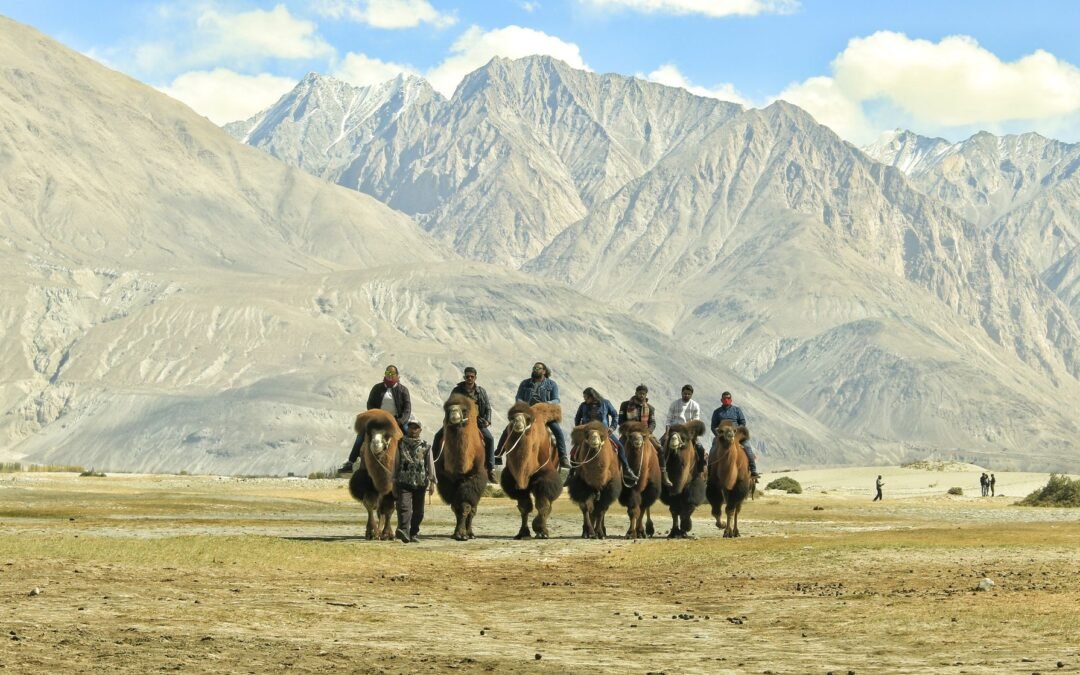
- Double-humped Bactrian camels at Hunder sand dunes are a unique attraction exclusive to this region
- Acclimatization in Leh for minimum 2 days is essential before traveling to high-altitude Nubra Valley
Introduction
Imagine standing in a valley where two rivers converge, surrounded by snow-capped peaks that pierce the cobalt blue sky, while double-humped Bactrian camels graze peacefully amidst white sand dunes. This isn’t a scene from a fantasy novel—this is Nubra Valley, one of Ladakh’s most spectacular and otherworldly destinations. Situated in the northernmost reaches of India, Nubra Valley offers travellers an experience that defies ordinary mountain tourism, blending stark desert landscapes with lush green oases, ancient monasteries with military outposts, and traditional Ladakhi culture with the echoes of the historic Silk Route.
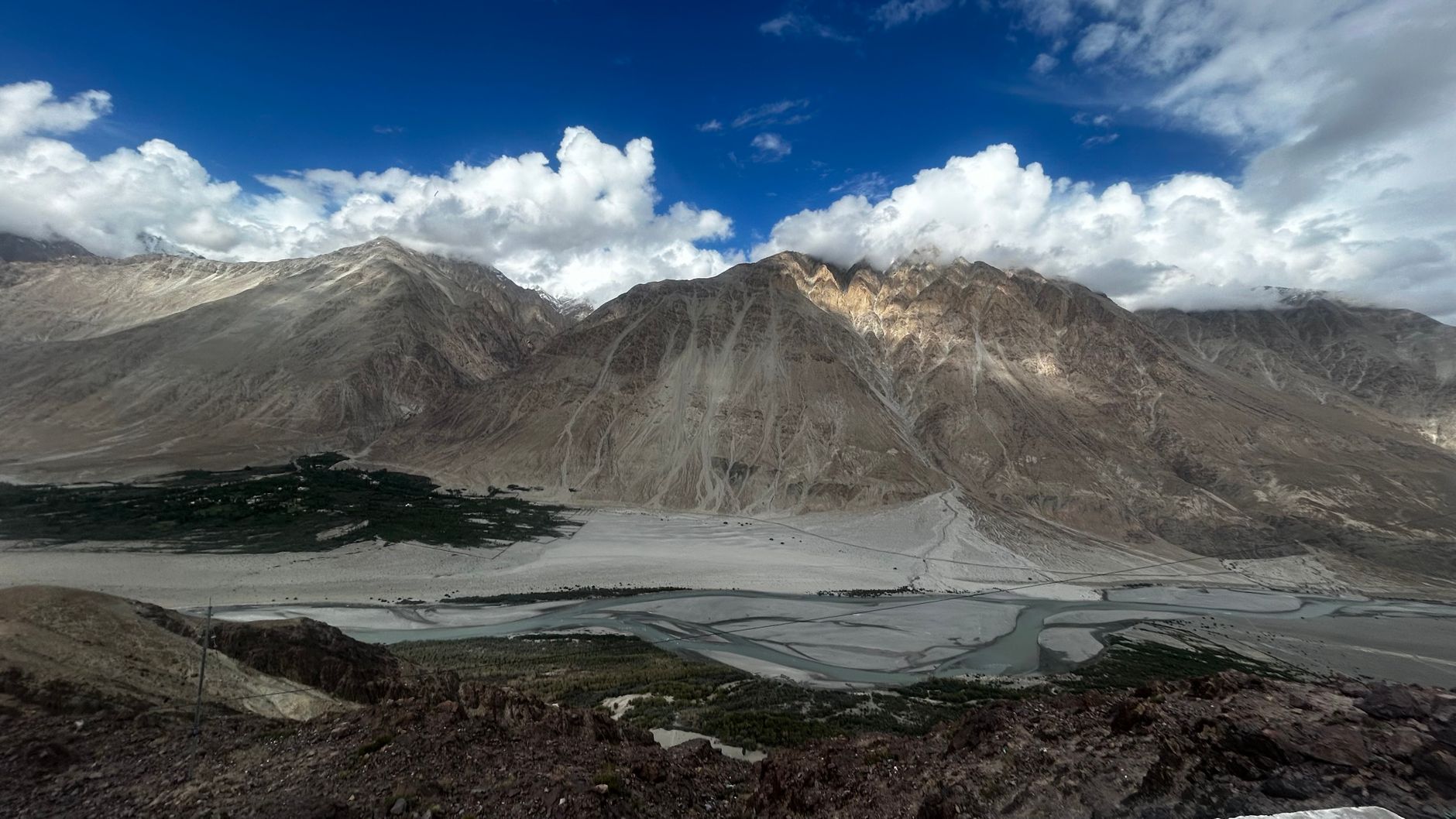
The name “Nubra” derives from the Ladakhi word “Ldumra,” meaning “valley of flowers,” though this description barely scratches the surface of what awaits visitors. Accessed via Khardung La—one of the world’s highest motorable passes—the journey to Nubra Valley is as thrilling as the destination itself. The valley is formed by the confluence of the Shyok and Nubra (or Siachen) rivers, creating a distinctive Y-shaped geographic formation that has supported human settlement and trade for centuries.
For Indian travellers seeking an adventure that feels international without crossing borders, and for international tourists wanting to witness India’s incredible geographic diversity, Nubra Valley represents the ultimate frontier experience. It’s a place where Buddhist prayer flags flutter against landscapes more reminiscent of Central Asia or Tibet, where the air is so thin and pure that every breath feels precious, and where the night sky reveals stars in numbers city-dwellers have never imagined.
Quick Facts About Nubra Valley
| Attribute | Details |
|---|---|
| Altitude | 3,048 meters (10,000 feet) average; varies from 3,000m to 3,200m |
| Best Time to Visit | May to September (July-August peak season) |
| Distance from Nearest City | 150 km from Leh via Khardung La |
| Nearest Airport | Kushok Bakula Rimpochee Airport, Leh (150 km) |
| Permits Required | Yes – Inner Line Permit (₹400 for Indians, ₹600 for foreigners) |
| Temperature Range | Summer: 20°C to 30°C daytime, 4°C to 10°C night; Winter: -25°C to 5°C |
| Approx Budget per Day | ₹2,500 – ₹4,000 (budget) | ₹5,000 – ₹8,000 (mid-range) | ₹10,000+ (luxury) |
Why Visit Nubra Valley
Nubra Valley isn’t just another mountain destination—it’s a geographical anomaly that creates experiences impossible to replicate elsewhere in India. The valley’s unique position as a former Silk Route trading post means you’re literally walking in the footsteps of ancient merchants who travelled between India, Tibet, and Central Asia. The cultural significance is palpable in every monastery, every chorten, and every wrinkled face of the local elders who still remember when caravans passed through these routes.
What truly distinguishes Nubra is its high-altitude cold desert ecosystem. The Hunder sand dunes—sitting at approximately 3,050 meters above sea level—are among the highest cold desert formations in the world. The surreal experience of seeing camels on sand dunes with the Karakoram ranges forming a dramatic backdrop is unmatched. These aren’t Arabian camels but double-humped Bactrian camels, remnants of the valley’s trading heritage, now numbering fewer than 200 in the region, making encounters with them genuinely special.
The valley offers unparalleled biodiversity at extreme altitudes. Despite the harsh climate, Nubra supports a rich variety of flora including seabuckthorn bushes whose orange berries line the rivers, wild roses, and rare medicinal plants. Wildlife enthusiasts can spot blue sheep, Tibetan wolves, red foxes, and if exceptionally lucky, the elusive snow leopard in the upper reaches. Birdwatchers have documented over 200 species, including the Himalayan griffon, golden eagle, and various high-altitude finches.
The strategic location of Nubra Valley—mere kilometers from the Line of Actual Control with China—adds an element of geopolitical significance that few tourist destinations possess. The visible military presence, the stories of Siachen Glacier (the world’s highest battlefield, whose meltwaters feed the Nubra River), and the proximity to restricted zones give travellers a profound sense of being at India’s northernmost frontier. This isn’t just tourism; it’s witnessing the complex realities of Himalayan geopolitics while experiencing extraordinary natural beauty.
How to Reach Nubra Valley
By Air and Road (Most Common Route): The standard route involves flying to Leh’s Kushok Bakula Rimpochee Airport, which receives daily flights from Delhi (₹4,000-₹12,000), Mumbai (₹6,000-₹18,000), and Srinagar (₹3,000-₹8,000) operated by Air India, IndiGo, SpiceJet, and Vistara during the tourist season. From Leh, Nubra Valley is approximately 150 km via Khardung La Pass. The journey takes 5-6 hours depending on road conditions and acclimatization stops. A shared taxi costs ₹800-₹1,200 per person, while a private taxi costs ₹5,000-₹7,000 for the entire vehicle (accommodating 4-5 people).
By Road from Leh (The Khardung La Route): The classic route crosses Khardung La (5,359 meters), marketed as one of the world’s highest motorable roads. The road is generally open from May to October, though conditions can change rapidly. The climb from Leh (3,500m) to Khardung La takes about 2 hours, with mandatory stops at the pass for permits and acclimatization. The descent to Nubra Valley takes another 3-4 hours, passing through stunning landscapes of barren mountains, frozen streams, and occasional glimpses of wildlife. Most travellers hire vehicles from Leh; ensure your driver is experienced with high-altitude routes and carries oxygen cylinders.
Alternative Route via Wari La: A newer, less-traveled route via Wari La Pass (5,306 meters) has opened, connecting Nubra Valley through Sakti and Khalsar villages. This route is approximately 140 km from Leh and takes similar time. It’s less crowded than Khardung La but has fewer facilities and requires the same permits. This option costs ₹5,500-₹7,500 for a private vehicle and offers different scenic perspectives.
By Bus: The Ladakh Transport Corporation operates semi-regular bus services from Leh to Diskit (Nubra Valley’s administrative headquarters) during peak season (June-September). Buses depart from Leh Bus Stand around 4:30-5:00 AM, taking 7-8 hours and costing ₹300-₹500 per person. However, services are weather-dependent and often fully booked weeks in advance. This option is budget-friendly but less comfortable and flexible.
By Motorcycle: Increasingly popular among adventure enthusiasts, riding to Nubra Valley on rented motorcycles (Royal Enfield bikes available in Leh for ₹1,200-₹2,000 per day) offers ultimate freedom. The route is challenging with high-altitude oxygen deprivation, extreme weather changes, and rough patches. Only experienced riders with proper acclimatization should attempt this. Fuel stations exist in Leh and Diskit but not in between—carry extra fuel.
Important Note: Regardless of transport mode, spend at least 2-3 days acclimatizing in Leh before attempting the journey to Nubra Valley. Acute Mountain Sickness (AMS) is a serious risk, and the altitude gain from Leh to Khardung La is significant.
Best Time to Visit Nubra Valley
May to June (Early Summer): This period marks the opening of Nubra Valley for tourists as Khardung La Pass becomes accessible. Temperatures range from 15°C to 25°C during daytime, dropping to 0°C to 5°C at night. The landscape is transitioning from winter dormancy, with snow still visible on higher peaks while valley floors bloom with wildflowers—truly embodying the “valley of flowers” name. This is the best time for photographers seeking snow-capped backdrops with green valleys. Crowds are moderate, accommodation is readily available, and prices are reasonable (₹1,500-₹3,000 for mid-range hotels). The main drawback is that some higher altitude attractions may remain inaccessible due to residual snow.
July to August (Peak Summer and Monsoon): The warmest months with daytime temperatures reaching 25°C to 30°C, though nights remain cool at 8°C to 12°C. While the rest of India experiences monsoon rains, Nubra Valley’s position in the rain shadow keeps it relatively dry, though occasional showers occur. This is peak tourist season—expect large crowds, especially at Hunder sand dunes and Diskit Monastery. Accommodation prices surge by 30-50% (₹2,500-₹5,000 for similar properties available for ₹1,500-₹3,000 in May). The advantages are fully functional infrastructure, all attractions accessible, maximum flight frequencies to Leh, and the best weather for camel safaris and camping. Book accommodations at least 3-4 weeks in advance.
September to Mid-October (Autumn): Arguably the best time for experienced travelers. Post-monsoon clarity offers exceptional visibility—the Karakoram peaks appear incredibly sharp against impossibly blue skies. Temperatures range from 10°C to 20°C during the day and -5°C to 5°C at night. Tourist crowds thin significantly after mid-September, giving you a more authentic, peaceful experience. Accommodation prices drop back to pre-peak levels. The landscape takes on golden and rust hues as vegetation prepares for winter. However, Khardung La can close unpredictably due to early snowfall, potentially stranding travellers. September is safer than October in this regard. This period is ideal for photography, with harvest activities adding cultural interest.
November to April (Winter – Generally Closed): Nubra Valley becomes largely inaccessible to tourists as Khardung La Pass closes due to heavy snowfall. Temperatures plummet to -20°C to -30°C, with the valley floor experiencing -10°C to 5°C daytime maximums. The few locals who remain endure extreme hardship, and most guesthouses, restaurants, and tourist facilities close completely. Only occasional military and administrative vehicles traverse the frozen roads. Some extreme adventure companies offer specialized winter expeditions, but these are expensive (₹40,000+ per person), require extensive preparation, and aren’t recommended for regular tourists. The valley’s isolation during these months is total—mobile networks fail, supplies are limited, and medical emergencies become life-threatening.
Top Things to Do in Nubra Valley
Experience a Bactrian Camel Safari at Hunder Sand Dunes
The iconic Hunder sand dunes, locally called “Hunder ger,” offer the quintessential Nubra Valley experience—riding double-humped Bactrian camels across white sand dunes with the Karakoram ranges creating a spectacular backdrop. These camels are descendants of the animals that once carried silk, spices, and tea along the ancient trade routes. A camel ride costs ₹300-₹500 for 15-20 minutes, during which camel handlers share stories about the Silk Route heritage. Visit during late afternoon (4-6 PM) when slanting sunlight creates magical shadows across the dunes and temperatures are comfortable. The experience is surreal—the silence of the desert interrupted only by wind and camel footsteps, surrounded by one of the world’s most unique ecosystems.
Explore Diskit Monastery and the Giant Maitreya Buddha
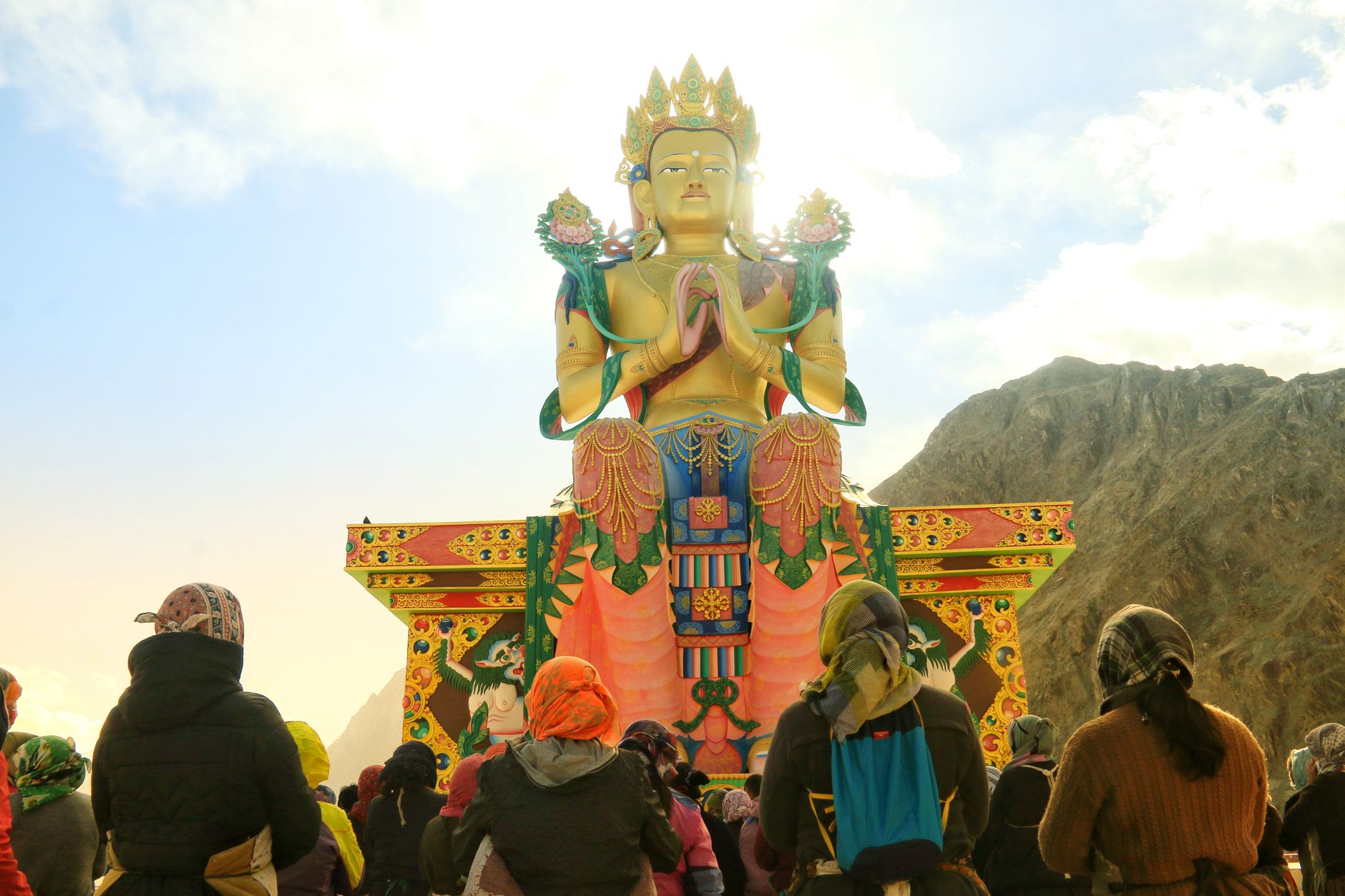
Perched on a hilltop overlooking Diskit town and the Shyok River valley, Diskit Monastery (Diskit Gompa) is the oldest and largest Buddhist monastery in Nubra Valley, established in the 14th century. The monastery houses ancient murals, thangkas, and a shrine room with fierce guardian deity statues. The main attraction is the 32-meter tall Maitreya Buddha statue inaugurated by the Dalai Lama in 2010, representing the future Buddha seated in a meditation pose facing toward Pakistan—a symbolic gesture of peace. The statue’s interior contains 100 smaller statues, prayer wheels, and relics. Entry fee is ₹20-₹30, and spending 1-2 hours here provides insights into Ladakhi Buddhism while offering panoramic views of the valley that make the steep climb worthwhile.
Soak in the Panamik Hot Springs
Located in Panamik village, approximately 45 km north of Diskit, these natural hot sulphur springs are believed to have medicinal properties, particularly beneficial for skin conditions and joint pain. The springs are channeled into basic bathhouses (separate facilities for men and women) where you can soak in warm water (temperature around 40°C) even when outside temperatures hover near freezing. The experience costs merely ₹20-₹50 and provides genuine relaxation after days of travel through rough mountain roads. Panamik also marks the last civilian settlement before Siachen Glacier, adding geopolitical significance to the visit. The surrounding village, with its apricot orchards and traditional Ladakhi houses, offers authentic cultural immersion away from tourist crowds.
Visit Sumur Village and Samstanling Monastery
Sumur, situated along the Nubra River about 20 km from Diskit, represents traditional Ladakhi village life amidst green oases contrasting dramatically with surrounding barren mountains. The village is famous for Samstanling Monastery, established in 1841, which houses a massive prayer hall adorned with colorful mandalas, ancient manuscripts, and a sacred sand mandala that monks painstakingly create over weeks. The monastery grounds include a beautiful garden, the only significant green space for kilometers. Sumur also hosts a small market where local women sell homemade seabuckthorn juice, apricot products, and traditional woolen items. Spending half a day here, walking through apricot and walnut orchards, interacting with locals, and witnessing monks at prayer provides a peaceful counterpoint to Nubra’s more touristy attractions.
Trek to Ensa Monastery and Beyond
For adventure seekers, the trek to Ensa Monastery offers both physical challenge and spiritual reward. Starting from Sumur village, the 4 km trek climbs steadily to this remote hermitage perched on a cliff face at approximately 3,500 meters. The monastery, dating back to the 17th century, is often deserted except for one or two resident monks who maintain the simple structures. The trek takes 2-3 hours one way through rocky terrain with minimal trail markings—hiring a local guide (₹800-₹1,200 for the day) is advisable. The views from Ensa encompass the entire Nubra Valley, with the confluence of rivers visible far below. More ambitious trekkers can continue to Yarab Tso, a high-altitude lake considered sacred, adding another 6-7 hours of trekking through pristine wilderness where blue sheep and Himalayan marmots are commonly spotted.
Experience Turtuk Village and Its Balti Culture
Turtuk, located about 92 km from Diskit, is one of Nubra Valley’s most fascinating destinations, opened to tourists only in 2010. This village was under Pakistani control until 1971 and remains one of the northernmost civilian settlements accessible to tourists. The predominantly Balti Muslim population speaks Balti, a Tibetan dialect, creating a unique cultural blend of Islamic faith with Tibetan Buddhist influences. Walking through Turtuk’s narrow lanes lined with traditional wooden houses, visiting the small Balti Heritage Museum (entry ₹20), and sharing butter tea with hospitable locals provides unparalleled cultural insights. The village overlooks the Shyok River gorge with views toward Pakistani-controlled territory. Visit the historic Polo Ground, sample traditional Balti cuisine like khambir (local bread) and chutagi (pasta-like dish), and understand border-area complexities through conversations with villagers who have relatives on both sides of the LOC.

Where to Stay in Nubra Valley
Budget Options (₹800-₹2,500 per night): For budget-conscious travelers, Nubra Valley offers numerous homestays and guesthouses providing authentic experiences at reasonable prices. Stanzin Guesthouse in Diskit offers clean, basic rooms with shared bathrooms for ₹800-₹1,200, including breakfast and dinner prepared with local ingredients. Karma Inn near Hunder sand dunes provides dormitory beds (₹400-₹600) and private rooms (₹1,500-₹2,000) with stunning valley views and friendly Ladakhi family hospitality. Yarab Tso Guesthouse in Sumur charges ₹1,000-₹1,500 for rooms with basic amenities and home-cooked meals. These budget accommodations typically feature shared Western or squat toilets, limited hot water (usually available morning and evening), no heating except for traditional bukhari stoves, and inconsistent electricity. However, they offer genuine cultural interaction, home-cooked meals, and local insights worth far more than the money saved.
Mid-Range Options (₹3,000-₹7,000 per night): The mid-range segment has expanded significantly, offering comfort without excessive luxury. Hotel Lchang Nang in Hunder provides well-appointed rooms with attached bathrooms, hot water, Wi-Fi (limited), and a restaurant serving Indian, Chinese, and Ladakhi cuisine for ₹3,500-₹5,000 depending on season. The Olthang Boutique Hotel near Diskit offers cottages with modern amenities, valley views, and personalized service for ₹4,500-₹6,500, including breakfast. Mystic Meadows in Sumur combines comfort with environmental consciousness—solar-heated water, organic meals, and eco-friendly practices—charging ₹4,000-₹6,000 per night. These properties typically provide comfortable beds, reliable hot water, Western toilets, room heaters, limited electricity (generators operate fixed hours), and tour assistance.
Luxury/Splurge Options (₹8,000-₹25,000+ per night): For those seeking premium experiences, Nubra Valley now hosts several upscale properties. The Nubra Organic Retreat offers luxury tents with attached bathrooms, organic farm-to-table dining, and panoramic views for ₹8,000-₹12,000 per night. Hunder Sarai, the valley’s most luxurious resort, features traditionally designed cottages with modern amenities, multi-cuisine restaurant, well-maintained gardens, and concierge services for ₹15,000-₹25,000 depending on room category. Stone Hedge Resort provides Swiss tent accommodations with premium bedding, 24-hour electricity via solar and generator backup, attached glass-walled bathrooms, and curated cultural experiences for ₹10,000-₹18,000. These properties offer consistent hot water, heating, quality toiletries, Western-style dining options, and professional service standards, though even luxury accommodations face occasional infrastructure challenges due to remote location.
Camping Options: Several operators offer camping experiences at designated sites near Hunder and Sumur for ₹1,500-₹3,500 per person including meals, tent accommodation, and basic facilities. Nubra Camps and Cold Desert Camp provide large tents with beds, sleeping bags, shared toilet blocks, and bonfire evenings. Camping offers unmatched stargazing opportunities and nature immersion but requires tolerance for basic facilities and cold nights.
Local Food & Cuisine
Nubra Valley’s cuisine reflects its Tibetan Buddhist heritage, harsh climate, and historical Silk Route influences, resulting in hearty, warming dishes designed to sustain people in extreme conditions. Thukpa, the ubiquitous noodle soup available everywhere from basic dhabas to hotel restaurants, comes in numerous variations—vegetable thukpa (₹80-₹120), chicken thukpa (₹120-₹180), and the heartier thenthuk with hand-pulled noodles (₹100-₹150). The rich, warming broth, often flavored with local herbs and vegetables, provides essential hydration and calories at high altitude. Each family has their own recipe, making comparing versions across different eateries a delicious adventure.
Momos—Tibetan dumplings—are essential Nubra Valley eating, available steamed or fried with vegetable (₹60-₹100 for 8-10 pieces), cheese (₹80-₹120), or meat fillings (₹100-₹150). The local specialty is Tingmo, a steamed bread served with various curries or vegetable dishes, providing a filling, altitude-friendly meal for ₹80-₹150 including accompaniments. Skyu, a traditional Ladakhi pasta dish with root vegetables in a light soup, offers authentic local flavor and costs ₹100-₹180. Don’t miss Butter Tea (Gur Gur Chai), a salty Tibetan tea churned with butter and salt, costing ₹20-₹40 per cup—an acquired taste but essential for combating cold and altitude effects.
Unique to the region is Seabuckthorn juice, extracted from the bright orange berries growing wild along river valleys. High in vitamins and antioxidants, this tart juice (₹50-₹100 per glass) helps with altitude acclimatization and is increasingly popular among health-conscious travelers. Apricots are Nubra Valley’s agricultural pride—fresh in season, dried, or processed into apricot jam, all available at local markets and better accommodations.
Recommended Eateries: Rinchen Cafeteria in Diskit Bazaar serves excellent momos, thukpa, and local Ladakhi dishes in a no-frills setting for ₹80-₹200 per person. Tsewang’s Organic Kitchen near Hunder specializes in organic, locally sourced ingredients prepared as traditional Ladakhi meals, with thalis costing ₹250-₹400. Desert Himalaya Resort Restaurant offers the widest menu in Nubra, including North Indian, Chinese, and Continental options alongside Ladakhi specialties, with meals ranging ₹200-₹600 per person. For authentic Balti cuisine, Yumtang Restaurant in Turtuk serves khambir bread, apricot curry, and traditional Balti butter tea for ₹150-₹300 per person. Most establishments close by 9 PM, and advance ordering for dinner (before 7 PM) is advisable as ingredients are limited and nothing is pre-prepared.
Practical Travel Tips for Nubra Valley
Permits and Documentation: All visitors to Nubra Valley require an Inner Line Permit (ILP), obtainable from the District Commissioner’s office in Leh or through registered tour operators/travel agencies. Indian nationals pay ₹400, while foreign nationals pay ₹600 for a permit valid for 7 days. Applications require two passport-size photographs and a photocopy of your ID proof (Aadhaar card for Indians, passport for foreigners). Most hotels and tour operators in Leh can arrange permits within 24 hours for a service charge of ₹100-₹200. Carry multiple photocopies of your permit as checkpoints at Khardung La, Khalsar, and various military posts require verification. Turtuk, being close to the LOC, requires additional permits checked more stringently—ensure your ILP specifically mentions Turtuk if you plan to visit.
Mobile Network and Connectivity: Mobile connectivity in Nubra Valley is extremely limited and unreliable. BSNL and Jio are the only networks with intermittent coverage in Diskit and Hunder; Airtel and Vodafone don’t work at all. Most of the valley, including the road to/from Khardung La and smaller villages like Sumur and Turtuk, has zero mobile reception. Internet connectivity, when available, is painfully slow—don’t expect to stream videos or make video calls. Most hotels and guesthouses in Diskit and Hunder offer limited Wi-Fi (often shared satellite connections) that works for basic messaging and email. Plan accordingly—inform family before departing Leh that you’ll be largely unreachable for the duration of your Nubra visit. This digital detox is actually a blessing for genuine immersion in the landscape and culture.
ATM and Money Matters: ATM availability is severely limited—only one or two ATMs exist in Diskit town, and they frequently run out of cash or malfunction due to connectivity issues. Carry sufficient cash from Leh to cover your entire Nubra Valley stay plus 30% emergency buffer. Credit/debit cards are accepted at only the most upscale hotels; most accommodations, restaurants, shops, and service providers operate cash-only. Budget ₹3,000-₹5,000 per day per person in cash depending on your accommodation category and planned activities. Keep money distributed across multiple locations (luggage, person, travel companion) for security.
Medical Facilities and Altitude Sickness: Medical facilities are basic at best—Diskit has a Primary Health Centre with limited capabilities, essentially offering first aid and basic medications only. Serious medical emergencies require evacuation to Leh (5-6 hours away) or, in extreme cases, airlift. Carry a comprehensive first-aid kit including altitude sickness medication (Diamox/Acetazolamide), painkillers, anti-diarrheal medication, bandages, antiseptic cream, and any personal prescription medications. Acute Mountain Sickness (AMS) is a serious risk—symptoms include headache, nausea, dizziness, and shortness of breath. Acclimatize properly in Leh for 2-3 days before ascending to Khardung La. Stay hydrated (3-4 liters of water daily), avoid alcohol, move slowly, and descend immediately if severe AMS symptoms appear. Some hotels keep oxygen cylinders for emergencies. Travel insurance covering high-altitude trekking and emergency evacuation is essential.
What to Pack: Regardless of season, pack layered clothing as temperatures fluctuate dramatically between day and night. Essentials include thermal innerwear, fleece jacket, windproof and waterproof outer jacket, warm hat, gloves, sunglasses with UV protection, high-SPF sunscreen (minimum SPF 50), lip balm, comfortable walking shoes with ankle support, sandals for indoors, headlamp/flashlight (power cuts are common), personal toiletries (limited availability locally), toilet paper, hand sanitizer, reusable water bottle, basic medications, power bank, and plastic bags for waste. Even in summer, night temperatures can drop near freezing. Modest clothing is appreciated in this culturally conservative region—avoid shorts and sleeveless tops when visiting monasteries or villages.
Safety and Responsible Tourism: Nubra Valley is generally safe with low crime rates and hospitable locals. However, the challenging terrain, extreme altitude, and unpredictable weather pose natural risks. Always inform your accommodation about daily plans and expected return times. Don’t trek alone in remote areas. Respect military sensitivities—never photograph military installations, convoys, or strategic areas; violations can result in detention and confiscation of equipment. Practice responsible tourism by carrying all non-biodegradable waste back to Leh for proper disposal, minimizing plastic use, respecting local customs and religious sites (remove shoes before entering monasteries, walk clockwise around Buddhist structures, seek permission before photographing people or inside monasteries), supporting local businesses and homestays, and being mindful of the fragile high-altitude ecosystem. Avoid loud noise, especially near monasteries. Dress modestly, particularly when visiting religious sites or interacting with locals in villages. The people of Nubra Valley are preserving their unique culture and environment against tremendous challenges—travellers should contribute positively rather than extract experiences selfishly.
Final Thoughts
Nubra Valley represents far more than a tourist destination—it’s an encounter with extremes, where nature’s raw power meets human resilience, where ancient trade routes whisper stories of merchants and pilgrims, and where the very air seems charged with spiritual significance. The valley challenges you physically with its altitude and terrain, mentally with its isolation and austerity, and spiritually with its profound silence and stark beauty. Those who make the journey across Khardung La don’t simply visit Nubra Valley; they experience a transformation, gaining perspective on human adaptability, cultural richness beyond urban comforts, and Earth’s incredible geographic diversity.
Whether you’re photographing double-humped camels against Karakoram peaks, sharing butter tea with Balti villagers in Turtuk, meditating in centuries-old monasteries, or simply absorbing the impossible blue sky from the Hunder dunes, Nubra Valley offers moments that transcend typical tourism. For Indian travellers, it’s a reminder of our nation’s astonishing diversity—from tropical beaches to high-altitude deserts within the same borders. For international visitors, it’s proof that India contains landscapes rivaling any on Earth. Plan carefully, acclimatize properly, travel responsibly, and let Nubra Valley work its magic on you. This is adventure travel at its most authentic, a journey that rewards the prepared, respects the patient, and transforms the open-minded. Start planning your Nubra Valley expedition today—the cold desert awaits with experiences you’ll treasure for a lifetime.
- Start your journey to Nubra Valley early morning by 6 AM to cross Khardung La before afternoon winds make driving dangerous
- Carry sufficient cash as ATMs are unavailable in Nubra Valley; the last ATM is in Leh before you depart
- Book homestays in Turtuk village for authentic Balti culture experience away from tourist crowds in Hunder and Diskit
- Visit Diskit Monastery before 1 PM as it closes for afternoon prayers and offers best photography light in morning hours
- Fuel up completely in Leh as petrol pumps in Nubra Valley often face shortages and irregular supply schedules
Frequently Asked Questions about Nubra Valley
The best time to visit Nubra Valley is from May to September when the roads are accessible and weather conditions are favorable. July and August are considered peak season with daytime temperatures ranging from 20°C to 30°C, though nights can drop to 4°C to 10°C.
Yes, visitors require an Inner Line Permit to visit Nubra Valley. The permit costs ₹400 for Indian nationals and ₹600 for foreign tourists, and can be obtained through travel agencies or online portals.
Nubra Valley is located 150 km from Leh and is accessed via Khardung La, one of the world’s highest motorable passes. The nearest airport is Kushok Bakula Rimpochee Airport in Leh, from where you need to travel by road to reach the valley.
Nubra Valley sits at an average altitude of 3,048 meters (10,000 feet), though elevations vary between 3,000m to 3,200m across different areas of the valley. The valley is formed by the confluence of the Shyok and Nubra (Siachen) rivers, creating a distinctive Y-shaped formation.
The daily budget for Nubra Valley varies based on travel style: ₹2,500-₹4,000 for budget travelers, ₹5,000-₹8,000 for mid-range comfort, and ₹10,000 or more for luxury experiences. This includes accommodation, food, local transportation, and sightseeing activities.
The name “Nubra” derives from the Ladakhi word “Ldumra,” which means “valley of flowers.” Despite this name, the valley offers much more than floral beauty—it features a unique landscape of white sand dunes, double-humped Bactrian camels, snow-capped peaks, ancient monasteries, and lush green oases against stark desert terrain.