
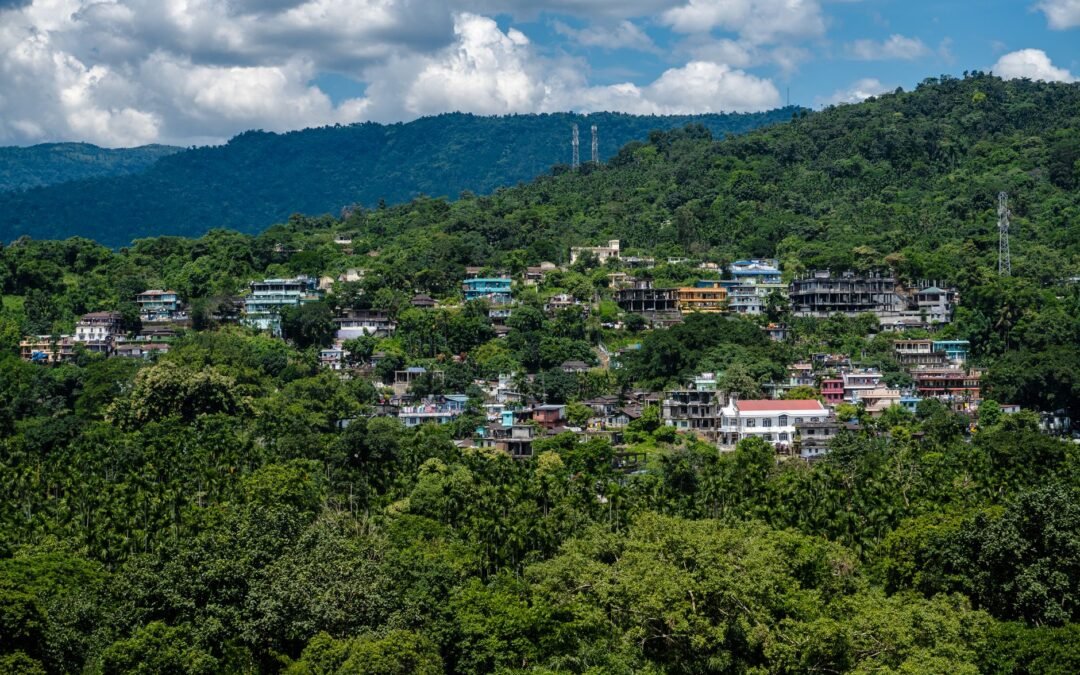
- Mawlynnong is renowned as Asia’s cleanest village, maintained entirely by local community efforts
- The living root bridge and sky view platform are must-visit attractions in the village
- October to May is the ideal time to visit, avoiding heavy monsoon rains
- Homestays offer authentic Khasi cultural experiences with local families
- The village is about 90 km from Shillong and makes an excellent day trip or overnight stay
Introduction
Tucked away in the East Khasi Hills of Meghalaya, Mawlynnong is a revelation that challenges every preconception about rural Indian villages. This remarkable settlement, home to fewer than 600 residents, earned the prestigious title of “Asia’s Cleanest Village” in 2003, and has since become a shining example of community-driven sustainability and environmental consciousness. What makes this Khasi village truly extraordinary isn’t just its immaculate pathways and flower-lined streets, but the deeply ingrained culture of cleanliness and eco-consciousness that permeates every aspect of daily life here.
Located approximately 90 kilometers from Shillong, Mawlynnong offers travelers an experience that goes far beyond conventional tourism. This is a place where bamboo dustbins dot every corner, plastic is virtually non-existent, and literacy rates soar to 100 percent. The village sits near the India-Bangladesh border, offering breathtaking views of the neighboring country’s plains from elevated vantage points. Surrounded by lush green forests, living root bridges, and crystal-clear streams, Mawlynnong represents the perfect harmony between human habitation and nature.
For Indian travelers seeking an offbeat destination that combines natural beauty with cultural richness, and for international tourists wanting to witness sustainable rural life in practice, Mawlynnong presents an unmissable opportunity. Here, you’ll walk through streets cleaner than many urban parks, interact with warm Khasi communities who have maintained their matrilineal traditions, and witness firsthand how a small village has transformed itself into a global example of environmental stewardship.
Quick Facts About Mawlynnong
| Aspect | Details |
|---|---|
| Altitude | 1,400 meters (4,593 feet) above sea level |
| Best Time to Visit | October to May (avoid peak monsoon) |
| Distance from Nearest City | 90 km from Shillong, 78 km from Dawki |
| Nearest Airport | Shillong Airport (Umroi) – 95 km; Guwahati (Lokpriya Gopinath Bordoloi International Airport) – 140 km |
| Permits Required | None for Indian nationals; foreign nationals may need ILP for certain border areas |
| Temperature Range | Summer: 15°C-25°C; Winter: 4°C-15°C; Monsoon: 18°C-23°C |
| Approx Budget per Day | ₹1,500-₹2,500 (budget); ₹2,500-₹4,500 (mid-range); ₹4,500+ (comfortable) |
Why Visit Mawlynnong
Mawlynnong’s claim to fame as Asia’s Cleanest Village is no marketing gimmick—it’s a lived reality that becomes apparent the moment you enter the village. Every household takes responsibility for maintaining public spaces, with traditional bamboo dustbins (called “khoh”) placed strategically throughout the village. These cylindrical, handwoven bamboo containers are both functional and beautiful, representing the community’s innovative approach to waste management. The streets are swept daily, and you’ll be hard-pressed to find even a single piece of litter on the stone-paved pathways that wind through the village.
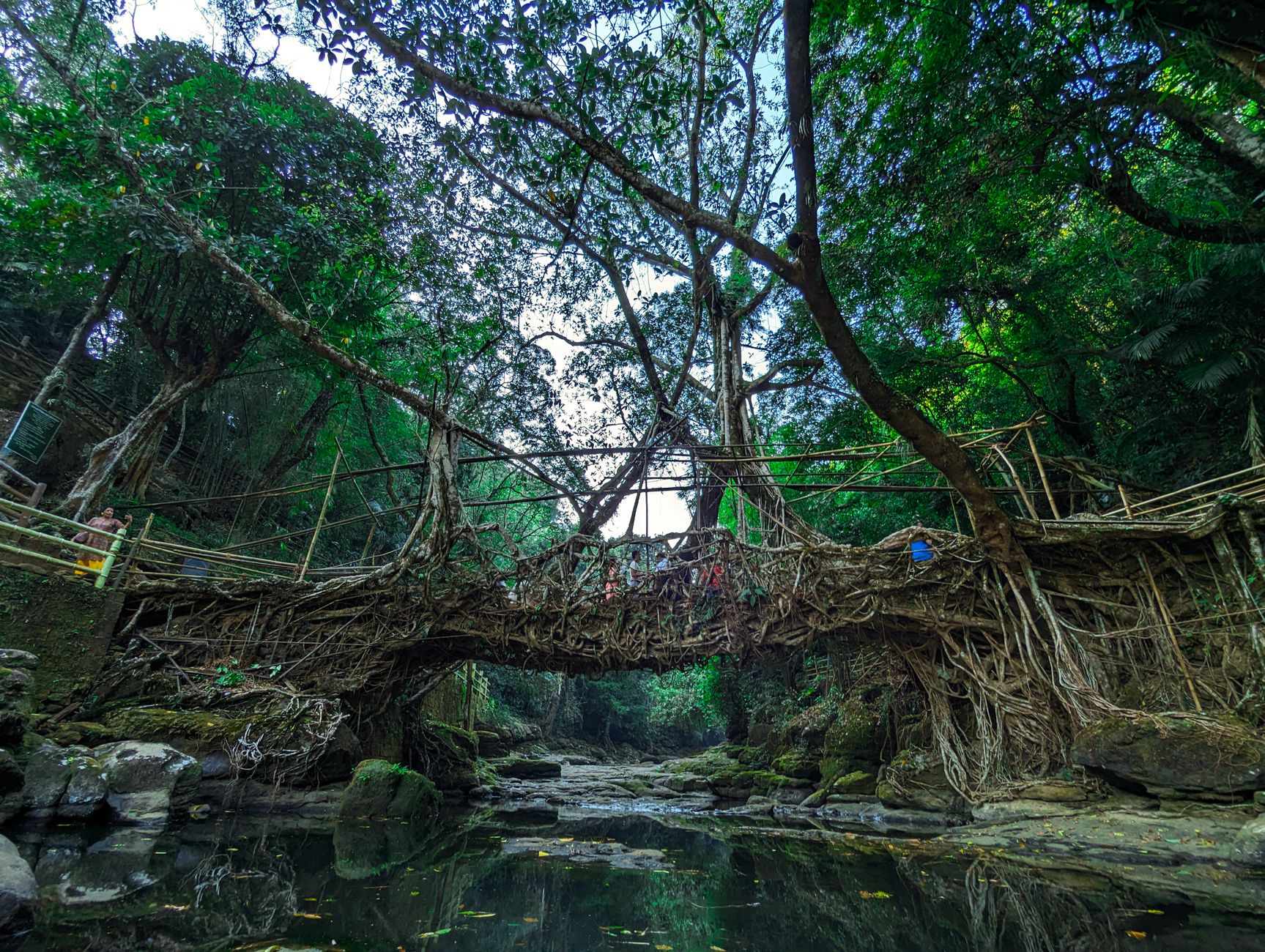
What truly distinguishes Mawlynnong is the living root bridge located about a kilometer from the main village. Unlike the more famous double-decker root bridge in Cherrapunji, Mawlynnong’s single-tier root bridge is easily accessible and demonstrates the ingenious bio-engineering practiced by the Khasi people for centuries. The War Khasis have trained the aerial roots of rubber fig trees across streams and rivers, creating bridges that grow stronger with time—some are over 500 years old. This particular bridge, though smaller than its cousins, provides an intimate glimpse into this sustainable architectural tradition.
The village also offers the Sky View, a 85-foot tall bamboo structure that allows visitors to climb up and gaze across the verdant canopy into Bangladesh. On clear days, the view extends for miles, revealing the stark contrast between Meghalaya’s rolling green hills and the flat plains of Bangladesh. The platform sways gently with the wind, adding a touch of adventure to the panoramic experience.
The matrilineal Khasi society presents another compelling reason to visit. Property and lineage pass through the female line, and the youngest daughter traditionally inherits the family home. This social structure has created a community where women hold significant decision-making power, offering visitors a chance to observe a functioning matrilineal society—increasingly rare in modern India. Conversations with local families reveal fascinating insights into how this system operates in contemporary times, balancing tradition with modernity.

How to Reach Mawlynnong
By Air: The most convenient airport for Mawlynnong is Lokpriya Gopinath Bordoloi International Airport in Guwahati, Assam, located approximately 140 kilometers away. This airport is well-connected to major Indian cities including Delhi, Mumbai, Bangalore, and Kolkata, with flights operated by IndiGo, Air India, SpiceJet, and Vistara. From Guwahati, you can hire a private taxi directly to Mawlynnong for approximately ₹4,500-₹6,000, or travel to Shillong first and then proceed to Mawlynnong. The Shillong Airport at Umroi is closer at 95 kilometers, but has limited connectivity with only occasional flights to Kolkata.
By Road from Shillong: Most travelers base themselves in Shillong and take a day trip or overnight stay to Mawlynnong. Shared taxis (Sumos) depart from Bara Bazar in Shillong, costing around ₹200-₹300 per person for the 90-kilometer journey, which takes approximately 2.5-3 hours. Private taxis can be hired for ₹2,500-₹3,500 for a round trip with waiting time. The route passes through Pynursla and Balat village, offering scenic views of Meghalaya’s countryside. The road condition is generally good, though it can be slippery during monsoons.
By Road from Guwahati: Direct buses are not available from Guwahati to Mawlynnong. Travelers should first reach Shillong via Meghalaya Transport Corporation buses (₹150-₹250, 3-4 hours) or private taxis (₹3,000-₹4,000, 3 hours), then proceed to Mawlynnong. Alternatively, hire a private vehicle from Guwahati for the entire journey at approximately ₹5,000-₹7,000.
Combining with Dawki: Many travelers visit Mawlynnong along with Dawki (famous for the Umngot River), located 17 kilometers away. Shared taxis between Mawlynnong and Dawki cost around ₹50-₹100 per person. This combination makes for an excellent day trip from Shillong, though spending a night in Mawlynnong is highly recommended to experience the village’s tranquility in the early morning.
By Train: The nearest railway station is Guwahati Railway Station, a major junction on the Northeast Frontier Railway. From there, follow the road route to Mawlynnong via Shillong. Trains connect Guwahati to Delhi, Kolkata, Bangalore, Chennai, and other major cities.
Best Time to Visit Mawlynnong
October to November (Post-Monsoon): This is arguably the best time to visit Mawlynnong. The monsoon has ended, leaving the landscape incredibly green and fresh. Waterfalls are still flowing robustly, the living root bridge is surrounded by lush vegetation, and the weather is pleasantly cool with temperatures ranging from 15°C to 22°C. Skies are generally clear, offering excellent visibility from the Sky View platform. Tourist crowds are moderate, and accommodation is readily available. This period is ideal for photography enthusiasts.
December to February (Winter): Winter brings cooler temperatures ranging from 4°C to 15°C, with mornings and evenings being particularly chilly. The landscape remains green, though slightly less vibrant than in autumn. This is peak tourist season for Meghalaya, so expect more visitors, especially during Christmas and New Year. Book accommodation in advance. The clear, crisp air provides excellent visibility, and the cool weather is perfect for trekking to the root bridge. Pack warm layers, especially if you’re sensitive to cold.
March to May (Spring/Summer): These months offer warm, pleasant weather with temperatures between 18°C and 25°C. The landscape begins to look slightly drier compared to other seasons, but Mawlynnong retains its greenery. This is an excellent time for families and those who prefer warmer weather. The village is less crowded than winter months, making it peaceful. Pre-monsoon showers may begin in May, bringing occasional rainfall that refreshes the environment.
June to September (Monsoon): Meghalaya receives some of the highest rainfall on Earth, and Mawlynnong is no exception. While the village is accessible during monsoons, travel can be challenging due to slippery roads and reduced visibility. However, if you’re an adventure enthusiast who doesn’t mind getting wet, this season offers a unique experience—waterfalls at full force, incredibly lush vegetation, and virtually no tourists. The living root bridge is particularly spectacular with rushing water beneath. Roads can be treacherous, and landslides are possible. Many travelers avoid this period, but it has its own raw beauty. Accommodation prices may be lower, but some homestays might close temporarily.
Top Things to Do in Mawlynnong
Walk Through the Cleanest Village Streets
Begin your Mawlynnong experience with a leisurely walk through the village lanes, where the cleanliness culture is immediately apparent. The stone-paved pathways are swept spotless, with bamboo dustbins positioned every few meters. Observe the traditional Khasi houses with their distinctive sloping roofs, vibrant flower gardens filled with orchids and seasonal blooms, and intricately maintained kitchen gardens growing betel nut, bay leaves, and seasonal vegetables. The village elders are often happy to explain their waste management system and the community rules that maintain this pristine environment. Early morning walks are particularly rewarding when mist hangs over the village and locals begin their daily routines.
Trek to the Living Root Bridge
A well-maintained path leads approximately one kilometer from the village center to the single-tier living root bridge, locally called “Jingkieng Jri.” The trek descends through dense forest, taking about 20-30 minutes. The bridge itself spans a small but vigorous stream, its roots forming a natural lattice strong enough to support 50 people simultaneously. Unlike some root bridges that require steep descents, this one is relatively accessible, making it perfect for families and older travelers. The surrounding area is ideal for picnics, and the stream’s crystal-clear water provides a refreshing spot to cool your feet. Local guides (₹100-₹200) can explain the bridge’s construction and the years of patient training required to achieve this natural architecture.
Climb the Sky View Platform
This 85-foot tall bamboo tower, locally known as the Machan, offers panoramic views that justify the climb up its somewhat rickety stairs. Entry costs just ₹20, and the ascent takes about 5-7 minutes with rest platforms along the way. From the top, you’ll see the village spread below like a green carpet, with Bangladesh’s flat plains visible in the distance on clear days. The platform sways gently, adding an element of adventure. Visit during sunset for particularly stunning views when the golden hour light bathes the landscape. The tower can accommodate about 10-12 people at the top, so visit during off-peak hours for a more peaceful experience.
Explore the Sacred Forest and Natural Pool
Mawlynnong’s sacred forest, located near the village, is a protected grove that the local community has preserved for generations. The forest features ancient trees, some several hundred years old, and is home to diverse bird species including various hornbills and sunbirds. A natural pool fed by a spring-water stream provides a perfect spot for a refreshing dip, especially after the trek to the root bridge. The water is remarkably clear and cool, maintained naturally without any artificial treatment. The sacred forest also serves as the village’s natural water filtration system, demonstrating the Khasi people’s understanding of ecological balance.
Visit Balancing Rock (Mawjymbuin Cave)
Located about 10 kilometers from Mawlynnong en route from Shillong, the Mawjymbuin Cave features a massive boulder balanced precariously on a smaller rock, creating a natural shelter used as a place of worship. Inside the cave, you’ll find a naturally formed Shivalinga that’s revered by both locals and visitors. The cave stays pleasantly cool even during summer, and the geological formations are fascinating. Local mythology suggests the boulder has been balanced there for thousands of years. Entry is free, though small donations are appreciated. The site requires a brief 10-minute walk from where vehicles can park.
Experience Khasi Culture and Interact with Locals
Mawlynnong’s true treasure is its people. Spend time conversing with villagers who are remarkably welcoming and eager to share their culture. Learn about the matrilineal system, where property and clan membership pass through the mother’s line. Visit during community gatherings if possible, or simply join families in their homes who often invite respectful visitors for tea and kwai (betel nut, a local custom). The village church, built in 1965, serves as a community center where Presbyterian services are held—attending a Sunday service (if you’re comfortable) offers deep cultural insights. Many households are happy to demonstrate traditional handicrafts, including bamboo weaving and beadwork, with some items available for purchase at fair prices (₹100-₹1,000 depending on complexity).
Where to Stay in Mawlynnong
Budget Options (₹500-₹1,200 per night): Mawlynnong offers several homestays that provide authentic experiences at reasonable prices. Symbiosis Homestay charges around ₹600-₹800 per night for basic but clean rooms with shared bathrooms, and the family serves traditional Khasi meals for an additional ₹200-₹300. Rishot Tourism Homestay is another popular budget option at ₹800-₹1,000 per night, offering simple rooms with attached bathrooms and home-cooked food. These homestays provide basic amenities—don’t expect hot water 24/7 or Western toilets in all cases, but the warmth of hospitality more than compensates. Dawat Homestay near the village entrance offers rooms at ₹700-₹900 with mattresses on the floor in traditional style, giving you a genuinely local experience.
Mid-Range Options (₹1,200-₹2,500 per night): Welcoming Nest is a well-maintained guesthouse offering comfortable rooms with attached bathrooms, hot water (during specific hours), and basic modern amenities at ₹1,500-₹2,000 per night. The property has a small garden and serves both Indian and Khasi cuisine. Mawlynnong Guest House, run by the village community, provides clean rooms at ₹1,200-₹1,800 with reliable service and helpful staff who can arrange local guides and transportation. Ephrasia Cottages offers slightly upgraded accommodations at ₹2,000-₹2,500 with better mattresses, cleaner bathrooms, and a small dining area where traditional Khasi thalis are served.
Comfortable Options (₹2,500+ per night): While Mawlynnong doesn’t have luxury hotels, Orchid Homestay offers the village’s most comfortable accommodations at ₹2,500-₹3,500 per night with spacious rooms, consistent hot water, Wi-Fi (limited bandwidth), and well-appointed bathrooms. Meals here are elaborate affairs featuring traditional Khasi dishes prepared with organic ingredients from their garden. Some visitors prefer staying in nearby Dawki at slightly more upscale properties like River View Resort Dawki (₹3,000-₹4,500 per night) and making a day trip to Mawlynnong, though this means missing the village’s magical early morning ambiance.
Important Notes: Most accommodations don’t accept online bookings—you’ll need to call in advance. During peak season (December-January), book at least 2-3 weeks ahead. Most homestays operate on a full-board basis, including all meals in the price. Electricity can be intermittent, and Wi-Fi is limited to non-existent in budget properties. The experience compensates for any lack of luxury amenities.
Local Food & Cuisine
Mawlynnong offers an excellent introduction to Khasi cuisine, which is characterized by minimal use of spices, preference for fermented ingredients, and unique cooking methods. The food is generally mild compared to typical Indian cuisine, allowing the natural flavors of ingredients to shine through.
Must-Try Dishes: Jadoh is the quintessential Khasi rice dish, where red rice is cooked with pork or chicken, along with black sesame seeds, turmeric, bay leaves, and ginger. The result is flavorful, aromatic, and slightly oily. In Mawlynnong, this is often prepared with locally raised pork and served with tungrymbai (fermented soybean chutney). Dohneiiong is a pork curry cooked with black sesame paste, giving it a distinctive dark color and nutty flavor. It’s traditionally eaten with plain rice and is available in most homestays. Tungrymbai, fermented soybean prepared with pork or served vegetarian, has a pungent smell but complex, acquired taste—it’s the Khasi equivalent of Japanese natto. Kwai (betel nut) isn’t exactly food but a cultural practice; locals chew it wrapped in betel leaves with lime, and you’ll be offered it as a gesture of hospitality (though you can politely decline).
Where to Eat: Most visitors eat at their homestays, where authentic Khasi meals are served as part of the accommodation package. However, Mawlynnong Cafeteria, located near the village entrance, offers simple meals including jadoh, rice with chicken or pork curry, and vegetarian options for ₹100-₹250 per meal. Ephrasia Cottages Restaurant serves both Khasi and North Indian dishes with thalis priced at ₹200-₹350; their dohneiiong is particularly well-prepared. Rishot Tourism Homestay opens its dining area to non-guests by prior arrangement (₹200-₹300 per person) and offers some of the most authentic home-style Khasi cooking in the village, including rare dishes like dohkhlieh (pork salad with onions and chilies).
For those with dietary restrictions, vegetarian options are available but limited. Most homestays can prepare vegetable curries, dal, and rice if informed in advance. Vegan travelers should communicate their requirements clearly, as traditional Khasi cuisine heavily features pork and dairy. Fresh fruits aren’t abundant, but seasonal offerings like local oranges and pineapples are sometimes available. Tea (both black and the local ‘red tea’ made with indigenous leaves) is excellent and served generously. Alcoholic beverages are not openly sold in the village, though local rice beer (called ‘kiad’) might be offered in some homestays.
Practical Travel Tips for Mawlynnong
Permits and Documentation: Indian citizens don’t require any permits to visit Mawlynnong. Foreign nationals generally don’t need permits for Mawlynnong itself, but may require an Inner Line Permit (ILP) or Protected Area Permit (PAP) if traveling to certain sensitive border areas nearby. These can be obtained online through Meghalaya government’s official portal or at designated counters in Shillong for ₹100-₹500 depending on permit type and duration. Carry multiple photo IDs—original Aadhaar card, passport, or voter ID—as there are occasional checkpoints near the Bangladesh border.
Mobile Network and Connectivity: Mobile network coverage in Mawlynnong is limited and unreliable. BSNL and Airtel have intermittent 2G/3G coverage, while Jio and other private operators often have no signal. Don’t depend on your phone for navigation or communication. Download offline maps before arriving. Wi-Fi is virtually non-existent except in one or two higher-end homestays, where it’s extremely slow. Use your visit as a digital detox opportunity. For emergencies, most homestays have landline connections or know locations with better mobile coverage.
Money and ATMs: There are no ATMs in Mawlynnong village. The nearest ATM is in Pynursla, approximately 17 kilometers away, but it’s frequently out of cash. Carry sufficient cash from Shillong or Guwahati to cover your entire stay plus emergencies. Budget at least ₹3,000-₹5,000 per person for a 2-day visit, covering accommodation, food, guide fees, entry tickets, and shopping. Most establishments don’t accept cards or digital payments, though a few have started accepting PhonePe or Paytm when mobile network permits. Keep small denominations (₹10, ₹20, ₹50 notes) for entry fees and small purchases.
Medical Facilities: Mawlynnong has a small primary health center with basic first-aid facilities, but serious medical issues require traveling to Shillong. Carry a personal medical kit with bandages, antiseptic cream, pain relievers, anti-diarrheal medication, anti-allergic medicines, and any prescription medications you require. The nearest well-equipped hospital is Civil Hospital Shillong, 90 kilometers away. If you have serious health conditions, travel with a companion and ensure you have emergency evacuation plans. Basic medicines are available at small shops in Pynursla.
What to Pack: Layer your clothing as temperatures vary significantly between day and night. Pack comfortable walking shoes with good grip for trekking to the root bridge and navigating village paths. A light raincoat or umbrella is essential year-round given Meghalaya’s unpredictable weather. Include a flashlight or headlamp as village lighting is minimal after dark. Carry reusable water bottles (plastic bottles are discouraged) and fill them from filtered water sources. Sunscreen, hat, and sunglasses are important at this altitude. Bring insect repellent, especially during monsoon. Pack modest clothing—both men and women should cover shoulders and knees out of respect for local culture. A small daypack for excursions, power bank for your phone, and basic toiletries (some homestays provide minimal amenities) complete your packing list.
Safety Tips: Mawlynnong is exceptionally safe with virtually no crime reported. However, standard precautions apply—don’t flash expensive jewelry or gadgets, and keep valuables secure. The root bridge trek involves stairs and can be slippery when wet; wear appropriate footwear and take your time. The Sky View platform is generally safe but can sway in strong winds—those with a fear of heights should be cautious. During monsoons, leeches are common on forest treks; carry salt or tobacco powder to remove them. Don’t drink untreated water from streams no matter how clean they appear. Solo female travelers generally feel very safe here, but should inform their homestay hosts about their movements.
Responsible Tourism: Mawlynnong’s cleanliness is its identity—absolutely don’t litter anywhere. Use the bamboo dustbins provided and carry any non-biodegradable waste back to Shillong for proper disposal. Don’t pluck flowers or disturb plants in gardens or forests. The living root bridge is a living organism—don’t carve initials, break roots, or damage it in any way. Respect the sacred forest and religious sites; ask permission before photographing locals, especially during prayers or personal moments. Don’t offer money to children as it encourages begging (unknown in the village currently). Purchase handicrafts directly from artisans at fair prices without aggressive bargaining. Conserve water and electricity in homestays. Consider the community fund donations (₹10-₹20) at the village entrance, which support maintenance and development. Learn a few Khasi phrases—”Khublei” (thank you) goes a long way in showing respect.
Final Thoughts
Mawlynnong is more than a destination; it’s a revelation about what communities can achieve when they unite around shared values. In a country grappling with waste management challenges, this small Khasi village demonstrates that solutions don’t always require expensive technology or government intervention—sometimes they need only collective will, cultural pride, and commitment to future generations. Walking through streets where every citizen takes personal responsibility for public cleanliness, where natural architecture has been perfected over centuries, and where traditional values coexist harmoniously with contemporary life, you’ll find yourself reimagining what Indian villages could be.
Whether you’re an Indian traveler seeking respite from urban chaos or an international visitor wanting to understand rural India’s potential, Mawlynnong offers profound lessons wrapped in stunning natural beauty. The village challenges you to reconsider your relationship with the environment, to appreciate the sophistication of indigenous knowledge systems, and to recognize that development and tradition need not be opposing forces. Plan your visit thoughtfully, travel respectfully, engage authentically with the community, and you’ll leave with not just photographs and memories, but a fundamentally altered perspective on sustainable living. Mawlynnong isn’t just Asia’s cleanest village—it’s a blueprint for the future, preserved in the practices of the past, waiting in the hills of Meghalaya for those willing to learn its lessons.
- Visit the village early morning before 10 AM to experience the community’s daily cleaning rituals and avoid tourist crowds
- Carry Indian currency cash as there are no ATMs in Mawlynnong and most homestays don’t accept digital payments
- Book homestays directly with villagers through phone rather than online platforms for better rates and authentic experiences
- Combine your visit with nearby Dawki and Riwai village to see the single-decker living root bridge
- Respect the no-plastic policy strictly enforced in the village; carry reusable water bottles and cloth bags
Frequently Asked Questions about Mawlynnong
Mawlynnong is famous for being “Asia’s Cleanest Village,” a title it earned in 2003. This Khasi village in Meghalaya’s East Khasi Hills is renowned for its immaculate streets, bamboo dustbins at every corner, plastic-free environment, and 100% literacy rate, making it a global example of community-driven sustainability and environmental consciousness.
Mawlynnong is located approximately 90 kilometers from Shillong, the capital of Meghalaya. The village is also 78 km from Dawki and can be reached via Shillong Airport (Umroi) at 95 km away, or Guwahati’s Lokpriya Gopinath Bordoloi International Airport, which is 140 km from the village.
The best time to visit Mawlynnong is between October and May when the weather is pleasant with temperatures ranging from 15°C-25°C in summer and 4°C-15°C in winter. It’s advisable to avoid the peak monsoon season for a more comfortable travel experience.
Indian nationals do not require any permits to visit Mawlynnong. However, foreign nationals may need an Inner Line Permit (ILP) for certain border areas as the village is located near the India-Bangladesh border.
Mawlynnong is situated at an altitude of 1,400 meters (4,593 feet) above sea level in the East Khasi Hills. The approximate daily budget ranges from ₹1,500-₹2,500 for budget travelers, ₹2,500-₹4,500 for mid-range tourists, and ₹4,500+ for comfortable travel experiences.
Beyond its exceptional cleanliness, Mawlynnong is unique for its matrilineal Khasi traditions, 100% literacy rate, and perfect harmony between human habitation and nature. The village features living root bridges, crystal-clear streams, lush green forests, and offers breathtaking views of Bangladesh’s plains from elevated vantage points near the border.