The train enters the mountain, and daylight disappears almost immediately.
The sound of wheels striking the narrow-gauge track grows louder inside the stone tunnel. Every movement returns as an echo. The whistle of the engine travels ahead into the darkness and comes back altered, as though another train is answering from somewhere deep inside the hill.
For more than a kilometre, passengers see only dim carriage lights, wet walls and the small circle of daylight waiting at the far end.
Then, beneath the noise of the train, some people claim to hear something else.
A voice.
Calm, distant and almost hidden by the echo.
Local legend says it belongs to Colonel Barog—the railway engineer whose professional failure, humiliation and death became permanently connected with this Himalayan tunnel.
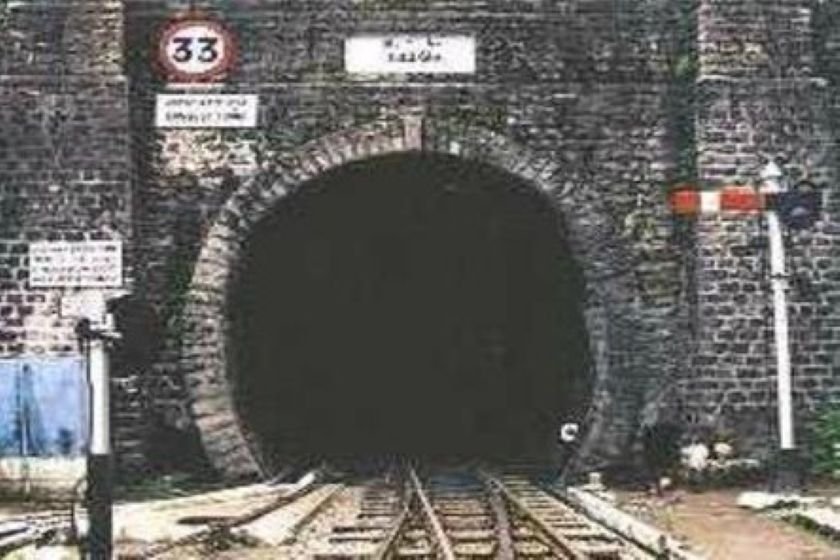
Tunnel No. 33 is the longest operational tunnel on the historic Kalka–Shimla Railway. It is also one of Himachal Pradesh’s most famous haunted locations.
Stories say Colonel Barog still walks near the tunnel that carries his name. Travellers have described hearing unexplained voices, footsteps and laughter inside the darkness. Some accounts portray him not as a frightening spirit, but as a lonely and friendly presence who occasionally speaks to people before disappearing.
There is no verified evidence that the tunnel is haunted.
Its tragic history, railway echoes and long darkness, however, have kept the legend alive for more than a century.
Barog Tunnel No. 33 at a Glance
| Detail | Information |
|---|---|
| Location | Barog, Solan district, Himachal Pradesh |
| Railway line | Kalka–Shimla narrow-gauge railway |
| Tunnel number | 33 |
| Approximate length | 1,143 metres |
| Opened | 1903 |
| Haunted character | Voice, footsteps and apparition associated with Colonel Barog |
| Nearby railway station | Barog Railway Station |
| Public access | Railway property; unauthorised entry is prohibited |
| Best way to experience it | Travel through it aboard an authorised train |
| Main safety rule | Never walk on the railway track or enter the tunnel |
The Engineer Who Began from Both Ends
During the construction of the Kalka–Shimla Railway, engineers faced the difficult task of cutting a railway line through steep Himalayan terrain.
The route required bridges, retaining walls, sharp curves and more than a hundred tunnels.
Colonel Barog was assigned responsibility for excavating a tunnel through the mountain near the settlement that would later carry his name.
To speed up construction, work began from both sides of the hill.
This method was not unusual. Engineers carefully calculated the alignment so that the two excavated sections would meet inside the mountain.
Workers entered from opposite sides.
Day after day, they drilled, blasted and removed stone.
The tunnels moved deeper towards one another.
But when the expected meeting point arrived, the two sections did not connect.
The alignment was wrong.
The error meant that the excavation could not be used as planned. Time, money and labour had been lost, and the railway project faced an embarrassing setback.
For Colonel Barog, it became more than an engineering mistake.
It became the failure that would define his name.
The Fine of One Rupee
According to the most repeated version of the story, the British authorities held Colonel Barog responsible for the miscalculation.
He was reportedly fined one rupee.
The amount sounds insignificant today, but the fine was symbolic. It publicly placed responsibility for the failure on the engineer.
Colonel Barog was said to have felt deeply humiliated.
The workers under his supervision knew that the tunnel had failed to meet. Officials questioned his competence, and the project moved forward without the success he had expected.
The legend describes a man overwhelmed by shame.
One morning, Colonel Barog went for a walk near the failed excavation with his dog.
He carried a revolver.
Somewhere near the unfinished tunnel, he shot himself.
His dog reportedly ran back towards the workers and nearby settlement, eventually leading people to the body.
Colonel Barog was buried near the railway line, not far from the place associated with his final days.
The hill, station and completed tunnel later became known by his name.
The man who could not finish his tunnel became inseparable from it.
Where History Becomes Uncertain
The popular story of Colonel Barog is widely repeated, but several details remain historically uncertain.
Accounts disagree about his full name, exact military or engineering position, the date and location of his death, and the precise circumstances of the failed alignment.
The one-rupee fine and the story of his loyal dog may have been strengthened through oral retelling.
Even the connection between the abandoned excavation and the present Tunnel No. 33 is often simplified.
The current railway tunnel was completed after the failed attempt, under different engineering supervision and on a corrected alignment.
This uncertainty does not mean Colonel Barog never existed or that no engineering failure occurred.
It means that documented railway history and later folklore have become tightly intertwined.
The tragic engineer may have been a real man.
The figure who walks inside the tunnel belongs to legend.
The Tunnel That Replaced His Failure
After the original alignment failed, construction continued under the supervision of another engineer.
Local tradition also gives an important role to Baba Bhalku, a man from the Shimla hills who became famous for helping British engineers identify suitable railway alignments through difficult mountain terrain.
Stories say Baba Bhalku used his knowledge of the landscape and an unusual ability to judge the inside of the hills. Walking with a wooden staff, he supposedly listened to the ground and indicated where tunnels should pass.
Whether every detail of the tale can be verified or not, Baba Bhalku became an important figure in the cultural memory of the Kalka–Shimla Railway.
The corrected Barog Tunnel was completed in 1903.
Running almost straight through the mountain for approximately 1,143 metres, it became the longest tunnel on the route.
A train takes only a few minutes to cross it.
Inside, those few minutes feel much longer.
The Voice in the Darkness
The most common haunted story connected with Tunnel No. 33 concerns a man’s voice.
Railway workers and travellers are said to have heard someone speaking inside the tunnel when no visible person was nearby.
The voice is not always frightening.
In some versions, Colonel Barog speaks calmly to people walking near the tunnel entrance. He sounds like an ordinary traveller or railway official.
A person responds.
The conversation continues briefly.
Then the voice stops.
When the listener looks towards the speaker, no one is there.
Other accounts describe laughter travelling through the tunnel. It begins quietly, gathers strength through the echo and disappears before anyone can identify its source.
The legend generally portrays Colonel Barog as a friendly ghost.
He does not attack travellers.
He does not push people onto the track or cause trains to crash.
He appears to remain near the railway as though still connected with the work that ended his life.
The Man Walking Beside the Track
Another story describes a figure seen near the tunnel entrance during quiet hours.
He appears to be a British-era railway officer.
The man walks slowly beside the track, sometimes accompanied by a dog.
From a distance, there is nothing unusual about him.
He keeps his head lowered and seems to be inspecting the railway line.
A witness calls out.
The figure continues walking.
Then he reaches the darkness of the tunnel and disappears.
No footsteps remain.
No one emerges from the other side.
Some versions say only the dog is seen. It waits near the entrance as though expecting its master to return from the tunnel.
These stories are not supported by verified records, but the image is powerful.
A dead engineer.
His loyal dog.
And a railway line completed without him.
The Locked Tunnel Legend
A darker version of the folklore concerns the abandoned excavation associated with Colonel Barog’s failed attempt.
According to the story, authorities tried to close or secure the old tunnel after people began entering it.
Doors or barriers were installed.
By morning, the lock would be found broken.
The entrance appeared to refuse being sealed.
Some accounts claim that voices came from behind the locked barrier. Others say the door opened on its own whenever someone tried to permanently close it.
There is no reliable evidence proving that a supernatural force repeatedly broke locks.
Barriers on abandoned structures may be damaged by people, weather, corrosion or animals.
But within the legend, the meaning is clear.
Colonel Barog did not want the failed tunnel forgotten.
Inside Tunnel No. 33
A journey through Barog Tunnel is unsettling even without the ghost story.
The opening appears ahead as a black arch cut into the hillside. The train enters, and natural light disappears.
The walls are damp in places. Water may drip from the stone, while the movement of the train sends sound repeatedly along the curved roof.
Carriage wheels become thunder.
Conversations blend into the noise.
The engine whistle becomes almost unrecognisable.
The far exit may appear as a tiny white point, seemingly too distant to reach.
Inside a railway tunnel, it is difficult to judge where any sound begins.
A voice from another compartment may seem to come from outside the train.
A maintenance noise may resemble footsteps.
The wind displaced by the train can create whistles and low murmuring sounds.
When passengers already know the story of Colonel Barog, every echo acquires a possible identity.
The Passenger Who Heard His Name
One frequently retold tale describes a railway passenger travelling through the tunnel at night.
The carriage was quiet, and most people were looking towards the windows as the train entered the darkness.
Halfway through, the passenger heard someone call his name.
The voice came from outside the carriage.
He turned towards the window.
There was only the tunnel wall moving past in darkness.
The voice called again, this time from the other side of the compartment.
No one nearby appeared to have spoken.
When the train emerged into daylight, the passenger asked whether anyone else had heard it.
No one had.
The story provides no named witness or verifiable date. It may be a later addition to the Barog folklore.
Yet it captures the particular fear created by a railway tunnel.
You cannot stop the train.
You cannot leave the carriage.
And if something calls from outside, there should be nowhere for it to stand.
The Whistle After the Train Has Passed
Railway staff and nearby residents are also said to have heard a train whistle after the actual train had already left.
The sound emerges from the tunnel.
It grows louder as though another engine is approaching.
People wait for the train to appear.
Nothing comes.
The whistle fades, leaving the track empty.
Tunnel acoustics provide a reasonable explanation. Sound from a train may continue reflecting inside the passage after the engine has moved away. Another train farther along the line may also be heard before it becomes visible.
But in railway folklore, a whistle with no train often suggests something older.
A phantom engine.
A railway worker repeating his final duty.
Or an engineer still waiting for a train to pass through the tunnel he could not complete.
Why Barog Tunnel Feels Haunted
Tunnel No. 33 combines several natural features that intensify fear.
Complete Darkness
Beyond the entrance, natural light becomes extremely limited. The human mind becomes more alert when it cannot clearly see its surroundings.
Powerful Echoes
Voices, wheels, whistles and dripping water reflect from the walls. The returning sounds may appear to come from another direction.
Damp Air and Sudden Cold
The air inside a long mountain tunnel can feel noticeably cooler. The change may be interpreted as a supernatural presence.
Railway Vibrations
Tracks carry sound and vibration over long distances. An approaching train may be heard before it is seen.
Expectation
Passengers who know the haunted legend listen for Colonel Barog. An ordinary sound becomes more significant when a story has already given it a name.
Tragic History
Unlike many invented ghost stories, Barog folklore is connected with a remembered professional failure and reported death. The emotional foundation makes the haunting feel plausible.
Barog Railway Station
Barog Railway Station stands immediately beside the tunnel and is among the most picturesque stops on the Kalka–Shimla Railway.
The station has a quiet, old-world character, with traditional railway architecture, forested surroundings and the tunnel entrance dominating one end of the track.
Toy trains stop here briefly before continuing towards Solan, Dharampur, Kalka or Shimla.
For travellers interested in the haunted legend, arriving by train provides the safest and most authentic experience.
Passengers can see the tunnel entrance and station from authorised public areas without walking onto the railway line.
Train services, schedules and stopping patterns may change, especially during adverse weather or railway maintenance.
Check the latest timetable before planning the journey.
Colonel Barog’s Grave
A grave associated with Colonel Barog is located in the Barog area, close to the railway line and old construction sites.
It has become part of the town’s historical and supernatural identity.
Visitors sometimes leave flowers or pause at the grave while learning about the engineer’s story.
The site should be approached respectfully.
Whether every popular detail of his death is historically exact or not, the grave represents a person whose name became permanently attached to the settlement and railway.
Do not damage the structure, remove objects or treat it as a location for staged horror videos.
Visiting Barog Tunnel Safely
Tunnel No. 33 is part of an operational railway line.
It is not a pedestrian tunnel, trekking route or unrestricted paranormal site.
The safest way to experience it is aboard an authorised Kalka–Shimla train.
Visitors at Barog Railway Station must remain on permitted platforms and public areas. Never walk on the track, enter the tunnel or attempt to film from inside.
A train can approach with limited warning.
Inside a long tunnel, there may be no safe space to move away from the track.
Railway rules must be followed regardless of whether the line appears quiet.
How to Reach Barog
By Road
Barog lies in Solan district on the Kalka–Shimla corridor.
Approximate road distances are:
- Solan: around 8 kilometres
- Dharampur: around 15 kilometres
- Kasauli: around 25 kilometres
- Chandigarh: around 60 kilometres
- Shimla: around 55 kilometres
Barog can be reached by taxi, bus or private vehicle from Solan, Chandigarh and Shimla.
By Train
The most atmospheric way to reach Barog is by the Kalka–Shimla narrow-gauge railway.
Barog Railway Station lies immediately beside Tunnel No. 33.
Advance booking is advisable during weekends, holidays and the main tourist season.
Train services may be interrupted by heavy rain, landslides, maintenance work or winter weather.
By Air
Chandigarh Airport is the most practical airport for most travellers.
Shimla Airport at Jubbarhatti is closer geographically but generally has fewer flights and weather-dependent operations.
Best Time to Visit Barog
March to June and September to November generally offer pleasant weather.
Summer is comfortable compared with the plains, while autumn often provides clearer views and stable road conditions.
The monsoon makes the forests green and atmospheric but may also bring landslides, track disruption and reduced visibility.
Winter is cold and quiet. Frost or occasional snow can affect roads and railway services.
The station and surrounding public areas should be visited during normal operating hours.
There is no need to enter the tunnel at night to experience its story.
Responsible Visiting
Visitors interested in Tunnel No. 33 should follow these rules:
- never enter the railway tunnel on foot;
- remain off the tracks;
- follow station and railway staff instructions;
- do not cross barriers;
- never attempt night-time ghost hunting;
- avoid blocking railway operations for photographs;
- do not damage signs, walls or heritage structures;
- respect Colonel Barog’s grave;
- supervise children closely at the station;
- check current train operations before travelling;
- do not fly drones near railway property without permission.
The real danger at Barog is an operational railway line, not the legend.
Is Tunnel No. 33 Really Haunted?
There is no verified evidence proving that Colonel Barog’s spirit haunts Tunnel No. 33.
The voices and footsteps described by visitors may be explained by powerful tunnel acoustics, railway vibrations, dripping water and conversations travelling between train compartments.
The historical account has also changed through decades of retelling.
Yet Barog’s legend remains unusually affecting because it is not built around an evil ghost.
It is built around humiliation, regret and unfinished work.
Colonel Barog is remembered as a man who failed to make two ends meet.
More than a century later, every train passes successfully through the mountain that defeated him.
Perhaps that is why folklore keeps him nearby.
Frequently Asked Questions
Why is Barog Tunnel called Tunnel No. 33?
It is numbered 33 on the Kalka–Shimla narrow-gauge railway route.
How long is Barog Tunnel?
The operational tunnel is approximately 1,143 metres long, making it the longest tunnel on the Kalka–Shimla Railway.
Who was Colonel Barog?
Colonel Barog is remembered as a British engineer associated with an unsuccessful early attempt to construct a tunnel near the present site.
Why did Colonel Barog die?
The popular legend says he died by suicide after an alignment error, official fine and public humiliation. Some details of the story remain historically uncertain.
Is Colonel Barog’s ghost considered dangerous?
Most folklore describes him as a friendly or sorrowful spirit rather than a violent presence.
Can tourists walk through Tunnel No. 33?
No. It is an operational railway tunnel, and unauthorised entry is extremely dangerous and prohibited.
What is the safest way to experience the tunnel?
Travel through it aboard an authorised train on the Kalka–Shimla Railway.
Is Colonel Barog buried nearby?
A grave associated with Colonel Barog is located in the Barog area near the railway line.
Is Barog Tunnel part of a UNESCO World Heritage Site?
Yes. The Kalka–Shimla Railway forms part of UNESCO’s Mountain Railways of India World Heritage property.
The Engineer Who Never Left
The platform becomes quiet after the train departs.
Its final carriage disappears inside Tunnel No. 33, and the sound of wheels continues long after the darkness has swallowed it.
Then the noise fades.
Water drips somewhere inside.
A soft footstep touches the track.
From beyond the entrance, a man begins speaking.
His voice is calm.
Almost friendly.
You listen, but the words are broken by the echo.
For a moment, a figure appears against the darkness—a railway engineer standing beside a dog, watching another successful train complete the journey he could not.
Then the light changes.
The tunnel is empty.
Only the railway remains, passing forever through the mountain that still carries his name.