Hospitals never become completely silent.
Even after visiting hours end, lifts continue to move between floors. Trolleys pass through corridors. Doors open and close, monitors sound from distant rooms, and tired footsteps travel beneath the white lights.
At Indira Gandhi Medical College and Hospital in Shimla, the night shift carries another layer of unease.
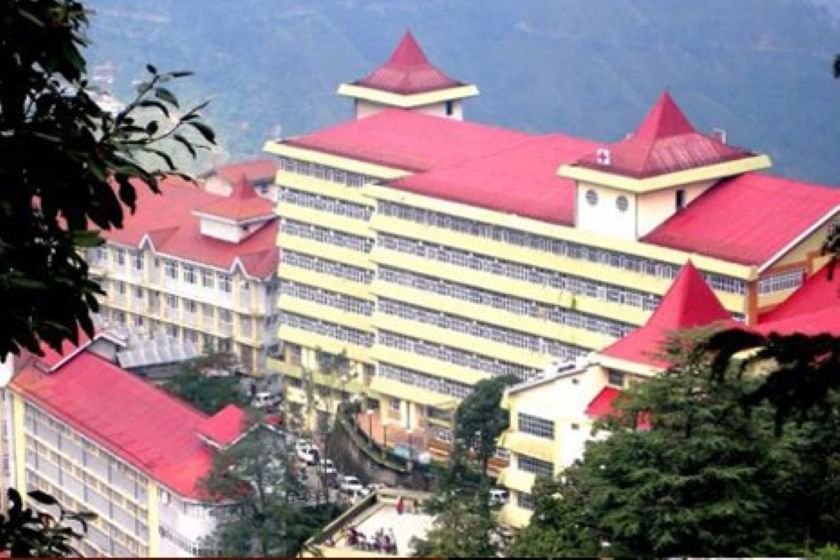
The sprawling hospital complex stands against a forested hillside above the city. During the day, its corridors remain crowded with patients, attendants, students and medical staff. After midnight, some passages become quieter, and the ordinary sounds of the building begin to feel different.
A trolley moves somewhere beyond a closed door.
Footsteps approach from the end of a corridor.
A faint cry seems to come from an empty section.
Then everything stops.
Stories associated with IGMC speak of shadow-like figures, unexplained voices, footsteps in quiet passages and the feeling that someone is standing nearby when no one can be seen.
There is no verified evidence that IGMC Shimla is haunted.
Its reputation survives mainly through hospital folklore—the stories shared during night duty, repeated by students and carried beyond the campus by people who have spent long, anxious hours inside its corridors.
IGMC Shimla at a Glance
| Detail | Information |
|---|---|
| Location | Snowdon area, Lakkar Bazaar, Shimla |
| Established | 1966 |
| Original name | Himachal Pradesh Medical College |
| Present name adopted | 1984 |
| Type of place | Government medical college and teaching hospital |
| Haunted character | Footsteps, voices, shadows and night-duty folklore |
| Public access | Limited to legitimate hospital and institutional purposes |
| Night exploration | Strictly inappropriate |
| Important rule | Patients, staff and medical services must never be disturbed |
The Footsteps in the Empty Passage
One of the most common stories connected with IGMC begins during a quiet night shift.
A staff member or medical student is walking through a corridor after completing a task. Most nearby doors are closed, and only a few lights remain on.
Footsteps begin behind them.
They are slow, measured and close enough to belong to another person walking in the same direction.
The person moves aside to let whoever is behind pass.
No one appears.
The footsteps continue for another few seconds and then stop.
When the corridor is checked, it is empty.
The story changes depending on who tells it. Sometimes the footsteps belong to an unseen patient. In other versions, they continue towards a staircase or disappear near a closed ward.
There is no documented incident proving that such footsteps are paranormal. Hospitals contain interconnected corridors, staircases, service passages and rooms where sound can travel unexpectedly.
Yet the experience becomes unsettling when footsteps appear to match your own pace.
You stop.
They stop.
You begin walking again.
A moment later, they return.
The Patient at the End of the Corridor
Another story describes a figure standing at the far end of a hospital passage.
The person appears to be wearing patient clothing.
Their head is lowered, and they remain motionless near a doorway.
A staff member calls out, believing someone may have left a ward without assistance.
The figure does not answer.
The staff member begins walking towards it.
For a few seconds, the person remains visible beneath the corridor light.
Then someone passes briefly between them.
When the view clears, the figure is gone.
There is no open doorway nearby and no sound of anyone moving away.
In some versions, the figure is later described as an elderly patient.
In others, only a pale outline is visible.
No named or verifiable witness is consistently attached to the account. It belongs to the wider collection of hospital legends repeated in many medical institutions.
Still, such stories become powerful in a place where patients regularly move through corridors at unusual hours.
The figure may have been real.
The question is where it went.
A Voice from an Unoccupied Room
Some IGMC stories focus on voices heard from rooms believed to be empty.
A nurse or attendant passes a doorway and hears someone call softly from inside.
The voice may ask for water.
It may say only one word.
Sometimes it sounds like crying.
The person enters, expecting to find a patient needing help.
The beds are empty.
No television is playing.
No one is standing near the window or washroom.
The corridor outside is also quiet.
A few minutes later, the voice is heard again.
Hospital buildings provide many possible explanations for such experiences. Voices travel through ventilation openings, connecting doors and tiled passages. A patient speaking in another room may sound much closer than they are.
Fatigue can also make unclear sounds seem familiar.
But when a voice appears to come from an empty bed, the logical explanation does not arrive before the fear.
How Hospital Ghost Stories Develop
Hospitals create unusually strong conditions for supernatural folklore.
They are places of recovery and birth, but also of fear, grief and death. Patients arrive during emergencies. Families wait for news. Staff work long hours under emotional and physical pressure.
Many people inside a hospital are exhausted, anxious or sleep-deprived.
At night, the atmosphere changes further.
Crowded waiting areas become quieter. Lights are reduced in some sections. Corridors that felt ordinary during the day begin to look longer and more isolated.
A small sound becomes noticeable.
A curtain moving in air circulation resembles a person turning in bed.
A reflection in glass resembles someone standing behind you.
Stories are then shared during breaks, hostel conversations or night duty.
One student hears footsteps.
Another remembers a figure near a staircase.
A third person has heard the same story from a senior.
Eventually, the story becomes part of the institution’s unofficial memory.
From Medical College to Major Referral Hospital
Indira Gandhi Medical College was established in 1966 as Himachal Pradesh Medical College. It was later renamed Indira Gandhi Medical College in 1984.
Over the decades, it developed into one of Himachal Pradesh’s principal government medical teaching and referral institutions.
Patients arrive from different districts, including remote mountain regions where specialist healthcare may be limited. The campus accommodates clinical departments, teaching facilities, laboratories, offices and associated hospital services.
This constant activity is important when considering its haunted reputation.
IGMC is not an abandoned hospital.
It is a living institution operating throughout the day and night.
Many sounds described as mysterious may originate from patients, staff, attendants, equipment, maintenance work or activity taking place on another floor.
The hospital is rarely as empty as it appears.
The Fourth-Floor Rumour
Online versions of the IGMC legend sometimes describe a supposedly closed or haunted upper-floor section.
The details vary considerably.
Some stories mention an old fire.
Others claim that a ward was sealed after unexplained events. Certain versions introduce specific patients, nurses or medical students, but provide no dependable records, names or official confirmation.
These claims should not be presented as established history.
There is no trustworthy publicly available evidence confirming the dramatic incidents commonly attached to the so-called haunted fourth floor.
The story is better understood as an urban legend.
Hospitals often contain temporarily closed rooms, storage sections, renovation zones and restricted clinical areas. A locked door may exist for ordinary operational reasons.
Once people are told that the space is haunted, the absence of access makes the story stronger.
No one can easily enter to disprove it.
Every sound behind the door becomes part of the legend.
The Lift That Stops on Its Own
Another familiar hospital story concerns a lift stopping at a floor where no one appears to be waiting.
The doors open.
The corridor beyond is empty.
No button seems to have been pressed.
After several seconds, the doors close and the lift continues.
In a haunted version of the story, the lift repeatedly returns to the same floor late at night. Some tellers add that a cold sensation enters the cabin or that the reflection of another passenger briefly appears in the metal doors.
Modern lifts can stop unexpectedly for several ordinary reasons.
Someone may press the call button and walk away. Doors may reopen because of a sensor. Maintenance settings, electrical fluctuations or control-system behaviour can also cause apparently unexplained stops.
Hospitals also have staff and patients moving at all hours.
Yet when lift doors open onto a silent passage after midnight, few passengers feel entirely comfortable waiting to see who called it.
The Shadow Beside the Staircase
Staircases are another recurring setting in IGMC folklore.
A person notices movement on the landing above.
It appears to be someone descending.
The shadow passes across the wall, but no footsteps follow.
When the person reaches the next landing, the stairs are empty.
Hospital stairways contain strong artificial lighting, reflective surfaces and people moving on different levels. A shadow from one floor may appear on another, especially when doors open or someone passes near a light source.
But shadows are difficult to dismiss when they appear to move with purpose.
A vague shape becomes a person.
A person becomes a patient.
And a patient who cannot be found becomes a ghost.
What People Commonly Report
Stories connected with IGMC Shimla usually mention:
- footsteps in quiet corridors;
- voices or crying from apparently empty rooms;
- shadow-like figures near staircases;
- lifts opening on empty floors;
- sudden coldness in enclosed passages;
- doors moving without an obvious cause;
- the sensation that someone is standing behind a person;
- patient-like figures disappearing around corners.
None of these reports has been independently verified as paranormal.
They remain pieces of institutional folklore and personal experience.
Because IGMC is a busy working hospital, it is also extremely difficult to establish that any area was truly empty at the time an incident supposedly occurred.
Why IGMC Can Feel Haunted at Night
Several factors can make a large hospital feel unsettling after dark.
Unpredictable Sound
Hospitals contain hard floors, tiled walls, long corridors and stairwells. Sound may travel between floors or return as an echo.
A trolley wheel on another passage may resemble footsteps nearby.
Medical Equipment
Monitors, alarms, ventilation systems, pipes and electrical equipment can produce sudden sounds even when a corridor seems quiet.
Glass and Reflections
Windows, polished surfaces and glass doors create overlapping reflections. A person moving behind the observer may appear to be standing inside an empty room.
Fatigue
Doctors, nurses, students and attendants may remain awake for long periods. Sleep deprivation can reduce concentration and make shadows or unclear sounds easier to misinterpret.
Emotional Stress
Hospitals are emotionally intense spaces. Anxiety and grief increase awareness of unfamiliar sounds and movement.
Continuous Activity
Cleaning teams, technicians, security staff and medical personnel work outside normal visiting hours. Someone glimpsed briefly may disappear through a service entrance or staircase before being identified.
These explanations account for many reported experiences.
They do not necessarily explain what every individual believes they witnessed.
The Road Through the Forested Hillside
Some haunted accounts extend beyond the hospital building to the roads approaching the Snowdon area.
The route passes through steep hillside terrain with trees, bends and sections that become quiet at night.
People describe seeing figures beside the road or feeling that someone is following them along isolated stretches.
These accounts are also difficult to verify.
Mist, headlights, pedestrians, hospital attendants and shadows from trees can create brief human-like shapes.
The road remains active because hospital services operate around the clock.
Anyone travelling there should focus on traffic, weather and road safety rather than attempting to investigate supernatural claims.
Respecting a Working Hospital
IGMC Shimla is not a haunted tourist attraction.
It is a functioning hospital where patients receive treatment and families may be experiencing difficult moments.
Visitors should never enter wards, corridors or restricted sections merely to search for paranormal activity.
Do not photograph patients, staff, records, clinical areas or grieving families.
Do not attempt late-night exploration, staged ghost videos, séances or unauthorised recording.
Hospital security and access restrictions must be followed at all times.
Writing about folklore is acceptable only when it does not compromise patient dignity or interfere with medical care.
Visiting IGMC Shimla
People should visit IGMC only for legitimate medical, academic or administrative reasons.
It should not be added to a sightseeing itinerary as though it were an abandoned building.
Anyone with official work at the institution should follow the directions provided by hospital staff. Parking, visitor access, department locations and entry rules may change according to operational requirements.
Emergency routes and entrances must always remain clear.
How to Reach IGMC Shimla
By Road
IGMC is located in the Snowdon area near Lakkar Bazaar in Shimla.
The campus can be reached by taxi, local transport or permitted private vehicle access, subject to Shimla’s traffic regulations and hospital parking arrangements.
Traffic congestion is common in central Shimla, so allow additional travel time.
By Bus
Local bus services connect different parts of Shimla with areas near Lakkar Bazaar, Sanjauli and the hospital approach.
The most suitable stop depends on the department or entrance being used.
By Train
Shimla railway station is the nearest railhead.
It is connected with Kalka by the historic narrow-gauge railway. The remaining journey to IGMC is by road.
By Air
Shimla Airport at Jubbarhatti is the nearest airport, although flight schedules are limited and weather-dependent.
Chandigarh Airport offers wider connectivity, followed by a road journey to Shimla.
Is IGMC Shimla Really Haunted?
There is no verified evidence proving that Indira Gandhi Medical College and Hospital is haunted.
The stories are mainly urban legends connected with night duty, empty-looking corridors, unusual sounds and the emotional atmosphere of a major hospital.
Some people regard these accounts as ordinary misunderstandings intensified by tiredness and fear.
Others believe hospitals retain something from the lives that end within them.
The truth cannot be established through repeated online stories alone.
What can be said with certainty is that IGMC carries decades of human experience—recovery, relief, anxiety, birth, grief and loss.
That emotional history is enough to make its quieter corridors feel different after midnight.
Frequently Asked Questions
Is IGMC Shimla officially recognised as haunted?
No. IGMC is a government medical college and hospital. Its haunted reputation comes from unofficial folklore and personal accounts.
What ghost stories are associated with IGMC?
Common stories mention footsteps, voices, disappearing patient-like figures, unexplained lift stops and shadows near staircases.
Is the fourth-floor story true?
There is no dependable public evidence confirming the dramatic fire, deaths or sealed haunted ward described in some online versions. It should be treated as an urban legend.
Can tourists enter IGMC to explore haunted areas?
No. People should visit only for genuine medical, academic or administrative purposes.
Can visitors take photographs inside the hospital?
Photography in clinical areas may violate privacy and hospital rules. Patients, staff and medical spaces should never be photographed without explicit permission.
Is night-time investigation permitted?
No. Unauthorised exploration would interfere with hospital operations and could lead to security or legal action.
When was IGMC established?
The institution was established in 1966 as Himachal Pradesh Medical College and was renamed Indira Gandhi Medical College in 1984.
When the Corridor Becomes Quiet
A hospital corridor is never truly empty.
Somewhere, a machine continues to run.
A patient turns in bed.
A lift moves between floors.
A member of staff walks through a passage beyond sight.
Then the sounds fade.
For a moment, the corridor appears completely still.
At the far end, a figure stands beneath the light.
You assume it is a patient.
You look down for only a second.
When you raise your eyes, the corridor is empty again.
Perhaps the person entered a room.
Perhaps the light created a shadow.
Or perhaps hospitals remember every voice that once called for someone in the night.
At IGMC Shimla, the corridors have heard more than most.