Above Chamba’s roofs and temple spires, Chamunda Devi sits on the Shah Madar hillside — fierce in name, quiet in setting, and close enough to watch the town without being swallowed by it.
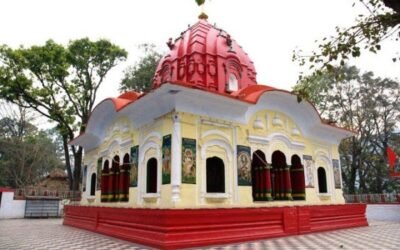
Chamba has many temples of stone. Their shikharas rise from the town like old mountain memories: Lakshmi Narayan, Hari Rai, Champavati, Vajreshwari. Chamunda Devi Temple is different. It stands above the town on the Shah Madar range, known not only for its devotion to the fierce goddess but also for its unusual wooden form.
This is not the more famous Chamunda temple of Kangra, often called Chamunda Nandikeshwar Dham. Chamba’s Chamunda Devi Temple has its own geography, its own royal memory, and its own atmosphere. It belongs to the hill above Chamba, to the old stone steps that once formed the approach, to the view over the town below, and to the goddess who carries both the terrifying and protective faces of Shakti.
🌄 Location & How to Reach It
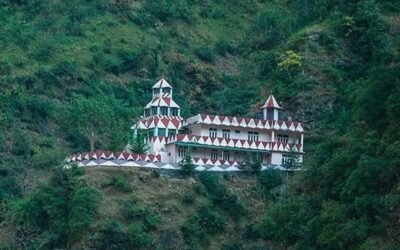
Chamunda Devi Temple is located on a spur of the Shah Madar range, above and opposite Chamba town in Himachal Pradesh. From the temple, the town opens below with its roofs, lanes, Chaugan, river valley, and surrounding hills. The shrine is close enough to be part of Chamba’s temple circuit, but high enough to feel slightly withdrawn from the movement of the bazaar.
Google Maps: Get Directions
Elevation: A precise temple-specific elevation is not consistently published in reliable public sources. It is safest to understand the temple as a hill shrine above Chamba town, which itself is generally around 1,006 m / 3,300 ft above sea level.
- By road: Chamba is connected by road with Dalhousie, Banikhet, Pathankot, Khajjiar, Saho, and Bharmour. From Chamba town, the temple can now be reached by road, and several travel references describe it as about 3 km from the town side.
- By steps: Earlier, the temple was approached by a steep stone-paved path of about 378 steps. Even if using the road now, the older step approach remains important to the temple’s memory.
- By rail: The nearest major railway station is Pathankot, from where travellers continue by road to Chamba.
- By air: The nearest commonly used airports are Pathankot Airport and Kangra / Gaggal Airport, followed by road travel to Chamba.
This is not a remote trek, but it is a hillside temple. If you choose to walk or climb, go slowly, carry water, and visit during daylight.
🌸 Best Time to Visit
Chamunda Devi Temple can be visited through most of the year because it is close to Chamba town. The most comfortable months are generally March to June and September to November, when walking, climbing, and exploring Chamba’s old temple circuit are easier.
The temple is especially meaningful during Navratri, when worship of the goddess becomes more intense and public. Since local arrangements can change from year to year, travellers should confirm exact timings, crowd levels, and ritual details locally before planning a visit around Navratri.
Morning is a good time for a quieter visit and clearer views over Chamba. Late afternoon can also be beautiful, especially when the light softens across the valley. Monsoon months may make steps slippery and roads in the wider district uncertain. Winter is usually manageable in Chamba town, though mornings and evenings can be cold.
There is no need to treat the shrine like a managed tourist monument. It is a living temple. Remove shoes where required, dress respectfully, avoid loud behaviour, and ask before photographing the sanctum.
🕉️ The Fierce Mother Named Chamunda
The name Chamunda comes from one of the most powerful stories of the goddess tradition. In the Devi Mahatmya tradition, the goddess takes a fierce form to destroy the demons Chanda and Munda. After slaying them, she becomes known as Chamunda.
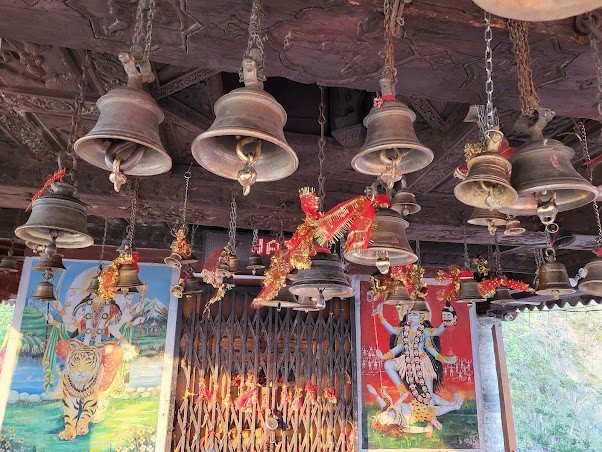
This form of the goddess is not gentle in appearance or mood. Chamunda is associated with fierce protection, destruction of evil, and the raw power of Shakti. She is closely linked with Kali, Durga, and the terrifying forms of the divine feminine that appear when ordinary protection is not enough.
At Chamba, this fierce goddess is worshipped in a setting that is surprisingly calm. The temple does not stand in a crowded market or inside a large complex. It watches from the hillside. That distance suits her. Chamunda is close to the town, but not lost inside it.
This is part of the temple’s power. The goddess who destroys demons does not need to be presented through noise. She can sit quietly above a hill town, guarding it by presence alone.
🏛️ Raja Umed Singh and the Hill Shrine of 1762
Chamunda Devi Temple is commonly associated with Raja Umed Singh of Chamba and is often dated to 1762. This places the temple within the later royal history of Chamba, long after the foundation of the town but still within the period when Chamba’s rulers continued to support temples, shrines, and sacred architecture.
The date matters because it separates the temple from some of Chamba’s older early-medieval stone shrines. Lakshmi Narayan, Champavati, and Hari Rai belong to an earlier architectural world. Chamunda Devi Temple belongs to a later chapter — still traditional, still sacred, but shaped through a different material language.
That material language is wood.
Several sources describe Chamunda Devi Temple as the only wooden temple with a gabled roof in Chamba. Whether one reads that claim in the strictest architectural sense or as a popular description, the temple is clearly remembered for its wooden structure and its difference from the stone shikhara temples below.
This gives the shrine a distinct identity. In a town famous for stone temples, Chamunda Devi rises as a wooden goddess shrine on the hillside.
🙏 What Chamunda Devi Temple Is Known For
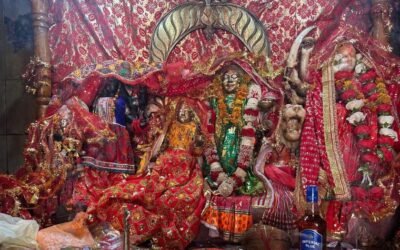
Chamunda Devi Temple is known first for its dedication to Goddess Chamunda, a fierce form of Shakti associated with the destruction of Chanda and Munda. Devotees come to seek protection, strength, courage, and blessings from the goddess.
The temple is also known for its hilltop position. It overlooks Chamba town and gives visitors one of the most meaningful temple-view experiences in the area. From here, Chamba is not only seen as a settlement; it is seen as a sacred town with layers of temples, old royal spaces, the Chaugan, and the surrounding valley.
Another important feature is the temple’s material character. It is remembered as a wooden temple with a gabled roof, unlike the many stone shikhara temples of Chamba’s older core. This makes it architecturally distinct within the town’s sacred map.
The temple is also associated with Lord Shiva through a cave-like recess or rear sacred space where a Shiva symbol is kept. This gives the shrine a wider meaning: Chamunda is fierce Shakti, but she does not stand alone. The temple is also part of the old Himalayan pairing of Shiva and Shakti.
🏛️ Wood, Silver, and the Gabled Roof
Chamunda Devi Temple’s architecture should be read differently from Chamba’s stone temples. Its power is not in a rising stone shikhara, but in its wooden presence, gabled roof, hillside placement, and carved detail.
The temple is often described as simple and sober in overall form, yet rich in devotional atmosphere. The wooden architecture carries floral carvings and sacred motifs. The interior sanctum is known for silver-sheet embellishment, which gives the shrine an intimate brightness against the darker warmth of wood.
Wooden temples age differently from stone. Stone holds weight; wood holds touch. Wood remembers hands, weather, smoke, repair, and ritual in a softer way. In a place like Chamba, where winters are cold and hill architecture adapts to climate, a wooden shrine feels deeply local.
The gabled roof is also important. It responds to mountain weather and gives the temple a form distinct from the vertical shikhara. Instead of reaching sharply upward, it shelters. It feels protective, almost domestic, as if the goddess is not only enthroned but housed.
A visitor may first notice the view. But the temple itself deserves slow attention: the roofline, the woodwork, the silvered sanctum, and the quiet contrast between fierce deity and restrained architecture.
📜 The Old Steps and the View Over Chamba
Earlier, Chamunda Devi Temple was reached through a steep stone-paved path of about 378 steps. Today, road access has made the shrine easier to visit, but the memory of those steps is still important.
Steps change the meaning of a temple visit. They make the body part of devotion. A person climbs, pauses, breathes, looks back, and continues. By the time the shrine is reached, the town below has already begun to look different.
From the temple, Chamba appears as a layered town: Chaugan, roofs, old temples, palace memory, river valley, and hills beyond. This view is not just scenic. It explains why the temple belongs where it is. Chamunda Devi watches from above, and the town lies below like a sacred map.
The old route also reminds us that ease of access is a recent thing for many Himalayan shrines. Road access is practical, but the older pilgrim experience was slower and more physical. The climb itself was part of the offering.
🕉️ Shiva, Shakti, Hanuman, and Bhairav
Chamunda Devi Temple is centred on the goddess, but it is not a single-figure sacred space. Several descriptions mention the presence of Lord Shiva in a cave-like rear section or sacred recess, along with other deities in the temple complex.
This pairing of Shiva and Shakti is deeply meaningful. Chamunda is fierce feminine power. Shiva is stillness, ascetic depth, and cosmic presence. Together, they give the shrine a fuller devotional balance.
The temple is also associated with Hanuman and Bhairav as protective figures near the goddess. This follows a wider pattern in Shakti shrines, where fierce or loyal guardian deities stand close to the Mother. Bhairav, in particular, is often linked with fierce goddess traditions and protective sacred boundaries.
This makes the temple more than a single shrine of Chamunda alone. It is a small sacred world of power, protection, guardianship, and mountain devotion.
🎉 Festivals and Devotion
- Navratri: The temple becomes especially important during Navratri, when devotees visit to seek blessings from Goddess Chamunda. Exact arrangements should be confirmed locally before planning around festival days.
- Shakti worship: Chamunda is worshipped as a fierce form of the goddess, associated with protection, courage, and the destruction of evil.
- Daily darshan: Since the temple is close to Chamba town, devotees may visit for regular prayer rather than only during major festivals.
- Shiva-Shakti reverence: The presence of Shiva-related sacred space gives the temple a wider devotional identity.
- Hillside pilgrimage: The old step approach and the temple’s elevation make the journey part of the devotional experience, especially for those who choose to climb.
🏞️ While You’re in the Area
- Chaugan: Chamba’s open public heart, visible from the wider hill setting and essential for understanding the town’s daily and festival life.
- Lakshmi Narayan Temple Complex: Chamba’s most important temple group, known for its Shikhara-style architecture and deep royal association.
- Champavati Temple: A central Chamba shrine connected with Princess Champavati and the town’s founding memory.
- Sui Mata Temple: A hill shrine associated with Rani Sui / Queen Sunaina and the legend of water being brought to Chamba through her sacrifice.
- Hari Rai Temple: A historic Vaishnavite shrine near the Chaugan, known for its Vishnu image and old stone temple character.
- Bhuri Singh Museum: A valuable stop for understanding Chamba’s paintings, inscriptions, royal history, Chamba rumals, sculptures, and cultural depth.
- Akhand Chandi Palace: A former royal palace that helps place Chamba’s temples within the political and architectural story of the old hill state.
🙏 Getting in Touch
There is no widely verified official visitor centre, booking system, or public temple contact number available for Chamunda Devi Temple, Chamba in common tourism references. For current darshan access, festival arrangements, priest availability, road condition, and photography rules, ask locally in Chamba town before visiting.
If you plan to visit during Navratri, confirm arrangements in advance because crowd levels and access patterns may differ from ordinary days.
As with all living shrines, remove shoes where required, avoid touching sacred objects or carvings, keep the visit quiet, and ask before photographing the sanctum or deity.
❓ Quick Questions Travellers Ask
Where is Chamunda Devi Temple located?
Chamunda Devi Temple is located on the Shah Madar range, above and opposite Chamba town in Himachal Pradesh.
Which deity is worshipped at Chamunda Devi Temple, Chamba?
The temple is dedicated to Goddess Chamunda, a fierce form of Shakti associated with Kali and Durga.
Is this the same as Chamunda Devi Temple in Kangra?
No. This article is about Chamunda Devi Temple in Chamba, not the better-known Chamunda Nandikeshwar Dham near Dharamshala / Palampur in Kangra district.
Who built Chamunda Devi Temple in Chamba?
The temple is commonly associated with Raja Umed Singh and is often dated to 1762.
What is special about the temple architecture?
It is known as a distinctive wooden temple with a gabled roof, unlike many of Chamba’s stone shikhara temples.
How was the temple reached earlier?
Earlier, visitors reached the temple by a steep stone-paved path of about 378 steps.
Can the temple be reached by road now?
Yes. It is now accessible by road from Chamba town, though local directions should be confirmed.
What is the best time to visit?
The comfortable months are generally March to June and September to November. Navratri is especially meaningful for goddess worship.
Is there a trek to reach the temple?
It is not a remote trek, but the temple stands on a hillside. Visitors may either use the road or experience the older stepped approach where accessible.
Are photos allowed inside?
Photography rules may depend on local custom. Ask before photographing the sanctum, deity, or inner sacred spaces.
A Last Word
Chamunda Devi Temple gives Chamba a different kind of sacred height. The town below is known for stone temples, old lanes, the Chaugan, museums, and royal memory. Above it, the wooden shrine of Chamunda Devi watches quietly from the Shah Madar hillside.
The goddess here is fierce, but the setting is calm. The roof shelters, the wood darkens with time, the silvered sanctum catches the light, and the old steps remember a slower way of reaching her.
Chamba has many temples that rise from the town. Chamunda Devi Temple rises above it — close enough to protect, high enough to see.
Fact-check note: Chamunda Devi Temple, Chamba is consistently described in available Chamba-specific tourism references as standing on the Shah Madar range above Chamba town, associated with Raja Umed Singh, and commonly dated to 1762. It is known for its wooden structure, gabled roof, older approach of about 378 stone steps, present road access, and devotion to Goddess Chamunda / Kali. Some online material mixes Chamba details with the better-known Chamunda Nandikeshwar Dham in Kangra district, especially references to the Baner River, Dharamshala, Palampur, and Aadi Himani Chamunda. This article keeps the focus on the Chamba temple and avoids transferring Kangra-specific legends, distances, timings, or facilities to it. Exact daily timings, formal temple contact details, and a temple-specific elevation are not firmly verified in accessible public sources and are therefore not forced.