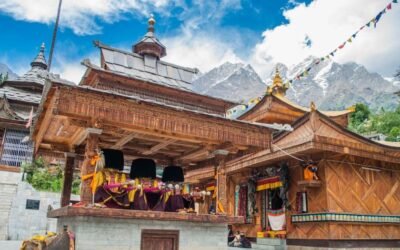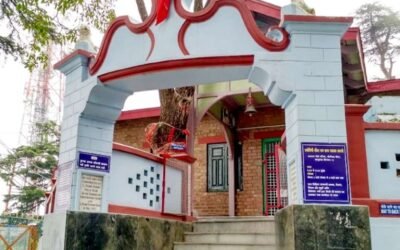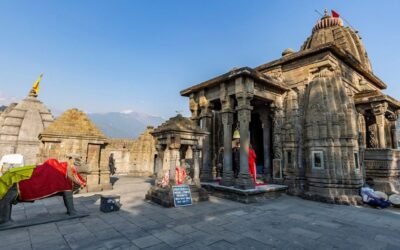
In the centre of Chamba, where the town’s lanes gather around memory, stone, and worship, Laxmi Narayan Temple rises as the sacred axis of a capital founded more than a thousand years ago.
Some temples stand outside a town and ask people to travel towards them. Laxmi Narayan Temple does something different. It stands at the heart of Chamba town, as if the town itself grew around its stone towers, wooden canopies, and long rhythm of worship.
This is the main temple complex of Chamba and one of the finest sacred landmarks of the old hill state. Built in the 10th century A.D. and traditionally associated with Raja Sahil Varman, the founder of Chamba, the temple is dedicated to Lord Vishnu in the form of Laxmi Narayan. Yet its meaning is wider than a single shrine. It is a complex of temples, a royal foundation, a Vaishnavite centre, a piece of Himalayan architecture, and one of the clearest ways to understand Chamba’s sacred identity.
🌄 Location & How to Reach It
Laxmi Narayan Temple is located in Chamba town, Himachal Pradesh, within the old sacred and urban core of the town. It stands close to the main town area and can be easily included in a walking route with Chamba’s other historic temples, the Chaugan, Bhuri Singh Museum, and the old market lanes. The temple belongs to the same historic townscape that includes Champavati Temple, Hari Rai Temple, Vajreshwari Temple, Sui Mata Temple, and Akhand Chandi Palace.
Google Maps: Get Directions
Elevation: Chamba town is generally around 1,006 m / 3,300 ft above sea level.
- By road: Chamba is connected by road with Dalhousie, Banikhet, Pathankot, Khajjiar, Saho, and Bharmour. From within Chamba town, the temple is easy to reach by walking, local taxi, or asking directions from the Chaugan and main market side.
- By rail: The nearest major railway station is Pathankot, from where travellers continue by road to Chamba.
- By air: The nearest commonly used airports are Pathankot Airport and Kangra / Gaggal Airport, followed by road travel to Chamba.
This is an easy town temple to visit. There is no trek involved, but the best experience comes from walking slowly through the old town rather than treating the temple as a quick roadside stop.
🌸 Best Time to Visit
Laxmi Narayan Temple can be visited throughout most of the year because it is located inside Chamba town. The most comfortable months are generally March to June and September to November, when the weather is suitable for walking through the town and visiting nearby temples.
The temple is meaningful during major Hindu festivals connected with Lord Vishnu, Lord Krishna, and the wider temple calendar. Janmashtami, Ram Navami, Diwali, and local festival periods can bring special devotional activity, though exact arrangements should be confirmed locally before planning around them.
Morning is usually the best time for a quieter visit. The stone remains cool, the town is slower, and the temple complex can be seen before the day’s movement becomes heavy. Late afternoon is also pleasant, especially for walking around the old lanes nearby.
There is no need to treat the temple as a ticketed monument. It is a living shrine. Remove shoes where required, avoid loud behaviour, ask before photographing inner sacred areas, and remember that the temple is still part of Chamba’s daily worship.
🕉️ Raja Sahil Varman and the Temple at the Centre of Chamba
Laxmi Narayan Temple is traditionally associated with Raja Sahil Varman, the ruler remembered for founding Chamba as a capital in the 10th century A.D. The official District Chamba page identifies it as the main temple of Chamba town and states that it was built by Sahil Varman in the 10th century.
This connection is important because the temple is not only a devotional structure. It is tied to the very making of Chamba town. Sahil Varman’s move from the older Brahmapura / Bharmour region to the present Chamba valley created a new political and sacred centre. Laxmi Narayan Temple became one of the anchors of that centre.
A capital in the hills was never only a place of administration. It needed temples, water, markets, protective deities, royal patronage, and a sacred order through which people could understand the new town. Laxmi Narayan Temple belongs to that founding language. It gave Chamba a Vaishnavite heart, even as the town also developed strong Shaiva, Shakta, and local devta traditions.
To stand before the temple today is to stand before one of Chamba’s oldest acts of self-definition.
🙏 The Vishnu-Lakshmi Shrine of the Hill Capital
The main temple is dedicated to Lord Vishnu and Goddess Lakshmi in the form of Laxmi Narayan. In Hindu thought, Vishnu is the preserver, the one who sustains cosmic order, while Lakshmi represents prosperity, grace, auspiciousness, and abundance. Together, Laxmi Narayan expresses a sacred ideal of protection and well-being.
This made deep sense for a new capital. A town required not only walls, rulers, and roads. It required order, wealth, fertility, peace, and continuity. A temple to Laxmi Narayan placed these hopes at the centre of Chamba.
Devotees come here for darshan, blessings, family well-being, prosperity, and peace. The shrine is also part of Chamba’s everyday religious rhythm. It is not important only because it is old; it is important because it continues to be used, visited, and remembered.
The temple complex also reminds visitors that Chamba’s sacred life cannot be reduced to one deity. Within and around the complex are shrines associated with Vishnu, Shiva, Radha-Krishna, Gauri-Shankar, Hanuman, and Kali traditions. This layered temple group shows the range of devotion that old Chamba gathered into one sacred enclosure.
🏛️ Six Shrines in a Sacred Row
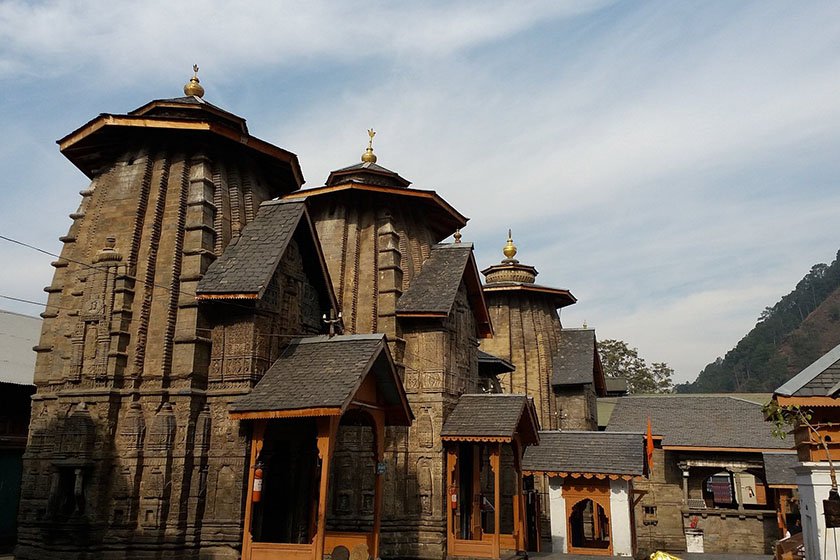
Laxmi Narayan Temple is often described not as a single temple alone, but as a temple complex. Many references speak of six main temples within the complex, arranged in a row or group, with the central and most important shrine dedicated to Laxmi Narayan.
The wider complex includes shrines commonly associated with Chandragupta Shiva, Gauri Shankar, Radha Krishna, Hanuman, and Kali, though descriptions vary slightly from source to source. Some accounts state that Chandragupta Temple, dedicated to Shiva, may even have been among the earliest shrines in the complex. Others emphasise the later addition of Radha-Krishna Temple by Rani Sarda, queen of Raja Jit Singh, in the early 19th century.
The exact sequence of every shrine is better left to specialist documentation, but the larger point is clear: this is a sacred cluster, not a solitary building.
That cluster quality matters. A visitor walking through the complex moves through different forms of devotion: Vishnu and Lakshmi, Shiva and Gauri, Krishna and Radha, Hanuman and Kali. This is Chamba’s religious life in miniature — orderly, layered, and older than the modern idea of a single-purpose tourist site.
🏛️ Shikhara Architecture Built for Himalayan Weather
District Chamba identifies the temple as built in the Shikhara style. This North Indian temple form is seen in many of Chamba’s important old shrines, where the sanctum rises into a tower-like superstructure. At Laxmi Narayan Temple, the shikhara gives the complex its vertical identity, drawing the eye upward from stone base to sacred height.
But this is not a plains temple simply copied into the hills. The temple has been adapted to local conditions. Tourism and heritage references describe wooden chhatris, protective roof elements, and upper coverings designed to help the structure withstand Chamba’s weather, including cold, rain, and snowfall.
This is one of the temple’s most fascinating architectural qualities. It carries the grammar of North Indian temple architecture, but it speaks with a Himalayan accent. Stone gives it permanence. Wood gives it weather-sense. Roof features protect the structure. The result is a temple that is both classical and local.
The complex also includes a metallic image of Garuda, the mount of Lord Vishnu, near the entrance area. Garuda’s presence is not ornamental only. He marks the temple’s Vaishnavite identity and stands as the vehicle and guardian of Vishnu.
✨ The Gold-Plated Pinnacles and a Story of Defiance
One of the most memorable later traditions connected with Laxmi Narayan Temple concerns Raja Chhatra Singh and the temple’s roof. Several accounts state that in 1678, he adorned the temple with gold-plated pinnacles.
The story is often told in connection with the Mughal emperor Aurangzeb. According to the tradition, Aurangzeb had ordered the demolition of the temple, and Raja Chhatra Singh responded not by hiding the shrine, but by adding golden finials to its roof. Whether every detail of this story is preserved with documentary certainty or not, the memory is powerful. It presents the temple not only as a place of worship, but as a symbol of royal protection and religious resilience.
In architectural terms, the pinnacles draw the eye upward. In historical memory, they do something more. They turn the temple roof into a statement.
This is how sacred buildings often survive in people’s minds. A roof is not only a roof. A finial is not only decoration. It can become a sign that a community refused to let its central shrine disappear.
📜 Chamba’s Sacred Capital and the Town Around the Temple
Laxmi Narayan Temple cannot be understood apart from Chamba itself. The town was founded as a capital in the early medieval period and developed a dense sacred landscape. Champavati Temple preserves the memory of Princess Champavati. Sui Mata Temple remembers the queen whose sacrifice brought water to the town. Hari Rai Temple holds a striking Vishnu image near the Chaugan. Chamunda Devi Temple watches from the hillside. Vajreshwari Temple stands in the old bazaar area.
Together, these temples make Chamba more than a hill town with monuments. They make it a sacred map.
Laxmi Narayan Temple is the heart of that map. Its centrality is not only geographical. It is historical and devotional. It shows how royal patronage, Vaishnavite worship, stone architecture, and Himalayan adaptation came together in one complex.
The temple also helps explain why Chamba has retained such a strong old-town character. Sacred sites anchor memory. They slow down change. They make certain routes, courtyards, and neighbourhoods meaningful over centuries.
🎉 Festivals and Devotion
- Daily worship: Laxmi Narayan Temple remains a living shrine where devotees visit for darshan, prayer, and blessings.
- Vaishnavite festivals: Festivals associated with Lord Vishnu, Lord Krishna, and Lord Rama, such as Janmashtami and Ram Navami, are spiritually meaningful here. Confirm local arrangements before planning around exact dates.
- Diwali: As a festival closely associated with Goddess Lakshmi, Diwali holds special devotional relevance for a Laxmi Narayan shrine.
- Chamba temple circuit: Many visitors combine Laxmi Narayan Temple with nearby shrines, making it part of a wider day of darshan.
- Local sacred calendar: Chamba’s major town festivals and fairs add to the atmosphere of the region, even when not centred only on this temple.
🏞️ While You’re in the Area
- Champavati Temple: A central Chamba shrine associated with Princess Champavati and the town’s founding memory.
- Shri Hari Rai Temple: A historic Vaishnavite temple near the Chaugan, known for its bronze Vishnu image and Shikhara-style form.
- Sui Mata Temple: A hill shrine linked to Rani Sui / Queen Sunaina and the legend of water being brought to Chamba through her sacrifice.
- Vajreshwari Temple: A Shakti shrine in Chamba’s old bazaar setting, known for its stonework and goddess worship.
- Chamunda Devi Temple: A wooden hill temple dedicated to the fierce goddess Chamunda, overlooking Chamba town.
- Bhuri Singh Museum: Essential for understanding Chamba’s paintings, inscriptions, sculptures, coins, Chamba rumals, and royal history.
- Chaugan: The open public heart of Chamba, useful for walking, festivals, town life, and understanding the old urban layout.
🙏 Getting in Touch
There is no widely verified official visitor centre, booking system, or public temple contact number consistently available in common tourism references for Laxmi Narayan Temple, Chamba. For current darshan access, festival arrangements, priest availability, photography rules, and ritual timings, ask locally in Chamba town or near the temple complex.
Some online sources list specific opening hours, but these are not consistently confirmed by official sources. It is safer to visit during daylight and confirm locally if planning around aarti or special worship.
As with all living shrines, remove shoes where required, avoid touching carvings or sacred objects, keep the visit quiet, and ask before photographing inner sanctums or deities.
❓ Quick Questions Travellers Ask
Where is Laxmi Narayan Temple located?
Laxmi Narayan Temple is located in Chamba town, Himachal Pradesh, within the old sacred and urban core of the town.
Who built Laxmi Narayan Temple, Chamba?
The temple is traditionally and officially associated with Raja Sahil Varman, who built it in the 10th century A.D.
Which deity is worshipped at Laxmi Narayan Temple?
The main shrine is dedicated to Lord Vishnu and Goddess Lakshmi in the form of Laxmi Narayan.
What is the architectural style of the temple?
The temple is built in the Shikhara style, adapted to Chamba’s Himalayan climate with protective wooden and roof elements.
Is Laxmi Narayan Temple a single temple or a complex?
It is a temple complex, commonly described as having six main shrines dedicated to Vishnu, Shiva, Radha-Krishna, Hanuman, Kali, and related forms.
What is special about the temple architecture?
Its stone shikhara form, wooden chhatris, climate-sensitive roof features, and Garuda image make it one of Chamba’s most important architectural landmarks.
Can it be visited with other Chamba temples?
Yes. It can be combined with Champavati Temple, Hari Rai Temple, Sui Mata Temple, Vajreshwari Temple, Chamunda Devi Temple, and Bhuri Singh Museum.
Is there a trek to reach the temple?
No. The temple is located inside Chamba town and can be reached easily on foot or by local transport.
What is the best time to visit?
The temple can be visited through most of the year. March to June and September to November are comfortable for exploring Chamba town.
Are photos allowed inside?
Photography rules may depend on local custom. Ask before photographing inner sanctums, deities, or ritual spaces.
A Last Word
Laxmi Narayan Temple is not only Chamba’s main temple. It is the town’s sacred centre of gravity. Around it, lanes move, festivals gather, other shrines speak, and the memory of a hill capital remains alive.
Its shikharas rise in stone, but they do not feel distant. They belong to the town’s daily life. The wooden canopies, the Garuda image, the shrines in a row, and the old Vaishnavite devotion all tell the same story: Chamba was built not only as a seat of power, but as a place of worship.
Many temples can be visited in Chamba. Laxmi Narayan Temple must be understood. It is where the town’s sacred architecture, royal memory, and living faith meet in one enduring form.
Fact-check note: District Chamba identifies Laxmi Narayan Temple as the main temple of Chamba town, built by Raja Sahil Varman in the 10th century A.D., and built in the Shikhara style. Other tourism and heritage references consistently describe it as a central temple complex dedicated to Lord Vishnu / Laxmi Narayan, with multiple shrines, wooden protective roof elements, and a Garuda image near the entrance. Some details vary across sources, including the exact sequence and patronage of individual subsidiary shrines and the historical framing of Raja Chhatra Singh’s gold-plated roof pinnacles. This article treats those points cautiously and avoids forcing unverified daily timings, contact numbers, or temple-specific elevation figures.