The road between Chotta Shimla and Navbahar does not appear unusual during the day.
Vehicles pass through regularly. Students travel towards nearby institutions, residents move between neighbourhoods, and sunlight filters through the tall trees covering the hillside.
Near the road lies an old perennial water source known locally as Chudail Baudi or Chudail Bauri—literally, the Witch’s Well.
In daylight, it is simply another old baudi hidden within Shimla’s changing urban landscape.
After dark, the story changes.
Drivers say their vehicles begin losing speed near the water source, even when they press harder on the accelerator. A woman dressed in white is said to appear beside the road, her face concealed beneath long black hair.
She raises one hand.
She asks for a lift.
Drivers who do not stop believe they have escaped her.
Then they look into the rear-view mirror.
The woman is sitting in the back seat.
There is no verified evidence that a supernatural figure haunts Chudail Baudi. The woman in white, the slowing vehicles and the impossible passenger belong to one of Shimla’s best-known roadside legends.
But on a mist-covered road after midnight, a familiar story can feel dangerously real.
Chudail Baudi at a Glance
| Detail | Information |
|---|---|
| Location | Between Chotta Shimla and Navbahar, Shimla |
| Nearby landmark | St Bede’s College area |
| Meaning of the name | Witch’s Well |
| Type of place | Old roadside baudi and urban mountain-road location |
| Haunted character | Woman in white, slowing vehicles and an unseen passenger |
| Best time to visit | Daylight hours |
| Night visit | Not recommended |
| Main concern | Traffic, poor visibility and roadside safety |
| Public access | The surrounding road is public; access around the baudi may vary |
The Woman Waiting Beside the Road
The central legend of Chudail Baudi begins with a driver travelling alone at night.
Shimla is covered in mist. The road ahead appears only in short sections beneath the headlights. Trees rise on both sides, and there are few pedestrians nearby.
As the vehicle approaches the baudi, the driver notices a woman standing beside the road.
She is dressed in a white sari.
Her long black hair falls across her face.
She raises her hand and asks for a lift.
The driver slows briefly but does not stop. Something about the woman feels wrong. She is standing too still, and her face remains hidden even when the headlights fall directly upon her.
The driver accelerates.
The vehicle refuses to respond.
Its speed falls as though someone has pressed a foot against the brake.
The driver changes gear and presses the accelerator harder. The engine sounds normal, but the car continues moving slowly.
Outside the window, the woman begins walking beside the vehicle.
Then she starts running.
She keeps pace without effort.
The driver refuses to look towards her.
The vehicle finally crosses the darkest part of the road and begins gaining speed again.
Believing the danger has passed, the driver checks the rear-view mirror.
The woman is sitting directly behind him.
Her head is lowered.
Her hair still covers her face.
The Passenger Who Was Never Invited
Different versions of the legend disagree about what happens next.
In one version, the woman slowly raises her head in the mirror. Her face is pale and damaged, as though she died violently on the same road.
The driver loses control of the vehicle and crashes before reaching the next bend.
In another version, the driver hears a whisper from the back seat.
“You should have stopped.”
When he looks again, the seat is empty.
A third version claims that the woman remains visible until the vehicle reaches an illuminated or populated area. She then disappears without opening a door.
Nothing is found inside the car.
No footprints appear outside.
The passenger door remains locked.
The details change each time the story is told, but three elements remain constant:
The woman waits beside the road.
The vehicle slows near the baudi.
And refusing her lift does not prevent her from entering.
The Road Where Vehicles Lose Speed
The unexplained slowing of vehicles is one of the most repeated claims associated with Chudail Baudi.
Drivers are said to approach at a normal speed before suddenly feeling that the engine has lost power. Pressing the accelerator makes little difference, and the vehicle continues moving slowly until it passes the water source.
Some storytellers describe the effect as though an invisible weight has attached itself to the car.
Others believe the woman forces vehicles to slow so she can approach the window.
There is no evidence of a paranormal force affecting engines at this location.
Mountain roads often include gradients, tight bends and sections where drivers naturally reduce speed. Gear selection, engine load, road surface, traffic and mechanical condition can also affect how a vehicle responds.
A driver who already knows the legend may become more aware of every change in speed.
But the story asks a darker question:
What if the vehicle slows before the driver sees her?
The Face Behind the Hair
Most versions describe the woman with long hair covering her face.
This detail makes the legend especially disturbing because the driver cannot identify what is waiting beside the road.
She may be young or old.
Living or dead.
Injured or completely faceless.
Some accounts claim that people who stop see nothing beneath the hair. Others say her face appears normal until she enters the vehicle.
Only then does it change.
Her eyes become hollow.
Her skin appears grey.
Her mouth opens far wider than a human mouth should.
These dramatic details belong to later retellings rather than verifiable testimony. They reflect familiar North Indian folklore surrounding the chudail—a restless female spirit often associated with an unnatural or tragic death.
Traditional stories sometimes identify such spirits by reversed feet, long hair or an ability to appear attractive before revealing a terrifying form.
At Chudail Baudi, however, the woman rarely needs to reveal her face.
Not seeing it is frightening enough.
What Is a Baudi?
A baudi or bauri is a traditional water source, often built around a spring or natural flow of water.
Before modern piped-water systems expanded across hill towns, such sources were essential to nearby communities. People visited them to collect water, wash and meet others travelling along local paths.
Water sources also occupy an important place in Himalayan folklore.
They may be associated with deities, protective spirits or warnings against disrespectful behaviour. Isolated springs and bauris can develop supernatural reputations when they are surrounded by forest, connected with an accident or avoided after dark.
Chudail Baudi is described as a perennial water hole whose frightening reputation was already linked with the surrounding road during the British period.
The supernatural story may have changed over time, but the water source gave it a fixed location.
The woman could appear anywhere along the road.
The baudi told people where to fear her.
The British-Era Cemeteries Nearby
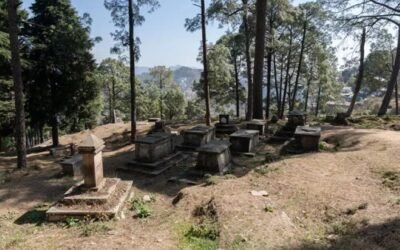
Two colonial-era cemeteries are located in the wider area around Chotta Shimla and Navbahar.
Their presence has sometimes been used to explain the legend.
Some storytellers believe the roadside woman belongs to one of the old graves. Others claim that spirits from the burial grounds move towards the baudi after nightfall.
No historical evidence connects a particular grave with the woman in white.
The cemetery association is likely the result of geography and atmosphere. Old burial grounds, dark trees and an isolated water source provide all the elements needed for a lasting ghost story.
Once the locations became linked in local imagination, every shadow on the road acquired a history.
The Accident Legend
Another version claims that the woman died in a road accident near the baudi.
She had been waiting for transport when a vehicle struck her or refused to stop. Her spirit now asks passing drivers for the lift she never received.
This version gives the haunting a simple emotional cause.
She is not trying to travel somewhere new.
She is repeating the final journey she was unable to complete.
No dependable record identifies the woman, the vehicle or the date of the supposed accident. Different retellings place the incident in entirely different periods.
The lack of evidence suggests that this explanation developed after the haunting story rather than before it.
Roadside ghost legends often create a tragic victim to explain an apparition already believed to exist.
The road provides the figure.
Folklore gives her a death.
The Driver Who Did Stop
One darker version tells of a taxi driver who stopped when the woman raised her hand.
She opened the rear door without speaking and sat behind him.
The driver asked where she wanted to go.
There was no answer.
He repeated the question.
The woman slowly pointed towards the road ahead.
The taxi continued through the mist.
After several minutes, the driver noticed that the back seat had become unusually cold. He looked into the mirror, but the woman’s hair still concealed her face.
Then the driver saw her feet.
They were turned backwards.
He stopped the taxi and ran towards the nearest light.
When he returned with other people, the vehicle was empty.
The rear door was open.
Water covered the back seat, although no rain had entered the car.
This story has no confirmed witness or documented report. Its reversed feet and wet seat belong to familiar chudail folklore rather than established history.
Yet the tale explains why the warning is not simply “Do not ignore her.”
It is also:
Do not let her enter.
When the Woman Runs Beside the Car
The most unsettling part of the Chudail Baudi legend is not the apparition standing beside the road.
It is what happens when the vehicle moves away.
Drivers claim the woman can keep pace with a car without appearing to run normally. She remains beside the window while the trees and road move behind her.
Her body does not rise and fall with each step.
Her hair does not move in the wind.
She simply stays there.
The faster the driver goes, the closer she appears.
Then, without warning, she disappears from the side window.
For a moment, there is relief.
Until something moves in the back seat.
Why Chudail Baudi Feels Haunted
The road’s setting helps explain why its legend remains believable.
Shimla’s fog can reduce visibility within minutes. A person at the roadside may appear suddenly and disappear when the vehicle turns.
Headlights create moving shadows among trees, railings and roadside structures. Reflections in wet glass may resemble a face or figure inside the vehicle.
The road’s gradient and bends can make vehicles feel as though they are losing speed. Drivers may also reduce speed automatically when visibility falls, without immediately recognising how much they have slowed.
Rear-view mirrors add another source of confusion. Clothing, headrests, reflections and objects on the rear seat can briefly resemble a passenger when seen under changing light.
Fatigue increases the effect.
A tired driver travelling alone at night is more likely to misinterpret an unexpected shape or sound.
These explanations account for many possible experiences.
They do not prove what every driver saw.
From Haunted Baudi to Public Space
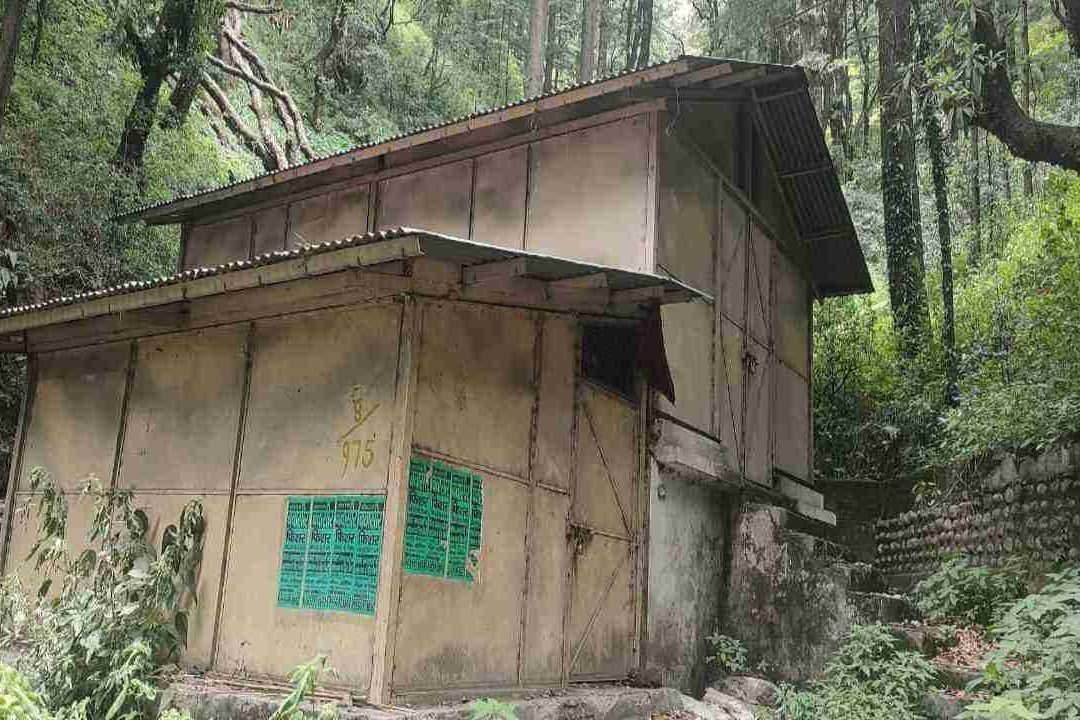
In 2019, redevelopment work was reported at Chudail Bauri, with the old feared location being converted into a children’s park and public space.
The project reflected a deliberate attempt to reclaim the area from fear and neglect.
Its physical appearance may now be very different from older descriptions of an isolated water hole surrounded by darkness.
Urban development, lighting and regular public activity can change how a place feels.
They do not always erase its legend.
A park may occupy the site during the day.
After dark, people still remember the woman who once waited there.
Visiting Chudail Baudi Today
Chudail Baudi is associated with the road linking Chotta Shimla and Navbahar, near the St Bede’s College area.
It should not be treated as an abandoned haunted attraction.
The surrounding locality is inhabited and used by residents, students and regular traffic. Access conditions around the water source or developed site may change.
Visit only during daylight and remain within public areas.
Do not block the road, disturb nearby institutions or enter private and restricted property while searching for the location.
Because the legend is tied to an active traffic route, attempting to recreate the story at night can put both visitors and other road users in danger.
How to Reach Chudail Baudi
By Road
The location is associated with the road between Chotta Shimla and Navbahar, near St Bede’s College.
It can be approached from central Shimla by local taxi, bus or permitted private vehicle, depending on current traffic restrictions.
Shimla’s roads may include one-way systems, congestion and limited parking. Follow current navigation and local traffic directions.
By Bus
Local buses connect central Shimla with Chotta Shimla, Navbahar and nearby areas.
Ask locally for the most convenient stop, as route names and services may change.
By Train
Shimla railway station is the nearest railhead.
It is connected with Kalka by the historic narrow-gauge railway. The remaining journey towards Chotta Shimla or Navbahar is by road.
By Air
Shimla Airport at Jubbarhatti is the nearest airport, although flight operations are limited and weather-dependent.
Chandigarh Airport offers wider connectivity, followed by a road journey to Shimla.
Best Time to Visit
March to June and September to November generally offer comfortable weather for exploring Shimla.
The monsoon creates misty and dramatic conditions but may also bring poor visibility, slippery roads and landslide disruption.
Winter can bring frost, snow and ice.
For anyone interested in the folklore, daylight is the safest time to see the area.
A night visit adds no reliable evidence to the story.
It only increases the real risks of low visibility and traffic.
Road Safety and Responsible Visiting
Chudail Baudi is connected with a functioning public road and inhabited neighbourhood.
Visitors should:
- avoid stopping on bends or narrow sections;
- never stand in the traffic lane for photographs;
- not walk alone along the road at night;
- avoid distracting drivers with staged apparitions;
- never attempt to slow or stop passing vehicles;
- respect nearby residents and institutions;
- remain outside private or restricted property;
- follow police and traffic instructions;
- avoid rituals, séances and staged paranormal investigations;
- never drive while tired merely to test the legend.
The road’s accident risk is more immediate than its ghost story.
No photograph or video is worth endangering another person.
Is Chudail Baudi Really Haunted?
There is no verified evidence proving that a supernatural woman appears at Chudail Baudi or that an unseen force slows passing vehicles.
The legend survives through local storytelling, travel accounts and repeated descriptions of the woman in white.
Natural explanations involving gradient, fog, reflections, fatigue and expectation are possible.
But legends do not survive only because people believe every detail.
They survive because a place makes the story feel possible.
At Chudail Baudi, the old water source, forested road, colonial cemeteries and sudden Shimla mist create exactly that feeling.
Frequently Asked Questions
Where is Chudail Baudi located?
It is associated with the road between Chotta Shimla and Navbahar, near the St Bede’s College area in Shimla.
What does Chudail Baudi mean?
The name is commonly translated as Witch’s Well or Witch’s Water Source.
What is the main haunted story?
The legend describes a woman in a white sari who asks drivers for a lift. Vehicles reportedly slow near her, and some stories claim she later appears inside the car.
Is there proof that vehicles lose speed?
No paranormal cause has been established. Road gradient, bends, traffic, gear selection and driver expectation may explain the sensation.
Can visitors see the baudi?
The area can be approached through public roads, but access immediately around the site may depend on current development and local restrictions.
Was the area converted into a park?
A redevelopment project reported in 2019 aimed to transform the feared bauri location into a children’s park and public space.
Is it safe to visit at night?
An unnecessary night visit is not recommended. Darkness, traffic, fog and limited visibility create genuine safety risks.
Is the woman in white connected with a confirmed death?
No dependable historical record identifies the woman or confirms the accident described in later versions of the legend.
Do Not Look in the Mirror
The road is nearly empty.
Mist moves through the headlights as the vehicle approaches the old baudi.
A woman stands beside the trees.
White sari.
Long black hair.
One hand raised.
You do not stop.
The engine struggles, but the car continues forward. The woman begins walking beside you.
Then she runs.
You keep your eyes on the road.
After the next bend, she disappears.
The vehicle gains speed.
The forest begins to fall behind.
You tell yourself the story was only a story.
Then the rear seat creaks.
A cold breath touches the back of your neck.
And from somewhere behind you, a woman whispers:
“You should have stopped.”