In Parvati Valley, the cold river rushes past stone and prayer flags while, just beside it, the earth releases boiling water for worship, langar, and old stories of Guru Nanak, Shiva, and Parvati.
Some sacred places belong clearly to one tradition. Manikaran does not. It stands in Parvati Valley as one of Himachal’s most unusual shared sacred landscapes — a Sikh gurdwara, Hindu temples, hot springs, river, steam, langar, and mountain settlement gathered into one narrow valley floor. For Sikhs, Manikaran Sahib is remembered through the visit of Guru Nanak Dev Ji and Bhai Mardana, where food for langar was cooked through a miracle of hot water. For Hindus, the place carries the story of Lord Shiva, Goddess Parvati, and the lost mani from which Manikaran takes its name. For every visitor, whether pilgrim or traveller, the first thing that stays in memory is the same: cold Himalayan air, the sound of the Parvati River, and steam rising from water that seems to come straight from the hidden fire of the mountain.
🌄 Location & How to Reach It
Manikaran Sahib is located in Parvati Valley of Kullu district, Himachal Pradesh, on the bank of the Parvati River. The official Kullu district page places Manikaran at an altitude of about 1,829 metres and around 40 km from Kullu. It lies beyond Bhuntar and close to Kasol, making it one of the most visited sacred stops in the Kullu-Manali region.
Google Maps: Get Directions
Elevation: about 1,829 metres, according to the official Kullu district page.
- By road: The usual route is Bhuntar – Kasol – Manikaran, or Kullu – Bhuntar – Kasol – Manikaran. Buses and taxis are available from Kullu, Bhuntar, and Kasol, but the road is narrow in parts and can become crowded during tourist season.
- By rail: There is no direct railway line to Manikaran. The nearest practical broad-gauge railheads are Chandigarh, Kiratpur Sahib, and Pathankot, followed by road travel towards Kullu, Bhuntar, and Parvati Valley.
- By air: The nearest airport is Bhuntar Airport / Kullu-Manali Airport, near Kullu, followed by road travel through Bhuntar and Kasol towards Manikaran.
This is a road-accessible pilgrimage, but not a place to rush. The Bhuntar–Manikaran road follows a sensitive river valley, so travellers should check current road conditions during monsoon, winter, and after heavy rain.
🌸 Best Time to Visit
Manikaran Sahib can be visited through most of the year, but the most comfortable months are March to June and September to November. These seasons give a better balance of road access, valley weather, and manageable travel conditions.
Winter has its own appeal because the hot springs feel more dramatic in cold air. Steam rises more visibly, and the contrast between the warm water and the cold valley becomes stronger. However, winter travel should be planned with road condition in mind, especially during snowfall or icy weather in higher parts of the region.
Monsoon needs more caution. Parvati Valley is beautiful in rain, but landslides, flash floods, falling stones, temporary road closures, and river danger are real issues. The Parvati River should never be treated casually for photos or riverside recreation.
There is no need to plan only around one festival. Manikaran Sahib is a living gurdwara and pilgrimage site through the year. For a calmer visit, arrive early in the morning or choose a weekday outside peak holiday periods.
ੴ The Guru, Bhai Mardana, and the First Langar of the Hot Spring
The Sikh memory of Manikaran Sahib centres on Guru Nanak Dev Ji and his companion Bhai Mardana. According to the tradition, Guru Nanak came to this valley during his travels. Bhai Mardana felt hungry, and food was collected for preparing langar. There was flour, but no fire.
Guru Nanak asked Bhai Mardana to lift a stone. When the stone was lifted, hot water appeared. The chapatis placed in the water first sank, and then, after prayer, rose back cooked. The message of the story is simple but deep: what is offered in the name of God returns blessed. The hot spring became part of the langar memory, and even today, Manikaran is famous for food being cooked through the natural heat of the springs.
This is what gives the gurdwara its special atmosphere. Langar is already one of Sikhism’s most powerful practices — food served without discrimination, with humility and seva. At Manikaran, the earth itself seems to participate in that service. Water becomes fire. Heat becomes hospitality. A natural spring becomes part of devotion.
🕉️ Shiva, Parvati, and the Lost Mani
The Hindu story of Manikaran begins with Lord Shiva and Goddess Parvati. Local tradition says the divine couple spent time in this valley, drawn by its beauty and seclusion. While they were here, Parvati lost her mani, a jewel from her ear ornament, in the waters.
The jewel disappeared into the earth, and Shiva became angry when it could not be found. In many tellings, Sheshnag is connected with the jewel’s return. The force of the serpent’s action brought hot water bursting from the ground, and with it the memory of the lost jewel. This is why the name Manikaran is often explained through mani and the place where the jewel was recovered.
Like many sacred stories in Himachal, this legend should not be read as geology. It is a way of giving spiritual meaning to a natural wonder. A valley where boiling water rises beside a cold river demands explanation. The legend says: this heat is not ordinary. It belongs to Shiva, Parvati, Sheshnag, and the lost jewel of the goddess.
♨️ The Hot Springs That Make the Place Unforgettable
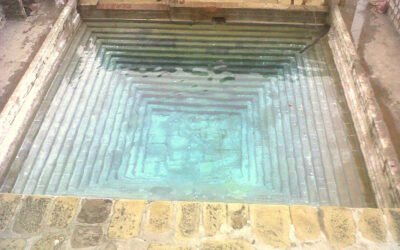
The hot springs are the heart of Manikaran’s public experience. The official Kullu district page calls Manikaran famous for its hot springs and notes that one important spring lies on the river bank at the entrance to the village, where it rises and falls with the increase and decline of river water.
This detail is important because it shows that the springs are not separate from the river landscape. Manikaran is not only a hot-water tank in a temple courtyard. It is a meeting of geothermal heat and Himalayan river energy. The Parvati River rushes cold and fast beside the settlement, while nearby, hot water rises from the earth with enough force to cook food and fill bathing areas.
Visitors often notice packets of rice being cooked in the spring water. The sight is simple but memorable: cloth bundles, steam, boiling water, and people waiting for food cooked without a stove. In another place this might feel like a curiosity. At Manikaran, it belongs naturally to the sacred rhythm.
The hot springs are also connected with bathing, healing belief, and ritual purity, but care is needed. The water can be extremely hot in certain points. Visitors should follow local instructions, avoid unsafe spots, and never step casually into any spring or channel without checking.
🙏 What Manikaran Sahib Is Known For
Manikaran Sahib is known for Gurdwara Sri Guru Nanak Dev Ji, the natural hot springs, the Parvati River, and the shared Sikh-Hindu sacred landscape around the village.
For Sikh devotees, the gurdwara is connected with Guru Nanak Dev Ji’s visit and the langar miracle. The continuing practice of langar gives the place a strong feeling of seva. People come not only to bow before the Guru Granth Sahib, but to sit, eat, serve, and remember the humility at the centre of Sikh worship.
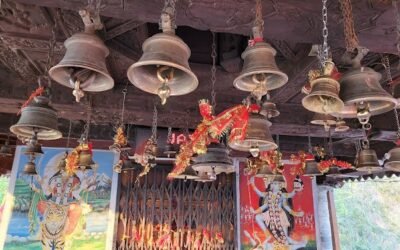
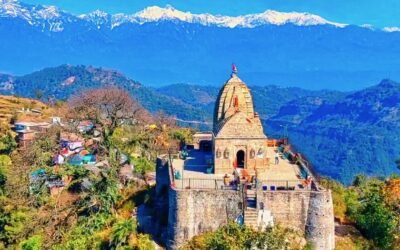
For Hindu devotees, Manikaran is associated with Lord Shiva, Goddess Parvati, the lost mani, and nearby temples such as the Lord Ramchandra Temple and Shiva Temple. The area is also part of the wider Parvati Valley sacred geography, where river, mountain, and myth carry deep religious memory.
For travellers, Manikaran is often visited along with Kasol, Tosh, Kheerganga, and other Parvati Valley places. But it should not be reduced to a tourist stop. Manikaran is first a sacred place. The steam, crowds, river, bridge, gurdwara, temples, and langar all ask for respect.
🏛️ A Sacred Town Built Around River and Steam
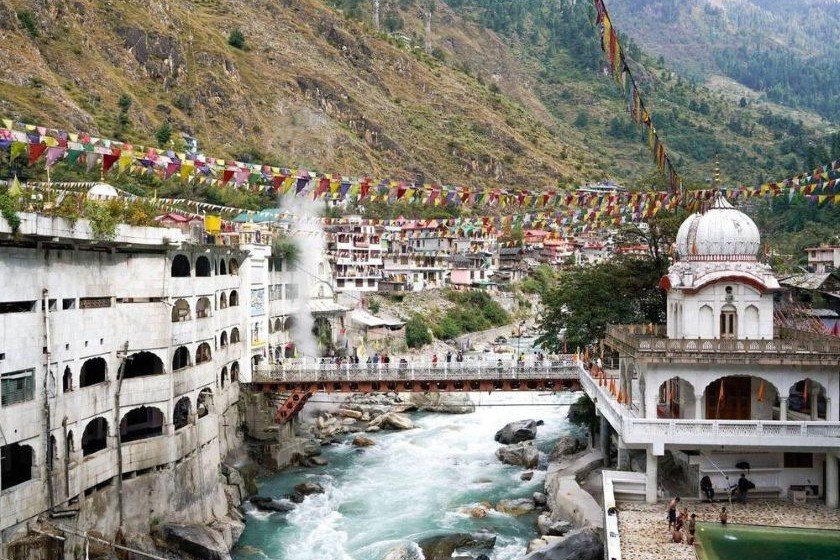
Manikaran is not a quiet isolated shrine. It is a dense sacred town pressed between mountain slopes and the Parvati River. Buildings rise close to the riverbank. Prayer flags stretch across spaces. Steam drifts from hot spring areas. People cross bridges, enter the gurdwara, visit temples, sit for langar, or move through the narrow lanes towards shops and guesthouses.
This closeness gives Manikaran its force, but also its intensity. The place can feel crowded, especially in peak season. The river is loud. The valley is narrow. The heat of the springs and the coolness of the river sit side by side. A visitor feels the contrast almost physically.
The gurdwara’s white structure stands as the most visible sacred building for many visitors, but Manikaran’s architecture is really a whole cluster: gurdwara, temples, bathing areas, langar space, bridges, riverbank structures, and the hot-water zones that make the town unique. The place is less about one perfect view and more about movement — entering, bowing, crossing, steaming, eating, bathing, listening.
📜 A Shared Sacred Landscape, Not a Blended Slogan
Manikaran is often described as a place of harmony, and that is true in a visible sense. Sikh and Hindu sacred traditions stand close together here. But the place deserves more careful wording than a simple slogan.
For Sikhs, Manikaran is connected with Guru Nanak Dev Ji, Bhai Mardana, and the miracle of langar cooked through the hot spring. For Hindus, it is connected with Shiva, Parvati, Sheshnag, and the lost jewel. These traditions do not need to be mixed into one flat story. Each has its own dignity.
The beauty of Manikaran is that both are present. A visitor may hear kirtan from the gurdwara, see devotees moving towards Hindu temples, watch langar being served, and notice steam rising from the same earth that both traditions understand through their own sacred language. The place does not erase difference. It allows different memories to gather around the same water.
That is why Manikaran is one of Himachal’s most important multi-faith sacred sites. It shows how a natural phenomenon — hot water rising beside a mountain river — can become sacred through more than one tradition without losing its depth.
🎉 Festivals and Devotion
- Gurpurab / Guru Nanak Jayanti: An important Sikh occasion, especially meaningful because Manikaran Sahib is associated with Guru Nanak Dev Ji’s visit and the langar tradition.
- Daily Langar: Langar is central to the gurdwara experience. Visitors should sit respectfully, cover the head, and accept food with humility.
- Hot Spring Cooking: Rice and other food items may be cooked using the natural hot spring water, continuing the site’s strong association with sacred heat and food.
- Hindu Worship: Devotees also visit nearby temples connected with Lord Shiva, Lord Ram, and other deities of the Manikaran sacred area.
- River Safety: The Parvati River is powerful and should be respected. Avoid going close to unsafe river edges for photos, especially during high flow, rain, winter ice, or official restrictions.
🏞️ While You’re in the Area
- Kasol: A nearby village about a short drive from Manikaran, known for Parvati Valley stays, cafes, river views, and access to nearby treks.
- Lord Ramchandra Temple, Manikaran: One of the important Hindu temples in the Manikaran sacred cluster, often visited along with the gurdwara.
- Shiva Temple, Manikaran: A temple connected with the Shiva-Parvati legend and the wider sacred identity of Manikaran.
- Tosh: A higher Parvati Valley village beyond Barshaini, useful for travellers continuing deeper into the valley.
- Kheerganga: A famous trek and hot-spring destination in the upper Parvati Valley, best planned separately with current trail and weather information.
- Malana Route: A culturally sensitive route in the wider Parvati region; visitors should be respectful of local rules and not treat village customs as entertainment.
- Bhuntar: The main road and airport access point for Parvati Valley, useful for transport connections before or after Manikaran.
🙏 Getting in Touch
Manikaran Sahib is a major pilgrimage site with gurdwara facilities and langar, but visitors should check current travel conditions before heading into Parvati Valley, especially during monsoon, heavy tourist season, winter, or after reports of road damage.
For ordinary darshan, no booking is required. Cover your head before entering the gurdwara, remove shoes where required, dress respectfully, and follow instructions around langar, bathing areas, and hot springs.
For accommodation, travellers usually stay at Manikaran, Kasol, or nearby Parvati Valley villages depending on their route. During peak holidays, Gurpurab periods, and long weekends, accommodation and parking can become difficult, so planning ahead is practical.
❓ Quick Questions Travellers Ask
Where is Manikaran Sahib located?
Manikaran Sahib is in Parvati Valley, Kullu district, Himachal Pradesh, on the bank of the Parvati River.
How far is Manikaran from Kullu?
The official Kullu district page places Manikaran about 40 km from Kullu.
Why is Manikaran Sahib famous?
It is famous for Gurdwara Sri Guru Nanak Dev Ji, natural hot springs, langar cooked with spring heat, Hindu temples, and its sacred location beside the Parvati River.
What is the Sikh story of Manikaran Sahib?
Sikh tradition says Guru Nanak Dev Ji and Bhai Mardana came here, and hot water appeared so food could be cooked for langar.
What is the Hindu story of Manikaran?
Hindu tradition connects the place with Lord Shiva and Goddess Parvati. Parvati’s lost mani or jewel is said to have led to the emergence of the hot springs.
A Last Word
Manikaran Sahib is not powerful because it fits neatly into one category. It is powerful because it refuses to be only one thing. It is a gurdwara, a hot spring, a Hindu sacred place, a river town, a langar memory, a Shiva-Parvati legend, and a valley where steam rises in the middle of cold mountain air.
The place is busy, sometimes crowded, and not always quiet. But its heart is simple. Food is served. Water boils. The river moves. People bow. The same earth that carries the Parvati River also gives heat enough to cook a meal for strangers.
At Manikaran, faith is not only seen in prayer. It is tasted in langar, felt in steam, heard in the river, and remembered in the stories that different communities have carried here for generations.
Fact-check note: Manikaran Sahib’s location in Parvati Valley, Kullu district, its position on the Parvati River, its altitude of about 1,829 metres, and its distance of about 40 km from Kullu are supported by the official Kullu district tourism page. The Sikh tradition of Guru Nanak Dev Ji, Bhai Mardana, and the hot spring used for langar is preserved in Sikh accounts and is treated here as sacred tradition. The Hindu legend of Lord Shiva, Goddess Parvati, the lost mani, and Sheshnag is also treated as sacred tradition rather than geology. The hot springs are a real geothermal feature, but water temperature, bathing access, road status, and safety restrictions can vary, so visitors should follow current local instructions before using spring areas or approaching the river.