
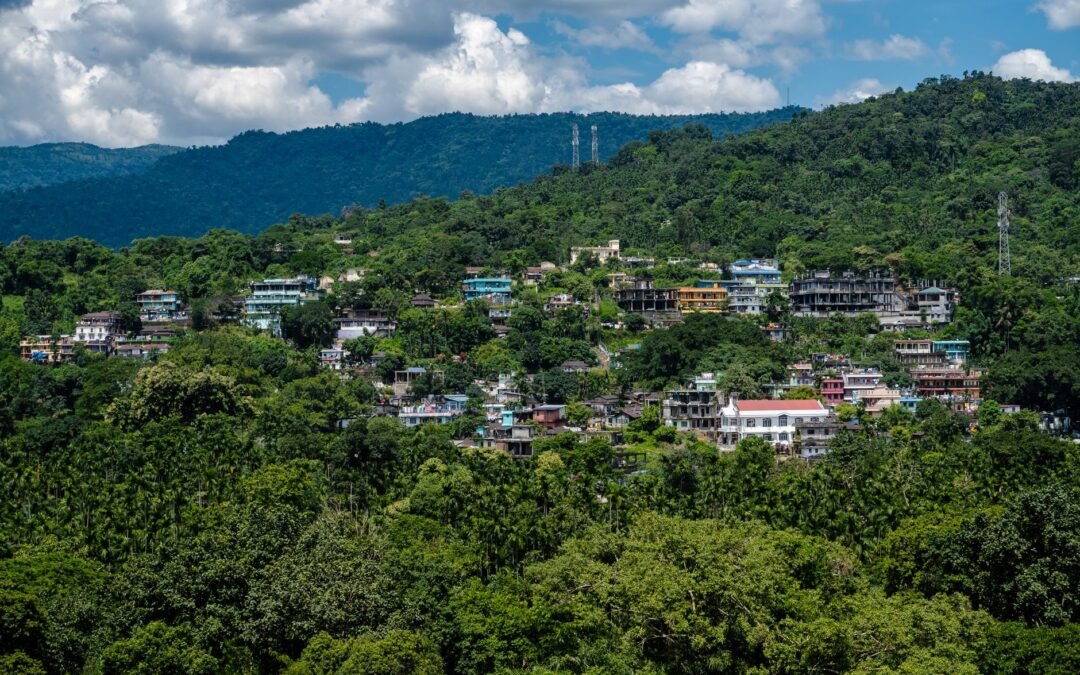
- Mawlynnong is recognized as Asia’s cleanest village with strict community cleanliness practices
- Living root bridge and Sky View platform are the main attractions accessible within the village
- October to March offers the best weather for visiting Mawlynnong village
- Homestays are the primary accommodation option offering authentic Khasi cultural experiences
- Dawki River and Bangladesh border viewpoint are easily accessible from Mawlynnong
Introduction
Nestled in the lush green hills of Meghalaya’s East Khasi Hills district, Mawlynnong is a revelation that challenges every preconception you might have about rural Indian villages. Located approximately 90 kilometers from Shillong, this small Khasi village has earned international acclaim as “Asia’s Cleanest Village” and “God’s Own Garden,” titles that barely scratch the surface of what makes this destination extraordinary. When you wander through its spotless paths lined with flowering plants, bamboo dustbins at every turn, and homes that seem to emerge organically from the verdant landscape, you realize that Mawlynnong represents something far more profound than just cleanliness—it’s a living testament to community-driven sustainable tourism and environmental stewardship.
What sets Mawlynnong apart from countless other picturesque villages in Northeast India is not merely its manicured appearance or its proximity to Bangladesh border viewpoints. It’s the palpable sense of pride that radiates from every corner of this 95-household village, where residents have collectively transformed their home into a model of eco-tourism without sacrificing their cultural identity or traditional way of life. The village’s matrilineal Khasi heritage remains intact, with women playing central roles in decision-making and property ownership, adding yet another layer of fascination for visitors seeking authentic cultural experiences.
For travelers weary of overcrowded hill stations and commercialized tourist traps, Mawlynnong offers a refreshing alternative—a place where tourism has enhanced rather than eroded local traditions, where every visitor becomes a student of sustainable living, and where the journey itself through Meghalaya’s dramatic landscapes becomes as memorable as the destination. Whether you’re an Indian traveler seeking offbeat weekend escapes or an international tourist exploring the hidden gems of Northeast India, Mawlynnong promises an experience that will recalibrate your understanding of what responsible tourism can achieve.
Quick Facts About Mawlynnong
| Attribute | Details |
|---|---|
| Altitude | 1,400 meters (4,593 feet) above sea level |
| Best Time to Visit | October to May (Peak: November to February) |
| Distance from Nearest City | 90 km from Shillong, 78 km from Dawki |
| Nearest Airport | Shillong Airport (Umroi) – 100 km; Guwahati (Lokpriya Gopinath Bordoloi International Airport) – 140 km |
| Permits Required | Inner Line Permit (ILP) for domestic travelers – ₹100; Protected Area Permit (PAP) for foreign nationals – ₹1,500 |
| Temperature Range | Summer: 15°C – 25°C; Winter: 4°C – 16°C; Monsoon: 12°C – 20°C |
| Approx Budget per Day (INR) | Budget: ₹1,000 – ₹1,500; Mid-range: ₹2,000 – ₹3,500; Luxury: ₹4,000 – ₹6,000 |
Why Visit Mawlynnong
The “Asia’s Cleanest Village” tag, awarded by Discover India magazine in 2003 and reinforced by numerous subsequent accolades, is Mawlynnong’s calling card, but it’s the village’s holistic approach to community living that truly deserves your attention. Unlike many destinations where cleanliness is enforced through hefty fines or authoritarian measures, Mawlynnong’s pristine condition stems from a deeply ingrained cultural ethos that dates back decades. Every household takes responsibility for their surroundings, with bamboo dustbins—handcrafted by villagers—strategically placed throughout the settlement. The absence of plastic, the swept stone paths, and the flowering gardens aren’t maintained for tourist approval but represent the community’s genuine commitment to their environment.
Beyond cleanliness, Mawlynnong serves as a living laboratory for sustainable tourism practices. The village has achieved this delicate balance where tourism revenue supports the community without overwhelming it. With only about 500 residents, the village has wisely limited commercial development, choosing instead to offer homestays, local guides, and authentic experiences over cookie-cutter hotels and restaurants. The village council’s strict regulations prohibit smoking, littering, and plastic use, and remarkably, these rules are self-enforced by residents and visitors alike. This social experiment in community-based tourism has succeeded so spectacularly that it’s now studied by sustainable development experts worldwide.
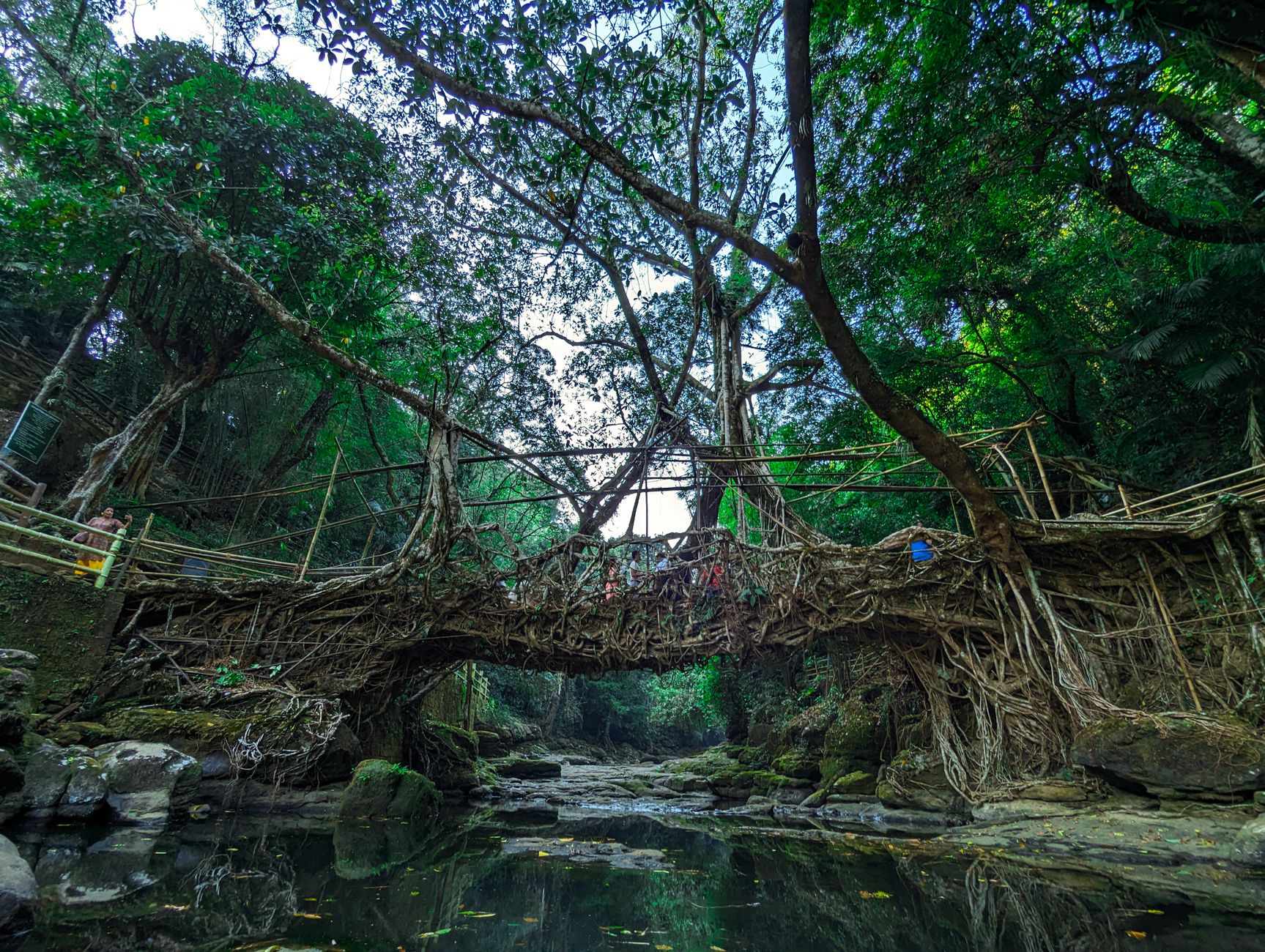
The village’s unique vantage point near the Bangladesh border offers spectacular views from the 85-foot-high Sky View platform, constructed entirely from bamboo. From this vertiginous perch, you can gaze across the verdant plains of Bangladesh stretching endlessly toward the horizon, while clouds drift between you and the landscape below. The nearby living root bridges, though smaller than the famous double-decker bridge in Nongriat, demonstrate the Khasi people’s ingenious bio-engineering techniques passed down through generations. These bridges, grown from the aerial roots of rubber fig trees, can take 15-20 years to become fully functional and last for centuries—a powerful metaphor for the patience and foresight that characterizes Khasi culture.

How to Reach Mawlynnong
By Air: The nearest major airport is Lokpriya Gopinath Bordoloi International Airport in Guwahati, Assam, located approximately 140 kilometers from Mawlynnong. This well-connected airport receives flights from Delhi, Mumbai, Kolkata, Bangalore, and other major Indian cities, with fares ranging from ₹3,500 to ₹12,000 depending on the season and booking time. From Guwahati airport, you can hire a private taxi directly to Mawlynnong (₹4,500 – ₹6,000, approximately 4-5 hours) or take a taxi to Shillong first (₹2,000 – ₹2,500, 3 hours) and then proceed to Mawlynnong. The smaller Shillong Airport at Umroi (100 km from Mawlynnong) has limited connectivity with only occasional flights from Kolkata, making Guwahati the more practical choice for most travelers.
By Road from Shillong: The most common route involves reaching Shillong first, either by flight or by road from Guwahati. From Shillong’s Bara Bazaar or Police Bazaar, shared Sumos (shared taxis) to Dawki pass through the junction near Mawlynnong, charging approximately ₹200-250 per person. However, these vehicles won’t take you directly into the village—you’ll need to hire a local taxi from the junction (₹300-400) for the final 8-kilometer stretch. Alternatively, hiring a private vehicle from Shillong costs ₹2,500-3,500 for a round trip with waiting time, giving you the flexibility to stop at attractions like Mawlynnong’s neighboring villages and the Dawki River along the way. The journey takes approximately 2.5-3 hours via the Shillong-Dawki Road (NH106), passing through stunning landscapes of pine forests, rolling hills, and Khasi villages.
By Road from Guwahati: Direct road travel from Guwahati to Mawlynnong covers roughly 140 kilometers and takes 4.5-5 hours. Government buses operate from Guwahati’s ISBT Paltan Bazaar to Shillong (₹150-300, depending on bus type), but you’ll still need to arrange onward transport to Mawlynnong. Private taxi services from Guwahati directly to Mawlynnong cost ₹5,000-7,000 for a round trip with sightseeing. Many travelers prefer booking multi-day packages from Guwahati that include Mawlynnong, Dawki, Cherrapunji, and other Meghalaya highlights, with rates starting at ₹8,000-12,000 per person for 3-4 day itineraries including accommodation and transport.
Self-Drive Option: For adventurous travelers comfortable with mountain driving, renting a self-drive vehicle in Guwahati or Shillong offers maximum flexibility. Car rental agencies charge ₹2,000-3,500 per day for compact SUVs, plus fuel costs. The roads to Mawlynnong are generally well-maintained, though the final approach involves some narrow sections. Ensure your vehicle has adequate ground clearance, especially during monsoon season when roads can deteriorate. Mobile network connectivity is spotty along the route, so download offline maps beforehand.
Best Time to Visit Mawlynnong
October to November (Post-Monsoon): This period represents arguably the finest time to visit Mawlynnong. The monsoon rains have ceased, leaving the landscape impossibly green and the numerous waterfalls in the region flowing at impressive volumes. Temperatures range from 15°C to 22°C, perfect for walking and exploration. The skies are generally clear, offering unobstructed views from the Sky View platform across to Bangladesh. Tourist crowds remain moderate, and homestays are readily available without advance booking. The Khasi community celebrates several harvest festivals during this period, offering cultural insights. Expect to pay standard accommodation rates, and the weather is ideal for trekking to nearby living root bridges.
December to February (Winter Peak Season): Winter brings crisp, cool weather with temperatures dropping to 4°C-6°C at night and hovering around 14°C-16°C during the day. This is peak tourist season, particularly around Christmas and New Year when both domestic and international visitors flock to Meghalaya. The village can feel crowded by its usual standards, and advance booking for homestays becomes essential. The advantage of winter travel is the crystal-clear visibility—perfect for photography enthusiasts. Morning mists create ethereal atmospheres, though they can obscure views from the Sky View platform until mid-morning. Pack warm clothing, as traditional Khasi homes don’t typically have heating systems. Prices for transport and accommodation can increase by 20-30% during this season.
March to May (Summer/Pre-Monsoon): Pre-monsoon summer offers warm, pleasant days with temperatures ranging from 18°C to 25°C. This period sees fewer tourists compared to winter, making it excellent for travelers seeking tranquility. The landscape begins showing the first signs of the approaching monsoon, with occasional afternoon showers that cool the air but don’t significantly disrupt travel plans. Wildflowers bloom prolifically, adding splashes of color to the already verdant surroundings. Accommodation is easily available, and prices drop to off-season rates. However, by late May, humidity increases noticeably, and afternoon thunderstorms become more frequent. This is an excellent time for budget travelers and those wanting to experience the village at its most peaceful.
June to September (Monsoon – Not Recommended): Meghalaya is one of the wettest places on Earth, and Mawlynnong receives substantial monsoon rainfall. While the landscape becomes extraordinarily lush, heavy rains make roads treacherous and sometimes impassable. Landslides can block the route from Shillong, and the Sky View platform may be closed during severe weather. The humidity hovers around 90%, and continuous rain can dampen the travel experience. Many homestays reduce operations during peak monsoon months. However, hardcore nature enthusiasts might appreciate this season for its dramatic waterfalls, swollen rivers, and the raw power of nature on full display. If you do visit during monsoon, expect travel delays, limited visibility, and the need for constant rain protection. Rates drop significantly, but the trade-offs are substantial.
Top Things to Do in Mawlynnong
Scale the Sky View Platform for Panoramic Bangladesh Views
The 85-foot bamboo Sky View platform, locally called “Rangbah Thymmai,” stands as Mawlynnong’s iconic attraction. This entirely bamboo-constructed tower, built and maintained by villagers, requires you to climb a somewhat precarious bamboo ladder—an adventure in itself that tests nerve as much as fitness. Once at the top, you’re rewarded with sweeping 360-degree views encompassing the village below, the surrounding Khasi hills, and the flatlands of Bangladesh stretching to the horizon. The entry fee is a modest ₹20, and early morning visits (6:30-8:00 AM) offer the best visibility before afternoon clouds roll in. Photography enthusiasts should note that the platform sways slightly in strong winds, so stabilizing your camera equipment is essential.
Trek to the Living Root Bridge at Riwai Village
Just one kilometer from Mawlynnong, the neighboring village of Riwai hosts a beautiful single-decker living root bridge approximately 50 feet long. Unlike the more famous bridges in Nongriat that require grueling descents, this bridge involves a relatively easy 20-minute walk through areca nut plantations and betel leaf farms. The bridge, estimated to be over 200 years old, spans a crystal-clear stream where you can rest, wade in the cool water, and marvel at the Khasi ancestors’ botanical engineering genius. Local guides (₹100-200) can explain the root-bridge cultivation process, which involves patiently guiding rubber fig tree roots across bamboo scaffolding until they’re strong enough to support human weight. The site sees fewer visitors than Mawlynnong’s main attractions, offering peaceful communion with nature.
Witness Traditional Khasi Village Life and Customs
Mawlynnong provides an authentic window into Khasi matrilineal culture, where lineage and inheritance pass through women. Simply walking through the village and observing daily life reveals fascinating customs: women manage family property, children take their mother’s surname, and the youngest daughter traditionally inherits the family home. Strike up conversations with residents who are generally welcoming and happy to explain their culture, traditions, and the village’s cleanliness initiatives. Visit the village church, which serves as the community’s spiritual and social center, reflecting the Khasi people’s unique blend of indigenous traditions with Christianity. Many families are involved in bamboo craft-making—you might witness artisans weaving the distinctive bamboo dustbins, baskets, and furniture that characterize the village aesthetic.
Explore the Sacred Forest and Balancing Rock
Within the village boundaries lies a small sacred grove protected by the community for generations. These sacred forests, called “Law Kyntang” in Khasi, represent the traditional conservation practices that have preserved Meghalaya’s biodiversity despite intensive agriculture. The grove contains massive old-growth trees, medicinal plants, and a remarkable balancing rock—a large boulder precariously perched on a smaller rock formation that has fascinated visitors and geologists alike. According to local legend, the rock has maintained its balance through earthquakes and storms for centuries. The sacred grove entry is free, though hiring a local guide (₹150-300) enriches the experience with botanical knowledge and folklore about the spirits believed to protect these forests.
Experience Village Homestays and Community Interaction
Unlike passive sightseeing, staying in a Mawlynnong homestay transforms you from observer to participant in village life. Homestay hosts typically include guests in daily activities—help with garden maintenance, learn traditional Khasi cooking techniques, participate in betel nut harvesting, or join evening gatherings where elders share stories of the village’s transformation into a tourist destination. Most homestays arrange traditional Khasi meals prepared with organic vegetables from family gardens, offering culinary experiences impossible to replicate in restaurants. Evening hours provide opportunities to learn about the village council’s governance structure, women’s central role in decision-making, and the challenges of balancing tourism development with cultural preservation. These interactions provide insights into Northeastern Indian tribal culture that few destinations can match.
Day Trip to Dawki and the Umngot River
Located just 17 kilometers from Mawlynnong, the town of Dawki and its crystal-clear Umngot River make an essential addition to your itinerary. The river’s extraordinary transparency—where boats appear to float in mid-air due to the visible riverbed below—creates photographic opportunities that have made it Instagram-famous. Boating costs ₹200-400 per person for 20-30 minute rides, though prices can spike during peak season. The river forms part of the India-Bangladesh border, and the Dawki Bridge offers views across both countries. Visit during morning hours when the sun illuminates the water’s clarity most spectacularly. Combined tours from Mawlynnong to Dawki and back, including the living root bridge at Riwai, can be arranged through village guides for ₹800-1,200 depending on group size.
Where to Stay in Mawlynnong
Budget Options (₹500-1,000 per night): Mawlynnong’s accommodation scene consists primarily of homestays, with budget options offering basic but clean rooms with attached or shared bathrooms. Popular choices include Macaw Homestay (₹600-800 per night), which provides simple rooms with traditional Khasi meals included, and Rymoi Homestay (₹500-700), run by a warm family who prepare authentic local cuisine and assist with arranging village tours. Mebanpyniaid Homestay (₹700-900) offers slightly more comfort with better mattresses and western toilets. These establishments don’t offer luxury amenities—expect modest rooms, shared spaces, and basic bathrooms—but they provide genuine cultural immersion. Most budget homestays include breakfast and dinner, and hosts often arrange packed lunches for treks to nearby attractions. Hot water is typically available in buckets rather than showers, and electricity can be intermittent during monsoons.
Mid-Range Options (₹1,200-2,500 per night): Mid-range accommodations in and around Mawlynnong offer better amenities while maintaining the homestay character that defines the village experience. Epang’s Homestay (₹1,500-1,800) provides well-appointed rooms with comfortable bedding, attached bathrooms with running hot water, and balconies overlooking the village and surrounding hills. Sophina’s Homestay (₹1,200-1,600) has earned reputation for exceptional Khasi home-cooked meals and knowledgeable hosts who provide detailed village tours. Mawlynnong Waterfall Homestay (₹1,800-2,200), located near a small seasonal waterfall at the village edge, offers rooms with modern amenities including consistent WiFi (rare in the village) and solar-powered hot water. These establishments typically accommodate 6-8 guests maximum, ensuring personalized attention. All meals are usually included, featuring organic vegetables from family gardens and occasionally fresh fish from nearby streams.
Premium/Comfort Options (₹2,500-4,500 per night): While Mawlynnong doesn’t have luxury resorts—and that’s part of its charm—some newer homestays and nearby eco-resorts offer enhanced comfort for travelers unwilling to compromise on amenities. Dawki Retreat (₹3,000-4,000), located between Mawlynnong and Dawki, provides well-designed cottages with modern bathrooms, quality bedding, and riverside locations. JJ Homestay (₹2,500-3,200), one of Mawlynnong’s most established accommodations, offers larger rooms with attached balconies, western-style bathrooms, and organized cultural programs including traditional Khasi music performances. Riwai Village Homestay (₹2,800-3,500) in the neighboring village combines comfort with proximity to the living root bridge. These properties maintain eco-friendly practices—solar power, rainwater harvesting, organic waste composting—while providing the comfort level international travelers expect. Advance booking is essential, particularly during peak season when these limited rooms fill quickly.
Local Food & Cuisine
Mawlynnong’s culinary landscape reflects authentic Khasi tribal cuisine, characterized by minimal spices, fresh organic ingredients, and unique preparation methods that highlight natural flavors rather than masking them with heavy seasoning. The village’s isolation from mainstream commercial food culture has preserved traditional recipes passed down through generations, making dining here a genuine cultural experience rather than a gastronomic performance for tourists.
Jadoh: This quintessential Khasi dish represents rice cooked with pork (or chicken), turmeric, black sesame seeds, and sometimes blood, creating a flavorful one-pot meal that’s both hearty and aromatic. Unlike biryani or pulao, Jadoh is less about spice complexity and more about highlighting the meat’s natural flavors complemented by the nutty sesame taste. Most homestays prepare Jadoh as part of their traditional meal offerings, typically served with side dishes of fermented soybeans and green salads. The pork version, cooked with locally raised pigs, offers the most authentic experience of this tribal staple that has sustained Khasi communities for centuries.
Dohneiiong: This unique pork preparation features pork cooked with black sesame paste and minimal spices, resulting in a rich, dark curry that exemplifies Khasi culinary philosophy. The black sesame not only provides distinctive flavor but also serves nutritional purposes in the tribal diet. The dish requires slow cooking to achieve the proper consistency and flavor balance, making it a labor-intensive preparation that homestay families typically reserve for special occasions or guests. Dohneiiong is invariably served with red rice (brown unpolished rice), whose nutty flavor and chewy texture complement the sesame-rich curry perfectly.
Tungrymbai: Fermented soybean curry represents Khasi cuisine’s vegetarian face, though it’s often prepared with dried fish or pork. The fermented soybeans provide umami depth that makes the dish surprisingly complex despite using few ingredients—typically just soybeans, onions, ginger, and minimal spices. Tungrymbai is particularly common during monsoon when meat availability decreases and preserved proteins like dried fish and fermented soybeans become dietary staples. The dish’s pungent aroma might surprise first-time tasters, but its savory depth rewards adventurous palates.
Nakham Bitchi: This dried fish chutney, made by grinding dried fish with chilies, onions, and minimal spices, serves as a condiment that accompanies most Khasi meals. The preparation method—sun-drying fish and then processing into paste—represents traditional preservation techniques developed long before refrigeration. The intense umami flavor adds depth to simple rice-and-vegetable meals, and small amounts go a long way. Homestay families typically have their own recipes passed through generations, with variations in chili heat and fish types creating distinct family signatures.
Where to Eat: Mawlynnong doesn’t have standalone restaurants in the conventional sense. Instead, dining happens primarily in homestays where meals are included in accommodation packages. However, several families run small eateries in their homes serving day visitors. Sohkha’s Kitchen near the village entrance serves simple Khasi thalis (₹150-200) featuring Jadoh, vegetables, and rice with warm hospitality. Rilang Eat & Stay offers meals to non-guests (₹180-250) with advance notice, preparing generous portions of traditional dishes. The small shops near the Sky View platform sell basic snacks, tea (₹10-20), and Kwai (betel nut preparations, ₹10-30), the traditional mild stimulant popular throughout Northeast India. For those with dietary restrictions, communicate with your homestay hosts in advance—they’re remarkably accommodating and can prepare vegetarian versions of traditional dishes, though pure vegan food can be challenging as dairy and eggs feature prominently in Khasi cooking. Food costs are remarkably affordable, with full traditional meals rarely exceeding ₹200-300 per person.

Practical Travel Tips for Mawlynnong
Permits and Documentation: Indian citizens from outside Meghalaya require an Inner Line Permit (ILP) to visit certain areas in Meghalaya, though as of 2024, Mawlynnong itself doesn’t fall under restricted areas requiring ILP for domestic tourists. However, regulations change, so verify current requirements before traveling. Foreign nationals require Protected Area Permits (PAP) costing ₹1,500, obtainable from the Foreigners’ Regional Registration Office (FRRO) in Shillong or online through Meghalaya’s official tourism portal. Carry multiple photocopies of your ID proof (Aadhar card for Indians, passport for foreigners) as checkpoints along the route sometimes require documentation. If planning to visit Dawki or areas near the Bangladesh border, additional verification may be required at border security checkpoints.
Mobile Network and Connectivity: Mobile network coverage in Mawlynnong is limited and unreliable. Airtel and BSNL provide the most consistent coverage, though signal strength fluctuates and data speeds rarely exceed 2G/3G. Jio and Vodafone have minimal to no coverage in the village itself, though they work along the highway and in Shillong. Plan accordingly—download offline maps, pre-book accommodations, and inform family/friends about limited connectivity periods. Some newer homestays advertise WiFi, but speeds are generally too slow for video calls or streaming; basic messaging and email work intermittently. This digital detox, while initially frustrating, becomes part of the village’s charm, encouraging genuine interactions with hosts and fellow travelers rather than screen time.
ATM and Money Matters: Mawlynnong has no ATMs or banking facilities. The nearest ATM is in Pynursla, approximately 17 kilometers away, but these machines frequently run out of cash, particularly during weekends and holidays. Carry sufficient cash from Shillong or Guwahati to cover your entire stay, including accommodation, meals, guide fees, and emergency funds. Homestays and local shops don’t accept cards or digital payments—everything is cash-only. Budget approximately ₹2,000-3,000 per day per person for comfortable travel including accommodation, meals, guide fees, and incidentals. Keep small denominations (₹10, ₹20, ₹50 notes) for small purchases and tips, as shopkeepers often lack change for large notes.
Medical Facilities and Health: Mawlynnong has a small primary health center with basic first-aid capabilities but no facilities for serious medical emergencies. The nearest hospitals are in Shillong, 90 kilometers away—a 2.5-3 hour drive under good conditions. Carry a comprehensive first-aid kit including bandages, antiseptic cream, pain relievers, anti-diarrheal medication, altitude sickness tablets (though 1,400 meters rarely causes issues), antihistamines for insect bites, and any prescription medications you require. Stomach issues from unfamiliar food are the most common health complaints—carry probiotics and digestive enzymes. The village’s cleanliness significantly reduces risks of waterborne diseases, but still drink only filtered or boiled water. Comprehensive travel insurance covering medical emergencies and evacuation is highly recommended for all travelers.
What to Pack: Pack layers suitable for cool hill weather—temperatures can drop significantly at night even during summer. Essentials include comfortable walking shoes with good grip (the village paths are stone but can be slippery when wet), rain jacket regardless of season (sudden showers are common), flashlight or headlamp (village lighting is minimal after dark), sunscreen and hat (UV radiation is strong at altitude), insect repellent (mosquitoes and leeches during monsoon), reusable water bottle (staying hydrated is important at altitude), daypack for excursions to Dawki and living root bridges, power bank (electricity can be intermittent), basic toiletries (shops sell only essentials), and biodegradable soap and shampoo (respecting the village’s eco-consciousness). Avoid bringing plastic bags or disposable items—the village’s plastic-free policy is strictly observed.
Safety Tips: Mawlynnong is remarkably safe with virtually no crime affecting tourists. However, exercise common sense—don’t flaunt expensive jewelry or electronics, secure valuables in your accommodation, and avoid wandering alone late at night in unfamiliar areas. The Sky View platform, while generally safe, requires caution—those with vertigo or mobility issues may find the climb challenging. The bamboo structure sways slightly in wind, which is normal but can be unnerving. When trekking to living root bridges or nearby villages, hire local guides who know the terrain and can assist in emergencies. During monsoon, be extremely cautious of leeches on forest trails—tuck pants into socks and check your legs and feet regularly. Female travelers report feeling very safe in Mawlynnong, though dressing modestly respects local Khasi sensibilities. Photography is generally welcomed, but always ask permission before photographing people, particularly in sacred sites or during religious ceremonies.
Responsible Tourism Practices: Mawlynnong’s transformation into a tourist destination rests on community commitment to sustainable practices—visitors share responsibility for maintaining this. Strictly adhere to the no-plastic policy; pack out everything you bring in. Use the bamboo dustbins placed throughout the village rather than littering. Respect the no-smoking policy that applies throughout the village. When staying in homestays, conserve water and electricity—resources are limited and expensive for families. Purchase souvenirs directly from artisan families rather than middlemen, ensuring your money benefits the community. Respect photography restrictions at sacred sites and always ask permission before photographing people. Engage guides and services from the village rather than bringing outsiders, supporting the local economy. Don’t distribute money or gifts to children, as this encourages begging behavior undermining community values. Instead, contribute through proper channels—purchasing crafts, paying fair prices for services, and recommending the village to fellow travelers who will respect its unique character.
Final Thoughts
Mawlynnong represents more than a destination; it’s a powerful argument for what tourism can become when communities take ownership of their narrative and development. In an era where travel often feels extractive—taking from local cultures while giving little back beyond economic benefits that rarely reach grassroots levels—this small Khasi village demonstrates an alternative path. Here, tourism has funded education, improved infrastructure, and elevated community pride without requiring residents to perform caricatured versions of their culture or sacrifice their values to visitor convenience. The village’s cleanliness, while visually striking, is merely the most obvious manifestation of deeper communal values around stewardship, collective responsibility, and long-term thinking that modern urbanized societies would do well to emulate.
Your visit to Mawlynnong will likely be brief—most travelers spend only a day or two—but its impact may be lasting. You’ll return home with new perspectives on sustainability, community organization, and the possibility of tourism that enhances rather than exploits. You’ll carry memories of warm Khasi hospitality, the taste of Jadoh shared with homestay families, the slightly terrifying climb up the Sky View platform, and the quiet pride in villagers’ voices as they explain their cleanliness initiatives. But beyond personal memories, you’ll carry an obligation: to share Mawlynnong’s story thoughtfully, to recommend it to travelers who will respect its ethos, and perhaps most importantly, to apply lessons learned here to your own community. Book your trip during the October-May window when weather cooperates and the village shows its best face, come with open minds and respectful attitudes, and prepare for one of Northeast India’s most meaningful travel experiences. Mawlynnong awaits, not to perform for you, but to welcome you as a temporary community member in Asia’s cleanest—and perhaps most inspiring—village.
- Arrive before 10 AM to experience the village before tourist buses arrive from Shillong and Guwahati
- Carry small denomination cash as most homestays and local eateries don’t accept digital payments
- Book homestays directly through phone calls rather than online platforms for better rates and authentic experiences
- Visit the living root bridge early morning when it’s less crowded and lighting is perfect for photography
- Combine your Mawlynnong trip with Dawki’s Umngot River which is only 17 km away for a complete day trip
Frequently Asked Questions about Mawlynnong
Mawlynnong is located in the East Khasi Hills district of Meghalaya, India, approximately 90 kilometers from Shillong. The village sits at an altitude of 1,400 meters (4,593 feet) above sea level and is about 78 kilometers from Dawki.
Mawlynnong has earned international acclaim as “Asia’s Cleanest Village” due to its spotless paths, systematic waste management with bamboo dustbins at every turn, and the collective efforts of its 95 households to maintain exceptional cleanliness. The village represents a living testament to community-driven sustainable tourism and environmental stewardship.
The best time to visit Mawlynnong is from October to May, with the peak season being November to February. During these months, the weather is pleasant and ideal for exploring the village and its surrounding attractions.
Yes, domestic travelers need an Inner Line Permit (ILP) to visit Mawlynnong, which costs ₹100. This permit is required for visiting this part of Meghalaya.
The nearest airport to Mawlynnong is Shillong Airport (Umroi), located 100 kilometers away. Alternatively, Guwahati’s Lokpriya Gopinath Bordoloi International Airport is 140 kilometers from the village and offers better connectivity.
Beyond its cleanliness, Mawlynnong is unique for its matrilineal Khasi heritage where women play central roles in decision-making and property ownership. The village has successfully developed eco-tourism without sacrificing its cultural identity or traditional way of life, making it a model of sustainable tourism.