Barely a mile from Manali’s busiest market, this temple keeps a secret most tourists walking past never learn: a wedding procession is said to have stopped here on its way to Kailash, and never quite finished the journey
Manali’s Mall Road crowds thin out fast once you head toward Siyal village, and within a short walk the noise gives way almost entirely to pine forest and the particular hush of a temple that most visitors to the town never find. Siyali Mahadev doesn’t advertise itself. There’s no queue, no souvenir stalls, often not even another visitor in the courtyard — just a weathered wooden shrine, carved with a density of detail that seems almost excessive for how quiet the place actually is, and a scatter of old stone statues sitting in the open air as though someone simply set them down generations ago and never moved them since.
🌄 Location & How to Reach It
- Location: Siyal village, Hidimba Temple Road area, Manali, Himachal Pradesh – 175131
- GPS Coordinates: 32.2449° N, 77.1835° E
- Google Maps: Get Directions
- Altitude: Roughly 2,050 metres
- Distance: About 1.5–2 km from Manali Bus Stand and Mall Road
The temple sits close enough to central Manali that most visitors reach it on foot, following the same general direction as the road toward Hidimba Devi Temple before branching off into Siyal village itself. The final stretch narrows into a genuinely tight village lane — several visitors specifically mention the road being awkward for larger vehicles, and recommend walking the last portion rather than trying to drive all the way to the entrance. An auto-rickshaw or taxi can get you close, but be prepared for a short walk regardless.
Getting to Manali first: The nearest airport is Bhuntar (Kullu-Manali Airport), roughly 50 km away, typically a two-hour drive. Regular buses connect Manali to Delhi, Chandigarh, and Shimla.
🌸 Best Time to Visit
Manali’s general seasonal pattern applies here too: March to June and September to November offer the most comfortable conditions for the walk through Siyal village, with clear skies and manageable temperatures. Winter brings snow that settles beautifully over the temple’s carved wooden roofline, though the narrow village lanes can turn icy, so sturdy footwear matters if you’re visiting between December and February. Monsoon months are best avoided if you can help it, both for slippery paths and reduced visibility of the surrounding views.
Temple timings: Widely listed as 6:00 AM to 7:00 PM, though it’s worth knowing this is inconsistent with some recent visitor reports, which describe the inner sanctum as only occasionally open during the month, with blessings offered from outside the closed doors on other days. If seeing inside matters to you, it’s worth checking locally before making the trip, rather than assuming the posted hours guarantee access to the sanctum itself.
🕉️ Inside the Sanctum
At the centre of the temple sits a Shivalinga, and it’s here that local tradition offers something a little different from the usual origin stories attached to Himalayan Shiva shrines. Some visitors describe the site as connected to a specific, evocative piece of folklore: that a wedding procession of Shiva’s own attendant spirits — his ganas — once stopped here overnight on their journey toward Mount Kailash, and that the site’s sanctity dates from that brief, divine stopover. It’s a wonderfully specific image, and distinct enough from the more commonly repeated Pandava-exile stories told about other Kullu Valley temples that it’s worth treating as this temple’s own particular claim to sacredness, rather than a variation on a familiar theme.
A second, equally distinctive legend attaches to a smaller shrine standing just behind the main temple: local belief holds that this is the exact spot where Shiva and Parvati first appeared on earth, emerging from the bark of a tree. Devotees who wish to perform specific poojas connected to this particular legend are generally advised to arrange it directly with the temple’s priest, rather than expecting a standard, fixed ritual to be available on any given day.
A third and more widely repeated tradition, echoed across several regional temple guides, connects the site to the Pandavas’ period of exile, describing this as one of several places in the valley where they are believed to have paused and worshipped. Rather than treating any single one of these three stories as the “correct” origin, it’s more honest to say that Siyali Mahadev carries layered, sometimes competing traditions — not unusual for a temple this old, where oral memory has had centuries to accumulate more than one explanation for the same sacred ground.
🏛️ Architecture Dense With Detail
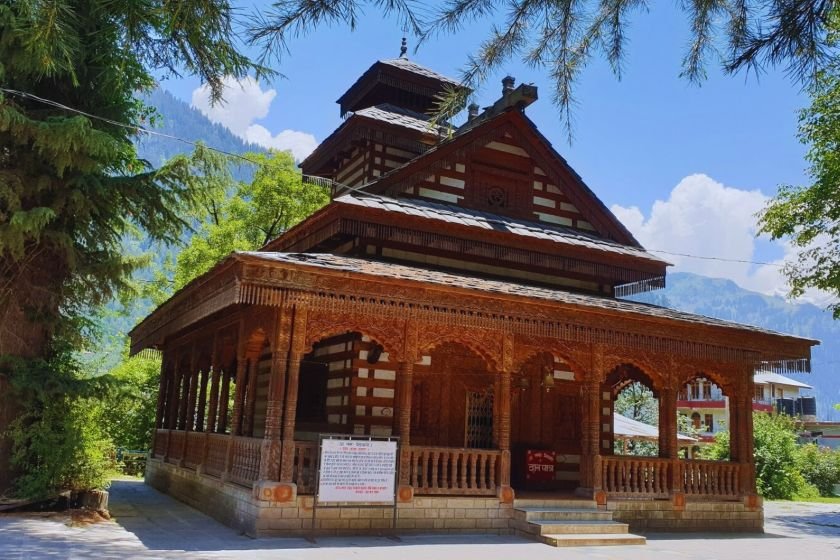
Siyali Mahadev is built in the traditional Himachali wooden style — a blend of chalet and pagoda influences common to temples across this part of the Kullu Valley — with a stone-and-cement foundation supporting an elaborately carved wooden superstructure above. Several accounts describe a genuinely striking detail: a four-tiered roofline with smaller spires stacked somewhat asymmetrically, giving the temple a slightly irregular, organic silhouette rather than a rigidly symmetrical tower.
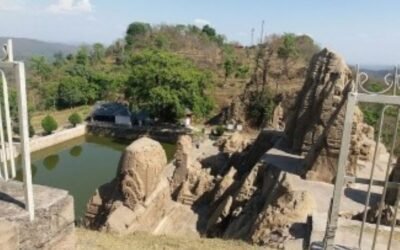
What draws the most consistent praise, though, is the sheer density of the woodwork itself. Panels throughout the temple are carved with sages, animals, and scenes drawn from mythology, wrapped around a porch-like mandapa with its own carved railings and pillars encircling the sanctum. The rich brown of the aged cedar contrasts against whitewashed walls elsewhere on the structure, and more than one visitor mentions the scent of deodar wood lingering in the temple courtyard — a small sensory detail that adds real texture to an otherwise quiet, easily overlooked stop. Scattered around the courtyard are older stone statues and carved fragments, giving the whole site a slightly unkempt, unrestored authenticity that several visitors find more moving than a heavily maintained monument would be.
One practical note worth passing on directly: photography inside the temple is generally not permitted, according to multiple visitor accounts — worth knowing before you go, so you’re not caught off guard.
🎉 Festivals and Devotion
- Maha Shivratri: By far the temple’s most significant occasion, with a substantial local fair (mela) held here, drawing crowds for night-long bhajans and havans according to several long-time visitors.
- Shravan month: Marked with special poojas, in keeping with the wider devotional calendar observed at Shiva temples across the region.
- Daily worship: Modest and consistent when the sanctum is accessible — abhishek with spring water, chanting of Shiva mantras, and the lighting of ghee lamps.
🏞️ While You’re in the Area
- Hidimba Devi Temple: A short distance away in the Dhungri forest, easily combined with a visit here given the geographic overlap of the two temple approaches.
- Manu Temple: In Old Manali, a comparable walk-up village shrine with its own distinctive legend.
- Manali Mall Road and Old Manali: Both within easy reach for a full day combining temple visits with the town’s café and market culture.
- Manali Wildlife Sanctuary: Nearby, for those wanting to extend the day with a nature walk.
🙏 Getting in Touch
There’s no independent phone number or formal booking contact for this temple — it’s a working village shrine rather than a managed tourist site, and as noted above, its sanctum isn’t always open on a predictable schedule. If a specific pooja or ritual matters to your visit, arranging it directly with the temple’s priest in person, or asking locally in Siyal village, is a more reliable approach than relying on posted hours alone.
❓ Quick Questions Travellers Ask
Will the inner sanctum definitely be open when I visit? Not necessarily. While 6 AM–7 PM is the commonly listed range, some recent visitor accounts describe the sanctum as only occasionally open during a given month, with blessings offered from outside on other days. Treat the posted hours as a general guide rather than a guarantee.
Is photography allowed? Multiple visitor accounts note that photography inside the temple is generally not permitted — worth respecting, and worth knowing in advance so it doesn’t come as a surprise.
How difficult is the walk from Manali? Quite manageable — it’s a short walk from the main road into Siyal village, with a narrow final stretch better covered on foot than by vehicle. Nothing technically demanding, just a village lane rather than a paved main road.
Is there an entry fee? No, entry is free, as with most active community temples in the region.
Can this be combined easily with Hidimba Devi Temple? Yes — the two sit close enough together, sharing a general approach direction, that many visitors comfortably combine both into a single outing from central Manali.
A Last Word
There’s a particular kind of appeal to a temple that doesn’t try very hard to be found. Siyali Mahadev sits close enough to Manali’s busiest streets that reaching it takes barely any effort at all, and yet it remains, by most accounts, genuinely uncrowded — carved wooden panels weathering quietly, old stone figures scattered across a courtyard nobody’s rushed to tidy, three different legends about its own origins coexisting without anyone particularly needing to resolve which one is true. Whether you picture a wedding party of Shiva’s own spirits resting here on the road to Kailash, or a fig tree’s bark splitting open to reveal two gods, the temple holds its stories the way old places usually do — loosely, generously, and without much interest in being believed by everyone at once.
Fact-check notes: The earlier draft of this article, published on the site, included the “three pindis — Maha Kali, Maha Lakshmi, Maha Saraswati” paragraph found in several other temple articles on the site — a sixth confirmed instance of this recurring error, particularly inapplicable here since this is a Shiva temple with no Devi-focused iconography. It has been removed. Three separate origin legends are presented here as distinct local traditions rather than merged into one — the Shiva-ganas wedding procession story, the Shiva-Parvati tree-bark legend tied to the smaller rear shrine, and the more commonly repeated Pandava-exile association. Verified GPS coordinates were pulled from live location data; posted opening hours (6 AM–7 PM) are widely cited, but some recent visitor accounts describe irregular sanctum access, which is noted honestly rather than presented as guaranteed. No phone number or formal contact exists for this temple, and none has been invented.