
- Bundi is famous for its 50+ intricately designed stepwells and the stunning Taragarh Fort with panoramic city views
- October to March offers the best weather for exploring Bundi’s palaces and outdoor attractions
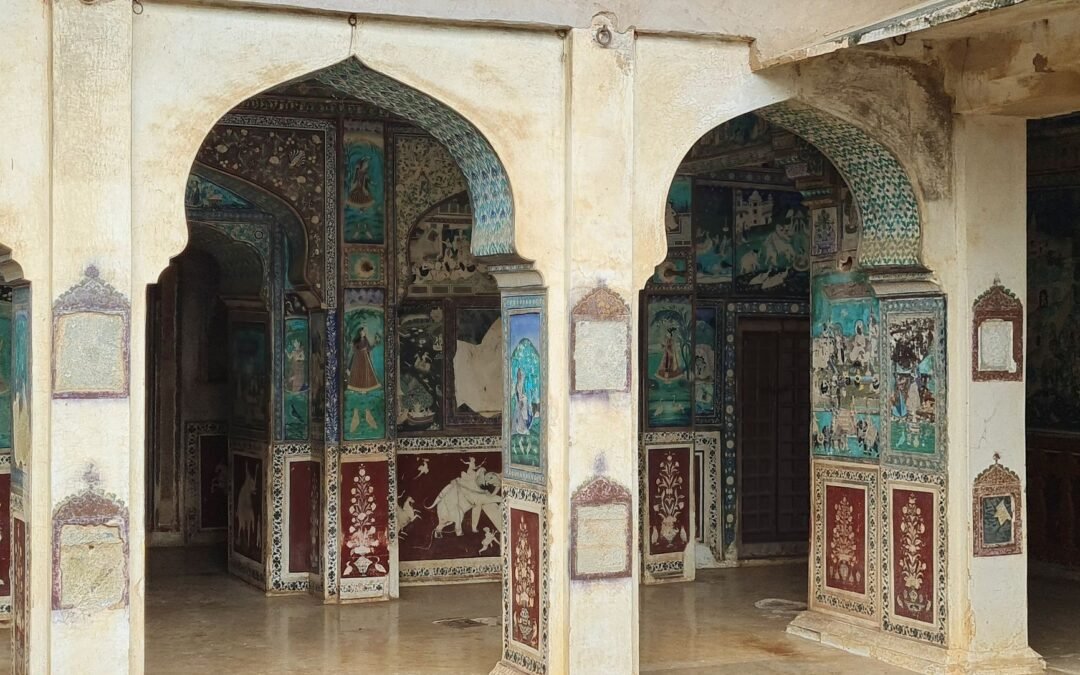
- Bundi Palace’s Chitrashala gallery features some of Rajasthan’s finest preserved miniature paintings and frescoes
- The town remains relatively unexplored compared to Jaipur and Udaipur, offering authentic local experiences
- Direct buses from Kota (35 km away) make Bundi easily accessible for budget travelers
Introduction
Tucked away in the southeastern corner of Rajasthan, Bundi is a mesmerizing medieval town that seems to have escaped the relentless march of time. While hordes of tourists flock to Jaipur, Udaipur, and Jaisalmer, this small stepwell-studded town nestled in the Aravalli hills continues to preserve its old-world charm with remarkable authenticity. With its stunning palace perched dramatically on a hillside, over fifty ancient stepwells hidden in narrow lanes, and vibrant Rajasthani frescoes adorning crumbling havelis, Bundi offers an immersive glimpse into Rajasthan’s glorious past without the overwhelming commercialization that plagues many of its more famous counterparts.
The town’s skyline is dominated by the imposing Taragarh Fort crowning the hill above, while the magnificent Garh Palace cascades down the slope in a symphony of turrets, balconies, and ornate gateways. Below, a labyrinth of cobbled streets winds through the old city, where blue-painted Brahmin houses recall a quieter era, and artisans still practice traditional crafts passed down through generations. What makes Bundi truly special is its unhurried pace—here, you can wander through centuries-old bazaars, discover hidden baolis (stepwells) adorned with intricate carvings, and witness everyday life unfolding much as it has for hundreds of years.
For travellers seeking an authentic Rajasthani experience away from the well-trodden tourist circuits, Bundi presents an irresistible proposition. It’s a place where you can spend days losing yourself in narrow alleys, photographing stunning architectural details, and conversing with friendly locals who still regard visitors with genuine curiosity rather than commercial interest. Whether you’re a history enthusiast, an architecture aficionado, or simply someone yearning for an unhurried escape into India’s rich cultural tapestry, this hidden gem promises an unforgettable journey.
Quick Facts About Bundi
| Aspect | Details |
|---|---|
| Altitude | 268 meters (879 feet) above sea level |
| Best Time to Visit | October to March |
| Distance from Nearest Major City | Kota: 36 km, Jaipur: 210 km, Udaipur: 265 km |
| Nearest Airport | Jaipur International Airport (210 km) |
| Permits Required | None (Indian and foreign tourists) |
| Temperature Range | Summer: 25°C-45°C, Winter: 5°C-28°C, Monsoon: 22°C-35°C |
| Approx Budget per Day | Budget: ₹1,000-1,500, Mid-range: ₹2,000-3,500, Luxury: ₹4,000+ |
Why Visit Bundi
Bundi’s claim to fame lies in its extraordinary collection of over fifty ancient stepwells, making it perhaps the stepwell capital of India. These architectural marvels, locally called baolis, were engineering feats designed to harvest rainwater in this arid region. The Raniji ki Baoli, with its ornate pillared arcade and 46-meter depth, features exquisite carvings of Lord Vishnu’s ten avatars and delicate floral motifs that have survived centuries. Unlike the more famous stepwells of Gujarat, Bundi’s baolis remain largely uncommercialized—many are still discovered accidentally while wandering through residential neighborhoods, their moss-covered steps descending into mysterious depths.
The town’s artistic heritage is equally compelling. Bundi is renowned for the distinctive “Bundi School” of miniature painting, which flourished here between the 17th and 19th centuries. The Chitrashala (art gallery) within Garh Palace houses some of the finest examples of Rajput murals in existence, featuring vibrant frescoes depicting courtly processions, hunting scenes, Krishna legends, and the romantic exploits of Rajput rulers. The turquoise and jade-green pigments used have retained their brilliance despite the ravages of time, and the level of detail—down to individual facial expressions in crowd scenes—is absolutely breathtaking.
What truly distinguishes Bundi is its remarkable preservation of medieval urban fabric. The old city retains its original layout with narrow gullies (lanes) barely wide enough for two people to pass, interconnected courtyards, intricately carved wooden doorways, and hundreds of blue-washed houses creating a sea of azure reminiscent of Jodhpur but without the crowds. The town has no shopping malls, multiplexes, or modern intrusions—evening entertainment still consists of gathering at chai stalls to watch life unfold. This authenticity, increasingly rare in Rajasthan’s tourist towns, makes Bundi feel like stepping into a living museum where the past seamlessly coexists with the present.

How to Reach Bundi
By Air: The nearest airport is Jaipur International Airport, located approximately 210 km from Bundi. From the airport, you can hire a private taxi for around ₹3,500-4,500 (journey time: 4-4.5 hours). Alternatively, take an airport shuttle or local transport to Jaipur Railway Station and continue by train. Udaipur’s Maharana Pratap Airport (265 km) is another option, though the road journey takes longer (5-6 hours) and costs around ₹4,500-5,500 by taxi.
By Train: While Bundi has a small railway station, it’s not well-connected to major cities. The most practical approach is to reach Kota Junction, one of Rajasthan’s major railway hubs, located just 36 km away. Kota has excellent train connectivity with Delhi (6-7 hours, ₹400-1,500 depending on class), Mumbai (14-16 hours, ₹600-2,000), Jaipur (3-4 hours, ₹200-800), and other major cities. From Kota, frequent buses depart for Bundi every 30 minutes (₹30-50, 1 hour journey), or you can hire a taxi (₹600-900). Some trains like the Bundi Express do stop at Bundi station, but checking current schedules is essential.
By Road: Bundi is well-connected by road. Rajasthan State Road Transport Corporation (RSRTC) operates regular buses from Jaipur (210 km, 4-5 hours, ₹250-400), Udaipur (265 km, 6 hours, ₹350-500), Ajmer (165 km, 3.5 hours, ₹200-350), and Kota (36 km, 1 hour, ₹30-50). Private deluxe and semi-deluxe buses are also available at slightly higher fares. If driving yourself, the route from Jaipur via NH-52 and NH-27 is in good condition. Self-drive car rentals from Jaipur cost approximately ₹2,500-3,500 per day.
By Taxi: Private taxis offer the most comfortable option. From Jaipur, expect to pay ₹3,500-4,500; from Kota, ₹600-900; from Udaipur, ₹4,500-5,500. Apps like Ola and Uber operate in Jaipur and Kota for initial connections, but pre-booking through local travel agencies often yields better rates for longer journeys. Many hotels in Bundi can arrange pickup services with advance notice, typically charging a 10-15% commission over standard rates.
Best Time to Visit Bundi
October to November: This is the beginning of the ideal period to visit Bundi. Post-monsoon freshness lingers, with daytime temperatures ranging from 25°C to 30°C and pleasant nights around 15°C. The stepwells are filled with water from monsoon rains, making them particularly photogenic. Tourist crowds remain manageable, and accommodation prices haven’t yet peaked. The Dussehra celebrations in October bring the town alive with processions and cultural performances. This is perfect weather for climbing to Taragarh Fort and exploring outdoor attractions.
December to February: Peak tourist season brings the best weather, with daytime temperatures between 20°C-25°C and nighttime lows occasionally dropping to 5°C-8°C. This is ideal for sightseeing and photography, with clear blue skies providing stunning backdrops. However, pack warm clothing for early mornings and evenings. December sees increased domestic tourism during Christmas and New Year holidays. Hotels raise prices by 20-40%, and advance booking is essential. The winter sunshine is perfect for spending leisurely hours exploring the palace and wandering through the old city.
March to April: The shoulder season offers a pleasant compromise. March remains comfortable (25°C-32°C), though April starts getting warmer (30°C-38°C). Tourist numbers decline significantly, making this an excellent time for those seeking solitude. Hotel rates drop by 20-30% compared to peak season. The Gangaur Festival in March/April brings vibrant celebrations with local women carrying decorated idols in procession. Early morning and late afternoon are best for sightseeing, with midday hours spent resting or exploring indoor attractions like the palace museum.
May to June: The scorching summer months see temperatures soaring to 40°C-45°C, making outdoor activities challenging. This is off-season with tourist numbers at their lowest and hotel rates at their cheapest (discounts up to 50%). If you can tolerate the heat, you’ll have monuments virtually to yourself. Visit early morning (6-9 AM) or late evening (5-7 PM). Many smaller guesthouses and restaurants may close or operate with reduced hours. Not recommended for elderly travelers or those with health conditions.
July to September: The monsoon transforms Bundi into a lush green paradise. Rainfall is moderate (50-60 cm annually), usually in short, intense bursts rather than continuous downpours. The stepwells overflow, waterfalls appear around Taragarh Fort, and the entire landscape rejuvenates. Temperatures moderate to 25°C-35°C with high humidity. This is arguably the most photogenic season, though some outdoor exploration may be curtailed. Tourist infrastructure remains fully operational, and prices are 30-40% lower than peak season. Leeches can be a minor nuisance on forest paths leading to the fort.
Top Things to Do in Bundi
Explore Garh Palace and Chitrashala
The magnificent Garh Palace, also called Bundi Palace, is an architectural marvel that cascades down the hillside in a series of terraces, courtyards, and intricately decorated chambers. Built over several centuries starting in the 14th century, the palace showcases a fascinating evolution of Rajput architecture. The star attraction is the Chitrashala, an extraordinary gallery of miniature paintings created by the Bundi school of artists. These murals depict scenes from the Ramayana, Krishna Leela, and royal life with astonishing detail and vibrant colors that have miraculously survived. Entry fee is ₹100 for Indians and ₹300 for foreigners, with an additional camera fee of ₹50. Allow 2-3 hours to explore thoroughly, and consider hiring a local guide (₹300-500) for detailed historical context.
Discover the Ancient Stepwells
Bundi’s network of stepwells deserves at least a full day of exploration. Start with Raniji ki Baoli, the most ornate stepwell built in 1699 by Rani Nathavati. Its 46-meter depth features beautifully carved pillars with motifs of Lord Vishnu’s incarnations. The symmetry and acoustics are remarkable—clap at the bottom and hear the echo multiply. Nagar Sagar Kund, located near Jait Sagar, features multiple stepwells around a picturesque artificial lake with small temples. Don’t miss Dabhai Kund, believed to be one of the largest and deepest stepwells in Rajasthan. Many smaller baolis hide in residential areas—asking locals “Baoli kahan hai?” (Where is the stepwell?) often leads to unexpected discoveries. Wear comfortable shoes as steps can be steep and slippery.
Trek to Taragarh Fort
The imposing Taragarh (Star Fort) crowns the hill 1,426 feet above sea level, offering breathtaking panoramic views of Bundi and the surrounding Aravalli landscape. Built in 1354, it was once among Rajasthan’s most formidable fortifications. The steep trek takes 45-60 minutes from the palace, passing through ruined gateways, reservoirs, and old military installations. The main attractions include the Bhim Burj, the largest battlement featuring a huge cannon called Garbh Gunjam, and the ancient Rani Mahal. The fort’s labyrinthine passages and dark tunnels add an element of adventure—carry a torch/flashlight. Visit early morning (6-8 AM) to avoid heat and catch sunrise, or late afternoon for sunset views. Entry is technically free, though a nominal ₹20-50 donation is customary at the entrance.
Photograph the Old City’s Blue Houses
Bundi’s old city is a photographer’s paradise, particularly the neighborhoods where traditional blue-washed Brahmin houses create streets of azure brilliance. The blue lime wash was originally used to denote high-caste residences and keep houses cool, but it’s created an inadvertently stunning urban landscape. Wander through lanes near the palace and Naval Sagar area, where ancient havelis feature intricately carved wooden brackets, jharokhas (overhanging enclosed balconies), and ornate doorways adorned with brass work. The narrow gullies, sometimes no more than six feet wide, create fascinating light-and-shadow compositions. Early morning (7-9 AM) offers the best lighting for photography. Respect residents’ privacy—always ask permission before photographing people or peering into homes.
Visit Jait Sagar and Sukh Mahal
This artificial lake, created in 1596, provides a serene escape from the town’s medieval intensity. The lake is adorned with Nagar Sagar temples partially submerged during monsoons, creating dreamy reflections. On its banks sits Sukh Mahal, a summer retreat where Rudyard Kipling stayed in 1888 and reportedly began writing “Kim.” The small palace, now somewhat decrepit but atmospheric, can be explored for a ₹20 entry fee. The lake area is perfect for picnics, especially during sunset when the sky paints watercolor reflections on the still waters. Boating facilities are occasionally available (₹50-100 per person for 30 minutes), though services can be irregular depending on water levels. Located about 3 km from the town center, it’s easily reachable by auto-rickshaw (₹50-80).
Experience the Local Bazaars
Bundi’s markets retain an authentic, non-touristy character rarely found in Rajasthan anymore. The Sadar Bazaar is the main commercial area where locals shop for daily necessities—spices, textiles, vegetables, and household items. Here you’ll find miniature painting workshops where artists continue the Bundi school tradition; small paintings start at ₹300-500, while larger commissioned works can cost ₹5,000-20,000. The Bundi kofta (traditional turban) cloth market offers vibrant Rajasthani textiles. Near the palace, small shops sell locally-made beadwork, leather mojaris (traditional shoes, ₹400-1,200), and brass handicrafts. Unlike tourist markets elsewhere, shopkeepers here rarely hassle visitors, making browsing genuinely pleasant. The evening bazaar scene, with chai stalls and street food vendors, offers wonderful cultural immersion opportunities.

Where to Stay in Bundi
Budget Options (₹600-1,500 per night): The Haveli Braj Bhushanjee is a popular budget choice offering clean rooms in a 200-year-old haveli with a rooftop restaurant serving home-cooked meals (doubles from ₹800). Shivam Tourist Guest House near Naval Sagar provides basic but spotless accommodation with friendly hosts who offer excellent local guidance (₹600-1,000). Lake View Paying Guest House offers simple rooms with attached bathrooms and stunning views of Jait Sagar (₹700-1,200). Bundi Vilas Guest House in the old city provides an authentic experience with basic amenities, common bathrooms, and a welcoming family atmosphere (₹500-900). Most budget properties include breakfast and can arrange local tours.
Mid-Range Options (₹1,500-4,000 per night): Haveli Katkoun is a beautifully restored 19th-century haveli featuring traditional architecture, comfortable rooms with modern bathrooms, a pleasant courtyard, and excellent home-style Rajasthani food (₹2,000-3,500). Kasera Heritage View is another converted haveli offering well-appointed rooms, some with palace views, and attentive service (₹2,200-3,800). Bundi Haveli offers a rooftop with spectacular views, clean contemporary rooms in a heritage setting, and a multi-cuisine restaurant (₹1,800-3,200). Nawal Sagar Palace Hotel provides comfortable accommodation near the lake with decent amenities and helpful staff (₹2,500-4,000). These properties typically include breakfast, Wi-Fi, and can arrange guides and transportation.
Luxury/Heritage Options (₹4,000+ per night): The Royal Retreat is Bundi’s most upscale heritage property, a converted 17th-century haveli featuring period furniture, elaborately decorated suites, a swimming pool, spa facilities, and gourmet dining (₹6,000-12,000). Ishwari Niwas Palace, once belonging to the Thakur of Bundi, offers regal accommodation with antique-furnished rooms, traditional hospitality, and beautiful gardens (₹5,000-9,000). Dev Niwas Guest House, while technically mid-range, offers premium rooms in a heritage setting with exceptional service and cuisine (₹3,500-5,500). Luxury properties often include cultural performances, cooking classes, and guided heritage walks in their packages. Booking directly often secures better rates than online portals.
Local Food & Cuisine
Bundi’s cuisine reflects traditional Rajasthani flavors with some local specialties that food enthusiasts should not miss. Bundi ki Kachori is the town’s signature dish—these deep-fried pastries stuffed with spiced dal are crunchier and more flavorful than kachoris elsewhere, served with tangy tamarind chutney and potato curry. Pyaaz ki Kachori (onion-filled variant) is equally delicious, particularly when fresh and hot from street vendors. Ghevar, a honeycomb-textured sweet soaked in sugar syrup, is a Rajasthani specialty perfected here. Malpua, sweet pancakes dripping with sugar syrup and topped with rabri (reduced milk), are traditional festive treats available year-round at local sweet shops.
Dal Baati Churma, Rajasthan’s quintessential dish, reaches excellent standards in Bundi—baked wheat balls served with five types of dal and sweet churma powder. Laal Maas, an intensely spicy red meat curry made with mathania chilies, is prepared authentically here for those who can handle serious heat. Vegetarians will appreciate Gatte ki Sabzi (gram flour dumplings in yogurt curry) and Ker Sangri (desert beans and berries), both showcasing the desert region’s ingenious use of local ingredients.
For authentic experiences, visit Diamond Restaurant near Sadar Bazaar, a no-frills local eatery serving excellent thalis (₹120-180) and the best Bundi kachoris (₹30-50 per plate). Rainbow Restaurant inside Haveli Braj Bhushanjee offers rooftop dining with palace views and serves both Rajasthani specialties and continental dishes (₹150-350 per person). Hotel Bundi Haveli‘s restaurant provides a more upscale setting for traditional Rajasthani cuisine (₹250-500 per person). Shivam Restaurant near the bus stand is popular with locals for South Indian breakfast and North Indian meals at very reasonable prices (₹80-150).
Don’t miss the street food scene around Sadar Bazaar in the evenings. Ramdev Kachori Bhandar has been serving legendary kachoris for over 60 years (₹20-40). Malpua Corner near the clock tower prepares fresh malpuas that draw crowds (₹40-60). For tea, Chotu Chai Wala near Naval Sagar serves masala chai (₹10-15) that locals swear by. Sweet shops like Kanha Sweets offer ghevar, rabri, and other traditional mithai (₹300-600 per kg). Budget approximately ₹300-500 daily for meals at local eateries, or ₹800-1,200 for more comfortable restaurants.

Practical Travel Tips for Bundi
Permits and Documentation: No special permits are required for Indian or foreign nationals to visit Bundi. Standard identification (Aadhaar card for Indians, passport for foreigners) is sufficient. Foreign tourists should carry passport photocopies, as some heritage properties require them during check-in. Photography is generally permitted at monuments, though some palace sections may charge camera fees (₹50-100). Video camera fees, where applicable, range from ₹100-200.
Mobile Network and Connectivity: Major networks (Jio, Airtel, Vodafone-Idea, BSNL) provide good coverage in town, though signals can be patchy inside thick palace walls and in some parts of Taragarh Fort. Most mid-range and luxury hotels offer Wi-Fi, though speeds may be slower than urban standards. Several cafes near the palace area provide free Wi-Fi for customers. For important work requiring reliable internet, the town has a few small internet cafes (₹30-50 per hour) with better connectivity.
ATMs and Banking: Bundi has several ATMs of major banks (SBI, Bank of Baroda, ICICI, HDFC) located around Sadar Bazaar and the main market area. However, ATMs sometimes run out of cash, particularly during weekends and festivals. Carry sufficient cash, especially for smaller establishments, street food, and auto-rickshaws that don’t accept digital payments. Credit cards are accepted only at larger hotels and a few upscale restaurants. The SBI branch in the main market handles foreign exchange, though rates are better in larger cities.
Medical Facilities: MBS Hospital is the main government medical facility with emergency services and basic medical care. Several private clinics and pharmacies operate in the market area. For serious medical emergencies, Kota (36 km) has better multi-specialty hospitals. Carry a basic first-aid kit, any prescription medications, oral rehydration salts for stomach upsets, and sunscreen. Tap water is not safe for drinking—stick to bottled water (₹20-40 per liter) available everywhere.
What to Pack: Comfortable walking shoes with good grip are essential for exploring stepwells and climbing to the fort. Cotton clothing works best October-March; add warm layers for December-January evenings. Summer visitors (April-June) should pack light cotton clothes, a wide-brimmed hat, and strong sunscreen. A flashlight/headlamp is invaluable for exploring fort tunnels and dimly lit palace sections. Carry a reusable water bottle, small backpack, power bank, and basic toiletries (international brands may not be available). Women should dress modestly—covering shoulders and knees shows cultural respect.
Safety Considerations: Bundi is exceptionally safe with very low crime rates. Locals are generally helpful and honest. However, exercise standard precautions: avoid displaying expensive jewelry or electronics, don’t wander alone late at night in deserted areas, and keep valuables in hotel safes. Women travelers report feeling comfortable and safe, though solo female travelers should avoid the isolated fort areas after dark. Some stepwells lack safety barriers—exercise extreme caution, especially with children. Watch for monkeys around the fort and palace who can snatch food and shiny objects. During summer, risk of heatstroke is real—stay hydrated and avoid midday sun exposure.
Local Transport: Bundi is small enough to explore largely on foot. For longer distances, auto-rickshaws are available (₹30-100 for trips within town). Few drivers use meters, so negotiate fares beforehand or ask your hotel for standard rates. Bicycle rentals (₹50-100 per day) are available at some guesthouses—an excellent way to reach Jait Sagar and explore surrounding areas. Motorcycle rentals are occasionally available (₹300-500 per day), though finding reliable providers can be challenging.
Responsible Tourism: Bundi’s unspoiled character is its greatest asset—help preserve it. Don’t litter; carry a small bag for trash and dispose of it properly. Many stepwells are delicate heritage structures—don’t carve names or damage stonework. Respect photography restrictions and always ask permission before photographing people. Support local artisans by purchasing miniature paintings and handicrafts directly from artists rather than intermediaries. Choose homestays and locally-owned guesthouses over chain properties to ensure tourism revenue benefits the community. Use water judiciously, as Rajasthan faces water scarcity. When visiting religious sites, dress modestly and remove shoes where indicated.
Final Thoughts
Bundi represents something increasingly precious in our rapidly modernizing world—an authentic connection to India’s rich historical and cultural heritage. Unlike Rajasthan’s more famous destinations, where tourist infrastructure sometimes overshadows authenticity, Bundi remains refreshingly real. Here, the experience of discovery feels genuinely personal, whether you’re stumbling upon a hidden stepwell down a forgotten alley, watching artisans paint miniatures using techniques unchanged for centuries, or simply sitting at a chai stall observing daily life unfold in medieval surroundings. The town rewards slow, contemplative travel—rushing through Bundi in a day would miss its essential character entirely. Give yourself at least three to four days to truly absorb its unhurried rhythms, explore its architectural treasures, and connect with its gracious people.
Whether you’re a seasoned India traveler seeking experiences beyond the beaten path or a first-time visitor wanting to understand Rajasthan’s authentic soul beyond the tourist brochures, Bundi delivers magnificently. Its combination of spectacular architecture, rich artistic traditions, fascinating history, and uncommercialised atmosphere creates a travel experience that lingers in memory long after you’ve left. Pack your curiosity, comfortable walking shoes, and a camera with plenty of memory—Bundi is waiting to share its stories. In an age where genuine travel experiences are becoming rare, this medieval town offers something truly special: the gift of stepping back in time while remaining firmly rooted in the warm hospitality of contemporary Rajasthan. Make Bundi your next destination, and discover for yourself why those who visit often find themselves planning a return journey before they’ve even left.
- Visit Raniji ki Baori stepwell early morning around 7 AM to capture stunning light patterns and avoid crowds
- Hire a local guide at Bundi Palace for ₹300-500 to access restricted areas with the best frescoes and murals
- Stay in heritage havelis near Nawal Sagar Lake for authentic Rajasthani architecture and rooftop palace views
- Try local kachori and dal bati churma at Diamond Restaurant near Sadar Bazaar for authentic flavors
- Combine your Bundi visit with nearby Ramgarh Vishdhari Sanctuary for leopard spotting and nature trails
Frequently Asked Questions about Bundi
The best time to visit Bundi is from October to March when the weather is pleasant with temperatures ranging from 5°C to 28°C during winter. This period offers comfortable conditions for exploring the town’s stepwells, palaces, and narrow lanes without the extreme heat of Rajasthan’s summer months.
Bundi is located 36 km from Kota, 210 km from Jaipur, and 265 km from Udaipur. The nearest airport is Jaipur International Airport, approximately 210 km away, making it accessible yet pleasantly off the beaten tourist path.
Bundi is famous for its extraordinary collection of over fifty ancient stepwells (baolis) hidden throughout the town, its magnificent Garh Palace cascading down the hillside, and the imposing Taragarh Fort. The town is also renowned for its vibrant Rajasthani frescoes, blue-painted Brahmin houses, and remarkably preserved medieval charm that has escaped commercialization.
A budget traveler can explore Bundi for ₹1,000-1,500 per day, while mid-range travelers should budget ₹2,000-3,500 daily. Luxury travelers can expect to spend ₹4,000 or more per day for premium accommodations and experiences.
No special permits are required to visit Bundi for either Indian or foreign tourists. Visitors can freely explore the town, its stepwells, palaces, and surrounding attractions without any permit requirements.
Bundi is situated at an altitude of 268 meters (879 feet) above sea level in the Aravalli hills. Temperatures range from 25°C-45°C in summer, 5°C-28°C in winter, and 22°C-35°C during the monsoon season.