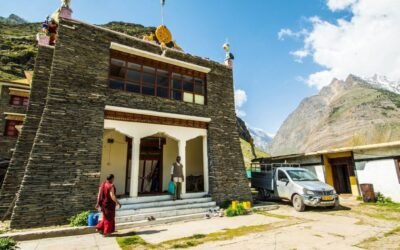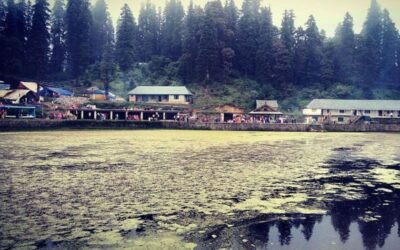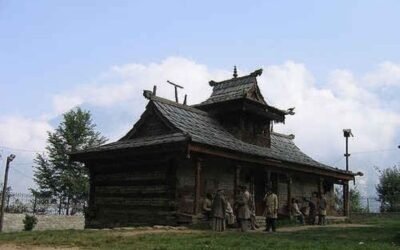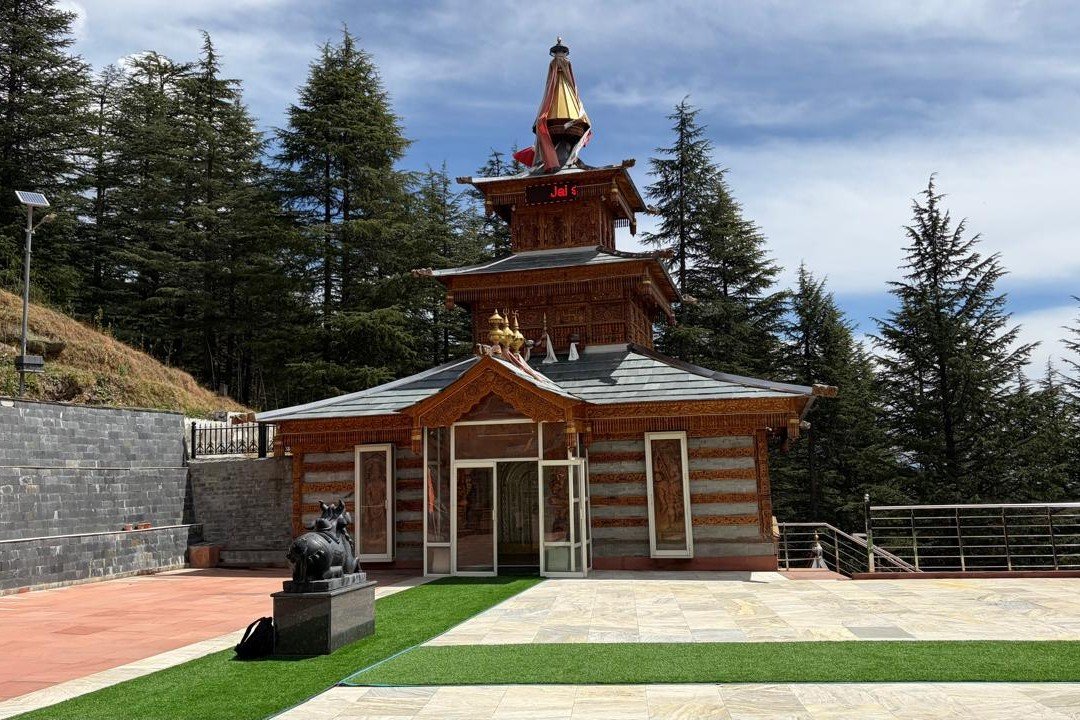
In the forests near Mandal in Jubbal, Kyanlu Devta Ji is remembered through closed doors, unseen worship, and a hidden Shiva story where milk from a naag becomes water before it leaves the temple.
Some temples are open because their power is meant to be seen. Others remain powerful because almost nothing is shown. Kyanlu Devta Ji Temple near Mandal, Jubbal belongs to the second kind. Hidden in a forested setting above the Pabbar-side villages, this old local devta shrine is not known for tourist crowds, public display, or easy explanations. People speak of closed doors, a pujari who performs worship without directly facing the deepest chamber, and an unseen Shivling guarded by a naag. In local memory, the place is also sometimes understood as Gupt Maheshwar — the hidden form of Lord Shiva — where the real mystery is not outside the temple, but behind its doors.
🌄 Location & How to Reach It
Kyanlu Devta Ji Temple is located near the Mandal / Jubbal region of Shimla district, Himachal Pradesh, in a forested area above the Pabbar-side villages. The shrine is locally known as Kyanlu Devta Ji, while variant spellings such as Kayanlu or Kayalu may appear in local speech, older references, or social-media usage. This is not a mainstream tourist temple with detailed public documentation, so the most reliable access guidance still comes from local people of Mandal, Jubbal, Sawra, Rohtan, and nearby villages.
Google Maps: Get Directions
GPS Coordinates: 31.1185455, 77.7864379
- By road: The practical approach is through the Jubbal / Hatkoti / Sawra / Mandal side, depending on your starting point. From the nearest motorable point, a village or forest approach may be involved, so ask locally before entering the route.
- By rail: The nearest convenient rail access is Shimla Railway Station on the Kalka–Shimla heritage railway, followed by road travel towards Theog, Kotkhai, Jubbal, Hatkoti, and then the Mandal side.
- By air: The nearest practical airport is Shimla Airport, though Chandigarh Airport is usually more reliable for regular flight connectivity, followed by road travel into the upper Shimla / Pabbar region.
This is not a regular tourist temple with clear route boards everywhere. It should be visited with local guidance, especially because the shrine lies in a forested setting and the temple’s inner traditions are said to be highly restricted.
🌸 Best Time to Visit
The best time to visit the Mandal–Jubbal side is usually March to June and September to November. These months are better for road travel, walking through village and forest paths, and avoiding the worst of monsoon slush or winter cold.
Monsoon can make forest paths slippery, and the upper Shimla region can face road damage, landslides, falling stones, and route blockages during heavy rain. Winter can be beautiful but difficult, especially if snow, frost, or cold weather affects the higher roads and forest approaches. If you are going specifically to locate Kyanlu Devta Ji Temple, do not depend only on online navigation. Ask in Mandal or nearby villages first.
There are no widely verified public darshan timings for this temple. In fact, the local tradition around the shrine suggests the opposite of a normal open-temple experience. The temple doors are said to remain closed, and access to the inner mystery is restricted. Visit during daylight, do not force entry, and follow whatever the local devta committee, pujari, or villagers tell you.
🕉️ The Devta Whose Doors Stay Closed
The most striking local belief about Kyanlu Devta Ji Temple is that its doors remain closed. People say that nobody truly knows what lies inside the deepest part of the temple. Even the pujari does not enter and look at the inner form in the ordinary way. The worship is said to be performed only up to the last door, and even there, with great care and restraint.
This makes the temple very different from most shrines, where darshan is based on seeing. At Kyanlu, the power of the devta is preserved through not seeing. The closed doors become part of the worship. The unseen chamber becomes the centre of faith.
That is why the temple should not be written like a normal “open for visitors” sacred site. The mystery is not a missing detail. It is the identity of the shrine. Local people do not speak of the closed doors as a problem. They speak of them as part of the devta’s maryada — the sacred boundary that should not be crossed.
In many old Himalayan devta traditions, the deepest space of a shrine is not meant for public curiosity. The deity may be close to the village, but not casually available. Kyanlu Devta Ji belongs to that older way of understanding sacred power: the devta is present, but the devta does not need to be displayed.
🕉️ Gupt Maheshwar and the Hidden Shivling
One local tradition says that inside the temple is a Shivling, hidden from ordinary sight. This is why some people understand the place as Gupt Maheshwar — the hidden Maheshwar, or the hidden form of Lord Shiva.
The word gupt is important here. It does not only mean hidden physically. In Himalayan temple tradition, hiddenness can also mean power kept protected, not meant for casual viewing. A deity may be worshipped through signs, doors, sound, ritual, water, forest memory, or local belief rather than through direct public darshan.
In this belief, Kyanlu Devta Ji is not separate from Shiva. The local devta form and the hidden Shiva form overlap. This is common in many parts of Himachal, where village devtas may be understood as forms, attendants, guardians, sons, manifestations, or local presences connected with Lord Shiva, Mahasu, Nag devtas, Devi, or other older regional powers.
At Kyanlu, the hidden Shivling story gives the forest temple a deeper Shaiva identity. The devta is local, but the mystery inside belongs to the larger world of Maheshwar.
🐍 The Naag Who Offers Milk to the Shivling
The most powerful story connected with the temple speaks of a naag above the Shivling. Local belief says that inside the closed chamber, the naag offers milk to the Shivling. But when that milk comes out from the temple, it no longer remains milk. It becomes water.
This is a strong Himalayan sacred image: Shiva, naag, milk, water, secrecy, and forest. The naag is not just a snake in the ordinary sense. In hill traditions, Naag Devtas are connected with springs, water sources, fertility, protection, hidden underground forces, and sacred boundaries. A naag above a Shivling is therefore symbolically very natural. Shiva and the serpent already belong together in the wider Hindu imagination, and in Himachal’s mountain villages, that relationship often becomes even more local and living.
The change from milk to water is also meaningful. Milk is offering. Water is what the world receives. Inside the temple, the act is divine and hidden. Outside, it becomes a sign that people can experience without seeing the inner chamber. The miracle remains protected, but its trace comes out.
This story should be treated as oral tradition, not as a claim to be tested with modern instruments. Its purpose is devotional. It tells people that worship is happening inside even when the doors remain closed. The temple may appear silent, but the story says the naag continues the offering.
🙏 What Kyanlu Devta Ji Is Known For
Kyanlu Devta Ji is known as a local devta of the Mandal / Jubbal region, associated with forest, secrecy, closed-door worship, and the hidden Shiva tradition. The deity’s name appears locally as Kyanlu Devta Ji, while spelling variations such as Kayanlu or Kayalu may be heard or seen because oral devta names often shift when written in Hindi, English, or local dialect.
The temple is especially known for:
- Closed temple doors
- Restricted inner worship
- A hidden Shivling tradition
- A naag offering milk
- Milk turning into water outside
- The name Gupt Maheshwar
- A forest setting away from normal temple traffic
For devotees, such a place is not approached casually. It is approached with faith, silence, and local permission. The devta is not made available for tourist curiosity. The temple’s strength comes from the fact that the most important thing inside it is not for everyone to see.
This is what makes Kyanlu Devta Ji different. Many temples invite visitors to look closely. This one asks them to stop at the boundary.
🏛️ The Forest Temple and Its Several Doors
The temple is said to have several doors, one behind another, protecting the inner mystery. This layered-door structure is important to the way the shrine is understood. Each door marks a boundary. The outside belongs to visitors and villagers. The deeper space belongs to ritual. The final hidden space belongs to the devta.
A visitor may only see the outer temple, forest surroundings, closed doors, and signs of worship. But that is enough to understand the mood of the place. The temple does not invite loud movement. It asks for restraint.
Its forest setting adds to this atmosphere. The shrine is not standing in the middle of a bazaar. Trees, slope, silence, and distance from ordinary roads shape the experience. In such places, sound also changes. A bell feels louder. A footstep feels more noticeable. Even a closed wooden door feels like part of the deity’s presence.
This is the kind of temple where architecture and secrecy work together. The building does not reveal. It protects. The several doors are not only physical doors; they are stages of sacred distance.
📜 Mandal, Jubbal, and the Devta Landscape
The Jubbal–Mandal–Pabbar region is full of local devta traditions. Temples here are not only places for individual prayer; they are linked with village identity, seasonal rituals, fairs, oral history, forests, water sources, agricultural rhythm, and local authority. Devtas are often understood as protectors of specific areas, families, forests, routes, and settlements.
Kyanlu Devta Ji belongs to this larger sacred world. In the upper Shimla and Pabbar-side villages, Shiva, Nag, Devi, and local devta traditions often overlap. A temple may be locally known by a devta name while also carrying a deeper story of Shiva or Maheshwar inside. Kyanlu’s Gupt Maheshwar tradition sits naturally within that pattern.
The temple’s forest setting is also important. In many Himalayan villages, forests are not empty land. They hold devtas, old routes, grazing memories, water sources, spirits, and restrictions. A temple in the forest therefore has a different character from a temple in a market. It asks for quieter behaviour.
To understand Kyanlu Devta Ji properly, one should not ask only, “What is inside?” A better question is: “Why has the inside been kept hidden?” The answer lies in the old devta culture of the region, where sacred power is often protected through rules, distance, and silence.
🎉 Festivals and Devotion
- Local Devta Worship: Kyanlu Devta Ji is worshipped as a local deity of the Mandal–Jubbal side. Specific ritual days should be confirmed locally, because such traditions often follow village calendars rather than public tourism schedules.
- Closed-Door Worship: The temple is known for its closed-door tradition. Visitors should not expect normal inner darshan or open access.
- Gupt Maheshwar Belief: The shrine is locally associated with a hidden Shivling and the name Gupt Maheshwar.
- Naag and Milk Story: Local belief says a naag offers milk to the hidden Shivling, and that the milk becomes water when it comes out from the temple.
- Forest Respect: Because the temple lies in a forested setting, visitors should avoid noise, litter, forced entry, careless photography, or treating the shrine as a curiosity spot.
- Local Permission: Before visiting, especially if going from outside the area, ask locally about access and restrictions. Some devta shrines are not meant for casual entry or public exploration.
🏞️ While You’re in the Area
- Mandal: The nearest important local reference point for asking directions and understanding the devta traditions of the area.
- Jubbal: A historic hill region known for its palace, apple orchards, temples, and links with the old Jubbal princely state.
- Hatkoti: A major nearby sacred site on the Pabbar River, famous for Hateshwari Mata Temple and its chained vessel legend.
- Sawra: A useful route-side settlement in the Jubbal–Hatkoti belt, often connected with local movement towards nearby villages and devta temples.
- Rohru: A major town of the Pabbar Valley, useful as a base for exploring Hatkoti, Jubbal, Mandal, and upper valley routes.
- Pabbar River Valley: The wider sacred and cultural landscape around Jubbal, Hatkoti, and Rohru, shaped by river, apple orchards, temples, devta traditions, and old village routes.
- Chanshal Region: A higher mountain route beyond Rohru, best planned separately and only in the right season with current road confirmation.
🙏 Getting in Touch
There is no widely verified official temple website, public phone number, or formal visitor office for Kyanlu Devta Ji Temple. For access, ritual rules, local customs, and the correct forest approach, ask people in Mandal, Rohtan, Sawra, Jubbal, or nearby villages.
Do not try to open closed doors, enter restricted sections, or photograph the inner temple area without clear permission. If the temple tradition says that even the pujari does not face the deepest inner space directly, visitors should treat that boundary with full respect.
For this temple, local guidance is not only useful. It is necessary. The shrine’s power lies in its restrictions as much as in its stories.
❓ Quick Questions Travellers Ask
Where is Kyanlu Devta Ji Temple located?
It is near the Mandal / Jubbal region of Shimla district, Himachal Pradesh, in a forested area. The Google Maps coordinates are 31.1185455, 77.7864379.
Is it Kyanlu, Kayanlu, or Kayalu Devta?
The exact Google Maps listing uses Kyanlu Devta Ji. Variant spellings such as Kayanlu and Kayalu may appear in local speech or social-media usage.
Why are the temple doors closed?
Local tradition says the temple’s inner space is not meant for ordinary viewing. The closed doors are part of the shrine’s sacred boundary.
What is Gupt Maheshwar?
Some local people understand the temple as Gupt Maheshwar, connected with a hidden Shivling inside the closed chamber.
What is the naag and milk story?
Local belief says a naag inside the temple offers milk to the Shivling, and when that milk comes out of the temple, it turns into water.
A Last Word
Kyanlu Devta Ji Temple should not be treated like a temple waiting to be opened for tourists. Its whole meaning is built around what remains hidden. The closed doors, the forest, the unseen Shivling, the naag, the milk turning to water, and the name Gupt Maheshwar all point to one idea: some sacred places protect their mystery by refusing to show everything.
In a time when every place is photographed, pinned, and explained too quickly, Kyanlu stands differently. It asks the visitor to stop at the boundary. To accept that the devta is present even if unseen. To understand that darshan is not always about looking inside.
At Kyanlu Devta Ji, the door itself becomes part of the worship.
Fact-check note: The exact Google Maps listing supplied by the local reference identifies the shrine as Kyanlu Devta Ji, with coordinates 31.1185455, 77.7864379. Variant spellings such as Kayanlu and Kayalu may appear in oral or social-media usage, but this article uses Kyanlu Devta Ji as the main name because that is the current map-listed form. Public documentation for the temple is limited, so the closed-door tradition, hidden Shivling, naag offering milk, milk turning into water, and the name Gupt Maheshwar are treated as important local oral tradition rather than inscription-verified history. Visitors should confirm route, access, and ritual restrictions locally before visiting.