On a hilltop near the Hamirpur–Bilaspur border, Baba Balak Nath is worshipped inside a natural cave — not as an old ascetic withdrawn from the world, but as a child-saint whose following still fills the hills every Chaitra.
Some sacred places in Himachal are reached after a long climb into snow country. Deotsidh is not one of them. Its power comes from something else: a cave, a hilltop, a childlike saint, and a devotional current that runs strongly through Himachal, Punjab, Haryana, Chandigarh, Jammu & Kashmir, and other parts of North India. The shrine is dedicated to Sidh Baba Balak Nath Ji, one of the most loved folk-saint deities of the western Himalayas. At Deotsidh, his presence is not remembered through a grand palace-like temple, but through a natural cave on a hilltop at Chakmoh village, where devotees still come with vows, offerings, and the old cry of faith — Jai Baba Balak Nath Ji.
🌄 Location & How to Reach It
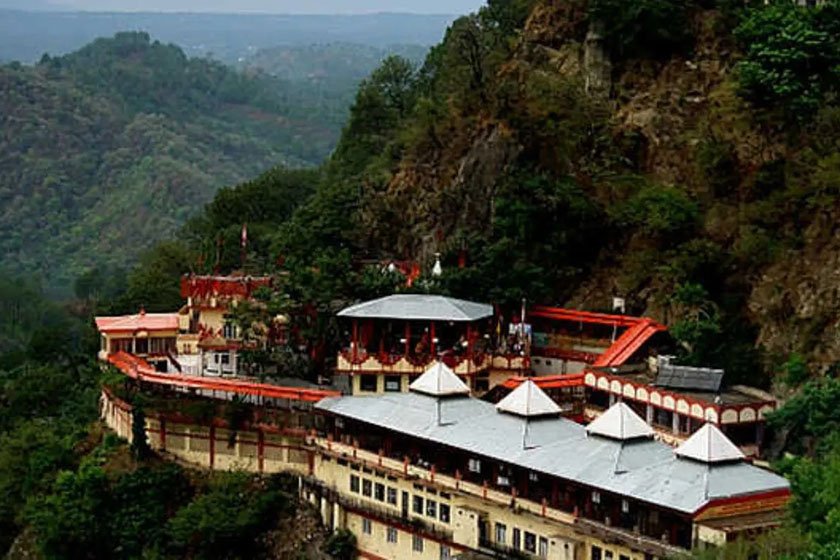
Deotsidh is located at Chakmoh village in Hamirpur district, Himachal Pradesh, close to the border area of Hamirpur and Bilaspur districts. The official Hamirpur district page places Baba Balak Nath Temple about 45 km from Hamirpur, on a hilltop, with the idol of Baba Ji placed inside a natural cave.
Google Maps: Get Directions
- By road: Deotsidh is well connected by road with Hamirpur, Bilaspur, Una, Barsar, Shah Talai, Chandigarh, Punjab, and other nearby regions. The official district page notes that regular bus services and taxis are available, and that the shrine is well connected with major cities of Himachal Pradesh and neighbouring states.
- By rail: There is no direct railway line to Deotsidh. The official district page mentions Una as the nearest broad-gauge railway station, with Una railway station about 55 km from Hamirpur. From Una, travellers continue by road.
- By air: Hamirpur district has no airport. The official district page gives Gaggal Airport near Dharamshala as the nearest airport, about 128 km from Hamirpur. Travellers also commonly use Chandigarh depending on route and convenience.
For most pilgrims, Deotsidh is a road-based journey rather than a difficult trek. The temple is hilltop-based, but the larger pilgrimage route is well established, especially from Hamirpur, Bilaspur, Una, Barsar, and Shah Talai.
🌸 Best Time to Visit
Deotsidh can be visited throughout the year. The official Hamirpur district page clearly states that the shrine can be visited any time throughout the year, while also noting that Sunday is considered especially auspicious for Baba Ji, so weekends and Sundays usually see a heavy rush.
The main pilgrimage season is the month-long Chaitra Mela, traditionally held from 14 March to 13 April every year according to the district page. In 2025, a PTI report published by ThePrint also reported that the month-long Chaitra fair began at Deotsidh on 14 March 2025, confirming the continuing public importance of this annual gathering.
If you want the full devotional atmosphere, visit during Chaitra month or on a Sunday. If you prefer a calmer darshan, choose a weekday outside the fair period. During Chaitra Mela, expect larger crowds, longer queues, traffic arrangements, and higher pressure on accommodation and parking.
🕉️ The Child-Siddh of the Cave
Baba Balak Nath Ji is not worshipped like a distant god of temple sculpture alone. His identity is closer, more intimate, and more folk-rooted. He is remembered as a siddh, a spiritually accomplished being, and as Balak Nath — the child Nath. That childlike name is central to his appeal. Devotees approach him with a sense of affection as well as reverence.
The official Hamirpur district page describes Sidh Baba Balak Nath as a Hindu deity worshipped prominently in Himachal Pradesh, Punjab, Haryana, Chandigarh, Jammu & Kashmir, and other northern regions. His shrine is known as Deothsidh / Deotsidh.
At Deotsidh, Baba Ji is associated with a natural cave. The idol is placed inside the cave, and this gives the shrine a different tone from a temple built only through architecture. A cave shrine carries the feeling of tapasya, withdrawal, and hidden power. It suggests that the saint is not merely installed; he is connected with the hill itself.
🕉️ Baba Balak Nath, Shah Talai, and the Memory of Devotion
The Deotsidh shrine is often understood together with Shah Talai in Bilaspur district, another major place connected with Baba Balak Nath Ji’s legend. Devotees frequently combine both places in one pilgrimage circuit. Shah Talai is linked with Baba Ji’s time as a cowherd and with the stories of his service, testing, and spiritual revelation.
The broad devotional memory of Baba Balak Nath Ji often includes themes of renunciation, celibacy, miraculous power, service, and the saint’s connection with cows and pastoral life. These stories vary in detail from place to place, but they carry the same emotional pattern: Baba Ji appears simple, young, and humble, yet spiritually immense.
This is why Deotsidh does not need to be understood only through dates and buildings. The shrine lives through कथा, song, oral memory, family vows, and repeated journeys. For many devotees, Baba Ji is not a figure from the past. He is a living protector, a granter of wishes, and a saint who remains close to ordinary people.
🙏 What Deotsidh Is Known For
Deotsidh is known above all as the main cave shrine of Baba Balak Nath Ji. The official district page identifies the temple as situated at Chakmoh village on a hilltop, with Baba Ji’s idol placed in the natural cave. It also notes the heavy flow of devotees on Sundays and during the Chaitra fairs.
Devotees visit for blessings, fulfilment of vows, family welfare, protection, and gratitude after wishes are fulfilled. Baba Ji is especially popular among devotees from Himachal Pradesh, Punjab, Haryana, Chandigarh, Jammu & Kashmir, and other northern regions.
One important custom associated with the shrine is that women traditionally do not enter the main cave chamber itself; they have darshan from a designated place. This practice is widely mentioned in visitor accounts and local tradition, but travellers should follow the current instructions displayed by the temple authorities on the day of visit rather than relying only on old information.
The devotional rhythm of Deotsidh is simple but strong: darshan, offerings, queues, songs, prasad, and the repeated call of Jai Baba Balak Nath Ji. The shrine’s fame is not based on spectacle. It is based on generations of trust.
🏛️ The Cave, the Hilltop, and the Pilgrim Flow
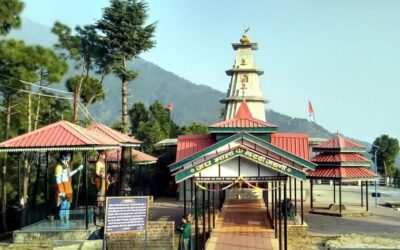
The heart of Deotsidh is the natural cave. Around it, the wider temple complex has grown to manage the movement of thousands of devotees. This is common at major Himalayan shrines: the original sacred point may be small, but the living pilgrimage around it becomes large.
A visitor should remember this contrast. The cave itself is intimate. The approach can be crowded. On Sundays and during Chaitra, the experience may feel less like a quiet meditation and more like a living river of devotees. Bells, announcements, queues, prasad counters, shops, and family groups all become part of the atmosphere.
On a quieter day, the hilltop setting is easier to notice. Deotsidh sits in the lower hill country, not in snowbound Himalaya. The landscape is gentler, but the shrine carries a deep ascetic memory through its cave. The stone, the hill, and the cave form the old centre; everything else has grown around them to serve the pilgrimage.
📜 Temple Trust and Modern Management
Deotsidh is not an unmanaged local shrine. Its administration is formally organised. The official Hamirpur district page states that management and administration of Shri Baba Balak Nath Temple Deothsidh was taken over by the Government of Himachal Pradesh on 16 January 1987 under the Himachal Pradesh Hindu Public Religious Institution and Charitable Endowments Act, 1984. It is looked after by Shri Baba Balak Nath Temple Trust Deothsidh, headed by the Temple Trust Commissioner-cum-Deputy Commissioner, Hamirpur.
The official Baba Balak Nath Deotsidh website also lists the trust organisation, including the Deputy Commissioner Hamirpur-cum-Commissioner, Sub Divisional Officer Barsar, and temple officer roles connected with the management structure.
This formal management matters because Deotsidh receives very large numbers of pilgrims, especially during the Chaitra fair. Crowd movement, offerings, accommodation, vehicle access, and online services require an organised system. The official temple website also provides online services and temple-related updates, which travellers should check before visiting during heavy rush periods.
🎉 Festivals and Devotion
- Chaitra Mela: The main annual fair at Deotsidh, observed for about one month. The official district page lists it from 14 March to 13 April every year.
- Sunday Darshan: Sunday is treated as especially auspicious for Baba Ji, and the district page notes that a heavy rush usually comes on weekends and particularly Sundays.
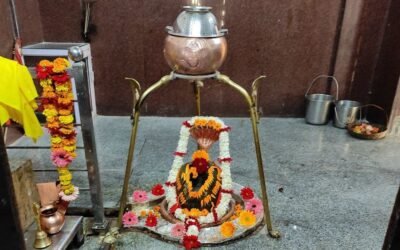
- Offerings and vows: Devotees come with prayers, vows, gratitude offerings, and family wishes. The exact form of offering should follow current temple instructions.
- Cave Darshan: The natural cave is the sacred centre of the shrine. Crowd systems may change during peak periods, so follow temple staff directions.
- Regional Devotion: The shrine draws devotees not only from Himachal, but also from Punjab, Haryana, Chandigarh, Jammu & Kashmir, and other northern states.
🏞️ While You’re in the Area
- Shah Talai: A major associated pilgrimage site of Baba Balak Nath Ji in Bilaspur district, often paired with Deotsidh in one devotional circuit.
- Barsar: A practical nearby town for route access, local services, and onward movement towards Hamirpur or Una.
- Hamirpur Town: The district headquarters, useful for accommodation, transport connections, and a wider understanding of the region.
- Bilaspur: A natural add-on for travellers coming from the Bilaspur side, especially those combining Deotsidh with Shah Talai.
- Una: A useful rail-connected access point for pilgrims coming from Punjab and the plains.
- Naina Devi Ji: A major Shakti shrine in Bilaspur district; best planned as a separate trip or a longer Himachal pilgrimage route.
🙏 Getting in Touch
The official Hamirpur district page gives the Temple Officer contact as +91-1972-286354 and links to the official Shri Sidh Baba Balak Nath Deothsidh website.
The official temple website provides online services and current updates, including booking-related services and notices. Travellers planning during Chaitra Mela, Sundays, or holidays should check current instructions before travelling.
❓ Quick Questions Travellers Ask
Where is Deotsidh located?
Deotsidh is at Chakmoh village in Hamirpur district, near the Hamirpur–Bilaspur border area.
How far is Deotsidh from Hamirpur?
The official Hamirpur district page places it about 45 km from Hamirpur.
Who is worshipped at Deotsidh?
The shrine is dedicated to Sidh Baba Balak Nath Ji, worshipped widely in Himachal Pradesh and northern India.
What is the main festival at Deotsidh?
The main festival is the month-long Chaitra Mela, traditionally held from 14 March to 13 April.
Is Deotsidh difficult to reach?
No. It is well connected by road, with regular bus services and taxis available according to the official district page.
A Last Word
Deotsidh is powerful because it holds two opposite feelings at once. The shrine is famous, organised, and crowded during peak periods. Yet its heart remains a cave — small, old in feeling, and tied to the memory of a child-siddh who refuses to become distant.
Baba Balak Nath Ji’s following is not limited by district lines. It crosses Himachal into Punjab, Haryana, Chandigarh, Jammu & Kashmir, and far beyond. People come because their families came, because a vow was made, because a wish was fulfilled, or because the name of Baba Ji has been carried in their homes for years. At Deotsidh, all of that devotion narrows into one cave on a hilltop. The place is busy, but the centre is still simple.
Fact-check note: Deotsidh’s location at Chakmoh village in Hamirpur district, about 45 km from Hamirpur, its position near the Hamirpur–Bilaspur border, and the presence of Baba Balak Nath Ji’s idol inside a natural cave are supported by the official Hamirpur district tourism page. The same source supports the year-round visiting pattern, Sunday rush, Chaitra Mela from 14 March to 13 April, and formal temple management under Shri Baba Balak Nath Temple Trust Deothsidh after government takeover on 16 January 1987. Legends around Baba Ji, Shah Talai, vows, and cave customs are treated as devotional tradition rather than inscription-based history. Travellers should confirm current crowd rules, online services, and access instructions through the official temple website or temple office before visiting during peak season.