Before Khajjiar became famous as “Mini Switzerland,” it already had an older name, an older guardian, and a wooden temple where the serpent deity still gives meaning to the meadow.
Khajjiar is usually introduced through its landscape first: a saucer-shaped meadow, a small lake, deodar forests, and the Dhauladhar rising quietly behind it. But the deeper story of the place does not begin with a tourist nickname. It begins with Khajji Nag, the serpent deity after whom Khajjiar is believed to have been named.
The temple standing near the meadow is not simply an attraction beside the lake. It is the sacred centre around which the place’s identity has gathered for centuries. Long before tourists arrived for photographs, horse rides, and the open green field, this was a landscape watched over by a local deity, held in memory through wood, stone, serpent worship, and oral tradition.
🌄 Location & How to Reach It
Khajji Nag Temple is located at Khajjiar, in the Chamba district of Himachal Pradesh. The temple stands close to the famous Khajjiar meadow and lake, making it one of the easiest sacred sites to include in a Dalhousie–Khajjiar–Chamba journey. Khajjiar lies roughly between Dalhousie and Chamba, surrounded by pine and deodar forests in the lower Dhauladhar region.
Google Maps: Get Directions
Elevation: Around 6,500 ft / about 1,920–2,000 m for the Khajjiar area.
- By road: Khajjiar is road-accessible from Dalhousie and Chamba. It is commonly given as around 22–24 km from Dalhousie and about 23 km from Chamba, depending on the route and source. Taxis and local vehicles are the most convenient way to reach the temple.
- By rail: The nearest major railway station is Pathankot, roughly 90–100 km away from Khajjiar.
- By air: The nearest airports usually considered for this region are Pathankot Airport and Kangra / Gaggal Airport, though road travel is still required from both.
The temple does not require a trek. It is a road-accessible shrine and can be visited comfortably along with Khajjiar Lake and the surrounding meadow.
🌸 Best Time to Visit
The best time to visit Khajji Nag Temple is generally from April to June and September to November, when the roads are easier, the weather is pleasant, and the meadow is at its most inviting. Summer brings the highest number of visitors to Khajjiar, so the temple can feel very different depending on when you arrive. Morning is usually better for a quieter visit, while afternoons around the meadow can become busy.
Winter has its own charm, especially when snow touches the forests around Khajjiar, but road conditions may change quickly. If you are travelling in winter, it is better to check locally in Dalhousie or Chamba before starting. During the monsoon, fog, slippery roads, and landslide-related delays can affect movement in the region.
There is no need to treat this temple like a ticketed monument with fixed tourist timings. It is a living local shrine. Visit during daylight, dress respectfully, and ask locally if you are planning around a specific ritual or festival.
🕉️ The Serpent Deity Behind the Name Khajjiar
Many travellers come to Khajjiar for the open meadow and only later notice the temple. Locally, the order feels reversed. The meadow carries the deity’s name.
Khajji Nag Temple is dedicated to Khajji Nag, a serpent deity associated with the place. The name Khajjiar itself is believed to have come from this deity and shrine. That single detail changes how the landscape should be understood. Khajjiar is not just a scenic meadow with a temple beside it. It is a sacred landscape whose identity is tied to its guardian deity.
Nāga worship has deep roots across many parts of the western Himalayas. In mountain traditions, serpent deities are often connected with water, fertility, protection, rainfall, land, and hidden forces beneath the earth. These deities are not distant mythological figures alone. In many villages, they are protectors of territory, community, crops, and balance.
At Khajjiar, this older devotional world survives quietly. It is held in the shrine, in the name of the meadow, in local memory, and in the way the temple continues to stand near the lake. Visitors may come for the landscape, but the landscape itself carries the name of the deity.
🏛️ A Temple Older Than the Tourist Name
Khajjiar’s modern fame is tied to its popular title, “Mini Switzerland of India.” That label has made the meadow widely known among tourists. But Khajji Nag Temple belongs to a much older layer of Khajjiar’s identity.
The exact age of the temple is not presented uniformly across all sources. Some accounts describe it as a 10th-century temple, while others refer to it as a 12th-century shrine. The safest way to understand this is not to force one exact date. What can be said carefully is that Khajji Nag Temple is an old and important shrine, remembered for its serpent deity, wooden architecture, and long association with the Khajjiar landscape.
In places like Khajjiar, history does not always arrive in a clean inscription or a single founding year. It often survives through architecture, local belief, repeated worship, and the way a name remains attached to a place. Khajji Nag Temple is one such site. Its importance is not only in how old it may be, but in how deeply it has shaped the identity of the meadow around it.
🙏 What Khajji Nag Temple Is Known For
Khajji Nag Temple is known first for its dedication to Khajji Nag, the serpent deity. This makes it one of the most important sacred sites in Khajjiar, because the place itself is believed to derive its name from the deity.
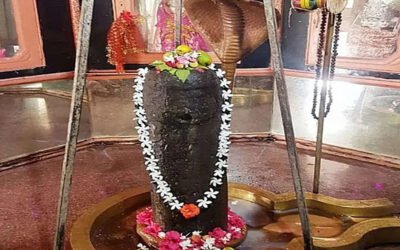
The temple is also known for its layered devotional character. Along with the main serpent deity, the temple area is associated with adjoining shrines of Lord Shiva and Hadimba Devi. This kind of sacred clustering is common in Himachal Pradesh, where one temple complex may hold several devotional traditions together without needing to separate them into neat categories.
For devotees, Khajji Nag is not simply a mythological symbol. He is a local protector, connected with the land and its unseen balance. In serpent-deity traditions, the deity is approached with respect, and the shrine is treated as part of the living spiritual geography of the village and meadow.
For travellers, this changes the experience of Khajjiar. Outside, the meadow may be full of activity — tourists walking, horses moving, cameras clicking, families sitting on the grass. Near the temple, the mood becomes slower. The shrine reminds visitors that Khajjiar is not only a scenic destination. It is also a place with a guardian, a memory, and a sacred name.
🏛️ Wood, Slate, and the Golden-Domed Shrine
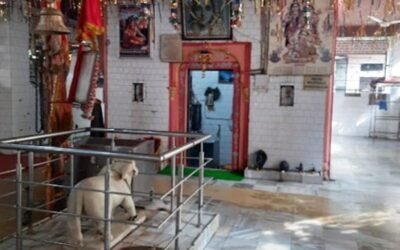
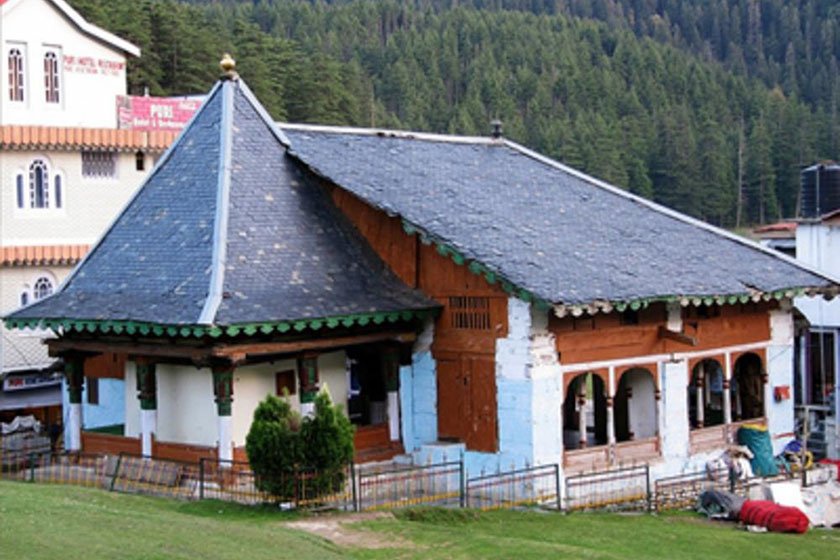
Khajji Nag Temple is especially important for its architecture. The temple is known for its wooden posts, carved ceiling, and a structure that reflects the old craftsmanship of the Chamba region. The wooden work is one of the most memorable parts of the shrine, carrying patterns, figures, and a sense of time that plain walls cannot give.
The temple is also associated with a distinctive golden dome and spire, because of which it is sometimes connected with the name Golden Devi Temple in tourism references. The shrine structure has also been described as having a slate-based dome form, using local material from the region.
One of the most interesting features of the temple is the blend of Hindu and Mughal artistic influence seen in its wooden ceilings and posts. This does not mean the temple loses its local identity. Rather, it shows how mountain architecture often absorbed artistic languages from different directions while still remaining deeply rooted in its own place.
The building is not grand in the way large plains temples are grand. Its strength is quieter. The wood gives it warmth. The carved posts ask for close attention. The ceiling holds the eye. The temple feels less like a monument made for display and more like a sacred interior shaped slowly by devotion, craft, and memory.
📜 The Pandavas, the Kauravas, and a Ceiling Full of Memory
Khajji Nag Temple is also associated with carvings linked to the Mahabharata tradition. Local and tourism accounts mention wooden figures and carved representations connected with the Pandavas and Kauravas. Some descriptions refer to figures of the five Pandavas — Yudhishthira, Bhima, Arjuna, Nakula, and Sahadeva — placed in the temple space.
These traditions should be understood with care. They are not archaeological proof of a specific event from the Mahabharata. They are part of local sacred memory. In the Himalayas, epic stories often attach themselves to temples, caves, lakes, stones, trees, and mountain routes. These stories help communities understand their landscape through the language of dharma, exile, protection, conflict, and divine presence.
At Khajji Nag Temple, the Mahabharata association turns the wooden interior into more than decoration. The carvings become a way of reading the shrine. A visitor is not simply looking at old woodwork. The temple invites the viewer into a world where serpent worship, epic memory, local deities, and mountain craftsmanship all stand together.
This is one of the reasons the temple deserves more attention than it usually receives. Khajjiar’s meadow is photographed constantly, but the temple holds the deeper story. It tells us that this landscape was not empty scenery waiting to be admired. It was already named, guarded, and remembered.
🕉️ Khajji Nag, Shiva, and Hadimba: A Himalayan Sacred Cluster
Khajji Nag is the main deity associated with the temple, but the sacred space around the shrine is not narrow. The presence of Shiva and Hadimba Devi in adjoining shrines gives the temple a layered character.
This is very common in Himachal’s sacred geography. A local devta may be central, but Shiva may stand nearby. A goddess may share the same space. An epic story may be remembered in carving. A natural feature like a lake or meadow may become part of the shrine’s identity. The result is not confusion. It is a Himalayan way of holding multiple forms of devotion within one sacred landscape.
Hadimba’s presence is especially interesting because she is strongly remembered in Himachal through the famous Hadimba Devi Temple in Manali, but local goddess traditions are never limited to one place alone. Her association here adds another layer to the sacred personality of Khajjiar.
Khajji Nag Temple therefore should not be treated as just one small stop near the lake. It is a compact sacred cluster where serpent worship, Shaiva devotion, goddess tradition, and epic memory meet.
🎉 Festivals and Devotion
- Local Nāga worship: The temple’s primary devotional identity is linked with Khajji Nag, the serpent deity after whom Khajjiar is believed to be named.
- Village and regional devotion: The shrine continues to be important as a local sacred place, not just a tourist attraction. Visitors should remember that it is part of a living devotional landscape.
- Mahabharata-linked memory: The carvings associated with the Pandavas and Kauravas give the temple an epic layer that many visitors may miss if they only walk around the meadow.
- Seasonal visits: The most comfortable travel months are April to June and September to November, but local confirmation is best if planning around a specific ritual or gathering.
- Respectful conduct: Photography rules, access to inner areas, and ritual timings should be checked locally. Small Himalayan temples often follow local custom rather than formal tourist signage.
🏞️ While You’re in the Area
- Khajjiar Lake: The small lake beside the meadow is the best-known natural feature of Khajjiar. Its grassy edges, floating vegetation, and surrounding deodar landscape make it a natural companion to the temple visit.
- Khajjiar Meadow: The open saucer-shaped meadow is the landscape that made Khajjiar famous. Visiting the temple first can change how you see the meadow, because the place carries the name of Khajji Nag.
- Kalatop Khajjiar Sanctuary: A forested area near Khajjiar, known for deodar, fir, wildlife, and walking routes. It pairs well with Khajjiar for travellers who want more than a quick photo stop.
- Dalhousie: A practical base for visiting Khajjiar, especially for travellers looking for hotels, road access, and a wider hill-station circuit.
- Chamba Town: A strong cultural addition to the journey, with old temples, historic settlement patterns, and the larger district identity to which Khajjiar belongs.
- Dhauladhar viewpoints: On clear days, the mountain ridges around Khajjiar give the temple and meadow a wider Himalayan frame.
🙏 Getting in Touch
There is no clearly verified public temple office, booking process, or official priest contact widely available for Khajji Nag Temple. For access, rituals, local customs, or festival-related information, ask locally at Khajjiar, Dalhousie, or Chamba before planning around a specific event.
If you are visiting as a traveller, arrive during daylight and treat the shrine as a living temple. Remove shoes where required, avoid loud behaviour, and ask before photographing inner sacred spaces.
❓ Quick Questions Travellers Ask
Where is Khajji Nag Temple located?
Khajji Nag Temple is located at Khajjiar in the Chamba district of Himachal Pradesh, close to Khajjiar Lake and the famous meadow.
Which deity is worshipped at Khajji Nag Temple?
The temple is dedicated to Khajji Nag, a serpent deity associated with the landscape and name of Khajjiar.
Why is Khajji Nag Temple important?
It is important because Khajjiar is believed to derive its name from Khajji Nag, making the temple central to the identity of the place.
How old is Khajji Nag Temple?
Sources differ. Some describe it as a 10th-century temple, while others call it a 12th-century shrine. It is safest to describe it as an ancient temple with a precise date that varies across sources.
What is special about its architecture?
The temple is known for its wooden posts, carved ceiling, slate and dome elements, golden spire association, and a blend of Hindu and Mughal artistic influence.
Is Khajji Nag Temple near Khajjiar Lake?
Yes. The temple is close to Khajjiar Lake and the main meadow, so both can be visited together.
Can Khajji Nag Temple be visited from Dalhousie?
Yes. Khajjiar is commonly visited as a day trip or half-day trip from Dalhousie, which is around 22–24 km away by road.
Is there a trek to reach the temple?
No. The temple is road-accessible and does not require a trek.
What is the best time to visit Khajji Nag Temple?
The best months are generally April to June and September to November. Winter visits are possible, but road conditions should be checked locally.
Are photos allowed inside the temple?
Photography rules may depend on local custom and temple access at the time of visit. It is better to ask before photographing the inner shrine or sacred objects.
A Last Word
Khajji Nag Temple asks the visitor to look at Khajjiar differently. The meadow is beautiful, but beauty is not the oldest thing here. Before the tourist signboards, before the nickname, before the comparisons with Europe, there was a local deity whose name stayed with the land.
That is the quiet strength of this temple. It does not need to dominate the meadow to define it. It stands close to the lake with wooden posts, carved figures, serpent memory, and adjoining shrines, holding together a world where landscape and worship are not separate things.
Khajjiar may be photographed for its open grass and deodar frame, but its deeper name still belongs to Khajji Nag.
Fact-check note: Khajji Nag Temple’s location at Khajjiar in Chamba district, its dedication to the serpent deity Khajji Nag, and the belief that Khajjiar’s name derives from the shrine are consistently supported by available tourism references. The temple is widely described for its wooden posts, carved ceiling, golden dome or spire association, and a blend of Hindu and Mughal artistic influence. Public sources differ on whether the temple should be described as 10th century or 12th century, so this article treats the exact construction date cautiously rather than forcing one settled year. Details about Mahabharata-linked carvings, adjoining shrines of Shiva and Hadimba, and the temple’s local devotional role are presented as sacred and regional tradition rather than archaeological proof.