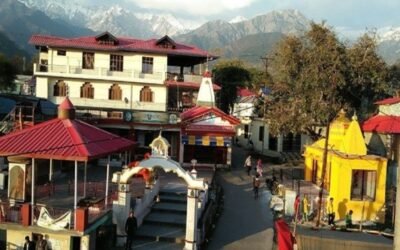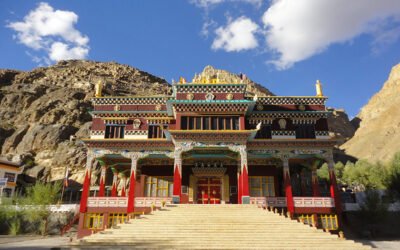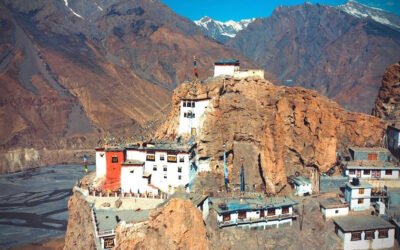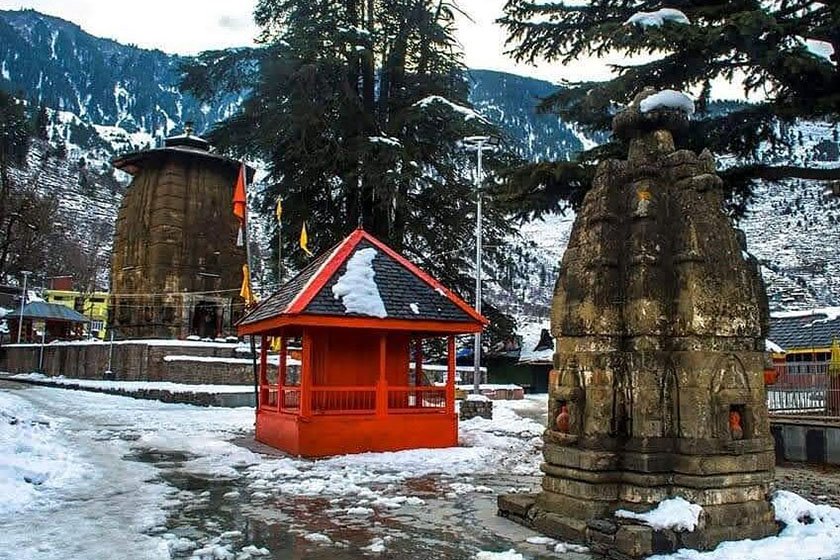
In the centre of Bharmour, where the old capital of the Chamba rulers still carries the memory of sages, Shiva worship, and Himalayan devta traditions, the Chaurasi Temple Complex stands as one of Himachal Pradesh’s most powerful sacred landscapes.
Chaurasi Temple Complex is located in Bharmour town of Chamba district, Himachal Pradesh. The word Chaurasi means eighty-four, and the complex is traditionally associated with 84 ancient shrines spread around a level temple ground in the heart of Bharmour. This is not a single temple but a sacred cluster where Shiva, Shakti, Vishnu, Ganesh, Nandi, Dharamraj, and other divine forms are worshipped together.
Bharmour was historically known as Brahmpura, the old capital of the Chamba region before the capital shifted to Chamba town. Even today, the life and identity of Bharmour are closely connected with the Chaurasi Temple Complex. The temple ground is not only a place of worship but also a cultural centre where festivals, rituals, local gatherings, and pilgrimage traditions continue to live.
For devotees going towards Manimahesh Kailash, Chaurasi is an important stop. For heritage lovers, it is one of the finest places to understand the old religious architecture of the western Himalaya. For travellers, it is a calm and deeply atmospheric temple complex surrounded by the mountain world of Bharmour.
🌄 Location & How to Reach It
Chaurasi Temple Complex is located in the centre of Bharmour town, around 60 km from Chamba. Bharmour lies in the upper Chamba region and is one of the most important spiritual bases for the Manimahesh Yatra.
Google Maps: Chaurasi Temple Complex, Bharmour
Approximate elevation of Bharmour: around 2,100 metres
District: Chamba
Nearest major town: Chamba
Route: Chamba → Khadamukh → Bharmour → Chaurasi Temple Complex
- By road: Bharmour is connected by road from Chamba. From the Bharmour taxi stand or main town area, the temple complex can be reached on foot.
- By rail: The nearest commonly used railway station is Pathankot, followed by a road journey towards Chamba and Bharmour.
- By air: The nearest practical airport is Gaggal Airport, Kangra, followed by a long road journey towards Chamba and Bharmour.
- Local movement: Vehicles generally do not enter the inner temple ground area. Visitors usually walk from nearby parking or market areas.
The temple complex is easier to visit than remote trekking shrines because it lies within Bharmour town itself. However, the road journey to Bharmour is a mountain route, so weather and road conditions should still be checked during monsoon, winter, and Manimahesh Yatra season.
🌸 Best Time to Visit
The best time to visit Chaurasi Temple Complex is from April to October, when the weather is more comfortable and the road to Bharmour is generally more accessible.
The most spiritually active period is around the Manimahesh Yatra, when thousands of devotees travel through Bharmour on their way towards Manimahesh Lake and Manimahesh Kailash. During this time, the town becomes highly devotional, but it can also become crowded.
For peaceful exploration, May, June, September, and October are good months. During winter, Bharmour can become very cold, and higher areas around the region may receive snowfall. The Chaurasi Temple Complex itself remains within the town, but travel conditions can still be affected by weather.
🕉️ Why It Is Called Chaurasi
The name Chaurasi comes from the number 84. Local tradition connects the temple complex with 84 siddhas or yogis who are believed to have meditated in Bharmour while travelling towards Manimahesh. Because of this association, the sacred ground came to be known as Chaurasi.
The number 84 also has deep symbolic value in Hindu belief. It is often connected with the idea of 84 lakh yonis, or the many forms of existence through which the soul passes. Because of this, the Chaurasi Temple Complex is not only seen as a group of shrines but also as a place linked with liberation, spiritual progress, and the journey beyond ordinary life.
In Bharmour, this belief is not treated as distant mythology. It is woven into local pilgrimage practice. Devotees visiting Manimahesh often pay respect at Chaurasi before or after their journey.
🏛️ The Sacred Layout of the Complex
Chaurasi Temple Complex is built around an open temple ground in the centre of Bharmour. The shrines are arranged across this sacred space, with the Manimahesh Temple standing as one of the central and most important temples.
Unlike many temple sites where one shrine dominates everything, Chaurasi works as a sacred cluster. The experience is of moving from one deity to another, from Shiva to Shakti, from Nandi to Ganesh, from Narasimha to Dharamraj. Each shrine adds one layer to the spiritual character of the place.
The complex has a strong Himalayan atmosphere. The mountains around Bharmour, the old temple forms, the local devotees, the sound of bells, and the open courtyard together create a feeling that the whole town has grown around this sacred centre.
🕉️ Manimahesh Temple – The Main Shiva Shrine
The Manimahesh Temple is one of the most important shrines inside the Chaurasi Temple Complex. It is dedicated to Lord Shiva, who is worshipped here in connection with Manimahesh Kailash, the sacred peak believed to be associated with Shiva.
For many devotees, Chaurasi and Manimahesh are spiritually connected. The journey to Manimahesh Lake is not only a mountain pilgrimage but also a Shiva yatra, and Bharmour’s Chaurasi Temple Complex acts as one of its main devotional anchors.
The Manimahesh Temple is noted for its Himalayan temple architecture and its central place within the complex. It is often described as one of the main visual and spiritual focal points of Chaurasi.
🌺 Lakshana Devi Temple – One of the Oldest Wooden Shrines
The Lakshana Devi Temple, also known locally as Lakhna Devi Temple, is one of the most historically important shrines in the Chaurasi Temple Complex. It is dedicated to Goddess Durga in her Mahishasuramardini form, the slayer of the buffalo demon Mahishasura.
This temple is especially important because it preserves an old wooden temple tradition of the western Himalaya. The carved wooden doorway, interior details, and ancient artistic style make it one of the most valuable heritage structures in Bharmour.
Lakshana Devi Temple shows that Chaurasi is not only a Shiva centre but also an important Shakti site. The presence of the goddess gives the complex a balance of Shiva and Shakti, which is very common in the sacred geography of Himachal Pradesh.
🐂 Nandi Temple
The Nandi Temple is another important feature of the Chaurasi Temple Complex. Nandi, the sacred bull of Lord Shiva, is worshipped as Shiva’s vehicle and devotee. In many Shiva temples, Nandi sits facing the main shrine, symbolising devotion, patience, and complete surrender.
At Chaurasi, the Nandi presence adds to the strong Shaivite identity of the complex. Devotees often offer prayers here before moving towards the main Shiva shrine.
🦁 Narasimha Temple
The Narasimha Temple is dedicated to Lord Vishnu in his fierce half-man, half-lion form. Narasimha is worshipped as the protector of dharma and the destroyer of arrogance and evil.
The presence of Narasimha inside Chaurasi shows that the complex is not limited to one tradition alone. While Shiva worship dominates the spiritual identity of Bharmour, Vishnu worship also has an important place within the sacred cluster.
🐘 Ganesh Temple
The Ganesh Temple is usually associated with the entrance side of the temple complex. Lord Ganesh is worshipped as the remover of obstacles and the first deity to be invoked before any sacred work or journey.
For pilgrims beginning their movement towards Manimahesh or entering the Chaurasi complex for darshan, the presence of Ganesh carries a natural meaning. The devotee first seeks removal of obstacles, then moves deeper into the sacred space.
⚖️ Dharamraj Temple – The Rare Temple of the Lord of Justice
One of the most fascinating shrines in the Chaurasi Temple Complex is the Dharamraj Temple, also known as Dharmeshwar Mahadev. Dharamraj is associated with Yamraj, the divine judge of death and justice.
This temple is surrounded by strong local belief. Many visitors are drawn to it because temples connected with Dharamraj are rare. The shrine gives Chaurasi a deeper philosophical character. It is not only a place for asking blessings in life but also a place that reminds devotees of karma, death, judgement, and liberation.
In this way, the Chaurasi Temple Complex holds the full circle of spiritual reflection — birth, life, devotion, death, and moksha.
👑 Historical Importance of Bharmour
Bharmour was once known as Brahmpura and served as an early capital of the Chamba rulers. This gives Chaurasi Temple Complex major historical value. It is not just a local temple ground; it belongs to the old political and religious centre of the region.
The temple complex is generally associated with the early medieval period, with many references placing its origins around the 7th century, though repairs and changes have taken place over time. The complex reflects the long continuity of worship in Bharmour, where old temples have remained active rather than becoming only archaeological monuments.
This living continuity is one of the most important things about Chaurasi. People do not visit it only to see old stones and wooden carvings. They come for darshan, rituals, blessings, fairs, and community life.
🧘 The Legend of 84 Siddhas
According to local tradition, 84 siddhas came to Bharmour while travelling towards Manimahesh. They meditated here and blessed the ruler. The temple complex is believed to have been built in honour of these siddhas.
This legend gives Chaurasi its spiritual foundation. The ground is seen as sanctified by meditation, tapasya, and divine presence. In Himalayan belief, a place becomes powerful not only because a temple is built there but because sages, deities, and communities have charged the landscape through long worship.
That is exactly how Chaurasi feels. It is not only architecture. It is memory, meditation, and devotion collected over centuries.
🏔️ Connection with Manimahesh Yatra
Chaurasi Temple Complex is deeply connected with the Manimahesh Yatra. Bharmour is one of the key bases for pilgrims travelling towards Manimahesh Lake, and many devotees visit Chaurasi as part of their pilgrimage.
The belief that Manimahesh Yatra should be connected with darshan at Bharmour’s sacred temples gives Chaurasi a special place in the wider Shiva pilgrimage route. The complex acts almost like a spiritual gateway before the more difficult mountain journey begins.
During yatra season, the temple area becomes more active, with pilgrims, local devotees, rituals, and movement through the town. For someone who wants to see Bharmour at its most devotional, this is a powerful time to visit. For someone who wants silence, the non-yatra months are better.
🪵 Architecture and Heritage Value
The Chaurasi Temple Complex contains different architectural styles and materials, including stone and wood traditions of the western Himalaya. Some shrines show shikhara-style temple forms, while others preserve older local wooden elements.
The Lakshana Devi Temple is especially significant for its wooden carving tradition. The Manimahesh Temple stands out for its centrality and strong temple form. Smaller shrines around the ground add to the impression of a sacred mandala, where each deity has a place within the larger spiritual design.
The beauty of Chaurasi lies in this combination. It is not polished like a newly built urban temple. It carries age, local character, repairs, living worship, and mountain simplicity.
🌿 Nearby Places to Explore
Bharmani Mata Temple
Bharmani Mata Temple is located above Bharmour and is strongly connected with local pilgrimage belief. Many devotees visit it along with Chaurasi.
Manimahesh Lake
One of the most important Shiva pilgrimage sites in Himachal Pradesh. The lake lies below Manimahesh Kailash and is reached through a high-altitude pilgrimage route.
Hadsar
Hadsar is an important point on the Manimahesh route and serves as a base for the trek towards the lake.
Kugti Village
A remote and beautiful village connected with old Gaddi routes, Kugti Pass, and Kartik Swami Temple.
Kartik Swami Temple, Kugti
A sacred shrine dedicated to Lord Kartikeya, located above Kugti village and associated with old mountain routes and pass-crossings.
Chhatrari Devi Temple
An ancient Shakti temple in the wider Chamba-Bharmour region, known for its old idol and traditional Himalayan architecture.
📌 Visitor Tips
Remove footwear before entering temple areas where required and follow local instructions respectfully.
Visit early morning or evening for a calmer experience, especially outside the main yatra rush.
During Manimahesh Yatra season, expect more crowds, traffic, and limited accommodation availability in Bharmour.
Carry warm clothing even in summer, as Bharmour’s weather can become cool, especially in the evening.
Photography may be restricted inside some shrines. Always ask before taking photos of idols, rituals, or local devotees.
Avoid littering in and around the complex. Chaurasi is a living sacred site, not a picnic ground.
If you are planning Manimahesh Yatra, confirm route, registration, weather, and local instructions before starting.
🧭 Why Chaurasi Temple Complex Matters
Chaurasi Temple Complex matters because it is the spiritual centre of Bharmour. It carries the memory of ancient Brahmpura, the devotion of Shiva and Shakti worship, the legend of 84 siddhas, and the living faith of the Chamba Himalaya.
It is also one of the best places to understand how Himachal’s sacred sites work. Here, temples are not isolated buildings. They are connected with towns, rulers, saints, seasonal pilgrimages, local devtas, mountain routes, and community life.
Chaurasi is important for history, but it is not frozen in history. It is still alive. People still gather here, pray here, sit here, and begin their spiritual journeys from here.
✨ Final Thoughts
Chaurasi Temple Complex, Bharmour, is one of Himachal Pradesh’s most meaningful sacred sites. It is ancient, but not silent. It is historical, but still living. It is architectural, but more than architecture.
To walk through Chaurasi is to walk through the old soul of Bharmour. Every shrine adds a different layer — Shiva, Shakti, Vishnu, Ganesh, Nandi, Dharamraj, siddhas, kings, pilgrims, and local people. Together, they create a sacred world that cannot be understood by seeing only one temple.
For devotees, Chaurasi is a place of darshan and blessings. For Manimahesh pilgrims, it is a spiritual gateway. For travellers, it is one of the most powerful heritage experiences in Chamba district.
In Bharmour, the Chaurasi Temple Complex is not simply a monument. It is the heart of the town, the memory of Brahmpura, and one of the great sacred centres of the western Himalaya.
*Fact-check note: Chaurasi Temple Complex is located in the centre of Bharmour town in Chamba district and is traditionally associated with 84 shrines. Bharmour is historically connected with Brahmpura, the old capital of the Chamba region. Major temples commonly listed in the complex include Manimahesh Temple, Lakshana Devi Temple, Narasimha Temple, Nandi Temple, Ganesh Temple, and Dharamraj / Dharmeshwar Mahadev Temple. The Lakshana Devi Temple is especially important as an early wooden shrine associated with Durga in Mahishasuramardini form. The complex is widely connected with Manimahesh pilgrimage traditions, but individual legends and exact dating should be treated with care because local traditions and historical references sometimes differ. Sources used for verification include Bharmour-focused local references, temple/travel documentation, and general heritage summaries. *