High above Bharmour, where the air becomes thin, the path becomes silent, and the mountains begin to feel like a living temple, Manimahesh stands as one of Himachal Pradesh’s most powerful Shiva pilgrimages.
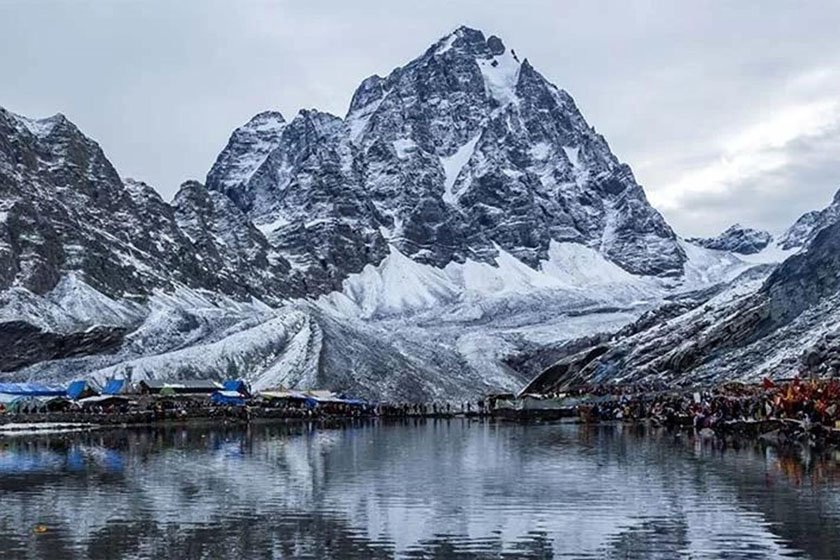
Manimahesh is one of the most sacred pilgrimage destinations in Chamba district, Himachal Pradesh. The holy Manimahesh Lake lies in the Budhil Valley, around 26 km from Bharmour, at the foot of the majestic Manimahesh Kailash peak. The lake is traditionally associated with Lord Shiva, and every year thousands of devotees undertake the difficult mountain journey to take darshan of the sacred lake and the snow-covered Kailash rising above it.
For devotees, Manimahesh is not only a lake. It is a place where Shiva is believed to reside in mountain form. For trekkers, it is a high-altitude Himalayan route of great beauty. For the people of Bharmour and Chamba, it is one of the deepest spiritual identities of the region.
The name Manimahesh is commonly understood as a combination of Mani and Mahesh. Mani means jewel, and Mahesh refers to Lord Shiva. In popular belief, the shining peak above the lake is connected with the jewel-like presence of Shiva. When sunlight touches the mountain, devotees often see it as a divine sign.
🌄 Location & How to Reach It
Manimahesh Lake is located near Bharmour in Chamba district, Himachal Pradesh. The lake lies at an altitude of around 13,000 feet, below Manimahesh Kailash, which is commonly listed at around 18,564 feet.
Google Maps: Manimahesh Lake, Bharmour
Approximate elevation of Manimahesh Lake: around 13,000 feet
District: Chamba
Nearest major base: Bharmour
Main trek starting point: Hadsar
Route: Chamba → Bharmour → Hadsar → Dhancho → Gauri Kund → Manimahesh Lake
- By road: Reach Chamba, then travel towards Bharmour. From Bharmour, the road continues towards Hadsar, which is the usual starting point of the Manimahesh trek.
- By trek: From Hadsar, pilgrims trek towards Dhancho, then continue towards Gauri Kund and finally Manimahesh Lake.
- By rail: The commonly used railway station is Pathankot, followed by a long road journey to Chamba and Bharmour.
- By air: The nearest practical airport is Gaggal Airport, Kangra, followed by road travel towards Chamba and Bharmour.
The trek from Hadsar to Manimahesh Lake is usually described as around 13 to 14 km one way, depending on the route reference and local measurement. Travel operators and trekking guides commonly list the distance in this range.
🌸 Best Time to Visit
The best time to visit Manimahesh is during the official Manimahesh Yatra period, which usually falls around August and September, depending on the Hindu calendar and local administration schedule. The main fair is traditionally held on the eighth day of the light half of the moon in the month of Bhadon, when thousands of pilgrims gather at the lake for the holy dip.
For trekking and pilgrimage, the safer travel window is generally from late August to September, when the route is officially active and arrangements are usually available. Some travellers also visit in the wider summer-autumn window, but off-season travel should be avoided without proper local guidance.
In winter and early spring, the route can become dangerous due to snow, ice, damaged trails, and weather changes. Recent reports also show that authorities may restrict or ban trekking beyond Hadsar during heavy snowfall or unsafe trail conditions.
🕉️ Spiritual Importance of Manimahesh
Manimahesh is one of the most revered Shiva pilgrimage sites in Himachal Pradesh. The lake is believed to be connected with Lord Shiva, and the mountain peak above it is worshipped as Manimahesh Kailash. Devotees believe that Shiva resides here, and the yatra is performed with deep faith, discipline, and surrender.
The journey is not easy. Pilgrims walk through steep trails, cold weather, waterfalls, resting points, and high-altitude terrain. This difficulty is part of the spiritual meaning of Manimahesh. The yatra teaches patience, endurance, humility, and devotion.
For many devotees, taking a dip in the holy lake is considered highly sacred. The lake water is believed to purify the soul and remove sins. The darshan of Manimahesh Kailash reflected in the lake is considered especially auspicious.
🏔️ Manimahesh Kailash – The Sacred Peak
The mountain above the lake is known as Manimahesh Kailash. It rises dramatically over the lake and gives the pilgrimage its powerful visual identity. The official Chamba district reference places the Kailash peak at around 18,564 feet.
Unlike many mountains that are climbed for adventure, Manimahesh Kailash is treated primarily as a sacred peak. Devotees do not see it only as geography. They see it as the seat of Lord Shiva.
The peak often remains partly hidden by clouds. Local belief gives deep importance to darshan of the peak. When the clouds open and the peak becomes visible, pilgrims often consider it a blessing.
🛕 Connection with Bharmour and Chaurasi Temple Complex
Bharmour is the main spiritual gateway to Manimahesh. Before beginning or after completing the yatra, many devotees visit the Chaurasi Temple Complex in Bharmour. This ancient temple complex is closely connected with the sacred identity of Bharmour and the wider Manimahesh pilgrimage.
The Chaurasi Temple Complex is associated with Shiva worship, ancient Brahmpura traditions, and the legend of 84 siddhas. For many pilgrims, Manimahesh Yatra feels incomplete without darshan at Chaurasi.
This connection between Bharmour and Manimahesh is important. The yatra does not begin only at the trailhead. Spiritually, it begins in Bharmour, where devotees prepare their mind before moving towards the high lake.
🚶 The Trek Route from Hadsar
The most common route to Manimahesh Lake begins from Hadsar, a village beyond Bharmour. From Hadsar, the trail climbs towards Dhancho, which is one of the main resting points on the yatra route. From Dhancho, the path continues towards Gauri Kund and then to Manimahesh Lake.
A common route structure is:
Bharmour → Hadsar → Dhancho → Gauri Kund → Manimahesh Lake
The first major stretch from Hadsar to Dhancho is known for waterfalls, mountain scenery, and a gradual but tiring climb. Dhancho is often used as a night halt during the yatra season. From Dhancho, the route becomes more demanding as pilgrims move towards higher altitude.
The trail is devotional, but it is also physically challenging. Pilgrims should not underestimate the climb. Proper shoes, warm clothes, rain protection, water, and basic fitness are important.
🌺 Gauri Kund
Gauri Kund is an important sacred point on the way to Manimahesh Lake. It is traditionally associated with Goddess Parvati. Many women pilgrims take a holy bath here before proceeding towards the main lake.
The presence of Gauri Kund adds a Shakti dimension to the yatra. Manimahesh is mainly known as a Shiva pilgrimage, but the journey also carries the presence of Parvati, the divine mother, and the mountain goddess tradition.
The route around Gauri Kund is high-altitude terrain, so visitors should move carefully and follow local instructions during yatra season.
🙏 The Holy Dip at Manimahesh Lake
The sacred bath at Manimahesh Lake is one of the most important parts of the yatra. Devotees take a dip in the cold lake water while chanting the name of Lord Shiva. The official Chamba district reference notes that the annual fair attracts thousands of pilgrims who assemble at the lake to take a holy dip.
The water is extremely cold, and the altitude can affect the body. Pilgrims should be careful, especially elderly visitors or those with breathing, heart, or blood pressure issues. Faith is important, but safety should not be ignored.
Many devotees also offer prayers at the lake and sit quietly facing Manimahesh Kailash. The silence of the lake, the reflection of the mountain, and the chanting of pilgrims create a powerful atmosphere.
🧘 Legends and Beliefs of Manimahesh
Many legends are associated with Manimahesh. The most common belief is that Lord Shiva resides at Manimahesh Kailash. The lake below the peak is seen as a sacred space connected with Shiva’s divine presence.
Local stories also say that the peak cannot be climbed by ordinary human effort because it belongs to Shiva. The mountain is respected as a living sacred form, not as an object of conquest.
Another belief is connected with the visibility of the peak. If the clouds part and a devotee receives clear darshan of Manimahesh Kailash, it is considered a special blessing. If the peak remains hidden, people often accept it as Shiva’s own will.
These beliefs are part of what makes Manimahesh different from an ordinary trek. The mountain is not just seen. It is approached with reverence.
🐐 Gaddi Culture and the Manimahesh Landscape
The Bharmour region is deeply connected with the Gaddi community, whose seasonal movements, pastoral life, and devta traditions have shaped the sacred geography of the area. Manimahesh lies within this broader Himalayan world of grazing routes, high pastures, village deities, and Shiva devotion.
For the people of Bharmour, Manimahesh is not only a pilgrimage destination visited once a year. It is part of local identity. The lake, the peak, the routes, the temples, and the stories all belong to the living memory of the region.
This is why Manimahesh should be understood not only as a tourist trek but as a sacred cultural landscape.
🌿 Nearby Places to Explore
Chaurasi Temple Complex, Bharmour
The spiritual heart of Bharmour and an important stop for devotees connected with Manimahesh Yatra.
Bharmani Mata Temple
A highly revered temple above Bharmour, often visited by pilgrims before Manimahesh.
Hadsar
The main starting point for the Manimahesh trek.
Dhancho
A major resting point on the route between Hadsar and Manimahesh Lake.
Gauri Kund
A sacred water point associated with Goddess Parvati on the way to the lake.
Kugti Village
A beautiful remote village connected with old Gaddi routes, Kugti Pass, and Kartik Swami Temple.
Kartik Swami Temple, Kugti
A sacred temple dedicated to Lord Kartikeya, associated with old mountain routes and pass-crossings.
📌 Visitor Tips
Register for the yatra if official registration is required during the pilgrimage season.
Check the latest route, weather, and administration advisories before travelling. Manimahesh lies in a high-altitude zone where conditions can change quickly.
Do not attempt the trek during heavy snowfall, landslides, or official restrictions.
Carry warm clothing, rain protection, proper trekking shoes, water, dry food, a torch, and basic medicines.
Start early from Hadsar or Dhancho so that you are not walking difficult sections in darkness.
Respect the lake. Do not throw plastic, clothes, food packets, or religious waste into the water.
Avoid loud music and irresponsible behaviour. This is a sacred pilgrimage route.
People with heart problems, breathing issues, high blood pressure, or serious medical conditions should consult a doctor before attempting the trek.
During peak yatra, expect crowds, traffic, limited accommodation, and slower movement.
🧭 Why Manimahesh Matters
Manimahesh matters because it brings together everything that defines sacred Himachal: Shiva devotion, mountain faith, difficult pilgrimage, local culture, high-altitude beauty, and the living power of ancient routes.
It is not an easy place. That is part of its meaning. The climb tests the body before the lake opens before the eyes. The cold air, the steep path, the chanting pilgrims, and the sudden view of Manimahesh Kailash create an experience that stays in memory for life.
For devotees, Manimahesh is a darshan of Shiva’s Himalayan form. For travellers, it is a journey into one of the most dramatic landscapes of Chamba. For Bharmour, it is the sacred identity around which faith, culture, and pilgrimage continue to revolve.
✨ Final Thoughts
Manimahesh, Bharmour, is not just a destination. It is a yatra. It is a test of devotion, strength, patience, and surrender.
The lake sits quietly below the sacred peak, but reaching it requires effort. Every step from Hadsar to Dhancho, every climb towards Gauri Kund, and every breath in the thin air brings the pilgrim closer to the presence of Lord Shiva.
In Manimahesh, the mountain does not feel like stone. It feels like a deity. The lake does not feel like water. It feels like a mirror of faith.
For anyone who wants to understand the spiritual heart of Chamba and Bharmour, Manimahesh is one of the most important sacred journeys in Himachal Pradesh.
Fact-check note: Manimahesh Lake is located in the Budhil Valley of Chamba district, around 26 km from Bharmour, at an altitude commonly listed as about 13,000 feet. The Manimahesh Kailash peak is commonly listed at around 18,564 feet. The usual pilgrimage route is Bharmour to Hadsar by road, followed by the trek towards Dhancho, Gauri Kund, and Manimahesh Lake. Trek distance from Hadsar is commonly described in the 13–14 km range depending on source and route measurement. The main yatra is traditionally connected with the Bhadon period and attracts thousands of pilgrims for the holy dip. Travel outside the official/safer season should be treated cautiously because snow, landslides, damaged trails, and official restrictions can affect access.