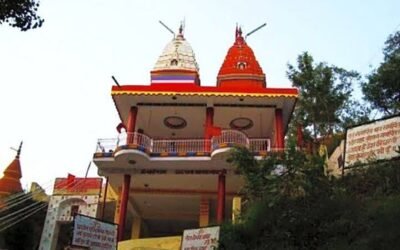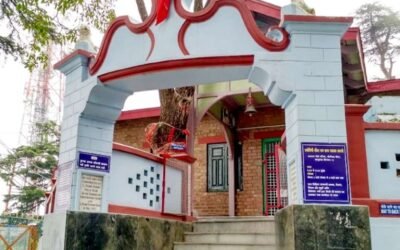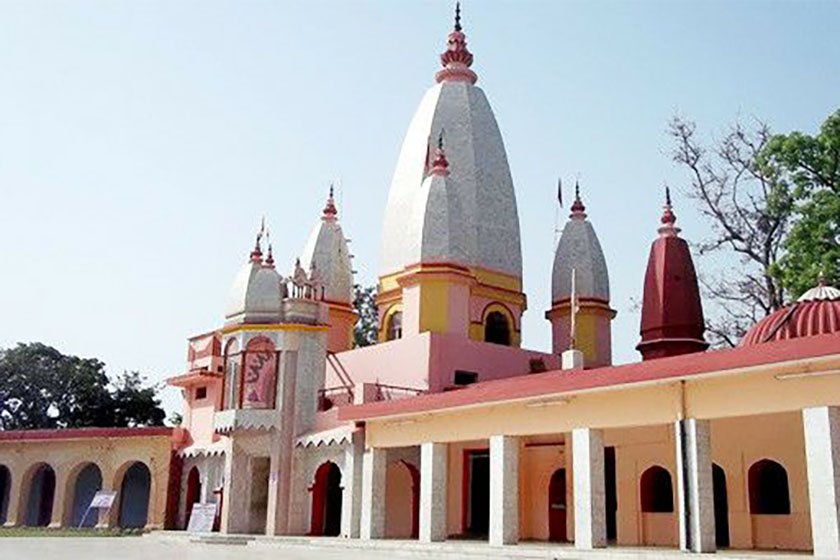
In the old town of Nahan, where royal memory still sits in streets, tanks, temples, and public buildings, Kalisthan keeps the fierce Mother in a quiet Pindi form.
Some shrines become famous because they stand far away from ordinary life. Kalisthan is different. It belongs deeply to Nahan town itself. The temple is associated with Maa Kali, worshipped here in Pindi form, and local accounts remember it as one of the important Shakti shrines of the old Sirmaur state. Its story is tied not only to devotion, but also to the royal household, a princess from Kumaon, Raja Vijay Prakash, and the old foundry side of Nahan. That makes Kalisthan more than a neighbourhood temple; it is one of those town shrines where faith, family memory, and the history of a hill capital quietly meet.
🌄 Location & How to Reach It
Kalisthan Temple is located in Nahan, the district headquarters of Sirmaur district, Himachal Pradesh. Local listings place it around the Police Colony / Nahan Foundry side of town, and an older tourism reference describes the temple as being near the Nahan Foundry. The temple is not a remote pilgrimage site; it is part of Nahan’s lived religious landscape, easy to combine with a walk through the town’s old streets, tanks, bazaars, and other shrines.
Google Maps: Get Directions
Elevation: approximately 900–950 metres around Nahan town; some local listings give the temple altitude around 932 metres, but this should be treated as approximate rather than a survey-certified temple elevation.
- By road: Nahan is well connected by road with Kala Amb, Paonta Sahib, Chandigarh, Solan, Shimla, Ambala, and Dehradun. From within Nahan town, Kalisthan can be reached by local vehicle, on foot from nearby areas, or by asking for the Kalisthan / Police Colony / Foundry side.
- By rail: The nearest practical railheads are Kalka, Chandigarh, and Ambala, followed by road travel to Nahan.
- By air: The nearest practical airports are Chandigarh and Dehradun, both requiring onward road travel into Sirmaur.
For most visitors, Kalisthan is an easy in-town darshan stop, not a difficult hill climb or full-day pilgrimage.
🌸 Best Time to Visit
Kalisthan can be visited throughout the year. Since Nahan is a lower hill town, the most comfortable months are usually October to March, when the weather is pleasant for walking through the town and visiting nearby temples. Summer afternoons can feel warm, so morning or evening is better for a quieter darshan.
The most important devotional periods are Navratri, Ashtami, and other Shakti-related observances, when Kali temples generally receive more devotees. Some local travel references also associate the temple with Navratri and Dussehra celebrations, though exact annual arrangements should be confirmed locally rather than assumed from old listings.
There is no need to invent fixed darshan timings for this temple. If you are planning a normal visit, go during daylight hours. If you are planning a special puja, Navratri visit, or group darshan, ask locally in Nahan before finalising your time.
🕉️ The Goddess in Pindi Form
Kalisthan is dedicated to Maa Kali, one of the fiercest and most protective forms of the Divine Mother. Local accounts describe the goddess here as seated in Pindi form, which gives the shrine a more elemental character than a temple centred only on a sculpted idol.
A Pindi does not work like an ordinary statue. It is simpler, older in feeling, and often more direct in devotional experience. Devotees bow not before a highly decorated image alone, but before a sacred presence understood through stone, faith, and continuity. In many Shakti shrines, this form carries a deep sense of power: the goddess is not merely represented, she is present.
That is why Kalisthan’s importance should not be judged only by the size of the temple. Its devotional strength comes from its identity as a Kali Sthan — a place of the Mother — within the royal town of Nahan.
👑 The Princess from Kumaon and Raja Vijay Prakash
The most important local historical tradition associated with Kalisthan connects the temple with the Sirmaur royal family. A tourism reference says the image of Kali was brought from her parental home by the daughter of Raja Kalyan Chand of Kumaon, and that Raja Vijay Prakash built the temple in honour of the goddess. It further places the temple’s construction between 1713 and 1749, while another local report gives 1730 CE as the construction year under Raja Vijay Prakash, at the request of his queen.
This story gives Kalisthan a very human origin. A goddess travels with a princess. A royal marriage links Kumaon and Sirmaur. A queen’s devotion becomes a temple in Nahan. The shrine, in this telling, is not only a public place of worship but also a royal family’s act of reverence.
The exact year is not fully settled in the public sources, but the broader frame is clear: Kalisthan belongs to the Sirmaur princely-state period, and its memory is tied to Raja Vijay Prakash and the royal household. That makes it an important town shrine for anyone trying to understand Nahan beyond markets and viewpoints.
🙏 What Kalisthan Temple Is Known For
Kalisthan is known as a Maa Kali temple and is often described in local accounts as a Siddhapeetha — a sacred place where devotees believe prayers and vows carry special power.
Devotees come here for protection, strength, family welfare, fulfilment of vows, and the blessings of the Mother. Like many Kali shrines, the temple’s emotional tone is different from softer forms of Devi worship. Maa Kali is approached as fierce, direct, and protective. She removes fear, cuts through obstacles, and stands with those who come with faith.
Kalisthan is also known because it is part of Nahan’s old religious map. The town has many temples and sacred spots — Jagannath Temple, Rani Tal Shiv Temple, Miyan Ka Mandir, Lakshmi Narayan Temple, Gurudwara Dashmesh Asthaan, and others — but Kalisthan carries a distinct Shakti identity. A list of Nahan religious places also includes Kalisthan Temple among the town’s notable shrines.
🏛️ A Temple Beside the Old Foundry Memory
One of the most interesting things about Kalisthan is its setting near the old Nahan Foundry side. The foundry itself is part of Nahan’s civic and industrial history; references to the town note that the foundry area became a significant public landmark, and one description places Kalisthan Temple near it.
That closeness gives the temple an unusual character. It is not hidden in forest. It is not a remote hilltop shrine. It stands within the old working body of the town, near places where people lived, worked, walked, and gathered. In a hill capital like Nahan, this is often how sacred spaces function. They are not separate from daily life. They sit beside it and slowly become part of its rhythm.
The temple’s architecture is locally described as important from the point of view of grandeur and artistic value, though detailed architectural documentation is limited in public sources. A visitor should therefore approach Kalisthan not expecting a formally documented ASI-style monument, but as a living Shakti shrine with royal-era memory and town devotion.
Inside, the experience is likely to be intimate rather than overwhelming. Bells, incense, red cloth, flowers, the Pindi form of Maa Kali, and the steady arrival of devotees are what give the shrine its force. The power of the place is not in spectacle. It is in continuity.
📜 Nahan’s Royal Townscape and the Shakti Thread
Nahan was the capital town of the Sirmaur princely state, and its sacred sites still carry traces of that world. Temples here are not random isolated buildings. They belong to a planned hill town shaped by rulers, courtyards, tanks, old lanes, public institutions, and religious patronage.
Kalisthan fits into this pattern. The temple’s link with Raja Vijay Prakash and the royal household places it within the devotional culture of the Sirmaur court. At the same time, its present identity is local and public. People know it by name, ask directions to it easily, and treat it as one of Nahan’s familiar sacred places.
This is what makes Kalisthan useful for travellers who want to understand the town seriously. Renuka Ji tells Sirmaur’s mother-son sacred story. Trilokpur shows the region’s large Shakti pilgrimage tradition. Paudiwala carries a Shiva legend connected with Ravana. Kalisthan, meanwhile, keeps the Devi inside Nahan’s royal and civic memory.
🎉 Festivals and Devotion
- Navratri: The most natural devotional season for a Kali temple. Local travel references associate Kalisthan with Navratri celebrations, but exact arrangements should be confirmed locally each year.
- Ashtami worship: Ashtami is commonly important in Devi worship, especially in Shakti temples. Visitors planning special darshan should ask locally in Nahan for the current ritual schedule.
- Daily worship: The temple functions as a living local shrine where devotees visit Maa Kali for blessings, protection, and fulfilment of vows.
- Royal memory: The temple’s association with Raja Vijay Prakash and the queen’s devotion remains one of its most important identity markers.
- Town devotion: Kalisthan is part of Nahan’s everyday sacred map, so its importance is not limited only to festival days.
🏞️ While You’re in the Area
- Jagannath Temple, Nahan: A major old temple in Nahan town, useful to combine with Kalisthan for understanding the town’s historic religious core.
- Rani Tal: A peaceful lake and garden area in Nahan, suitable for a short family stop after temple visits.
- Miyan Ka Mandir: Another well-known Nahan shrine, especially active around Krishna Janmashtami.
- Gurudwara Dashmesh Asthaan: A significant Sikh sacred site in Nahan, connected with Guru Gobind Singh Ji’s stay in the region.
- Paudiwala Shiv Temple: A nearby Shiva shrine associated with the local Ravana “stairway to heaven” legend, best visited as part of a Sirmaur temple circuit.
- Maa Bala Sundri Temple, Trilokpur: One of the most important Shakti shrines near Nahan, especially during Navratri fairs.
- Renuka Ji: Sirmaur’s major sacred lake and pilgrimage landscape, associated with Mata Renuka and Lord Parshuram, best planned as a separate half-day or full-day trip.
🙏 Getting in Touch
There is no widely verified official website, phone number, or formal visitor office for Kalisthan Temple in the sources checked. For puja details, Navratri arrangements, priest availability, or the easiest walking route, ask locally in Nahan, especially around the Police Colony / Foundry / Kalisthan side.
For ordinary darshan, no booking is needed. Arrive during daylight, dress respectfully, avoid blocking narrow town lanes, and keep the temple area clean.
❓ Quick Questions Travellers Ask
Where is Kalisthan Temple located?
Kalisthan Temple is in Nahan, Sirmaur district, around the Police Colony / old Foundry side of town.
Which deity is worshipped at Kalisthan?
The temple is dedicated to Maa Kali, worshipped here in Pindi form.
Who built Kalisthan Temple?
Local accounts connect the temple with Raja Vijay Prakash of Sirmaur, with one source placing construction between 1713 and 1749 and another giving 1730 CE.
Is Kalisthan a remote temple?
No. It is an in-town shrine in Nahan and can be visited easily while exploring the town.
What is the best time to visit?
Morning and evening are best for a peaceful visit. Navratri is the main devotional season, but it can be busier.
A Last Word
Kalisthan does not need a mountain summit to feel powerful. Its strength comes from where it stands — inside Nahan’s old life, beside royal memory, town movement, and generations of local devotion. Maa Kali is worshipped here in a form that is simple but not small. The Pindi holds the centre; the stories gather around it.
For a traveller, Kalisthan is a reminder that sacred Himachal is not only in remote valleys and dramatic temples. Sometimes it is in the middle of a town, near old buildings and familiar lanes, waiting quietly while daily life moves around it. Nahan has many such corners. Kalisthan is one of the important ones.
Fact-check note: Kalisthan Temple’s location in Nahan, Sirmaur district, its dedication to Maa Kali, and the belief that the goddess is worshipped in Pindi form are supported by local temple/travel references and regional reporting. The temple’s royal connection is consistently linked with Raja Vijay Prakash, but dates vary: one source gives construction between 1713 and 1749, while another local report gives 1730 CE and connects the temple’s construction with the queen’s request. The story of the Kali image being brought from Kumaon through a princess is treated as local royal tradition rather than inscription-verified history. No verified official temple contact number, GPS coordinate, ASI status, or fixed darshan schedule was found in the checked sources, so those details have not been forced.